Who is on this subjectordered by the date of their first quote here
2 of 4 lanes rest on fewer than 5 quotes and are marked thin. Offsets are days from the middle first-quote date, 23 Apr 2024 — a date, and nothing else. It is not a claim about who reached a view first.
- Dylan Patel 6 9 Aug 2023 – 17 Aug 2026 -258 d
-
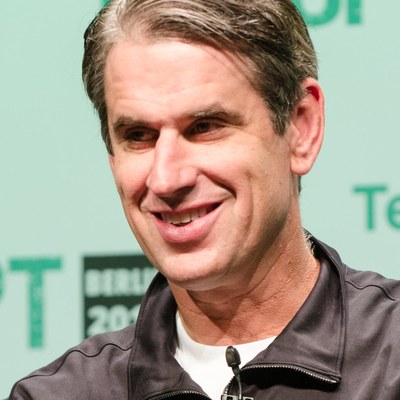 Bill Gurley
3
thin
23 Apr 2024 – 13 Jul 2026
+0 d
Bill Gurley
3
thin
23 Apr 2024 – 13 Jul 2026
+0 d
-
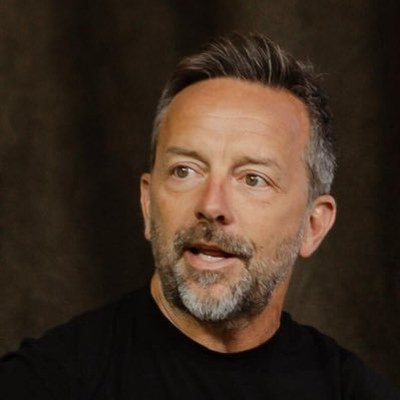 Brad Gerstner
1
thin
13 Oct 2024 – 13 Oct 2024
+173 d
Brad Gerstner
1
thin
13 Oct 2024 – 13 Oct 2024
+173 d
-
 Gavin Baker
5
4 Jan 2025 – 9 Dec 2025
+256 d
Gavin Baker
5
4 Jan 2025 – 9 Dec 2025
+256 d
The chronologysourced and dated, oldest first
-
-
Dylan Patel
Patel jokes that transformers are the most capitalist invention because spending more money reliably improves them.
“I like to joke, like, transformers are the most, like, capitalist thing that's ever been invented because you just throw more money at it, it gets better.”
-
-
-
Bill Gurley
Gurley calls foundational model companies' hundred-million-dollar annual burn rates poor capital allocation but possibly unavoidable competitive traps.
“200,000,000 a year? There's no way that's high quality capital allocation from my point of view. There's no chance. But maybe they don't have the alternative.”
-
Brad Gerstner
Gerstner says inference costs fell 90% last year and will drop another 90% in coming months.
“What Sunny has told us and other people in the field have told us that inference is going to drop by another 90% over the cost of the next period of months.”
-
-
-
Gavin Baker
Baker argues the ultimate AI winner must be the lowest cost compute provider, which requires owning rather than renting compute.
“the ultimate AI winner will be the one with the lowest cost of infrastructure cost, the lowest cost of compute.”
-
Bill Gurley
Gurley warns AI companies trading equity for server capacity don't recognize true COGS and get warped decision-making.
“They're trading equity for server capacity. And so those companies are running on a day to day basis with a high COGS, but they don't know it because they're not paying cash for it.”
-
Dylan Patel
Patel argues open source AI lacks software's feedback loops because reusing models requires significant compute and expertise.
“fundamentally, I would say that that's because open source AI does not have the same feedback loops as open source software.”
-
Dylan Patel
Patel argues most AI value accrues to users, not to companies building or deploying AI.
“But most of the AI value that's been generated does not accrue to the companies building the AI or deploying it. It actually deploy it actually accrues to the user.”
-
Gavin Baker
Baker says AI is the first time in his career that being the low-cost producer matters in tech.
“And this is really important because AI is the first time in my career as a tech investor that being the low cost producers ever matter.”
-
Gavin Baker
Baker says AI is the first time in tech where being the low-cost producer matters economically.
“AI is the first time in my career as a tech investor that being the low cost producers ever matter. Apple is not worth trillions because they're a low cost producer of phones.”
-
Gavin Baker
Baker notes AI companies generate cash earlier than SaaS despite lower margins due to fewer employees.
“The crazy thing is because of those efficiency gains, they're generating cash way earlier than SaaS companies did historically, but they're generating cash earlier, not because they have high gross margins, but because they have very few human employees.”
-
Gavin Baker
Baker says AI companies generate cash earlier than SaaS despite lower margins because they have very few human employees.
“And it's just tragic to watch all of these companies. Like you want to have an agent, It's never going to succeed.”
-
-
-
Dylan Patel
Patel calculates $100B AI revenue requires $250B infrastructure with five-year depreciation at 50% margins.
“That $50,000,000,000 of COGS needs to burn on infra, which cost roughly with if a five if you're talking about five year depreciation, call it $250,000,000,000,”
-
Dylan Patel
Patel reports Anthropic achieved profitability and positive free cash flow in April and May 2025.
“Anthropic is free cash flow positive, and they are profitable in q two. Even in April. In April, they closed April's books. They were profitable.”
-
Bill Gurley
Gurley suspects some AI companies are reselling tokens below cost, creating unsustainable growth.
“I suspect there are companies that are selling, reselling tokens from Amazon or Anthropic or whoever at a price lower than they're paying for them. And which looks like growth, but it is unsustainable.”
-
Dylan Patel
Patel argues AI business transformation has severe upfront spend spike then major cost efficiency gains.
“Like you spike up on spend a lot for the one time and then you spike down a lot and your cost efficiency is way better.”
-
Where they overlapsame programme, same subject
- Invest Like the Best also carries Bill Gurley and Gavin Baker on this subject, at different times.