Who is on this subjectordered by the date of their first quote here
5 of 7 lanes rest on fewer than 5 quotes and are marked thin. Offsets are days from the middle first-quote date, 26 Feb 2026 — a date, and nothing else. It is not a claim about who reached a view first.
-
 Brad Gerstner
10
28 Sep 2023 – 10 Feb 2026
-882 d
Brad Gerstner
10
28 Sep 2023 – 10 Feb 2026
-882 d
-
 Jensen Huang
1
thin
7 May 2025 – 7 May 2025
-295 d
Jensen Huang
1
thin
7 May 2025 – 7 May 2025
-295 d
-
 Howard Marks
4
thin
11 Dec 2025 – 11 Dec 2025
-77 d
Howard Marks
4
thin
11 Dec 2025 – 11 Dec 2025
-77 d
-
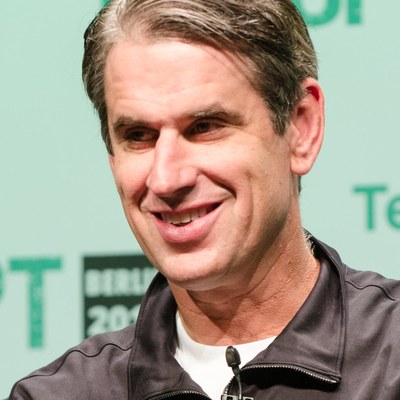 Bill Gurley
9
26 Feb 2026 – 11 May 2026
+0 d
Bill Gurley
9
26 Feb 2026 – 11 May 2026
+0 d
-
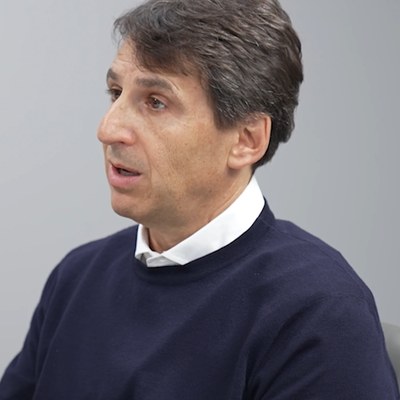 Marc Rowan
2
thin
3 Mar 2026 – 3 Mar 2026
+5 d
Marc Rowan
2
thin
3 Mar 2026 – 3 Mar 2026
+5 d
- Dylan Patel 1 thin 9 Mar 2026 – 9 Mar 2026 +11 d
-
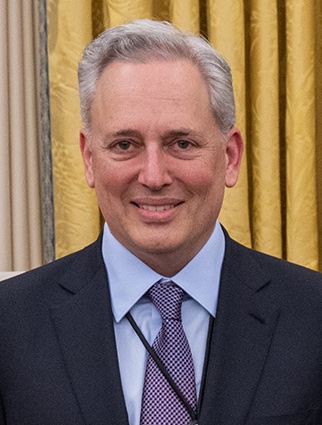 David Sacks
2
thin
1 May 2026 – 1 May 2026
+64 d
David Sacks
2
thin
1 May 2026 – 1 May 2026
+64 d
The chronologysourced and dated, oldest first
-
-
Brad Gerstner
Gerstner predicted in 2018 that AI's impact would exceed the internet's, a year after the transformer model.
“And at that event, in 2018, I said, and this was a year after the transformer model, that the impact would be greater than the Internet itself.”
-
-
-
Brad Gerstner
Gerstner claims AI will be bigger than the Internet in economic productivity impact despite near-term disillusionment ahead.
“But my my sense here is, you know, and I've said the AI is gonna be bigger than the Internet itself in terms of impact on economic productivity.”
-
Brad Gerstner
Gerstner observes companies can now cut tens of thousands of employees while increasing customer satisfaction, unprecedented historically.
“Never have has he seen or have I seen the ability for companies to take out 10,000 people and actually see customer satisfaction scores increase.”
-
-
-
Brad Gerstner
Gerstner reports organic search traffic down 20-40% as companies push AI-embedded answers above traditional results.
“They're saying organic search is down 20 to 40%. Why? Because they're putting AI on top of it. They got to push it down the page.”
-
Jensen Huang
Huang estimates modern agricultural technology could eliminate half a billion farming jobs worldwide.
“We estimated a number of years ago that if you took the most modern agricultural technology, that in the world you might eliminate a half a billion jobs of what's going on in farming, subsides, etcetera.”
-
Brad Gerstner
Gerstner notes 70% of current jobs didn't exist in 1940 to illustrate technology's job creation.
“70% of the jobs that exist today did not exist in 1940. Okay? So we have to evolve and we have to expand.”
-
Howard Marks
Marks links job losses from automation and offshoring to the opiate epidemic by amount and location.
“When we lost jobs to automation and offshoring, I think that that coincided with the opiate epidemic and not only in amount but also in location.”
-
Howard Marks
Marks worries that replacing income from lost jobs cannot address purposelessness since jobs provide more than paychecks.
“And I think it's a natural consequence of people sitting around all day. And even if we if we can find a way to replace their income I worry about purposelessness and you know we get so much job so much from our jobs other than a paycheck and you can't replace that stuff.”
-
Howard Marks
Marks worries that replacing income alone cannot address purposelessness from job loss and unemployment.
“And I think it's a natural consequence of people sitting around all day. And even if we if we can find a way to replace their income I worry about purposelessness”
-
Howard Marks
Marks worries that replacing income alone won't solve purposelessness problem from job losses to AI.
“And even if we if we can find a way to replace their income I worry about purposelessness and you know we get so much job so much from our jobs other than a paycheck and you can't replace that stuff.”
-
-
-
Brad Gerstner
Gerstner explains software stocks previously traded at 35x free cash flow due to bond-like predictability.
“Give them 35 times free cash flow because I had that level of predictability. It was like a government bond.”
-
Brad Gerstner
Gerstner says AI uncertainty has rationally caused investors to discount future cash flows and terminal values.
“I can't see as far into the future, so I'm gonna pay less for the terminal value. I'm gonna pay less for those future free cash flows.”
-
Brad Gerstner
Gerstner says software valuations only recover when companies prove they are AI beneficiaries through revenue acceleration.
“So the only way that reverses, Scott, is those companies have to accelerate their core revenues and show that they are beneficiaries of AI.”
-
Brad Gerstner
Gerstner describes exponential AI change creating fog of war where investors cannot predict 35 years of cash flows.
“Fog of war. I can't predict thirty five years into the future of those free cash flows, so I have to pull it in a little bit.”
-
Brad Gerstner
Gerstner explains software stocks fell because AI uncertainty reduced visibility, lowering multiples from 35x free cash flow.
“Give them 35 times free cash flow because I had that level of predictability. It was like a government bond. It was a sure thing.”
-
Bill Gurley
Gurley reports lawyers at large firms have already drastically reduced paralegal numbers due to AI.
“I've talked to lawyers that run large firms that have already drastically reduced the number of paralegals. So it's not theoretical at this point. It's real.”
-
Bill Gurley
Gurley argues people in safe jobs they don't love are most vulnerable to AI disruption.
“I think a lot of the people that go through that college conveyor belt that are chasing a safe job that end up working as a widget or a cog in an industry they may not love, I think they are ripe for disruption.”
-
Marc Rowan
Rowan notes software stocks have fallen almost 70% following the recent realization that AI will impact the software sector.
“But apparently two weeks ago, we discovered that AI is going to impact software and we've been in a massive risk off mode. And so software stocks are down almost 70%.”
-
Marc Rowan
Rowan notes software stocks are down almost 70% after markets recently realized AI's impact on the sector.
“But apparently two weeks ago we discovered that AI is going to impact software and we've been in a massive risk off mode and so software stocks are down almost 70%.”
-
Dylan Patel
Patel says he now supports UBI despite being very capitalist, a shift from his prior views.
“Over the last couple years I've realized, wait, I actually think UBI is perfectly fine. Which I think is crazy because again, I'm very capitalist.”
-
“Paralegals are already under threat, and I have talked to lawyers that have drastically reduced the size of their paralegal force. I've talked to them.”
-
Bill Gurley
Gurley reports lawyers he spoke with have already drastically reduced paralegal staff due to AI.
“Paralegals are already under threat, and I have talked to lawyers that have drastically reduced the size of their paralegal force. I've talked to them. That has already happened.”
-
Bill Gurley
Gurley argues that safe jobs are threatened by AI and fascination-based careers are actually safest now.
“I fear that our society has been steering people towards quote safe jobs, which in a day of AI may not even be that safe anymore.”
-
Bill Gurley
Gurley warns people in safe jobs they don't love are most vulnerable to AI replacement.
“If you went into a job because you thought it was safe and you studied it, but you don't really love it, you're not trying at home to get even better at it.”
-
Bill Gurley
Gurley says human relationships and strong peer and mentor networks will matter way more in AI era.
“A lot of people have a theory that I think is reasonable that human relationships will matter way more. So, do you have a strong peer network? Do you have a strong mentor network?”
-
Bill Gurley
Gurley urges embracing new AI tools despite their rapid arrival, comparing to technological evolution.
“And so you have to think that way about these tools. This one came out as fast, I admit, but you to roll around in it.”
-
David Sacks
Sacks cites Yale Budget Lab finding no discernible AI labor market disruption three years after ChatGPT launch.
“There's a study by Yale, the Yale Budget Lab, which concluded no discernible disruption to the labor market in the first three years after the launch of SHAT GPT.”
-
David Sacks
Sacks says less than 5% of layoffs announced last year were attributable to AI per Challenger Gray report.
“You look at things like the Challenger Gray report, which tallies up the number of layoffs in the economy. Less than 5% of the layoffs that were announced last year were attributable to AI.”
-
Bill Gurley
Gurley predicts AI will cause high-agency fascinated people to separate even more from others.
“I just think, in fact, one thing I might worry about in a, in a AI world is these high agency fascinated people might separate. Even more.”
-
Where they overlapsame programme, same subject
- Bloomberg Live also carries Brad Gerstner and Marc Rowan on this subject, at different times.
- Bloomberg Podcasts also carries Howard Marks and Marc Rowan on this subject, at different times.