Who is on this subjectordered by the date of their first quote here
2 of 5 lanes rest on fewer than 5 quotes and are marked thin. Offsets are days from the middle first-quote date, 27 Aug 2024 — a date, and nothing else. It is not a claim about who reached a view first.
-
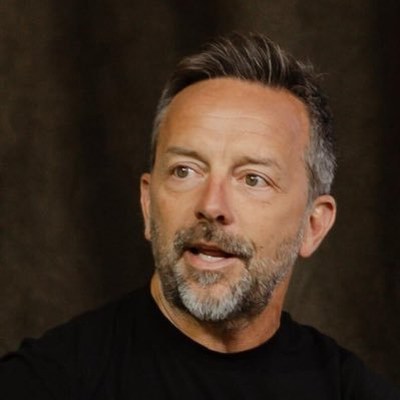 Brad Gerstner
16
25 Jan 2024 – 29 May 2026
-215 d
-
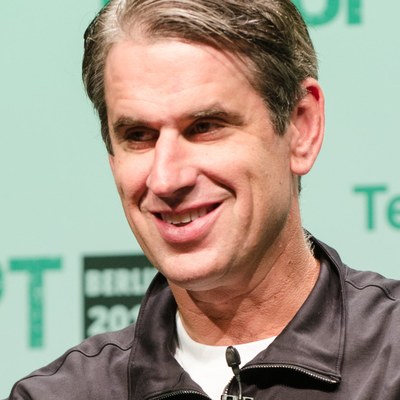 Bill Gurley
5
22 Feb 2024 – 24 Jan 2025
-187 d
-
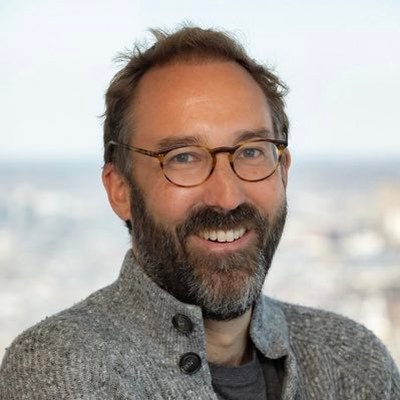 Gavin Baker
5
27 Aug 2024 – 4 Aug 2026
+0 d
-
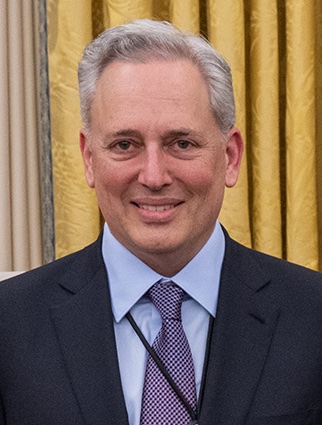 David Sacks
3
thin
17 Jan 2026 – 1 May 2026
+508 d
- Dylan Patel 1 thin 30 Apr 2026 – 30 Apr 2026 +611 d
The chronologysourced and dated, oldest first
-
-
Brad Gerstner
Gerstner cites Zuckerberg announcing Meta will have 600,000 H100 GPUs by year end.
“You saw that, tweet or thread out of Zuckerberg this week, where he said by the end of the year, they're gonna have the equivalent or this year, 600,000 h 100 GPUs,”
-
Brad Gerstner
Gerstner highlights Super Micro raised full-year guidance by 40% to $14 billion.
“Super Micro took their full year guide up after the bell today by 40%. 40% to $14,000,000,000. So that's why you're seeing these moves.”
-
Bill Gurley
Gurley expresses skepticism about sovereign server stacks, comparing them to Microsoft's failed NT server-per-employee pitch given rapid depreciation.
“So I would just, there was a time at which Microsoft was trying to convince the world that we'd all need an NT server for every employee.”
-
Bill Gurley
Gurley calls plans to compete with Nvidia radical given existing competitors like AMD already have decades-long head starts.
“There are already people competing with Nvidia. AMD's competing with Like, there are other people that have somewhat of a head start.”
-
Gavin Baker
Baker explains MFU runs at 35-40%, measuring the percentage of theoretical compute actually used for training.
“MFU, model flops utilization, and that generally runs around 35 to 40%. And that's literally the percentage of compute, theoretical compute flops that you're actually applying to trading.”
-
Gavin Baker
Baker explains higher MFU allows 25% faster time to market with same GPU and power spending.
“You have the same amount of GPUs and the same amount of power presumably. You could choose between faster time to market.”
-
Gavin Baker
Baker explains that 50% MFU versus 40% MFU enables 25% faster time to market for AI models.
“You could choose between faster time to market. If you run a 50% MFU and your competitor's running 40 for an equivalent amount of trading flops, you could be in market 25% faster.”
-
Gavin Baker
Baker proposes a new metric decomposing MFU that he developed the morning of the interview.
“MFU is the most important metric because it gives you all of these advantages and ways to differentiate yourself amongst five people, six people who've trained these GPT core class models.”
-
Brad Gerstner
Gerstner proposes dedicating individual nuclear reactors at Diablo to major tech companies for their data centers.
“I could imagine if you had four more reactors sitting here, right, if you could land them at the right price, you could have one reactor for Meta, one for Amazon, one for Microsoft, one for Nvidia, you could have the data center sitting right next to them.”
-
Brad Gerstner
Gerstner says Jensen confirmed GPU clusters are already at 200-300k scale and will reach 500k to 1 million
“I said, are we already at the phase of two and three hundred thousand cluster scale? And he said, yes. And then I said, and will we go to 500,000 a million?”
-
Brad Gerstner
Jensen confirmed AI clusters are already at 200,000-300,000 scale and will reach 500,000 to 1 million GPUs.
“are we already at the phase of two and three hundred thousand cluster scale? And he said, yes. And then I said, and will we go to 500,000 a million?”
-
Bill Gurley
Gurley notes TSMC announced 20% across-the-board price increase as expected proof point of supply-demand dynamics.
“Another thing that came out this morning that I was kind of waiting on as a proof point, because it didn't make sense to me that it hadn't happened yet, TSMC said they're gonna do across the board 20 price increase.”
-
Bill Gurley
Gurley questions hardware implications if LLM differentiation shifts from pre-training to inference focus.
“if the world shifts to inference sooner or faster, and if the path of differentiation for the language model companies becomes more inference based than pre training based, what does that mean for the hardware systems that people are using?”
-
-
-
Bill Gurley
Gurley says Stargate will be a property-owner and operating-company structure with one owning and the other leasing.
“People are telling me it's gonna be a prop co op co structure, which I didn't even know it was twenty four hours ago, but it's it's like a one person owns the property.”
-
Brad Gerstner
Gerstner says the UAE-US AI campus announced is five gigawatts, equivalent to 2.5 million GPUs.
“So in in Abu Dhabi, they announced a five gigawatt US AI you know, it's a UAE, US AI campus. It's an incredible architectural campus.”
-
Brad Gerstner
Gerstner says UAE announced five gigawatt AI campus with NVIDIA, OpenAI, Oracle, totaling 2.5 million GPUs.
“So in in Abu Dhabi, they announced a five gigawatt US AI you know, it's a UAE, US AI campus. It's an incredible architectural campus. It's in collaboration with NVIDIA and OpenAI and Oracle.”
-
Brad Gerstner
Gerstner says NVIDIA raised total compute buildout estimate to $3-4 trillion from $2 trillion.
“Last night on the call, they said 3 to 4,000,000,000,000 of total compute. He told us that inference was gonna billion x. Right?”
-
“Tech companies are investing over the course of the next four or five years, it's about 10 times the size of the Manhattan Project on an inflation adjusted or GDP adjusted basis.”
-
-
-
Brad Gerstner
Gerstner notes AI infrastructure stocks trade at mid-twenties multiples while CoreWeave trades at five times EBITDA.
“All of these stocks are trading in mid twenties in terms of their multiples in the case of something like CoreWeave, which has fallen out of favor, trading at five times EBITDA.”
-
Brad Gerstner
Gerstner says Databricks and Snowflake are accelerating because they provide the data substrate for agentic AI solutions.
“But there are other companies that we own and love, like Databricks and Snowflake, that are actually accelerating. Why are they accelerating? They are the data substrate upon which enterprises are building agentic solutions.”
-
David Sacks
Sacks says hyperscalers plan colocation power generation that will lower residential rates through grid donation and economies of scale.
“When I've talked to the hyperscalers, they also tell me that their plan is not to draw from the grid, it's to basically set up their own power generation behind the meter. It's called colocation.”
-
Brad Gerstner
Gerstner contrasts today's GPU utilization with 2000 when only 7% of fiber was utilized.
“Remember back in 2000, we talked a lot about dark fiber. Only 7% of the fiber going into the ground in the year 2000 was being utilized. 7%.”
-
David Sacks
Sacks cites $350 billion hyperscaler capex this year, heading to $1 trillion by 2030 per Jensen.
“Again, just the top four hyperscalers, $350,000,000,000 of expected capex this year. On its way, I think Jensen said 1,000,000,000,000 by 2030.”
-
Dylan Patel
Patel notes AI software stacks update constantly with nightly builds making performance measurement time-sensitive.
“with software changing literally multiple times a week, right, PyTorch has nightlies, VLM has nightlies, Asteeling has nightlies, CUDA drivers update constantly.”
-
David Sacks
Sacks says hyperscaler capex will exceed $700 billion this year, up from $350 billion last year, over 2% of GDP.
“This year, I think we were supposed to have $660,000,000,000 of hyperscaler CapEx up from $3.50 last year. I think there's now the new estimate is is gonna be over 700.”
-
Brad Gerstner
Gerstner asserts Elon Musk is the best at converting electrons into AI tokens globally.
“There's no human being on the planet that is better at turning electrons into tokens than Elon Musk.”
-
Brad Gerstner
Gerstner asserts no one is better at turning electrons into tokens than Elon Musk.
“There's no human being on the planet that is better at turning electrons into tokens than Elon Musk. Right? Let me say that again. Because we focus a lot on the launch business.”
-
Brad Gerstner
Gerstner says Musk is building the largest data centers on Earth and eventually in space.
“Elon is building the biggest data centers on Earth and eventually in space of anybody, and nobody is better at turning those electrons into tokens.”
-
Brad Gerstner
Gerstner asserts Elon Musk is the best in the world at turning electrons into tokens.
“There's no human being on the planet that is better at turning electrons into tokens than Elon Musk. Right? Let me say that again.”
-
Gavin Baker
Baker identifies memory as the single most important factor for increasing token output per compute unit.
“It's the single most important thing you could do to increase token output per unit of compute, and then that obviously, definitionally, actually lowers costs,”
-
Where they overlapsame programme, same subject
- BG2 Pod also carries Bill Gurley and Brad Gerstner on this subject, at different times.
- CNBC Television also carries Bill Gurley and Brad Gerstner on this subject, at different times.