Who is on this subjectordered by the date of their first quote here
4 of 7 lanes rest on fewer than 5 quotes and are marked thin. Offsets are days from the middle first-quote date, 8 Feb 2024 — a date, and nothing else. It is not a claim about who reached a view first.
-
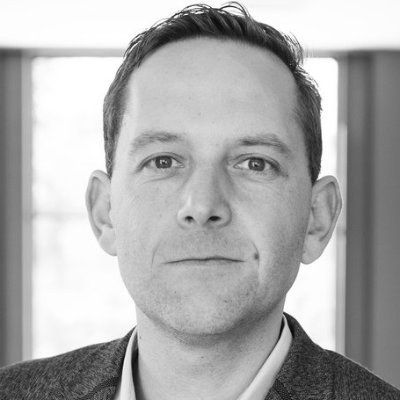 David Friedberg
12
8 Oct 2011 – 27 Mar 2026
-4506 d
David Friedberg
12
8 Oct 2011 – 27 Mar 2026
-4506 d
-
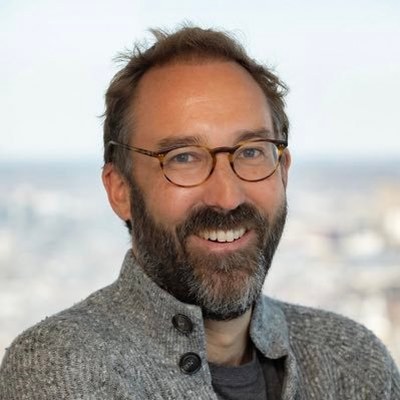 Gavin Baker
3
thin
26 Nov 2019 – 4 Aug 2026
-1535 d
Gavin Baker
3
thin
26 Nov 2019 – 4 Aug 2026
-1535 d
-
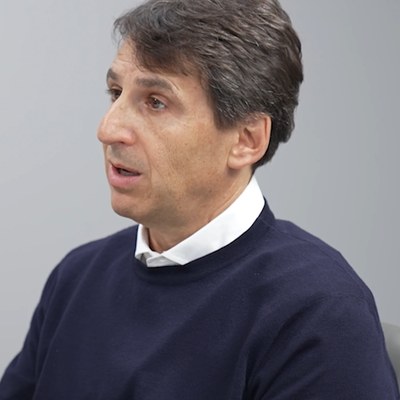 Marc Rowan
6
15 Jul 2021 – 6 Feb 2026
-938 d
Marc Rowan
6
15 Jul 2021 – 6 Feb 2026
-938 d
-
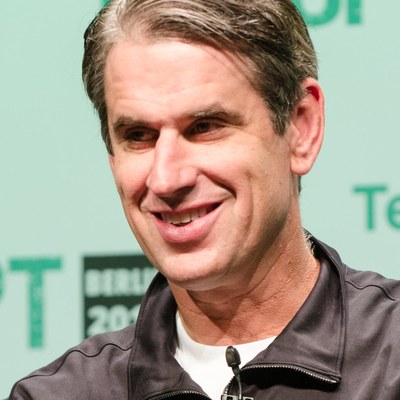 Bill Gurley
4
thin
8 Feb 2024 – 29 Apr 2024
+0 d
Bill Gurley
4
thin
8 Feb 2024 – 29 Apr 2024
+0 d
-
 Brad Gerstner
3
thin
4 Apr 2024 – 25 Jul 2024
+56 d
Brad Gerstner
3
thin
4 Apr 2024 – 25 Jul 2024
+56 d
- Dylan Patel 11 10 Jun 2025 – 22 Jul 2026 +488 d
-
 David Sacks
2
thin
25 Aug 2026 – 25 Aug 2026
+929 d
David Sacks
2
thin
25 Aug 2026 – 25 Aug 2026
+929 d
The chronologysourced and dated, oldest first
-
-
David Friedberg
Friedberg explains WeatherBill achieves 40% claims frequency versus typical insurance industry's under 3%, creating operational barrier for competitors.
“Those small variations occur to 40% of farmers. So 40% of our farmers getting some money back at the end of the season”
-
-
-
Gavin Baker
Baker argues customer acquisition cost is replacing rent as the primary cost for many businesses.
“CAC is the new rent. Customer acquisition cost, online ad spend. It's not just replacing other forms of ad spend. For a lot of businesses, it is replacing rent. Storefronts.”
-
-
-
David Friedberg
Friedberg explains fintech companies can accept lower profits per customer without shareholder pressure over short-term declines.
“Companies generally have a lower operating expense per customer so they can make less profit per customer and build a great business.”
-
Marc Rowan
Rowan explains Athene's growth is limited by assets that earn spread, not by capital or liabilities.
“The growth in the business is not limited by capital. It is not limited by liabilities. It is limited by assets, because it only makes sense to grow if you can earn spread.”
-
-
-
Marc Rowan
Rowan emphasizes Apollo manages half its $500 billion for itself, offering clients only what it already owns.
“Think about what that does from an alignment point of view. We go to a client and we offer them nothing that we don't already own.”
-
David Friedberg
Friedberg cites MrBeast selling 50 million chocolate bars with zero customer acquisition cost via existing audience.
“If you already have a 100,000,000 people following you like MrBeast does, he just goes on his video and he says, buy my chocolate bar. And he sells 50,000,000 chocolate bars.”
-
-
-
David Friedberg
Friedberg rejects businesses that depend on greenwashing and premium pricing to make consumers feel good about themselves.
“I'm not a huge believer or a huge fan of businesses that depend on kind of greenwashing and charging a premium to people to make themselves feel better about the decisions that they're making.”
-
Marc Rowan
Rowan questions whether regional banks can remain in the loan business given higher deposit costs and uncertain deposit stickiness.
“What is the business of regional banking going forward? If you pay more for your deposits, if you have increased costs from operations, from regulation, and all of a sudden you don't know about the stickiness of your deposits, are you in the loan business anymore?”
-
Marc Rowan
Rowan questions whether regional banks can remain in the loan business given higher costs and deposit uncertainty.
“If you pay more for your deposits, if you have increased costs from operations, from regulation, and all of a sudden you don't know about the stickiness of your deposits, are you in the loan business anymore?”
-
Marc Rowan
Rowan explains Athene's 25% diversification rule creates a $400 billion ecosystem with co-investors.
“So as Athene buys 25% of everything, clients of ours, institutions, other insurance companies, retirement systems, wealthy individuals come in side by side aligned with Athene.”
-
“Farmers want to pay for value. I want to pay for ROI. I want to spend $8 and get $60 back.”
-
-
-
Bill Gurley
Gurley argues Google's cage-match ad model generates far higher revenue than transactional models could achieve.
“Their business model is to throw their customers in a cage match and let them compete with one other to the death.”
-
Bill Gurley
Gurley argues transaction models produce 10x less revenue per visit than ad models due to CAC-to-LTV dynamics.
“You're not going to get to the same revenue per visit with a transaction model that you do with the ad model, because you already mentioned CAC TV.”
-
Brad Gerstner
Gerstner notes Perplexity reversed position on advertising despite previously opposing it, signaling business model shift.
“Perplexity came out and said that they were, you know, considering advertising and they there were statements in their previous releases that were very negative on advertising.”
-
Bill Gurley
Gurley says the $20 consumer subscription concept is gone and was a big part of OpenAI's revenue.
“I think the $20 concept is gone. Yep. And that was a big part of OpenAI's revenue apparently as we believe rumored”
-
Bill Gurley
Gurley suggests personal memory features could potentially revive paid AI subscription models.
“If some crazy feature comes along, you know, we've talked about personal memory, maybe that comes back.”
-
Brad Gerstner
Gerstner confirms data clouds pay revenue share to open AI models, though amount is unknown.
“I can definitely confirm that the data clouds are paying a revenue share to the open models. I don't know what the revenue share is, but there will be some compensation.”
-
David Friedberg
Friedberg advocates value-based pricing where farmers keep two-thirds of created value, technology provider one-third.
“I generally think that ag products should be built and priced on a value creation system. So, you know, this is the Monsanto pricing model.”
-
David Friedberg
Friedberg advocates for value-based pricing where technology companies capture one-third of the farmer profit they create.
“If you're delivering an incremental $30 an acre of profit to a farmer, can you charge them $10 an acre for that product or service you're offering them to help them get there?”
-
David Friedberg
Friedberg argues agtech digital companies failed by creating isolated data layers without integration, while farmers pay for results not data.
“And farmers don't wanna pay for data. They wanna pay for results. So that's a that's kind of a very hard thing to do without the the integration of data.”
-
Brad Gerstner
Gerstner reveals OpenAI has only 35% retention at twelve months, questioning the durability of its business model.
“But at twelve months, the retention even in OpenAI is like 35%. So I doubt that anyone that is looking at that even at 2,000,000,000 feels great about that as a durable business model.”
-
-
-
Dylan Patel
Patel says his business model shifted so that 95% of revenue now comes from selling datasets.
“the business transformed into, you know, selling data, right, or build building datasets and selling them. Right? And when the business truly flipped to that, we're now 95% of the revenue is that data”
-
Dylan Patel
Patel reports his newsletter has two hundred thousand subscribers with five thousand paid, generating under five percent of revenue.
“So the newsletter itself is, like, 200,000. Paid newsletter is, like, I think, like, 200,000 people. Paid newsletter is, like, 5,000. Nice. But then, like, the main”
-
Dylan Patel
Patel says neo clouds must scale massively, add software, accept real estate returns, or go bankrupt.
“you either have to go, like, really, really big, or you need to move into the software layer, or you just make commercial real estate, or you go bankrupt.”
-
David Friedberg
Friedberg details potato economics: $5,000 per acre revenue with $1,000-$2,000 operating costs for current methods.
“Okay? And that $5,000 of revenue is requiring an investment of 1 to $2,000 an acre.”
-
David Friedberg
Friedberg advocates pricing ag products at one-third of value created, citing the Monsanto model.
“I generally think that ag products should be built and priced on a value creation system. So, you know, this is the Monsanto pricing model.”
-
David Friedberg
Friedberg's Climate platform reached 10 million acres with free software before monetizing through premium seed and fertilizer recommendations.
“And then we had the idea of charging for certain add ons, certain models. Like, it would recommend what seed to use and recommend what fertilizer to use”
-
Dylan Patel
Patel says inference providers sell public endpoints at flat or negative margins, compensating through private deployments.
“Most of the inference providers are selling at flat margins or even negative for their public endpoints. And they then make it up when people do private deployments.”
-
Dylan Patel
Patel describes public inference as a loss leader to generate private sovereign and enterprise engagements.
“And so I think that's what a lot of this is, is you end up with the public business as like a loss leader just to generate private engagements, whether it be sovereigns or enterprises.”
-
Dylan Patel
Patel questions whether neo clouds targeting developers on short-term rentals can achieve ROI.
“Those that are just targeting developers on short term rentals, they may not be able to get their ROI back.”
-
Dylan Patel
Patel argues neo clouds with long-term enterprise and hyperscaler deals will succeed over on-demand providers.
“And so those are probably less likely to be able to succeed versus those who are locking in these massive deals with or long term deals that may not be massive but with enterprises or with AI labs, or with the hyperscalers who have no capacity because the demand is just so incredible.”
-
Dylan Patel
Patel left Substack when SemiAnalysis reached multi-million dollar revenue with increasing share from non-Substack sources.
“And then I left when we hit a few million of revenue. More and more of the revenue was coming from not Substack.”
-
Dylan Patel
Patel left Substack initially after reaching a few million in revenue to avoid the 10% fee.
“And then I left when we hit a few million of revenue. More and more of the revenue was coming from not Substack. The reason was like, Hey, Substack takes 10%.”
-
-
-
Marc Rowan
Rowan defines Apollo's role as asset origination, creating risk that doesn't exist in traditional markets.
“Our role is to originate the assets. If we originate good risk that offers excess return per unit of risk, we will prosper, and we will have lots of buyers for our product, our own balance sheet, funds, individuals, institutions, insurance companies, four zero one ks, and so on.”
-
David Friedberg
Friedberg predicts AI apps will create ecosystems where advertisers pay to be embedded, offering dual revenue models.
“There could almost be, whether it's through kind of connectors or embedded tools, an incredible ecosystem that were traditionally advertisers actually pay to be embedded and show up inside of the AI app, and the consumer can either pay for it or the advertiser can pay for it.”
-
Dylan Patel
Patel explains SemiAnalysis publishes public research on GPU benchmarking to build scale beyond institutional client work.
“Let's figure out how to figure it out and just post it publicly, and that begets more and more scale. So we've done this with a lot of GPU benchmarking and testing”
-
Gavin Baker
Baker explains Hock Tan's model is opposite of Dell's: find drained profit pools with no competition, enter, and raise prices.
“Hock's model has always been to find a profit pool that has been drained and there's no competition left, enter that and jack prices up.”
-
“Base Ten, like Tuhin's probably made more money off of, you know, Minimax or GLM or DeepSeq than those companies have because he's serving those models at scale. And same with, Linett Fireworks.”
-
Gavin Baker
Baker suggests memory companies should copy NVIDIA's credit wrapper model despite business instability risks.
“I would be going to the buyers of GPUs, Traniums, and whoever and say, I'll participate in the NVIDIA credit wrapper. Now their business is just inherently less stable and predictable,”
-
David Sacks
Sacks says Anthropic's premium pricing depends entirely on maintaining a six-month lead over open models.
“Because their whole right to charge this massive premium for tokens is because they're six months ahead of those open models.”
-
David Sacks
Sacks describes Anthropic and OpenAI as trapped on a hamster wheel, needing constant leadership to justify premium pricing.
“A decent subset of the market is willing to pay a premium for true frontier intelligence, but Anthropic and OpenAI are on that hamster wheel.”
-
Where they overlapsame programme, same subject
- Bill Gurley and Brad Gerstner — BG2 Pod, 1 appearance together
- CNBC Television also carries David Friedberg and Marc Rowan on this subject, at different times.