Who is on this subjectordered by the date of their first quote here
1 of 4 lane rests on fewer than 5 quotes and is marked thin. Offsets are days from the middle first-quote date, 27 Nov 2024 — a date, and nothing else. It is not a claim about who reached a view first.
-
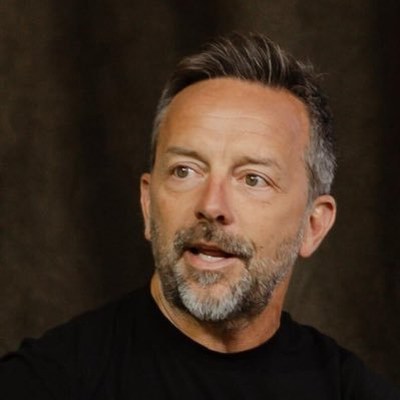
 David Friedberg
14
19 Sep 2020 – 18 Jul 2026
-1530 d
-
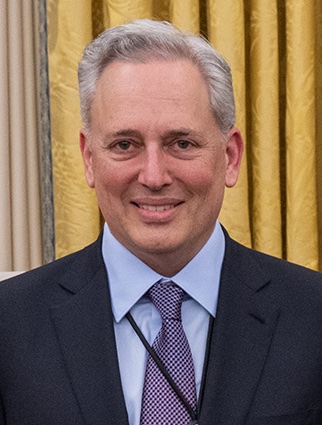
 Brad Gerstner
2
thin
27 Nov 2024 – 27 Nov 2024
+0 d
-
 David Sacks
8
27 Sep 2025 – 3 Jul 2026
+304 d
-
 Chamath Palihapitiya
5
19 Dec 2025 – 14 Jul 2026
+387 d
The chronologysourced and dated, oldest first
-
-
“California has 33,000,000 acres of forest land. It's about a 100,000,000 acres in total land. Forests make up about a third of our land.”
-
David Friedberg
Friedberg provides specific numbers showing California fires have burned 10% of forest acreage so far.
“Forests make up about a third of our land. So far, we're we're burning three and a half million, so about 10% of our acres.”
-
David Friedberg
Friedberg quantifies California wildfires have burned 10% of forest acres, releasing 15% of stored carbon per acre.
“When we burn an acre, we release about 15% of the carbon that's stored in that acre into the atmosphere.”
-
David Friedberg
Friedberg calculates California wildfires have released as much CO2 as all state cars in a year.
“So thus far, if you do the math on that, we've released about as much, c o two as we've, as the California cars release in a year by the wildfires.”
-
-
-
Brad Gerstner
Gerstner says Tesla employs 20,000 people and produced 550,000 cars in Fremont, criticizing Newsom's exclusion plan.
“So Tesla, of course, produces cars over in Fremont just across across the bay from here, employs 20,000 people, produced over 550,000 Teslas in the Fremont factory.”
-
Brad Gerstner
Gerstner notes Tesla's Fremont factory employs 20,000 people and produces over 550,000 cars.
“Tesla, of course, produces cars over in Fremont just across across the bay from here, employs 20,000 people, produced over 550,000 Teslas in the Fremont factory.”
-
-
-
David Sacks
Sacks argues hate speech has no fixed definition and becomes whatever those in power declare it to be.
“The problem is that there is no definition of hate speech. That's not a category that exists. It's just whatever the people in power say it is.”
-
Chamath Palihapitiya
Palihapitiya claims California's proposed billionaire tax has changed the state's economic trajectory by $100-200 billion over five to ten years.
“That one bill, this proposed billionaire tax, has single handedly changed the trajectory of the California economy by a 100 to $200,000,000,000 over the next five to ten years.”
-
-
-
David Sacks
Sacks predicts a rush for the exits from California if the wealth tax gets on the ballot in April.
“If it gets on the ballot, you know, again, we'll know in just a few months, there's gonna be a huge freak out.”
-
David Sacks
Sacks explains supervoting provision would turn 5% wealth tax into 25% for founders like Larry and Sergei.
“So the 5% tax for them is more like a 25% tax of all their net worth.”
-
David Sacks
Sacks says Newsom prohibiting audits of homeless spending is unacceptable and demands transparency for all government spending.
“It is not acceptable for Gavin Newsom, for example, to prohibit audits as he did with homeless spending.”
-
Chamath Palihapitiya
Palihapitiya argues the California wealth tax would have been legally bulletproof if delayed until 2027 instead of retroactive.
“If this union were smart enough, what they would have done is say this is gonna start 01/01/2027. It probably would make the ballot.”
-
David Sacks
Sacks characterizes California wealth tax as unprecedented asset seizure, not a tax, targeting all assets regardless of realization.
“This is an asset seizure. This is saying that we're gonna take 5% of everything you own, whether you're paid up on your taxes or not, whether your assets are realized or unrealized.”
-
David Sacks
Sacks warns California wealth tax is not one-time but first-time, establishing precedent for repeated asset seizures.
“It's it's different. It's not a one time. It's a first time. And if they get away with it, there'll be a second time and a third time.”
-
David Sacks
Sacks claims roughly a trillion dollars of net worth has left California due to wealth tax threat.
“And now roughly a trillion dollars of net worth of has left the state. That is gonna put a huge hole in the tax collections of the state.”
-
David Friedberg
Friedberg explains California court precedent prevents any reduction in promised public employee pension benefits for life.
“And so there's precedent in California state court that you cannot change pension benefits on the date that someone was hired. You can never change their future benefits.”
-
David Friedberg
Friedberg notes California ballot measure for 5% wealth tax on billionaires with legislative power to lower threshold.
“Well, it's it's on the ballot now in California to pass a wealth tax, and it starts as a one time 5% tax for billionaires, but it gives the legislature in California the ability to lower the threshold”
-
David Friedberg
Friedberg notes California wealth tax proposal starts at 5% for billionaires with expandable scope and authority.
“Well, it's it's on the ballot now in California to pass a wealth tax, and it starts as a one time 5% tax for billionaires, but it gives the legislature in California the ability to lower the threshold and make it every year if they wanted to and change the percentage.”
-
David Friedberg
Friedberg states California cannot pay retirement obligations of $250 billion to $1 trillion without legal restructuring.
“there's no way that California can make enough revenue to pay the retirement obligations that they've made to existing employees and past employees, and you're not legally allowed to restructure those employment retirement obligations.”
-
David Friedberg
Friedberg states California faces 250 billion to 1 trillion dollars in unpaid retirement obligations making it functionally bankrupt.
“And I'm talking about somewhere between 250,000,000,000 and $1,000,000,000,000. California is bankrupt. That is a major Right. Fact that is completely ignored by”
-
David Friedberg
Friedberg states California has 600 billion to one trillion dollar pension shortfall.
“The estimate currently is that there's 600,000,000,000 to a trillion dollars in the whole. Okay?”
-
David Friedberg
Friedberg warns California wealth tax would tax already-taxed private property for the first time.
“That's now your private property. You own this stuff. That's yours. So now comes along the government or this new bill, the billionaire tax act in California.”
-
David Friedberg
Friedberg states that 80 billion of California's 100 billion in new tax revenue went to public pensions, not schools.
“Not a big chunk, but I've done my part. And 80,000,000,000 of that went to increase and it was supposed to go to increasing schools and, like, health care services.”
-
David Friedberg
Friedberg details California's revenue concentration: 150,000 people (top 1%) pay $70 billion, one-third of state's total revenue.
“That is 211,000,000,000 of revenue the state generates. A 142 of it comes from personal income tax. The top 1%, 150,000 people pay 70,000,000,000, pay half of that tax of that income.”
-
Chamath Palihapitiya
Palihapitiya claims California's management is worse than Illinois when compared to Florida's performance.
“And then just ask your favorite AI, compare California on the spectrum of Florida versus Illinois. And what you'll find is California is even worse than Illinois in most of those comparisons.”
-
Chamath Palihapitiya
Palihapitiya predicts California bankruptcy within ten years will wipe out pension obligations.
“Then we're gonna deal with a California bankruptcy in the next ten years. And it is unfortunately no. And it will unfortunately result in a complete restructuring of those debt and obligations.”
-
David Sacks
Sacks defines leftism as experimenting with language to justify confiscation without solving actual problems.
“Let me let me tell you what leftism is. Okay? It's basically just people trying to string together words to justify taking your money. Okay? And they'll they're just experimenting.”
-
Chamath Palihapitiya
Palihapitiya warns California wealth tax will hit startup founders with $50 million bills despite having no liquid cash.
“This is not a not not really. I mean, these valuations happen all the time.”
-
David Friedberg
Friedberg argues California's AI legislation made no sense and couldn't map to current technology, justifying industry self-regulation.
“As we saw in California, when California tried to pass AI legislation, I think it was about a year, a year and a half ago, none of what they wrote even made sense at the time, But fast forward a year, none of those kind of rules and requirements actually map to the technology of the day.”
-
Where they overlapsame programme, same subject
- Chamath Palihapitiya and David Friedberg — All-In Podcast, 1 appearance together
- Chamath Palihapitiya and David Sacks — All-In Podcast, 1 appearance together
- David Friedberg and David Sacks — All-In Podcast, 1 appearance together
- CNBC Television also carries Chamath Palihapitiya and David Sacks on this subject, at different times.