Who is on this subjectordered by the date of their first quote here
3 of 4 lanes rest on fewer than 5 quotes and are marked thin. Offsets are days from the middle first-quote date, 15 Jul 2021 — a date, and nothing else. It is not a claim about who reached a view first.
-
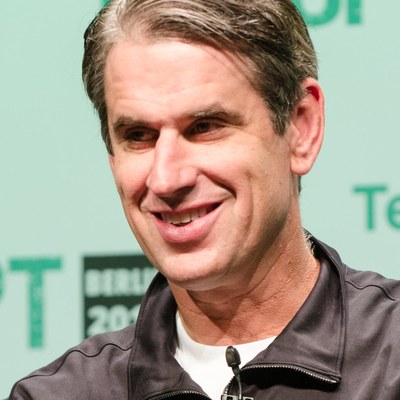 Bill Gurley
11
2 Jul 2019 – 24 Jan 2025
-744 d
Bill Gurley
11
2 Jul 2019 – 24 Jan 2025
-744 d
-
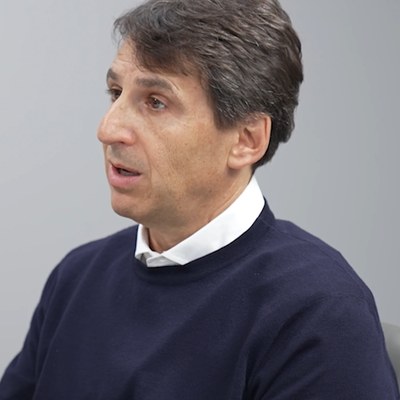 Marc Rowan
3
thin
15 Jul 2021 – 9 Apr 2025
+0 d
Marc Rowan
3
thin
15 Jul 2021 – 9 Apr 2025
+0 d
-
 David Friedberg
3
thin
9 Feb 2023 – 12 May 2026
+574 d
David Friedberg
3
thin
9 Feb 2023 – 12 May 2026
+574 d
-
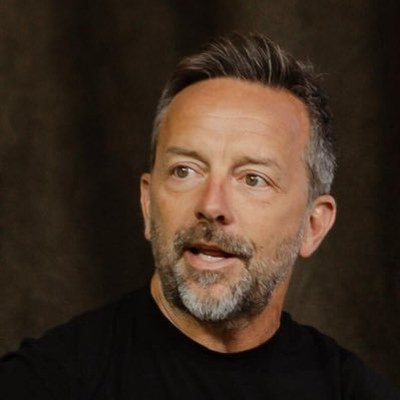 Brad Gerstner
2
thin
10 Jun 2024 – 10 Jun 2024
+1061 d
Brad Gerstner
2
thin
10 Jun 2024 – 10 Jun 2024
+1061 d
The chronologysourced and dated, oldest first
-
-
“Yeah, the flow of cash and the competition and how that money is being used.”
-
Bill Gurley
Gurley criticizes VCs who think cheap capital enables them to pursue low-return businesses in new industries.
“But I overheard a VC on a panel say that now that capital's become so cheap, we as venture capitalists get to go after all these new industries.”
-
Bill Gurley
Gurley argues that VCs using cheap capital to enter new industries are actually funding low-return businesses.
“I overheard a VC on a panel say that now that capital's become so cheap, we as venture capitalists get to go after all these new industries.”
-
Bill Gurley
Gurley mocked a VC who said cheap capital enables going after new industries, calling it flawed logic.
“I overheard a VC on a panel say that now that capital's become so cheap, we as venture capitalists get to go after all these new industries. And it really made me chuckle.”
-
Bill Gurley
Gurley argues that funding businesses because capital is cheap is equivalent to funding low-return businesses.
“The exact flip way of saying that is, I'm excited about funding low return businesses and I'm gonna go do it.”
-
-
-
Marc Rowan
Rowan forecasts Apollo's hybrid business will grow from $30 billion to $75-90 billion in five years.
“That's a $30,000,000,000 business. I think that business will be two and a half to three times its size in the next five years.”
-
-
-
David Friedberg
Friedberg argues private enterprises can allocate capital faster and smarter than government funding sources.
“I think it's about, you know, we we can aggregate more money through a central source, some federal grants or or what have you.”
-
-
-
David Friedberg
Friedberg argues too much capital flows into small software projects seeking quick 10x returns.
“And you could probably make 50,000,000 in return. That's a nice little 10 bagger. Great. Let's do that. And then let's plow a trillion dollars into that concept.”
-
Bill Gurley
Gurley says foundational model companies burning $100-200M yearly cannot possibly represent high quality capital allocation.
“100,000,000 a year? 200,000,000 a year? There's no way that's high quality capital allocation from my point of view.”
-
Bill Gurley
Gurley argues foundational AI model companies burning $100-200M annually represents poor capital allocation but may be unavoidable.
“100,000,000 a year? 200,000,000 a year? There's no way that's high quality capital allocation from my point of view. There's no chance. But maybe they don't have the alternative.”
-
Bill Gurley
Gurley calls foundational model companies' hundred-million-dollar annual burn rates poor capital allocation but possibly unavoidable competitive traps.
“200,000,000 a year? There's no way that's high quality capital allocation from my point of view. There's no chance. But maybe they don't have the alternative.”
-
Bill Gurley
Gurley notes four non-Microsoft coding copilot companies raised over $200M each despite being only 18 months old.
“There are four companies in the coding co pilot space that are not named Microsoft that have raised over $200,000,000 each. And we're just these companies are all of a year and a half old.”
-
Brad Gerstner
Gerstner warns excess capital distorts company behavior and makes efficiency difficult when all options can be funded.
“There is absolutely no doubt in my mind that excess capital distorts company behavior. Okay? And in particularly these early phases, it's very difficult.”
-
Brad Gerstner
Gerstner argues excess capital distorts company behavior and makes it difficult to stay efficient when all options can be funded.
“It's not impossible, but it's very difficult to stay fit and efficient when you have a buffet of all options sitting in front of you and you can fund all of them.”
-
Bill Gurley
Gurley says Meta may cut Reality Labs spending by 20 percent to reallocate billions toward AI development.
“Remember, Meta had allocated $20,000,000,000 a year to Reality Labs. And there was a report last week that they may, you know, tighten their belt on Reality Labs”
-
Marc Rowan
Rowan says Apollo's five-year plan does not assume returns on roughly $7 billion of capital available for deployment.
“The other is we have not assumed a return on roughly $7,000,000,000 of capital. We have a pretty rough framework given how much stock employees own.”
-
-
-
Bill Gurley
Gurley says late-stage investors force-feed capital to companies based on power law beliefs in unprecedented ways.
“It's it's it's just worse as it's ever been, where because you have these monolithic late stage players who believe in power laws, believe in network effects,”
-
Marc Rowan
Rowan grades the U.S. economy an A for capital allocation but a C for understanding trade's impact on labor.
“give us an a as an economy for allocation of capital and construction of assets, and give us a c for understanding trade and its impact on labor.”
-
-
-
David Friedberg
Friedberg states Koch reinvests 90% of profits in new businesses and growth as part of its operating model.
“Very unique operating model, which we'll get into today, including principles around disruptive innovation of the business, reinvesting 90% of profits in new businesses and growth, meritocratic values.”
-
Where they overlapsame programme, same subject
- Bill Gurley and Brad Gerstner — BG2 Pod, 1 appearance together