Who is on this subjectordered by the date of their first quote here
2 of 3 lanes rest on fewer than 5 quotes and are marked thin. Offsets are days from the middle first-quote date, 10 Jun 2025 — a date, and nothing else. It is not a claim about who reached a view first.
-
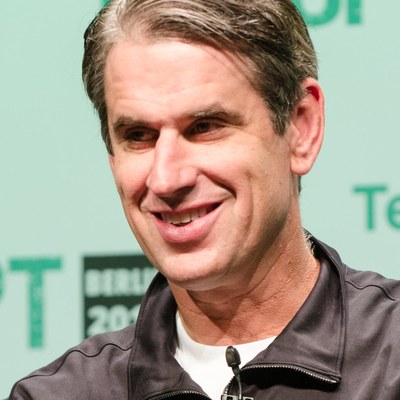 Bill Gurley
51
11 Dec 2012 – 15 Jul 2026
-4564 d
Bill Gurley
51
11 Dec 2012 – 15 Jul 2026
-4564 d
- Dylan Patel 1 thin 10 Jun 2025 – 10 Jun 2025 +0 d
-
 Gavin Baker
1
thin
8 Jul 2026 – 8 Jul 2026
+393 d
Gavin Baker
1
thin
8 Jul 2026 – 8 Jul 2026
+393 d
The chronologysourced and dated, oldest first
-
-
Bill Gurley
Gurley recounts Austin Ventures told him to work twenty years before entering venture, opposite of Benchmark's approach.
“And while I was there, I went and talked to some of the Austin Ventures partners and I said, I want to get into venture, what should I do?”
-
Bill Gurley
Gurley recounts being told to work twenty years before entering venture capital.
“I went and talked to some of the Austin Ventures partners and I said, I want to get into venture, what should I do?”
-
Bill Gurley
Gurley recounts Austin Ventures told him to work twenty years before entering venture capital.
“And while I was there, I went and talked to some of the Austin Ventures partners and I said, I want to get into venture, what should I do?”
-
-
-
Dylan Patel
Patel advises becoming a foremost expert in what you enjoy and reaching out to anyone online.
“Or try and talk to those people because one of the things I learned early on is you can talk to anyone on the Internet,”
-
-
-
Bill Gurley
Gurley reports survey finding that seven out of ten people would choose a different career.
“we asked a thousand people, if you could start your career over again, would you do something different? And seven out of 10 said yes.”
-
Bill Gurley
Gurley evaluated career paths by asking if he could see himself doing the job thirty years later.
“And you can look around the org and see the people that have been in that type of job that long and look at their life and just say, is that something I would enjoy?”
-
Bill Gurley
Gurley says regrets of inaction weigh on people's minds increasingly over time, unlike mistakes they forgive themselves for.
“But the thing we never did, the thing we always thought we should do that we didn't get to, those things weigh on our brain more and more and more as we get older.”
-
Bill Gurley
Gurley argues people in safe jobs they don't love are most vulnerable to AI disruption.
“I think a lot of the people that go through that college conveyor belt that are chasing a safe job that end up working as a widget or a cog in an industry they may not love, I think they are ripe for disruption.”
-
Bill Gurley
Gurley argues that being in an industry epicenter dramatically increases probability of lucky career events.
“In the epicenter, your probability of lucky events goes way up. Way up. And so, if you can do it, do it. There's this belief we all have that competition makes it too hard.”
-
Bill Gurley
Gurley describes venture firms telling him to work twenty years before reapplying as unexecutable.
“I couldn't find a way in. I I had a few informational interviews. They said, go work for twenty years and call me back, which I thought was not really an executable plan.”
-
Bill Gurley
Gurley advises being the most AI-enabled version of yourself using tractor versus donkey analogy.
“One, in any role in any field, be the most AI enabled version of yourself you can possibly be.”
-
Bill Gurley
Gurley advises being the most AI-enabled version of yourself in any field, citing tool evolution.
“in any role in any field, be the most AI enabled version of yourself you can possibly be. There's tons of anthropologists that have written about how we evolve with our tools.”
-
Bill Gurley
Gurley argues humans evolve with their tools, comparing AI adoption to a tractor versus plow competition.
“There's tons of anthropologists that have written about how we evolve with our tools, and you can just imagine a farming competition between a guy with a tractor and some drones and the other guys got a plow and a donkey. Who's gonna win? And you need to think about it that way.”
-
Bill Gurley
Gurley compares AI adoption to tractor versus donkey farming saying understanding AI better than peers prevents layoffs.
“you can just imagine a farming competition between a guy with a tractor and some drones and the other guys got a plow and a donkey.”
-
Bill Gurley
Gurley claims understanding AI's impact on your role better than peers protects you from layoffs.
“If there are 40 people in your org all doing the same thing and you understand how AI affects that role more than the rest of them, you're not getting laid off.”
-
Bill Gurley
Gurley developed a mental exercise asking himself if he saw himself in the same role thirty years later.
“I developed this mental exercise that I didn't realize I was doing, but at the time, but I said to myself, well, a couple years in, we started a third project, looked like the second project, looked like the first project.”
-
Bill Gurley
Gurley evaluated his Compaq career by asking if he wanted to be like the thirty-year engineers he saw.
“I said to myself, do I see myself here thirty years from now? And there were people in the building that had been engineers for thirty years, so I could, you know, I could I could get a perspective on it by just thinking, do I wanna be them?”
-
“Yeah. I mean, if I have one goal of this book, it's to be Uncle Richard for as many people as possible.”
-
Bill Gurley
Gurley recommends profiling field-defining figures to study what makes them great using available resources.
“Like if you're gonna go be a writer, you know, have a profile of Michael Lewis and Malcolm Gladwell and Krakauer and like study what makes them great.”
-
Bill Gurley
Gurley recommends creating profiles studying great practitioners in your field, saying there's never been better time to learn.
“Like, there's there's never been a better time in the history of the world to learn on your own time. Right. There's so much stuff out there.”
-
Bill Gurley
Gurley argues LLMs contain only existing best practices, so working on the industry edge provides AI protection.
“So if you somehow put yourself on the edge of the industry and are thinking about what's coming in the future, you're more future proof from this.”
-
Bill Gurley
Gurley advises running toward AI to understand its capabilities in your field provides protection and differentiation.
“Know exactly what AI can achieve in your field and be on the edge and the forefront of playing with it, and you will be remarkably differentiated.”
-
Bill Gurley
Gurley's survey found six to seven out of 10 college graduates would do their career differently if starting over.
“if you could start your career over again, would you do it differently? And in our original SurveyMonkey, seven out of 10 said yes. With Wharton, it was six out of 10.”
-
Bill Gurley
Gurley cites Daniel Pink finding humans dwell on boldness regrets, inactions they never tried.
“Daniel Pink in his book, The Power of Regret notes that humans dwell on regrets of inaction. He calls them boldness re regrets.”
-
Bill Gurley
Gurley contrasts humans easily forgiving action mistakes but struggling with things never tried.
“And the older you get, the more they weigh on you. Humans are fabulous at forgiving themselves for mistakes, kind of what you just walked through. Those are action mistakes.”
-
Bill Gurley
Gurley argues society steers people toward safe jobs that AI may make unsafe anyway over 80,000 working hours.
“And I fear that our society has been steering people towards quote safe jobs, which in a day of AI may not even be that safe anymore.”
-
Bill Gurley
Gurley argues that safe jobs are threatened by AI and fascination-based careers are actually safest now.
“I fear that our society has been steering people towards quote safe jobs, which in a day of AI may not even be that safe anymore.”
-
Bill Gurley
Gurley warns venture capital has massive oversupply of aspirants and being young alone won't make someone good.
“If you think like just being young will make you good at venture capital, that's wrong. But and it is a job that does not have a supply demand balance.”
-
Bill Gurley
Gurley says the continuum between safe jobs and creative passionate jobs has gone too far to one side.
“I think I think we the continuum between safe jobs and and and creative passionate jobs has has just gone too far to one side.”
-
Bill Gurley
Gurley argues moving to industry epicenters makes learning, mentoring, and finding peers dramatically easier.
“I would shorten it for this and say, all of the all of the previous principles we talked about get easier in the epicenter. Learning's easier. Mentoring's easier. Peers are easier.”
-
“I, I one day thought to myself, do I see myself doing this thirty years from now?”
-
Bill Gurley
Gurley describes woman who became top agent after discovering hundreds of support jobs surround individual talent roles in movies.
“There was a woman that all she could think about was movies, and she didn't see herself as an actress, so she went and got a normal degree and didn't ever consider it.”
-
Bill Gurley
Gurley argues that consulting, venture capital, and law offer breadth through exposure to multiple clients and industries.
“If you're a consultant, if you're a venture capitalist, if you're a lawyer, like you'll have clients across multiple, you know, places and you'll get to study more things.”
-
Bill Gurley
Gurley advises people may not find career fit until 30s or 40s and should check yearly.
“Some of these people didn't find their perfect fit until they're 30 or 40. And so get as many shots on goal.”
-
Bill Gurley
Gurley describes mental exercise asking if he sees himself doing current job thirty years from now.
“I had a mental exercise that I did in my first two stops in my career, where a couple of years in, said, Do I see myself doing this thirty years from now?”
-
Bill Gurley
Gurley argues society pushes people toward safe jobs from well-intentioned worry about economic stability.
“I think many of these parents and counselors are very well intentioned. I don't think they're out to make a mistake. A lot of them are worried about the economic stability of the child.”
-
Bill Gurley
Gurley says human relationships and strong peer and mentor networks will matter way more in AI era.
“A lot of people have a theory that I think is reasonable that human relationships will matter way more. So, do you have a strong peer network? Do you have a strong mentor network?”
-
Bill Gurley
Gurley argues high agency people studying the edge of their field are safer than those with rote algorithms.
“I think people that are high agency and fascinated are, they not only study the history of their field and all that, but they're constantly studying the edge of their field, which is a much safer place to be.”
-
Bill Gurley
Gurley says aging venture capitalists build mental models that create cynicism, causing them to miss disruptive innovations.
“I think, and this all goes back to the asymmetric optimism thing, as you get older, you build more mental models and you become more cynical.”
-
Bill Gurley
Gurley repeats MrBeast claim that fifth random person on four-year Skype calls would have become millionaire.
“And he said if a fifth person had been on those calls, they would have made a million dollars also. Regardless of who the individual was.”
-
Bill Gurley
Gurley describes Danny Meyer creating a list of ten impressive people in his field and keeping journals studying them.
“Danny created a list right when he decided to go do it of the 10 most impressive people in the restaurant industry at that moment in time, from his perspective, and started keeping a journal on each one of them and studying them from afar.”
-
Bill Gurley
Gurley recommends asking whether you want to do current job thirty years from now as career test.
“and I asked myself a question which I think anyone can use in any job you're in I said do I still want to be doing this thirty years from now and when I got when I asked myself that question it was a quick no”
-
“I asked myself a question which I think anyone can use in any job you're in I said do I still want to be doing this thirty years from now and when I got when I asked myself that question it was a quick no like a quick no and then I moved”
-
Bill Gurley
Gurley argues studying industry pioneers differentiates you and tests whether you're truly fascinated by the field.
“And one, I think you develop a really awesome bedrock for thinking about your industry and just knowing this history. It's a good test as to whether you're really fascinated by it”
-
Bill Gurley
Gurley advises seeking mentors two steps above you rather than shooting too high like CEOs.
“the person that's two steps above you on the ladder has never been asked to be a mentor, and that's probably your best place to start, and they'll be flattered that you ask.”
-
Bill Gurley
Gurley explains that when fascinated with something, learning gives energy rather than consuming it, creating unfair advantage.
“when you're fascinated with something, obsessive with something, the learning's free. And what I mean by free is it doesn't suck energy, it gives you energy.”
-
Bill Gurley
Gurley argues understanding the masters of your field is wildly differentiating in job interviews.
“Imagine you're interviewing for a job at P and G or Pepsi out of college, and there's 20 people there, and you're the one that understands the masters of marketing more than the others, and you're able to bring that up in the interview. Isn't that wildly differentiating?”
-
Bill Gurley
Gurley argues knowing the masters of your field would be wildly differentiating in job interviews.
“Imagine you're interviewing for a job at P and G or Pepsi out of college, and there's 20 people there, and you're the one that understands the masters of marketing more than the others, and you're able to bring that up in the interview.”
-
Gavin Baker
Baker argues investing is positive sum and people remember how you treat colleagues, not whether you were best in class.
“And people won't remember that you were the best. They'll remember how you treated the other people in your class.”
-
Bill Gurley
Gurley says when people are fascinated by something, others naturally connect them with opportunities.
“So if you knew someone who was just wouldn't stop chatting about modern architecture or whatever, and then you run into someone else and you go, oh, you should talk to Sally like this.”
-
Bill Gurley
Gurley argues that for proactive continuous learners, AI is a jetpack that enables them to achieve more faster.
“For that person, AI is a jetpack. Like they can now do more things faster than they wanted to do, and they can achieve more than they were able to before.”
-
Bill Gurley
Gurley says being the most AI-productive person in your field makes you indispensable and sought-after.
“And if you are the most AI productive human in your field, you're not getting fired. Like, you're you're the one they're asking all the questions of. Like, what's this capable of?”
-
Bill Gurley
Gurley argues that becoming the most AI-productive person in your field makes you indispensable and sought-after for expertise.
“And if you are the most AI productive human in your field, you're not getting fired. Like, you're you're the one they're asking all the questions of.”
-