Who is on this subjectordered by the date of their first quote here
4 of 12 lanes rest on fewer than 5 quotes and are marked thin. Offsets are days from the middle first-quote date, 23 Jun 2020 — a date, and nothing else. It is not a claim about who reached a view first.
-
 David Tepper
18
6 May 2018 – 18 Sep 2025
-779 d
David Tepper
18
6 May 2018 – 18 Sep 2025
-779 d
- Stanley Druckenmiller 1 thin 19 Dec 2019 – 19 Dec 2019 -187 d
-
 David Friedberg
17
19 Mar 2020 – 13 Aug 2026
-96 d
David Friedberg
17
19 Mar 2020 – 13 Aug 2026
-96 d
-
 David Sacks
20
21 May 2020 – 4 Sep 2026
-33 d
David Sacks
20
21 May 2020 – 4 Sep 2026
-33 d
-
 Sir Richard Dearlove
47
3 Jun 2020 – 16 Oct 2025
-20 d
Sir Richard Dearlove
47
3 Jun 2020 – 16 Oct 2025
-20 d
-
 Brad Gerstner
35
23 Jun 2020 – 15 May 2026
+0 d
Brad Gerstner
35
23 Jun 2020 – 15 May 2026
+0 d
-
 Bill Gurley
80
9 Jul 2021 – 21 Jul 2026
+381 d
Bill Gurley
80
9 Jul 2021 – 21 Jul 2026
+381 d
- Dylan Patel 55 2 Feb 2023 – 22 Jul 2026 +954 d
-
 Chamath Palihapitiya
5
13 Dec 2025 – 26 Jun 2026
+1999 d
Chamath Palihapitiya
5
13 Dec 2025 – 26 Jun 2026
+1999 d
-
 Jensen Huang
1
thin
16 Jun 2026 – 16 Jun 2026
+2184 d
Jensen Huang
1
thin
16 Jun 2026 – 16 Jun 2026
+2184 d
-
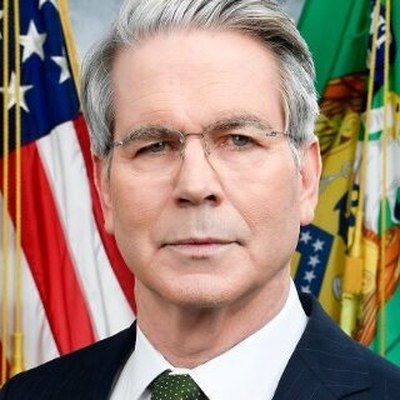 Scott Bessent
1
thin
20 Aug 2026 – 20 Aug 2026
+2249 d
Scott Bessent
1
thin
20 Aug 2026 – 20 Aug 2026
+2249 d
-
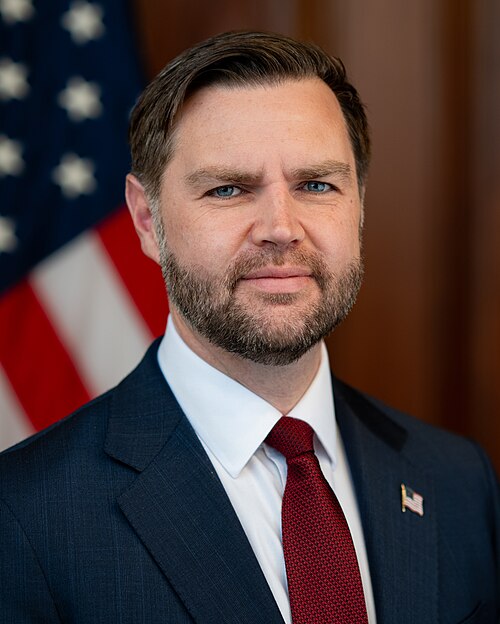 JD Vance
2
thin
25 Aug 2026 – 25 Aug 2026
+2254 d
JD Vance
2
thin
25 Aug 2026 – 25 Aug 2026
+2254 d
The chronologysourced and dated, oldest first
-
-
David Tepper
Tepper warns that tariff wars have historically led to real wars, making him nervous about the current path.
“And if you look at the history of of terrorists, they've resulted in, a lot of times, real wars. So I get a little nervous when you start down that path.”
-
-
-
“So 1,000,000,000 people have been lifted out of extreme poverty in the last twenty years. Why? Because obviously India and China adopted a free market model.”
-
-
-
David Friedberg
Friedberg says IgG antibody tests are mass-produced in China and used in Italy.
“Those IgG tests are being made en masse in China today. They're being shipped to countries like Italy where they are in fact being used on the front line.”
-
David Sacks
Sacks predicts China decoupling will become a bipartisan issue in the 2020 election.
“Decoupling from China is gonna be a bipartisan issue now. I think both candidates now will be well, Trump is gonna is gonna run blaming China for for what happened,”
-
David Sacks
Sacks argues the US should not depend on China for antibiotics, medicines, or PPE critical to survival.
“It doesn't really make sense for us to be dependent on China for our antibiotics, for our medicines, for our PPE, for any of these products that are important for national survival.”
-
David Friedberg
Friedberg says 112 million Chinese factory workers and purpose-built facilities make China hard to replace for U.S. production.
“Factories in China are purpose built. So they're built to make a thing, and then they gotta get retooled if you wanna make another thing.”
-
David Friedberg
Friedberg states 112 million Chinese factory workers in purpose-built facilities make replacing China as production source very difficult.
“It's very hard to kind of replace China as a source of production for a lot of what we consume in this country. That's the reality.”
-
Sir Richard Dearlove
Dearlove agrees with Trump's hard line on China, saying an international inquiry into the pandemic is needed.
“But I think there's a lot about his China policy that's right, because we need an explanation from the Chinese as to what happened. We need an international inquiry.”
-
Sir Richard Dearlove
Dearlove agrees with Trump's hard line on China, saying an international inquiry into the pandemic is needed.
“But I think there's a lot about his China policy that's right, because we need an explanation from the Chinese as to what happened. We need an international inquiry.”
-
Sir Richard Dearlove
Dearlove agrees with Trump's China policy and says an international explanation is needed for what happened.
“I think there's a lot about his China policy that's right, because we need an explanation from the Chinese as to what happened.”
-
Sir Richard Dearlove
Dearlove agrees with Trump's China policy and says an international explanation is needed for what happened.
“I think there's a lot about his China policy that's right, because we need an explanation from the Chinese as to what happened.”
-
Sir Richard Dearlove
Dearlove agrees with Trump's hard line on China and calls for international inquiry into pandemic origins.
“We need an international inquiry. And yes, I do, on this issue, agree with Trump's hard line, and I think we should support it.”
-
Sir Richard Dearlove
Dearlove criticizes George Osborne for being extremely uncritical in embracing the Chinese relationship.
“Personally pretty fed up with George Osborne. I think he was extremely uncritical in the way that he was willing to embrace the Chinese relationship.”
-
Sir Richard Dearlove
Dearlove predicts complete UK reassessment of China relationship after pandemic, warns against Chinese economic control.
“I think there will be a complete reassessment of this situation for The UK and for many other countries in the aftermath of the pandemic.”
-
Sir Richard Dearlove
Dearlove says Osborne didn't understand Communist Party leadership's disregard for law and human rights from his career experience.
“I don't think that George Osborne really understood what the leadership of a real Communist Party is like.”
-
Sir Richard Dearlove
Dearlove reveals British Telecom signed a deal with Huawei in 2001-2002 while he was MI6 chief.
“The problem is that British Telecom signed a deal back in 2001, 2002 actually, whilst I was chief with Huawei. And we became very much involved with this company and entangled with them.”
-
Sir Richard Dearlove
Dearlove says UK must halt Huawei involvement in 5G despite existing entanglement with the company.
“But just because they are, given, as it were, the importance of five gs in terms of our national infrastructure, I really think we have to call a halt and step back,”
-
Sir Richard Dearlove
Dearlove says China embedded in UK 5G is a serious security problem given Chinese intelligence nature.
“The fact is, if you understand the nature of Chinese leadership, Chinese intelligence, having China embedded in our five gs is a security problem, a serious one.”
-
Sir Richard Dearlove
Dearlove says China embedded in UK 5G is a serious security problem given Chinese intelligence nature.
“The fact is, if you understand the nature of Chinese leadership, Chinese intelligence, having China embedded in our five gs is a security problem, a serious one.”
-
Sir Richard Dearlove
Dearlove argues China entered WTO without proper restraints and the West is now suffering consequences.
“And we have allowed China so much rope that we are now suffering the consequences, and it's time to pull the rape in and to, as it were, tighten the way that we do business.”
-
Sir Richard Dearlove
Dearlove argues China entered WTO without proper restraints and the West is now suffering consequences.
“And we have allowed China so much rope that we are now suffering the consequences, and it's time to pull the rape in and to, as it were, tighten the way that we do business.”
-
Sir Richard Dearlove
Dearlove believes the pandemic started as an accident and China has not published true casualty figures.
“Absolutely. China itself has suffered hugely and probably more than we realize because they will have not published the true figures. I do think that this started as an accident.”
-
Sir Richard Dearlove
Dearlove believes the pandemic started as an accident and China has not published true casualty figures.
“Absolutely. China itself has suffered hugely and probably more than we realize because they will have not published the true figures. I do think that this started as an accident.”
-
Sir Richard Dearlove
Dearlove believes the pandemic started as an accident, not a deliberate Chinese act.
“I do think that this started as an accident. Okay, once it started, there are things about the Chinese behavior which are completely shocking, but there was nothing deliberate about the origins of it.”
-
Brad Gerstner
Gerstner notes Baidu lost 50% of value while other Chinese platforms multiplied due to WeChat and ByteDance.
“I mean, Baidu's worth 50% less today than it was six years ago. Notwithstanding the fact that all of the big internet platforms in China are worth multiples today of what they were five years ago because you had the rise of WeChat, you had the rise of ByteDance,”
-
Sir Richard Dearlove
Dearlove asserts that Chinese intelligence is driving some of China's positioning in science at leading universities.
“the Chinese have positioned themselves in crucial areas of science in all of our leading universities.”
-
Sir Richard Dearlove
Dearlove notes Ant's $34 billion flotation beat Aramco, illustrating Western-Chinese economic integration.
“two days ago, the Ant payment system, Jack Ma's company that controls massive payment system across the whole of China had a flotation and those of you who follow these things will be aware that it actually beat Aramco in terms of the value of the flotation, $34,000,000,000 was raised”
-
Sir Richard Dearlove
Dearlove notes Ant's $34 billion flotation beat Aramco, illustrating Western-Chinese economic integration.
“two days ago, the Ant payment system, Jack Ma's company that controls massive payment system across the whole of China had a flotation and those of you who follow these things will be aware that it actually beat Aramco in terms of the value of the flotation, $34,000,000,000 was raised”
-
Sir Richard Dearlove
Dearlove predicts US and China will negotiate a new global security system within five years.
“at some point in the next two, three, four, five years, I think The United States and China will sit down to work out how a new security system will, as it were, operate across the world to replace Pax Americana.”
-
Sir Richard Dearlove
Dearlove predicts US and China will negotiate a new global security system within five years.
“at some point in the next two, three, four, five years, I think The United States and China will sit down to work out how a new security system will, as it were, operate across the world to replace Pax Americana.”
-
Sir Richard Dearlove
Dearlove predicts US and China will establish a new security system within five years, replacing Pax Americana.
“So Pax Americana will become for those of you who are Latinists, Pax Americana et Sericana.”
-
-
-
Bill Gurley
Gurley speculates China may be blocking foreign IPOs to keep wealth inside China and taxed domestically.
“when these Chinese companies start with, a Bermuda entity and then go public on, an American stock exchange, that money's outside of China.”
-
Bill Gurley
Gurley speculates China blocks US listings to keep capital and tax revenue domestic rather than offshore.
“I wonder I and I don't have any data to back this up, but I wonder if part of what's going on is that the Chinese government wants to make sure that though that wealth is actually kept inside of China, taxed appropriately, and then able to be regenerative in that market.”
-
Bill Gurley
Gurley speculates Chinese government wants capital from tech companies kept and taxed domestically.
“I wonder if part of what's going on is that the Chinese government wants to make sure that though that wealth is actually kept inside of China, taxed appropriately, and then able to be regenerative in that market.”
-
-
-
Dylan Patel
Patel explains China can only buy A100-level GPUs from NVIDIA due to export controls, not H100s.
“Well, so NVIDIA made a special version of their a 100 GPU that can ship to China, and so that's that's pretty much it.”
-
Brad Gerstner
Gerstner says US TikTok is $3-4 billion of ByteDance's $120 billion revenue and loses money.
“It's also been leaked that in that TikTok is about 14,000,000,000 of that and that US TikTok is 3 to 4,000,000,000. US TikTok, 3 to 4,000,000,000 of 120, and it loses money.”
-
Dylan Patel
Patel says ASML projects China will grow from under ten percent to thirty percent chip manufacturing market share.
“Go from sub 10% market share in the chip industry to somewhere around 30% market share in the manufacturing industry, right?”
-
-
-
Brad Gerstner
Gerstner argues AI has become the leading edge of sovereign battles over trade and national security.
“AI, over the course of the last twelve months, has gone from an interesting technology to literally the leading edge of where we're battling with global sovereigns over trade, national security, national economic interest.”
-
Brad Gerstner
Gerstner states US nuclear deployment costs are limited by regulation, not technology, creating gap with China.
“our cost of deploying new nuclear fission infrastructure is limited by our own regulatory framework, not by the technology.”
-
Bill Gurley
Gurley argues autocratic China has a massive advantage over the U.S. by avoiding layered regulatory constraints.
“It's likely a massive advantage for China where a more autocratic government can just decide, okay, we're gonna start doing things a new way.”
-
Bill Gurley
Gurley says China has massive advantage clearing regulatory decks permanently while US only grants exceptions per project.
“This is where I think China has a massive advantage. They could just clear the decks for good for every project going forward. Whereas we're now making exceptions maybe with the TSMC plant in Arizona.”
-
Bill Gurley
Gurley urges people to watch China auto show videos to see competitive reality of innovation there.
“This is just deglobalization highly inflationary and will make our companies less competitive, not more.”
-
Bill Gurley
Gurley predicts restricting open source AI in US while leaving it available elsewhere will shift innovation abroad.
“if you pull up and say there's no open source here and you leave open source there, guess where it's going to be the most innovative, where where you're going to have the most entrepreneurs, where you're going to have the most innovation. It's gonna be over there,”
-
Bill Gurley
Gurley reports Chinese autonomous driving companies are three years behind Tesla, still catching up to FSD 11.
“She said, you know, they're still catching up to FSD 11. Now remember, FSD 11 was so they're like three years behind on full self driving.”
-
Bill Gurley
Gurley reports Chinese consumers show high willingness to adopt autonomous driving despite inferior technology.
“she said she had some really lousy experiences in the cars, but she was blown away at the Chinese consumers' willingness to adopt the technology.”
-
Brad Gerstner
Gerstner states China adds six to eight reactors yearly and will surpass US nuclear production by 2030.
“China who's adding six to eight new fission reactors per year, it's gonna add upwards of 25 or 30 over the course of the next, you know, five or six years, is expected to surpass The United States in nuclear power production by 2,030.”
-
Bill Gurley
Gurley says China builds nuclear plants at $2.5B per gigawatt versus $13B in the US.
“The plants in China that are the equivalent level three fission plants right now are coming on board at 2,500,000,000 per gigawatt. Right. So 13 to 2.5.”
-
Bill Gurley
Gurley finds industry insiders surprisingly unsurprised by China's 5x cost advantage in nuclear.
“Right. That's a shocking Delta. Yes. And one of, I would say the single most surprising thing to me of all the discussions I've had in the past two weeks with everyone that's in this industry is how few people are shocked by it.”
-
Brad Gerstner
Gerstner notes South Korea and China build reactors using US Westinghouse technology acquired through tech transfer licenses.
“both the South Koreans and the Chinese, right, are building on technology that they procured from The United States, from Westinghouse, under tech transfer licenses over the course of the past, you know, twenty or thirty years.”
-
Bill Gurley
Gurley argues anti-China attitudes are misguided as China is leading in infrastructure and cost efficiency.
“I think this anti Chinese mentality is a little nuts because if you look at low cost EVs, if you look at their subway stations, if you look at, they're leading us in many areas.”
-
Brad Gerstner
Gerstner warns low-cost power enables larger AI infrastructure, creating strategic risk if China leads nuclear.
“Because if you are the low cost power provider in the world, right, then you're going to be able to build bigger data centers that power bigger AI clusters, etcetera.”
-
Bill Gurley
Gurley urges US to respect China and Korea's superior execution and pursue Manhattan Project approach.
“And then two, consider some type of Manhattan project like approach where you get out of the current environment,”
-
David Friedberg
Friedberg cites 2021 Chinese research demonstrating chemical synthesis of starch from two molecules.
“Starch is amylose and amylopectin, two molecules. And the structure of how amylose and amylopectin are put together creates the difference between all the different kinds of starches we know.”
-
David Tepper
Tepper says Chinese central banker Pan Gongcheng exceeded expectations by promising to do more and more if needed.
“It's like, woah. Jovial saying we're gonna cut and we're gonna and we'll give you more. And he said, we'll do more and more if needed.”
-
David Tepper
Tepper emphasizes that China's commitment to do more is very strange language especially for Chinese central bankers.
“Now the Chinese to say we'll do more and more if needed, they don't say that because it's not been healthy to say those sort of things in China.”
-
David Tepper
Tepper emphasizes that China's commitment to do more is very strange language especially for Chinese central bankers.
“Now the Chinese to say we'll do more and more if needed, they don't say that because it's not been healthy to say those sort of things in China.”
-
David Tepper
Tepper says China's central bank exceeded expectations with unprecedented language about doing more stimulus.
“They exceeded expectations, and they promised to do more and more and more. Okay? And that's very strange language, especially for, you know, any central banker, but especially over there.”
-
David Tepper
Tepper says China is creating swap facilities to buy stocks as part of aggressive easing measures.
“And they're gonna be they're aggressive in how they're gonna do it, and they're they're also, believe this or not, swap facilities to buy stocks.”
-
David Tepper
Tepper notes China is lending money for stock buybacks with no-loss provisions, unprecedented for China.
“This is China. Alright? This is stock stock buybacks. Not only encouraging it, lending you money to do it.”
-
David Tepper
Tepper notes China is lending money for stock buybacks with no-loss provisions, unprecedented for China.
“This is China. Alright? This is stock stock buybacks. Not only encouraging it, lending you money to do it.”
-
David Tepper
Tepper describes China lending money for stock buybacks with no downside risk for borrowers.
“Not only encouraging it, lending you money to do it. And they're giving money like health money where you can put money out and you have no losses if you wanna do it.”
-
David Tepper
Tepper ranks investment regions as China first, then Asia broadly, then Europe, then Japan, then U.S.
“Right? Asia at large second. Okay. Japan, then Japan, you know, Korea, those markets. Also, Asia and Europe and Europe before Japan.”
-
David Tepper
Tepper says if China stimulates successfully and animal spirits return, Japan will be a major beneficiary.
“If you look what happens, if China runs and they get the economy going and you get the animal spirits going, what happens?”
-
David Tepper
Tepper says if China stimulates successfully and animal spirits return, Japan will be a major beneficiary.
“If you look what happens, if China runs and they get the economy going and you get the animal spirits going, what happens?”
-
Brad Gerstner
Gerstner contrasts China building 350 nuclear reactors versus zero in the US.
“there are 350 nuclear reactors under fission reactors under construction in China. How many in The US?”
-
Dylan Patel
Patel says China still receives over a million NVIDIA H20 GPUs annually despite October sanctions.
“Right? Because you have you have sanctions on how many NVIDIA GPUs you can get in. Now, they're still north of a million a year.”
-
Dylan Patel
Patel suggests China could centralize all GPUs under one entity if Xi Jinping becomes scale-pilled, avoiding US data center constraints.
“If you're Xi Jinping and you're scale pilled, do you just say x y z company is now in charge Yeah. And every GPU goes to one place.”
-
Dylan Patel
Patel claims China could build a gigawatt data center in six months near Three Gorges Dam due to power infrastructure.
“China could just build it in six months, I think, around the 3 Gorges Dam or many other places. Right? Because they have they have the ability to do the substations.”
-
Dylan Patel
Patel claims China could build a gigawatt data center in six months near the Three Gorges Dam but hasn't.
“China could just build it in six months, I think, around the 3 Gorges Dam or many other places. Right?”
-
Dylan Patel
Patel says China could centralize over a million NVIDIA H20 chips into one data center if scale-pilled.
“they can centralize the chips like crazy. Right now, oh, oh, million chips that NVIDIA shipping in q three and q four, the h twenty, let's just put them all in this one data center.”
-
Dylan Patel
Patel asserts chip export controls to China are working effectively despite smuggling through third countries.
“The chip side of things is actually being controlled quite effectively, I think. Right? Like, yes, there is, like, shipping GPUs through Singapore and Malaysia and and other countries in Asia to China.”
-
Dylan Patel
Patel argues US export controls are counterproductive because China can now build better chips domestically than what's allowed for export.
“They can build better chips in China, then we restrict them in terms of chips that NVIDIA or AMD or an Intel can sell to China.”
-
Dylan Patel
Patel argues current export controls are flawed because China can build better chips domestically than what West can sell them.
“the equipment that is shipped can be used to build chips that are better than what the Western companies can actually ship them. John, Dylan seems to think the”
-
Dylan Patel
Patel claims China could match individual US labs in compute by 2025-26 through centralization alone using foreign chips.
“China can be centralized enough to compete with each individual US lab. They could have just as many flops in '25 and '26 if they decided they were scale built. Right? Just from foreign chips”
-
Dylan Patel
Patel says China could build a bigger model than any US lab next year using 600,000 domestic Ascend chips.
“You know? So so if they put them all in one cluster, they could have a bigger model than any of the labs next year.”
-
“if they put them all in one cluster, they could have a bigger model than any of the labs next year. Right?”
-
Dylan Patel
Patel says China could train a bigger model than US labs next year if they centralize 600,000 Ascend chips.
“they could have a bigger model than any of the labs next year. Right? I I have no clue where, oh, the Sen nine ten b's are going.”
-
Dylan Patel
Patel says SMIC's Shanghai fab has 45 to 50 high-end lithography tools enabling 60,000 wafers monthly at seven nanometer.
“Shanghai has anywhere from 45 to 50 high end immersion lithography tools is is what's like believed by intelligence as well as like many other folks.”
-
Dylan Patel
Patel argues Western power grid supply chains have not expanded in decades unlike China, India, and Indonesia.
“The Japanese power grid has been like this. The Korean power grid has been like Only China and India and Indonesia, their power grids have been growing really fast.”
-
Bill Gurley
Gurley says China graduates 35% STEM versus below 10% in US, giving China the pieces needed to compete.
“while we are, like removing advanced STEM courses in California, the number of graduates in China's university system that are STEM is 35%, and that number is below 10 in The US.”
-
Bill Gurley
Gurley says China graduates 35% STEM versus below 10% in US, giving them necessary advantages.
“the number of graduates in China's university system that are STEM is 35%, and that number is below 10 in The US.”
-
Bill Gurley
Gurley argues blocking technology exports to China is not working and US needs to face reality.
“And I don't think blocking ASML or blocking AI technology or blocking anything is working. It's just not working.”
-
-
-
Bill Gurley
Gurley calls anti-Chinese sentiment irrational given China's lead in EVs and infrastructure while America maintains false superiority.
“I think this anti Chinese mentality is a little nuts because if you look at low cost EVs, if you look at their subway stations, if you look at, they're leading us in many areas.”
-
Bill Gurley
Gurley criticizes anti-Chinese sentiment, arguing China leads in EVs and infrastructure while America has holier-than-thou attitude.
“And we have this holier than thou attitude that America is the best and that we're the leader and we're being passed.”
-
Dylan Patel
Patel says Malaysia will add three gigawatts of data center capacity by 2027, mostly Chinese companies claiming to be Singaporean.
“Malaysia from 2024 to 2027, not the country itself, but companies operating there, mostly Chinese companies, many of them claiming they're now Singaporean companies. Right?”
-
Dylan Patel
Patel says Chinese data center companies are building three gigawatts in Malaysia by 2027, claiming Singaporean status.
“Like, the largest operator in China of data centers in China, GDS, moved to Singapore and says they're Singaporean now. It's like but now they're these companies are building three gigawatts of data center capacity.”
-
David Sacks
Sacks says people would have been surprised a Chinese company released the second reasoning model after OpenAI.
“if you had said to people a few weeks ago that the second company to release a reasoning model along the lines of o one would be a Chinese company, I think people would have been surprised by that.”
-
David Sacks
Sacks says DeepSeek moved perceptions of China's AI lag from six-to-twelve months to three-to-six months.
“if you had asked most people in the industry a few weeks ago how far behind is China on AI models, they would say six to twelve months.”
-
David Sacks
Sacks argues open-sourcing makes strategic sense for DeepSeek as a Chinese company trying to catch up.
“And so if you're if you're behind and you're trying to catch up, then open source is a strategy that actually really makes sense for you.”
-
Dylan Patel
Patel argues export controls primarily limit AI inference deployment in China, not frontier model training capabilities.
“A large part of export controls, if they work, is just that the amount of AI that can be run-in China is going to be much lower.”
-
Dylan Patel
Patel argues export controls aim to limit AI usage scale in China, not prevent AGI development.
“And I think that is a much easier goal to achieve than trying to debate on what AGI is.”
-
Bill Gurley
Gurley notes Chinese companies are among the leading donors to major open source projects like Linux.
“If you look at all of the major projects like Linux or MySQL, and most of these open source projects have a website and you can see who the leading donors are.”
-
Bill Gurley
Gurley cites China held 33% of global GDP in 1820 before Mao's isolation reduced it dramatically.
“in 1820, China's economy was wide open, and they actually, had 33% of the global economy. 33% of global GDP was China.”
-
Bill Gurley
Gurley states China's GDP share fell from 33% to 5% after Mao closed the economy.
“at the end of Mao's reign, and Mao had raised the wall and and kind of turned China inwards, they had fallen to 5% of global GDP.”
-
Dylan Patel
Patel reports ASML had 45% of equipment and more of revenue from China despite export controls.
“On equipment though, last year ASML, many quarters they've had 45% of their equipment and even more of their revenue come from China.”
-
Dylan Patel
Patel reports ASML had 45% of equipment and more of revenue from China despite export controls.
“On equipment though, last year ASML, many quarters they've had 45% of their equipment and even more of their revenue come from China. And likewise for ASML, Lam Research and all these companies, right?”
-
Dylan Patel
Patel challenges DeepSeek's GPU count claims, citing job ads promising tens of thousands of GPUs.
“The estimates that we have is, so first of all, ads in China, they say they have tens of thousands of GPUs for researchers, right?”
-
Dylan Patel
Patel reports China imported one million H20 GPUs in recent quarters, enough for largest cluster.
“Just in Q3, Q4 and the early part of Q1 this year, they imported a million H20s, Right?”
-
Dylan Patel
Patel says China imported one million H20 GPUs in recent quarters, enough to build largest cluster.
“This is more than enough if they even took 30 of it, concentrated it, to be a bigger cluster than any American company has.”
-
Dylan Patel
Patel argues the surprise was a Chinese company achieving this cost reduction, not the reduction itself.
“I think what was really surprising was that it was a Chinese company for the first time. Right? Because Google and and OpenAI and Anthropic and Meta have all traded blows.”
-
Dylan Patel
Patel says DeepSeek's cost efficiency follows the expected trend line, just from an unexpected source.
“It's not unexpected. Right? Like, this is actually within the trend line of what happened with GPT three is happening to GPT four level quality with DeepSeq.”
-
Bill Gurley
Gurley warns US policies were creating America-only AI versus China AI dominating rest of world, reversing internet patterns.
“Bingo. And I think had we continued on that path or if we go back towards that path, because I don't think this is over.”
-
Bill Gurley
Gurley claims many VCs have become China hawks because they need that stance to justify their military-tech investments.
“And I will tell you after spending twenty five years in venture capital, there's just this instinctive thing.”
-
Bill Gurley
Gurley argues VCs in military-focused companies become China Hawks to justify their investments and defend portfolio companies.
“And I think that's happening now that we have a large number of VCs in the military space.”
-
Brad Gerstner
Gerstner recalculated tariffs from original $800 billion estimate on Liberation Day to new figure.
“So remember, I came on here on liberation day, and I held up the list of tariffs that that that were on the poster board that Trump showed.”
-
Brad Gerstner
Gerstner recalculates tariffs at $300 billion under new framework versus $77 billion last year.
“And if you put China at 30% on strategic, at 15% on nonstrategic, and the rest of the world roughly at 10%, you come up with about 300,000,000,000 in tariffs.”
-
Brad Gerstner
Gerstner estimates NVIDIA lost track to $50 billion China business from chip export ban.
“I think if you forecast out two or three years, they were on track to be a $50,000,000,000 business, I think in China.”
-
Bill Gurley
Gurley notes China now has four deep-pocketed open source AI models including Baidu's upcoming release, creating competitive innovation advantage.
“this will be the fourth deep pocket funded model in China that are all open source. And when you consider I mean, this is a competitive dynamic, right, that leads to that.”
-
Bill Gurley
Gurley clarifies Manus operates exclusively on US models, has no foundational model, and never used Chinese models like DeepSeek.
“first of all, they've only operated on US models. They're a wrapper company. They don't have a foundational model and and they've only operated on top of US models.”
-
Brad Gerstner
Gerstner reports Saudi minister said Huawei went from 0% to 40% market share, nearly winning full adoption.
“One of the ministers in Saudi Arabia said to me that Huawei had gone from 0% market share to 40% market share and they were months away from making the decision to go with the Huawei stack right? Because they can't be left behind.”
-
Brad Gerstner
Gerstner reports Saudi minister said Huawei went from 0% to 40% market share, nearly winning the contract.
“One of the ministers in Saudi Arabia said to me that Huawei had gone from 0% market share to 40% market share and they were months away from making the decision to go with the Huawei stack right? Because they can't be left behind. They have to do something.”
-
Brad Gerstner
Gerstner argues NVIDIA's $40 billion China business keeps them on CUDA and export bans risk forcing Taiwan conflict.
“It's $40,000,000,000 business NVIDIA in China to keep them on the CUDA ecosystem rather than allowing them to have a monopoly on the Huawei ecosystem.”
-
Bill Gurley
Gurley explains China ensures 500 to 1000 competitors in target industries, letting markets select winners rather than state sponsorship.
“what I really uncovered the detail on is that in these industries where they wanna succeed, they actually make sure that there are 500 competitors or a thousand competitors.”
-
Bill Gurley
Gurley says China ensures 500 to 1000 competitors in target industries, letting markets select winners rather than state sponsorship.
“in these industries where they wanna succeed, they actually make sure that there are 500 competitors or a thousand competitors. And then they let the market whittle down to what the best one is.”
-
Bill Gurley
Gurley notes Chinese solid-state LiDAR costs $130 per car versus Waymo's $5,000, a result of competitive optionality.
“And it's actually in China right now is, I think being priced at like $130 a car, this solid state MEMS LiDAR, whereas the Waymo LiDAR is like $5,000 a car.”
-
Bill Gurley
Gurley cites research showing over 500 Chinese EV startups compared to four legitimate US ones.
“And I, you know, I think the data suggest in this this piece of research would suggest that's why they've been so successful in EVs where there were over 500 EV startups,”
-
Bill Gurley
Gurley contrasts China's 500 EV startups with only four legitimate ones in the United States.
“in EVs where there were over 500 EV startups, 500 in The US. What has there been? Four legitimate ones?”
-
Bill Gurley
Gurley argues Chinese government deprioritizes market cap, citing BYD's recent 30% price cut as evidence of different objectives.
“The the Chinese government may not consider that part of the objective function of what a win is. And in the past three weeks, we saw BYD take prices down 30%.”
-
Bill Gurley
Gurley argues Chinese government may not prioritize market cap as a win, citing BYD's recent 30% price cut.
“the Chinese government may not consider that part of the objective function of what a win is. And in the past three weeks, we saw BYD take prices down 30%.”
-
Bill Gurley
Gurley notes 50% of AI researchers are Chinese-origin and China now leads in AI patents, questioning immigration restrictions.
“some people say 50% of AI researchers are of Chinese origin. And I believe now the patent count in AI coming out of China is larger than The US.”
-
Brad Gerstner
Gerstner cites study showing 40-50% of top US AI researchers are Chinese.
“I saw a study that suggested that 40 to 50% of the AI researchers in The United States, our best researchers are Chinese.”
-
Brad Gerstner
Gerstner proposes trading AI chip access to China for rare earth materials access.
“On point three, it gets us right? If we do this trade, and I don't know that China would do this trade, but if we did this trade, then it would get us access to those rare earths right now, which is absolutely critical, and it buys us time to stand up our own rare earth supply.”
-
Brad Gerstner
Gerstner warns chip export ban increases risk China invades Taiwan over existential AI needs.
“If we keep the chip ban in place, here's my biggest concern. I think it dramatically increases the chances that China is forced to move on Taiwan.”
-
Brad Gerstner
Gerstner warns chip ban increases risk China moves on Taiwan given AGI timeline claims.
“I think it dramatically increases the chances that China is forced to move on Taiwan. Right? We're out there telling everybody in the world that AI is totally existential.”
-
Bill Gurley
Gurley notes DeepSeek triggered Alibaba and Xiaomi releasing open source models, with Baidu announcing June open source release.
“What happened in China, however, is Alibaba made Twin open source. Xiaomi has a model out now.”
-
Bill Gurley
Gurley predicts four deep-pocketed Chinese open-source AI models will create massive experimentation advantage over US.
“And so that level of competition, if it leads to four deep pocketed all open products is gonna be ultra powerful.”
-
Sir Richard Dearlove
Dearlove states China builds more naval tonnage annually than the entire Royal Navy in fifteen to eighteen months.
“Chinese navy is building more tonnage in a year to eighteen months each year than composes the whole of the Royal Navy. That's the speed of its expansion.”
-
Sir Richard Dearlove
Dearlove states China's navy builds more tonnage annually than the entire Royal Navy in twelve to eighteen months.
“Chinese navy is building more tonnage in a year to eighteen months each year than composes the whole of the Royal Navy.”
-
Sir Richard Dearlove
Dearlove reveals intelligence community objected to BT's original China deal but was overruled by policymakers.
“Now at the time that that deal was signed there were strong objections from people like me in the intelligence community. We were totally overruled.”
-
Sir Richard Dearlove
Dearlove argues any Chinese corporation is ultimately controlled by the Communist Party and must obey in crisis.
“The fact is you cannot get around the security problem that any Chinese corporation is ultimately under the control of the Chinese Communist Party. If in a crisis they are told to jump.”
-
Sir Richard Dearlove
Dearlove asserts any Chinese corporation is ultimately under Chinese Communist Party control.
“The fact is you cannot get around the security problem that any Chinese corporation is ultimately under the control of the Chinese Communist Party.”
-
Sir Richard Dearlove
Dearlove warns Chinese cars have cellular modules that could be reprogrammed remotely to immobilize vehicles in a crisis.
“Because in every Chinese car there is a cellular module which is connected to the internet of things and that car in a crisis can be reprogrammed by the manufacturer in China.”
-
Sir Richard Dearlove
Dearlove warns Chinese cars have cellular modules that could be reprogrammed remotely to immobilize vehicles in a crisis.
“Because in every Chinese car there is a cellular module which is connected to the internet of things and that car in a crisis can be reprogrammed by the manufacturer in China.”
-
Sir Richard Dearlove
Dearlove warns Chinese cars can be remotely immobilized from Beijing, potentially paralyzing UK cities in crisis.
“that car in a crisis can be reprogrammed by the manufacturer in China. And you can find your Chinese car, 40 of them, let's say around London immobilized.”
-
Sir Richard Dearlove
Dearlove warns Chinese cars can be remotely immobilized from Beijing, potentially paralyzing UK cities in crisis.
“that car in a crisis can be reprogrammed by the manufacturer in China. And you can find your Chinese car, 40 of them, let's say around London immobilized.”
-
Sir Richard Dearlove
Dearlove warns China could immobilize Chinese cars remotely and bring UK cities to a halt in a crisis.
“Chinese could bring in a crisis UK city to a grinding halt, bang, with a flick of a switch in Beijing.”
-
Sir Richard Dearlove
Dearlove says Chinese-made renewable energy equipment with cellular modules could be remotely disabled from China.
“A lot of our renewable sources of energy are Chinese manufactured with cellular modules in them that can be reprogrammed from China. You could knock out the whole of a North Sea wind farm, bang.”
-
Sir Richard Dearlove
Dearlove says Chinese-made renewable energy equipment with cellular modules could be remotely disabled from China.
“A lot of our renewable sources of energy are Chinese manufactured with cellular modules in them that can be reprogrammed from China. You could knock out the whole of a North Sea wind farm, bang.”
-
Brad Gerstner
Gerstner reports Huawei went from 0% to 50% market share in Saudi Arabia.
“when I was in Saudi Arabia, right, Huawei has gone from 0% market share in Saudi Arabia to 50% market share in Saudi Arabia.”
-
Brad Gerstner
Gerstner says NVIDIA had 80% China market share with developers in CUDA ecosystem, generating billions in US taxes.
“NVIDIA has you know, it went from 80% market share in China where all the developers, second largest developer market in the world, were were developing in CUDA.”
-
Dylan Patel
Patel asserts America cannot manufacture robots and Germany/Japan are losing capabilities to China.
“Germany and and Japan are losing a lot of their capabilities to do so slash the cost of their robots are just way, way, way higher than what China can do.”
-
Dylan Patel
Patel states that Japan, USA, Korea, and Germany combined deploy only a third of China's robots in 2023.
“You fast forward to 2023, and all four of these countries combined, right, are still a third of China's robot deployments.”
-
Dylan Patel
Patel notes that as recently as 2022, most of China's robots were imported from Japan and Germany.
“And so even as near as twenty twenty two, the majority of China's robots were being imported. Right? Japan and Germany being the largest market share players,”
-
Dylan Patel
Patel notes China was importing majority of robots as recently as 2022 from Japan and Germany.
“even as near as twenty twenty two, the majority of China's robots were being imported. Right? Japan and Germany being the largest market share players, but also USA, Korea is also in there.”
-
Dylan Patel
Patel notes that as recently as 2022, China imported the majority of its robots from Japan and Germany.
“even as near as twenty twenty two, the majority of China's robots were being imported. Right? Japan and Germany being the largest market share players,”
-
Dylan Patel
Patel forecasts that 70% of robots deployed in China in 2025 will be domestically manufactured Chinese robots.
“'24, it's, it's rapidly growing Chinese share. And '25 is it looks clear, like, the the market shares is, you know, gonna be 60 is gonna be, like, 70% Chinese robots for China's domestic usage.”
-
Dylan Patel
Patel reveals that China purchased two top German robotics companies and transferred their servo and actuator production to China.
“Two of Germany's best robotics companies were actually purchased by China, And a lot of their, servos and actuator construction was actually transferred to China.”
-
Dylan Patel
Patel explains Chinese companies use cost-plus pricing instead of price-to-value, avoiding margin expansion despite market dominance.
“Whereas Chinese companies are almost all cost plus. They're not price to value. They're cost plus. Right?”
-
Dylan Patel
Patel contrasts Western price-to-value strategy with Chinese cost-plus pricing model in manufacturing.
“Whereas Chinese companies are almost all cost plus. They're not price to value. They're cost plus. Right? And so you've got this interesting phenomenon where,”
-
Dylan Patel
Patel explains Chinese manufacturers use cost-plus pricing rather than value-based pricing across industries.
“They're not price to value. They're cost plus. Right? And so you've got this interesting phenomenon where, there are industries in China where the entire world relies on it.”
-
Dylan Patel
Patel describes Chinese manufacturers as locked in constant cost reduction cycle rather than margin expansion.
“there's this constant pressure cooker of continual cost reductions and engineering. It's not like, Oh, well, we make 80% margins. Our cost is low.”
-
Dylan Patel
Patel notes many Chinese companies dominating global markets have flat or declining stock prices.
“there's so many companies on the Hangshan, the Hangshan, which is a stock market in China, right, whose stock has literally been flat or down despite the fact that they own the global market.”
-
Dylan Patel
Patel predicts China will stop open sourcing AI models once ahead and closed source will ultimately win.
“China's open sourcing stuff only because they're behind the moment they're ahead, they will stop open sourcing stuff. And at the end of the day, closed source will win. Unfortunately, closed source will win.”
-
Brad Gerstner
Gerstner notes Alibaba's Qwen model has passed 400 million downloads under Apache 2.0 license.
“Of course, that's released like these other models under the Apache 2.0 open source license, so very open, as Bill's talked about.”
-
Bill Gurley
Gurley notes Zippu raised $1.4 billion and appeared on OpenRouter leaderboards, illustrating rapid Chinese AI emergence.
“I go on PitchBook and I look it up and they've already raised $1,400,000,000. So shouldn't have been a secret, but I didn't know about it, you know.”
-
Bill Gurley
Gurley argues seven to eight deep-pocketed Chinese open-source models can distill each other to accelerate improvement.
“I think there may be seven or eight dig pocketed players with open models in China, they all learn from each other extremely fast.”
-
Bill Gurley
Gurley introduces farming analogy to explain competitive dynamics between open and closed innovation communities.
“I came up with a little analogy for people. I'll try and do it quickly, but imagine you had two communities. They're both farming communities and let's say there's 10 to 20 farms in each.”
-
Bill Gurley
Gurley says Mistral should be distilling Chinese models right now if they want to compete.
“I do expect to see that. And if I'm the Mistral team, if you're not distilling on these Chinese models, I don't know what you're doing right now.”
-
Brad Gerstner
Gerstner predicts president wants biggest-ever China deal and is not ideologically rigid on China.
“I think this president wants to do the biggest deal ever done with China. I don't think he's dogmatic at all. I don't think he's some big China hawk.”
-
Brad Gerstner
Gerstner predicts Trump will pursue the biggest-ever China deal, calling himself a deal junkie at AI summit.
“He said at the AI summit last week, I'm a deal junkie. I like to do deals. You can't be the biggest deal maker in the world without doing a big deal with China.”
-
Brad Gerstner
Gerstner forecasts major China deal after Trump visit planned for September through November timeframe.
“They've invited the president to China. The president has suggested he's going to go to China the first week of September, sometime between September and November.”
-
Brad Gerstner
Gerstner quotes Trump proposing to cut defense budgets in half for US, China, and Russia.
“He said, You know, if I could wave a magic wand, I would cut the defense budget in half for The United States, for China, and for Russia.”
-
Brad Gerstner
Gerstner predicts a major US-China deal will be completed before end of 2025.
“I think that there's gonna be a big Chinese deal done before the year's out.”
-
“But, like, you know, can you give them no GPUs? No. They're gonna retaliate. Like, there is a middle ground, and, like, Huawei is eventually going to have a lot of production capacity,”
-
Brad Gerstner
Gerstner believes there's over 50% probability NVIDIA can sell Blackwell chips in China, a $50 billion market.
“China is a $50,000,000,000 market for NVIDIA unto itself. So I believe that the probability they're gonna be able to sell chips China is north of 50%.”
-
Brad Gerstner
Gerstner contrasts Google's unrestricted global expansion with current AI restrictions, wants same for AI companies.
“They just went and competed around the world, and now the world runs on the democratic principles that are embedded within Google. I wanna see the same thing happen in the age of AI.”
-
Brad Gerstner
Gerstner cites Jensen Huang saying half of world's AI researchers are in China and innovating.
“Jensen Huang reminded us recently that 50% of the world's AI researchers are in China, and they're indeed innovating and not copying.”
-
Bill Gurley
Gurley reports Chinese founders and VCs study Western podcasts and speeches exhaustively while West ignores China.
“over lunch, this individual told me, you know, every founder and every VC in China studies the West at a nauseating level. So they listen to all the podcasts.”
-
Bill Gurley
Gurley says Chinese study Western financials and speeches but West does not reciprocate for China.
“Possibly can. They study any speech. They look at the financials. And he said, the West doesn't do that of China.”
-
Bill Gurley
Gurley reports Xiaomi factory produces thousand cars daily with 2,000 employees versus six per car in US.
“The factory makes a thousand cars a day with 2,000 employees. It was highly automated, like really highly automated.”
-
Bill Gurley
Gurley quotes Ford CEO Farley saying Chinese vehicle cost and quality far superior, losing competition means no future.
“And he says even beyond that, their cost, their quality of vehicles is far superior to what I see in the West. We are in a global competition with China, and it's not just EVs.”
-
Brad Gerstner
Gerstner notes US is only 14% of China's exports and 3% of China's GDP.
“The US only represents about 14% of China's exports. The US only represents about 3% of China's GDP.”
-
Bill Gurley
Gurley reports BYD executive challenges claims of Chinese subsidies, says they receive nothing as public company.
“We're we're a public company. Come show me the money I'm getting from the government. She's like, say, I'm getting nothing.”
-
Bill Gurley
Gurley found only four of 24 CCP select committee members have visited China, last trips seven years ago.
“I did a deep dive on on your favorite product chat, GBT, $300 version deep research, and on the 24 members of the select committee for the CCP.”
-
Bill Gurley
Gurley finds only four of 24 members on China committee have visited China, last time seven years ago.
“And I think all but four have never been to China. Right. And the ones that went, it was seven years ago.”
-
Brad Gerstner
Gerstner warns believing China only wins through theft or subsidies prevents US self-improvement.
“if we have this view that the only reason China's competitive or winning is because they're they're stealing or they're subsidized, I think what that view does is it allows us to dilute ourselves into believing we don't need to get better ourselves.”
-
Brad Gerstner
Gerstner argues focusing on slowing China distracts from accelerating US competitiveness.
“And I think by if we focus too much on how do we slow down China, we take the eye off the ball on how to accelerate our own race.”
-
David Tepper
Tepper says Alibaba is up significantly and Appaloosa is having a pretty good year.
“I mean, like Alibaba's up a lot, so it worked pretty well. So, I mean, we're having a pretty good year.”
-
David Tepper
Tepper calls 25% or 50% tariffs destructive, drawing a line above 10% levels.
“I don't love the the 25% or the 50% tariffs. I think they're a little bit destructive.”
-
David Tepper
Tepper says Chinese stocks trade at low teens multiples versus US, making them relatively interesting.
“I mean, I think the move has been good, the earnings unlike here are still relatively low. I mean, you're, you know, you're talking, you know, low teens versus where we are.”
-
David Tepper
Tepper says China valuations are low teens multiples compared to US market levels.
“the earnings unlike here are still relatively low. I mean, you're, you know, you're talking, you know, low teens versus where we are.”
-
David Tepper
Tepper says US rate cuts enable China to ease, making Chinese assets more attractive.
“our easing is a big deal for them because it gives them more room to ease. So that would be the other reason. Our easing is their easing.”
-
David Tepper
Tepper estimates China has $7 trillion in excess savings that haven't been spent or invested.
“They haven't invested it. I mean, they're huge. I mean, they're we looked at the other day, don't know if it's true or not, like $7,000,000,000,000 of excess saving”
-
Dylan Patel
Patel estimates NVIDIA had north of $20 billion in China H20 revenue that had to be written off after ban.
“Our our revenue estimate for NVIDIA in China for just h 20 was north of 20,000,000,000 because that's what they were booking in capacity slash had to write off.”
-
Dylan Patel
Patel estimates NVIDIA had over $20 billion in H20 China revenue booked before ban and write-off.
“Our our revenue estimate for NVIDIA in China for just h 20 was north of 20,000,000,000 because that's what they were booking in capacity slash had to write off. Yeah. And then it got banned.”
-
Dylan Patel
Patel says China increased lithography imports to 40% of equipment spending to stockpile before bans took effect.
“They were importing lithography at a much higher rate than that. Right? Like, 40% of their equipment imports were lithography, and they were stockpiling lithography equipment.”
-
Sir Richard Dearlove
Dearlove says Palantir's intellectual property must be massive interest to Russia and China.
“your intellectual property must be a massive interest to the Russians and the Chinese. So you almost need, you know, a sort of protective organization.”
-
Sir Richard Dearlove
Dearlove says Palantir's intellectual property must be of massive interest to Russians and Chinese, requiring protective organization.
“But for example, your intellectual property must be of massive interest to the Russians and the Chinese. So you almost need a sort of protective organization.”
-
Sir Richard Dearlove
Dearlove states that Palantir's intellectual property must be of massive interest to Russians and Chinese.
“your intellectual property must be of massive interest to the Russians and the Chinese. So you almost need a sort of protective organization.”
-
David Friedberg
Friedberg states majority of scientific papers across nearly every domain are now published from China.
“If you look at papers being published across mainstream scientific journals, the majority of papers today across nearly every scientific domain are being published out of China.”
-
David Friedberg
Friedberg describes a Chinese team that synthesized starch from atmospheric carbon two years ago using chemo-enzymatic systems.
“And what they did is they created a chemo enzymatic system, meaning chemical and then enzymes, that could synthesize starch from atmospheric carbon.”
-
Sir Richard Dearlove
Dearlove states China poses a serious threat to UK national security and acknowledges mutual espionage between the two countries.
“Look, we all know there is a serious threat to The UK's national security from China.”
-
Sir Richard Dearlove
Dearlove states China poses a serious threat to UK national security and acknowledges mutual espionage between the two countries.
“Look, we all know there is a serious threat to The UK's national security from China.”
-
Sir Richard Dearlove
Dearlove says the government's handling of the China spy case looks like appeasement despite official denials.
“And it it, you know, it looks awfully like appeasement, yet we're being told it isn't.”
-
Sir Richard Dearlove
Dearlove says the dropped China spy case looks like appeasement despite government denials.
“it looks awfully like appeasement, yet we're being told it isn't. You know, it's terrible cliche, but if it quacks like a duck and looks like a duck, it probably is a duck.”
-
Sir Richard Dearlove
Dearlove says the proposed Chinese embassy site is sensitive due to communications cables running underneath or near it.
“And the reason it's sensitive in my understanding is because of the communications cables that run underneath it or very close to it.”
-
Sir Richard Dearlove
Dearlove opposes the Chinese embassy in the City of London due to sensitive communications cables underneath.
“And putting a Chinese embassy on top of that in a strategic place in the city of London seems to me an unnecessarily foolish and risky step to take and we should say no.”
-
Sir Richard Dearlove
Dearlove cites Australia as an example of handling China firmly despite intense commercial ties.
“And the Australian government have shown everybody that they can be very tough when they feel that their national security has been threatened by China, which it has on a number of occasions.”
-
Sir Richard Dearlove
Dearlove cites Australia as an example of handling China firmly despite intense commercial ties.
“And the Australian government have shown everybody that they can be very tough when they feel that their national security has been threatened by China, which it has on a number of occasions.”
-
Sir Richard Dearlove
Dearlove alleges behind-the-scenes intervention to drop the China spy prosecution case.
“it looks very much as though in this case, something behind the scenes was done to drop this prosecution.”
-
David Sacks
Sacks argues selling some chips to China takes market share from Huawei, preventing its dominance.
“And what Huawei wants is for all American chips to be banned in China so they can dominate that huge market for themselves.”
-
David Sacks
Sacks frames data center decision as binary: countries will choose American or Chinese technology.
“Every sovereign country that can afford them is gonna have data centers. Is that gonna be American technology or Chinese technology?”
-
Brad Gerstner
Gerstner compares AI buildout to Manhattan Project, calling it both national and economic security imperative against China.
“We are in a global AI race with China. This is like the Manhattan Project. We have to build out compute. It it's a it's not only a national security imperative.”
-
“I just saw an article that said that China was rejecting the h 200, so apparently, they don't want them.”
-
Chamath Palihapitiya
Palihapitiya predicts AI will create three geopolitical tiers with only China and America exporting intelligence.
“In bucket number one, you're an exporter of that intelligence. And I think right now, steady state, it's gonna be China and America.”
-
David Sacks
Sacks cites 83% AI optimism in China versus only 39% in the US as America's weak spot.
“If you look at AI optimism, in China versus The United States, it's 83% of people in China are optimistic about AI, only 39% in The US.”
-
Bill Gurley
Gurley argues invisible hand capitalism with hyper competition is actively happening in China despite communist label.
“So I think the thing that a lot of people in Silicon Valley love about capitalism is this notion of the invisible hand and competition that leads to innovation and best practice, and the winners rise up and they're better for it. That is happening there.”
-
Bill Gurley
Gurley states China builds nuclear fission plants at one fourth the price of US construction costs.
“So they are building new nuclear fission plants. So fission being old school, not new school, at one fourth the price that we do it here in The US.”
-
Bill Gurley
Gurley reports China builds nuclear fission plants at one-fourth the US price; South Korea does too.
“So fission being old school, not new school, at one fourth the price that we do it here in The US. So is South Korea, by the way.”
-
Bill Gurley
Gurley says Xiaomi uses one-third the employees per car; predicts one-sixth in ten years.
“The Xiaomi factory was a third, based on some numbers I was able to acquire, a third the number of employees per car output.”
-
Bill Gurley
Gurley argues America is run by lawyers while China is run by engineers, affecting infrastructure development.
“So anyway, that infrastructure thing's for real. And I think Dan Wong does a good job of saying that America is run by lawyers the author of of Breakneck.”
-
Bill Gurley
Gurley quotes Dan Wong saying America is run by lawyers while China is run by engineers.
“I think Dan Wong does a good job of saying that America is run by lawyers the author of of Breakneck. Our country's run by lawyers and theirs is run by engineers.”
-
Bill Gurley
Gurley calls claims that China lacks innovation capabilities flat wrong based on direct observation during visits.
“And that's just flat wrong. Whoever's saying that just hasn't been there. They don't know the facts on the ground.”
-
Bill Gurley
Gurley refutes claims that Chinese companies lack innovation, saying entrepreneurs there are as capable as American ones.
“Whoever's saying that just hasn't been there. They don't know the facts on the ground. These entrepreneurs are every bit as good as the entrepreneurs they are here.”
-
Bill Gurley
Gurley says Chinese entrepreneurs match US quality, citing MEMS LiDAR at $130 per car versus thousands.
“These entrepreneurs are every bit as good as the entrepreneurs they are here. There are examples like in LiDAR, they built a MEMS LiDAR product that's like $130 a car.”
-
Bill Gurley
Gurley notes China has ten open source AI models in hyper competition versus US proprietary approach.
“Wild. And by the way, I mean, not to divert too much back, but right now China has 10 open source AI models.”
-
Chamath Palihapitiya
Palihapitiya frames China competition as existential and says winning requires keeping it focused on AI and economics.
“The war with China is existential because if we can keep it on the battlefield of AI and intellectual and economic prowess, we have a very good chance of winning.”
-
David Sacks
Sacks notes 83% of Chinese people are AI optimistic about benefits outweighing harms versus only 39% in the US.
“Eighty three percent of people in China believe the benefits will outweigh the harms, they're AI optimistic. In The US, it's only 39%.”
-
“And it's sort of the perfect export control because there's only one company that makes these machines.”
-
David Friedberg
Friedberg states Chinese scientific publications went from half of US levels in 2015 to 50% more than US now.
“a statistic. In twenty fifteen, ten years ago, papers published by Chinese research labs and major scientific journals were about half of The United States. Yeah. Now 50% more than The United States.”
-
David Friedberg
Friedberg states Chinese scientific publications went from half of US output in 2015 to 50% more today across all categories.
“In twenty fifteen, ten years ago, papers published by Chinese research labs and major scientific journals were about half of The United States. Yeah. Now 50% more than The United States.”
-
David Friedberg
Friedberg states China is constructing 400 nuclear reactors representing 60% of total US power production capacity.
“Just try to think about each one of those being one, maybe one and a half gigawatts. Suddenly, that's 60% of The US power production capacity being built right now”
-
David Friedberg
Friedberg notes China is building 400 nuclear reactors, equivalent to 60% of total US power production capacity.
“Just try to think about each one of those being one, maybe one and a half gigawatts. Suddenly, that's 60% of The US power production capacity being built right now in just nuclear by China.”
-
David Friedberg
Friedberg says China has 400 nuclear reactor sites under construction, representing 60% of total US power production capacity.
“Suddenly, that's 60% of The US power production capacity being built right now in just nuclear by China.”
-
-
-
David Friedberg
Friedberg reports Chinese biotech licensing deals jumped from 5% in 2022 to 42% in 2025.
“In 2022, Chinese companies were just 5% of licensing deals. 2025, 42%. And recently, one of the biggest licensing deals ever was three s bio, 1,250,000,000 upfront with a $6,000,000,000 total with Pfizer.”
-
David Sacks
Sacks cites Stanford survey showing 83% AI optimism in China versus 39% in US as concerning competitiveness indicator.
“If they said the harms outweighed gains, they're an AI pessimist. Well, in China, 83% of the population are AI optimists. In The US, that number is only 39%.”
-
Dylan Patel
Patel says China's entire culture is semiconductor-focused, even appearing in romance dramas.
“I think the entire country is like semiconductor pilled. Mhmm. Right? There are dramas where people fall in love in the fab or dramas where people fall in love and they're photovoltaic,”
-
Dylan Patel
Patel says China's entire culture is semiconductor pilled with romance dramas set in fabs and solar research.
“There are dramas where people fall in love in the fab or dramas where people fall in love and they're photovoltaic, like, solar cell researchers and engineers.”
-
Dylan Patel
Patel claims China has the most vertical semiconductor stack and could run fabs independently unlike TSMC.
“China has the most vertical stack in semiconductors today and they're the best at semiconductors in the world because their fabs could still run somewhat on a lot of things because they have built some of these chemical supply chains. Right? Like TSMC for certain kinds of chemicals 100% share from Japan.”
-
Dylan Patel
Patel predicts AI industry will hit $100 billion ARR by end of 2025, with China 10x lower.
“And then what's the economic value of that $100,000,000,000? Now, how much of that is in China? Right? Like, China's number is probably 10 x lower.”
-
Dylan Patel
Patel frames AI competition as economic war determining whether China rises to global hegemony.
“at the end of the day, this is an economic war. Right? If The US and the West win in AI and control, you know, more powerful AI systems that have this feedback loop that improve economic growth and weapon systems and whatever else, right, engineering of grids and cyber attacks and all these sorts of things.”
-
Dylan Patel
Patel argues Western AI dominance determines whether China becomes global hegemon; without it, China will win economically.
“They have this like advantage over China, then China will not rise to be the global hegemony. But without AI, China definitely will rise to be the global hegemony.”
-
Dylan Patel
Patel argues US AI dominance across economic and military systems will prevent China from becoming global hegemon.
“They have this like advantage over China, then China will not rise to be the global hegemony.”
-
Brad Gerstner
Gerstner argues US should focus on running fastest race rather than restricting China's chip access.
“The US wins when the world runs on American technology, and I think we need to focus on running the fastest race we can possibly run.”
-
Bill Gurley
Gurley warns undiplomatic behavior could push global partners toward China, which he saw performing strongly in August.
“if we are undiplomatic with our partners around the globe, that they will, it'll be more easier for them to rationalize agreements with China.”
-
Bill Gurley
Gurley warns undiplomatic US behavior could push global partners toward China, which he observed hitting on many cylinders in August.
“And China is, I just spent some time there in August is hitting on many, many cylinders.”
-
Bill Gurley
Gurley warns alienating trade partners could result in China serving global AI markets while America is isolated.
“I think this could even happen with AI models where there's a fence around America and China's serving the rest of the world.”
-
Bill Gurley
Gurley warns that China's open source AI dynamic creates hypercompetitive weapon politicians don't understand.
“And I don't think the world, especially the the the politicians understand how, like unbelievably powerful open source is as a a as a weapon, like, as a competitive weapon.”
-
Bill Gurley
Gurley argues open source creates hypercompetitive dynamics politicians don't understand as competitive weapon.
“I don't think the world, especially the the the politicians understand how, like unbelievably powerful open source is as a a as a weapon, like, as a competitive weapon.”
-
Bill Gurley
Gurley predicts the US cannot stay ahead of China in AI with two proprietary models versus ten open source ones.
“I think the odds that that, you know, The US with two, you know, proprietary models can stay ahead of China with 10 open source ones is very low.”
-
Bill Gurley
Gurley reports Chinese VCs told him Chinese founders study US relentlessly while Americans don't study China.
“They watch the YouTube interviews. They listen to the podcast. They study them like crazy. He said, founders and and VCs in America don't study Chinese.”
-
Chamath Palihapitiya
Palihapitiya says China's economy is enormously dependent on imported oil, about 20% of their economy.
“If you look at the conditions inside of the Chinese economy, the most interesting takeaway is that they are enormously dependent on imported oil, So about 20% of their economy.”
-
Chamath Palihapitiya
Palihapitiya argues that a fifth of China's imported oil from Iran and Venezuela is now off the table.
“And of that 19%, about a fifth of it comes exclusively from Iran and Venezuela. And now all of that is off the table.”
-
Bill Gurley
Gurley notes AI anxiety polls in China show fraction of US levels because Chinese leaders don't do doomsday messaging.
“Why? I think it's because the leaders over there that are working on these products aren't doing the doomsday stuff that Dario is doing.”
-
Bill Gurley
Gurley notes AI fear polling is 20 percent in China versus 80 percent in America.
“And I think you guys mentioned this, but the polling on AI fear in China is like 20% or something like that. And it's like 80 here in America.”
-
David Sacks
Sacks warns against banning AI for kids when China is incorporating it into K-12 education.
“In China, they're incorporating AI into k through 12 education. Are we gonna ban it for our kids and teenagers? I think that'd be a terrible mistake.”
-
David Friedberg
Friedberg notes China went from publishing half as many research papers as US to 50% more in ten years.
“Ten years ago, China published 50% of the number of scientific research papers in peer reviewed journals as The United States. Last year, they published 50% more than The United States.”
-
David Friedberg
Friedberg reports China now holds fusion plasma magnetic fields for thirty minutes using AI control systems.
“And they're now able to hold these magnetic fields for thirty minutes at a time out of China now”
-
Bill Gurley
Gurley says it costs 400% more to build nuclear plants in US than in South Korea or China.
“it costs four x, 400% more to build a a a fission nuclear plant, 70 year old technology in The US than it does in South Korea or China.”
-
Bill Gurley
Gurley warns US AI regulation could create a fence around America while China serves the rest of the world.
“I think what may happen if you look at what happened with the Internet, there was a global market that the American company served, and there was a ring fence around China.”
-
Bill Gurley
Gurley predicts US AI regulation could create a fence letting China serve the global market instead.
“I think what could happen with AI is we could build a fence around ourselves, and China could end up serving the rest of the world.”
-
David Sacks
Sacks predicts Chinese AI models will have cyber capabilities within approximately six months.
“It's just it's really important to understand that the Chinese models are gonna have these capabilities within approximately six months.”
-
Bill Gurley
Gurley argues China built a highly competitive system inside communism through provincial competition mechanisms.
“They have built, inside of a communist country, have built a system that's highly competitive. And it comes from leveraging provincial competition and some other things.”
-
Bill Gurley
Gurley says China had 150 EV car companies, creating more intense competition than in the US.
“And you'll see, there were 150 EV car companies there. So hyper competition. In fact, I could argue the model they've created has more intense competition than we have here.”
-
Bill Gurley
Gurley argues China has built a system with more intense competition than the United States.
“In fact, I could argue the model they've created has more intense competition than we have here.”
-
Dylan Patel
Patel notes China has a fully self-sufficient vertical semiconductor supply chain, though behind by three to fifteen years.
“China has a vertical supply chain. Yes. In many cases, it's fifteen years behind, ten years behind, in some cases, only three years behind.”
-
Dylan Patel
Patel identifies semiconductors, AI, and aerospace engines as the only three industries China doesn't own.
“There's only two industries three industries they don't own. Semiconductors, it's AI, and it's aerospace engines. Right? It's those three things.”
-
Brad Gerstner
Gerstner says the US is financing nearly a trillion dollars in annual AI capex privately, unlike China's government subsidies.
“I think it's extraordinary that we're financing almost a trillion dollars of capex a year to build out the the entire AI infrastructure without any money from the US government.”
-
Bill Gurley
Gurley uses a farming metaphor to explain why China's open source AI models may innovate faster than closed US models.
“I'll use a simple metaphor, but imagine you have two societies and both agricultural societies.”
-
Bill Gurley
Gurley uses agricultural metaphor to argue Chinese open source AI models create faster innovation through mandatory knowledge sharing.
“imagine you have two societies and both agricultural societies. And one of them, whenever all the farmers come to market, they just sell each other goods and then they go back.”
-
Bill Gurley
Gurley argues China's open-source AI models create a system capable of innovating faster than closed US models.
“And the other society, when the farmers come to market, they're forced to share best practices with all the other farmers. Which which one of those is gonna gonna evolve faster?”
-
Bill Gurley
Gurley says China's instant transfers enabled Alibaba and Tencent to build wallets used for everything from street vendors to cars.
“In China, because they had this digital immediate transfer, Alibaba and Tencent were able to very quickly build digital wallets that people carry around.”
-
Bill Gurley
Gurley describes how China's digital payment system lets people pay for everything via QR codes.
“You scan a QR code, like, at a you check out of a restaurant. Like, can just pay at your table. There's a QR code on the table.”
-
Jensen Huang
Huang argues national security, technology leadership, and economic prosperity are not mutually exclusive.
“You could have national security, you have technology leadership, and you could have economic prosper ity all at the same time.”
-
David Sacks
Sacks asserts Chinese GLM model now matches currently available OpenAI and Anthropic models in capability.
“So we now have a Chinese open weight model that is as good as the currently available models from OpenAI and Anthropic.”
-
David Sacks
Sacks says China is typically nine months behind US AI models but can catch up faster on specific breakthroughs.
“I believe them because, look, the the Chinese have been, I'd say, nine months behind our models, plus or minus three months depending on capability.”
-
“I've been saying for months that we're on a shot clock. We have to do smart things. We can't just slow everything down because that will not slow down the Chinese.”
-
“They're six months behind on the model, and they're twenty four months behind on the silicon, yet they're only a few months behind in total. So what game are we playing? This is insane.”
-
Bill Gurley
Gurley finds Chinese entrepreneurs have the most cultural affinity with American entrepreneurs globally.
“of all the places I've visited around the world, the one place where I find the most cultural affinity between entrepreneurs, between American entrepreneurs and some foreign entrepreneurs, China. Like, the most like mindedness.”
-
Bill Gurley
Gurley says Chinese entrepreneurs have greatest cultural affinity with American entrepreneurs globally based on social interactions.
“the one place where I find the most cultural affinity between entrepreneurs, between American entrepreneurs and some foreign entrepreneurs, China. Like, the most like mindedness.”
-
Bill Gurley
Gurley suggests highlighting state versus state competition in US modeled on China's provincial competition.
“I'm I'm enamored by the provincial competition in China, and I wonder if shining a brighter light on state versus state competition could lead to some pretty amazing and positive things for our own country.”
-
Dylan Patel
Patel claims all good open source models are Chinese, with American and French models being terrible.
“American open source models are terrible. French open source models. Well, Mistral just stopped open sourcing models really. Are there any of the good ones? So it's it's all Chinese open source models.”
-
“Base Ten, like Tuhin's probably made more money off of, you know, Minimax or GLM or DeepSeq than those companies have because he's serving those models at scale. And same with, Linett Fireworks.”
-
David Friedberg
Friedberg argues China's open source AI models may deflate model value, shifting it to compute infrastructure.
“Yeah. Perhaps the application layer, but fundamentally, this model energy being shifted to China and deflated and commoditized puts a real wrinkle.”
-
“So China's got this massive amount of of energy that they can use to power electrified things. They've got 20 times the manufacturing square footage of The US, and much of it is automated.”
-
“And this has really been the heart of The US economy, at least for the last thirty years, probably going back even further.”
-
Scott Bessent
Bessent calls tariff refunds a corporate bonanza because companies keep the discounts they received from Chinese suppliers.
“what you are seeing is that we don't know the discount that Target got from the Chinese suppliers. Oh, gotcha. You know, this is a corporate bonanza, which I said it would be”
-
David Sacks
Sacks recounts Dario's argument that having thousands of AI agents versus China's dozens would ensure US dominance.
“And if we have thousands or millions of those and China has only dozens or a 100, whatever, then we're going to win everything.”
-
David Sacks
Sacks notes Dario's argument for AI advantage over China contradicts current data center bans.
“And if we have thousands or millions of those and China has only dozens or a 100, whatever, then we're going to win everything. And that was the whole argument.”
-
JD Vance
Vance declares Canada and China the two worst countries for trade policy anywhere in the world.
“Canada and China have been the two worst countries when it come to trade policy anywhere in the world.”
-
JD Vance
Vance accuses Canada of serving as a backdoor for Chinese goods and favoring them over Maine products.
“We know that Canada allows itself to be used as a backdoor for Chinese goods. They treat Chinese goods more fairly than they do the goods that come for the people of Maine.”
-
David Sacks
Sacks says Hugging Face was forced to use Chinese AI models for cyber defense because American model guardrails blocked them.
“They're being forced to turn to Chinese models for cyber defense because the guardrails have prevented them from having the latest and greatest American models.”
-
Where they overlapsame programme, same subject
- Bill Gurley and Brad Gerstner — BG2 Pod, 5 appearances together
- Chamath Palihapitiya and David Sacks — All-In Podcast, 2 appearances together
- David Friedberg and David Sacks — All-In Podcast, 2 appearances together
- CNBC Television also carries Bill Gurley, Brad Gerstner, David Sacks and David Tepper on this subject, at different times.
- Forbes Breaking News also carries JD Vance and Scott Bessent on this subject, at different times.
- Invest Like the Best also carries Bill Gurley and Brad Gerstner on this subject, at different times.