Who is on this subjectordered by the date of their first quote here
9 of 10 lanes rest on fewer than 5 quotes and are marked thin. Offsets are days from the middle first-quote date, 13 Oct 2024 — a date, and nothing else. It is not a claim about who reached a view first.
-
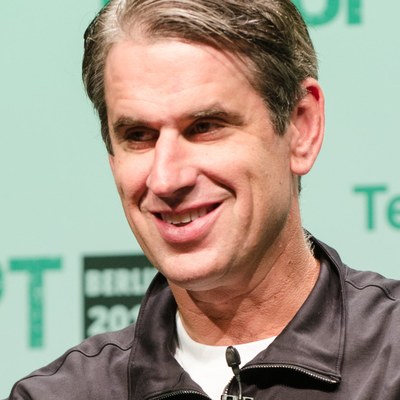 Bill Gurley
3
thin
11 Dec 2012 – 25 Sep 2024
-4324 d
-
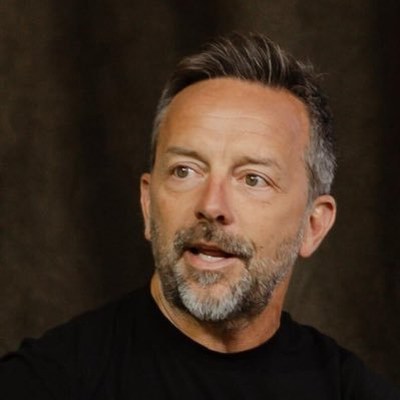 Brad Gerstner
6
27 Oct 2020 – 28 Aug 2025
-1447 d
-
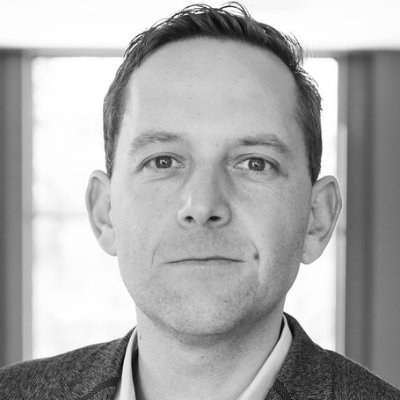 David Friedberg
4
thin
11 Sep 2024 – 15 Jan 2026
-32 d
-
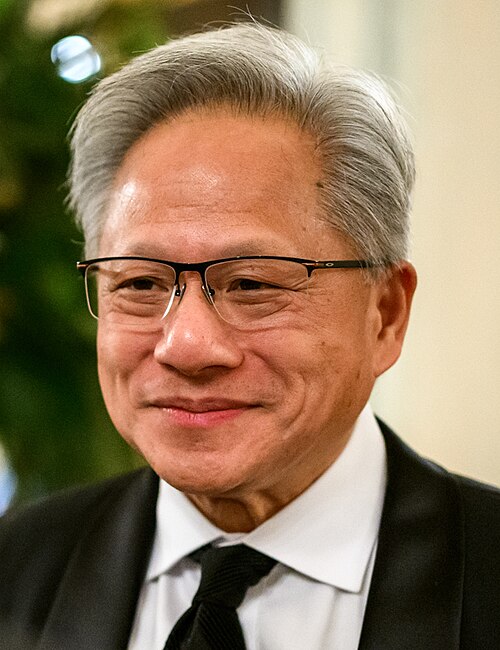 Jensen Huang
2
thin
13 Oct 2024 – 5 Feb 2026
+0 d
- Dylan Patel 4 thin 23 Dec 2024 – 22 Jul 2026 +71 d
-
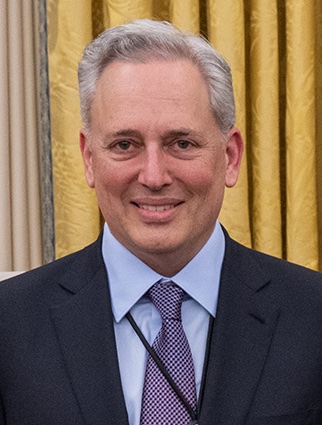 David Sacks
2
thin
31 Jan 2025 – 31 Jan 2025
+110 d
-
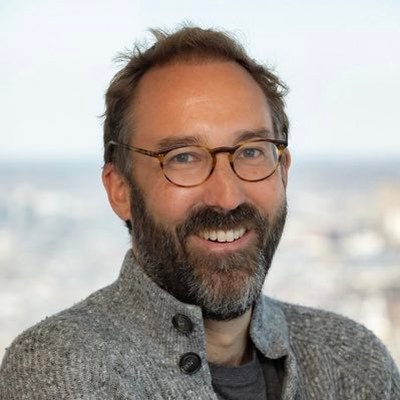 Gavin Baker
2
thin
9 Dec 2025 – 9 Dec 2025
+422 d
-
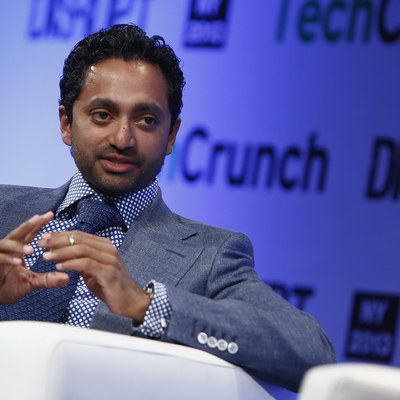 Chamath Palihapitiya
4
thin
30 Jan 2026 – 29 May 2026
+474 d
-
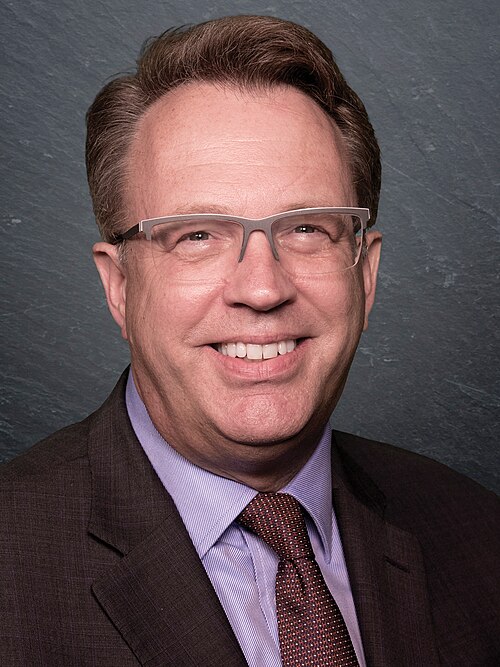 John Williams
1
thin
-
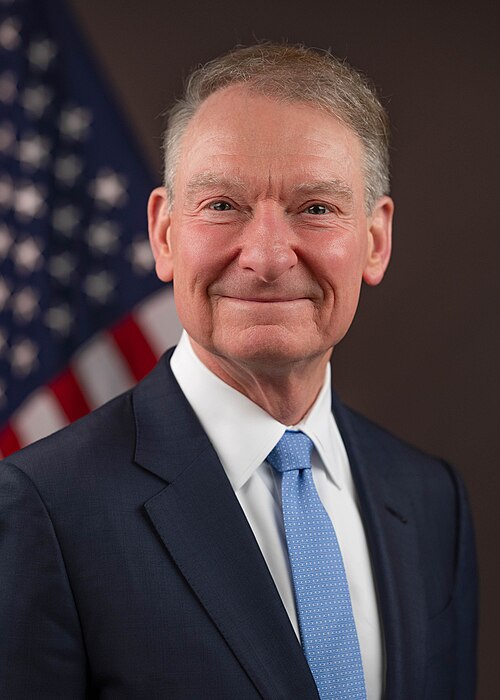 Paul Atkins
2
thin
The chronologysourced and dated, oldest first
-
-
Bill Gurley
Gurley argues smartphones enable apps to replace expensive dedicated embedded devices at dramatically lower cost.
“I mean we were talking earlier about local, the things you can do now that I can write an app instead of building a dedicated embedded device that would have cost $2, it's night and day.”
-
Bill Gurley
Gurley says apps replace embedded devices that previously cost $2,000, enabling new startup models.
“I can write an app instead of building a dedicated embedded device that would have cost $2, it's night and day. And I got all kinds of examples where our startups are using smart phones”
-
-
-
Brad Gerstner
Gerstner argues traditional IPO bank fees of 6-7% plus historical-only financials leave investors unable to evaluate high-growth companies.
“And on top of that, of course, you can only give historical financials, which leaves most investors in the dark about a high growth company's future prospects.”
-
Brad Gerstner
Gerstner explains SPAC costs are borne by SPAC shareholders through share dilution, not by the company going public.
“All the costs are borne by the shareholders of the SPAC who gave us part of their shares when we set up the SPAC as a finder's fee for helping them invest in a world class company.”
-
-
-
Brad Gerstner
Gerstner says traditional IPO costs include upfront fees and structural underpricing as the larger expense.
“There's the upfront fee, five and a half, 6%, whatever they're paying on the amount of capital raised. But he would argue the much bigger expense, right, is the indirect cost of the structural underpricing.”
-
Brad Gerstner
Gerstner calculates over $1 billion in cost savings for Grab employees and shareholders.
“And so if you say it's 30 percent on a $4,000,000,000 raise, that's over a billion dollars of savings. Right? Over $1,000,000,000 of indirect cost savings to the employees and the shareholders.”
-
-
-
Brad Gerstner
Gerstner calculates Invest America would cost $3.7 billion annually, less than one-hundredth of one percent of budget.
“There are 3,700,000 kids born every year in America. If we just put a thousand dollars in the S and P 500, it's only 3,700,000,000, less than one one hundredth of 1% of the national budget, less than the cost of a single weapon system.”
-
-
-
“So what's happened in biologicals is historically input companies would try and inoculate microbes or get them to grow that they were grabbing from the environment.”
-
David Friedberg
Friedberg notes DNA sequencing costs dropped from $100 million twenty years ago to $100 today, enabling new biological discovery approaches.
“Now DNA sequencing costs have gotten so cheap, right? Twenty years ago it cost $100,000,000 to sequence the human genome. Today it costs 100, and you can do it in a few hours.”
-
Bill Gurley
Gurley explains Strawberry requires 10X processing for linear improvement, meaning 10-100X inference costs for better solutions.
“in order to get linear improvement, you have to do maybe 10X the amount of processing. And this is all inference. So what are the implications of that?”
-
Jensen Huang
Huang claims NVIDIA reduced computing costs 100,000x in ten years versus Moore's Law's 100x.
“we drove the marginal cost of computing down by 100000x over the course of ten years. Moore's law would have been about 100x. And we did it it in several ways.”
-
Dylan Patel
Patel calculates o1 models increase inference costs by roughly 50x compared to standard models per query.
“Cost increase for a single token to be generated is four to five x, but then I'm generating 10 x as many tokens.”
-
-
-
David Friedberg
Friedberg states current potato planting costs can reach 40% of grower revenue.
“So when you add up the cost of the labor, the fuel, of the resourcing needed to store all of the what's called seed potato, all the fumigants, it can be as much as 40% of the revenue of that potato grower.”
-
David Sacks
Sacks says the $6 million DeepSeek training cost claim should be debunked, corroborated by industry leaders.
“On this one, I'm with Palmer Luckey and Brad Gerstner and others, and I think this has been pretty much corroborated by everyone I've talked to that that number should be debunked.”
-
David Sacks
Sacks says DeepSeek's compute cluster costs over $1 billion, contradicting the $6 million narrative.
“you add up the the cost of a compute cluster with 50,000 plus hoppers and it's gonna be over $1,000,000,000.”
-
Dylan Patel
Patel says DeepSeek's model is 400 to 600x cheaper than original GPT-4.
“And so now DeepSeek's model is something like 400 to 600x cheaper than the original GPT-four.”
-
Brad Gerstner
Gerstner highlights US fission reactors cost four to five times more and none are being built.
“Why does it cost us four to five times to build a fission reactor in this country? Why are we building no nuclear reactors in this country?”
-
Dylan Patel
Patel states each gigawatt AI deployment costs tens of billions of dollars end-to-end.
“Each of these gigawatt deployments once you take it from all the way from the power to the GPUs and the cloud contract, those are tens of billions of dollars each gigawatt.”
-
Gavin Baker
Baker says AI is the first time in his career that being the low-cost producer matters in tech.
“And this is really important because AI is the first time in my career as a tech investor that being the low cost producers ever matter.”
-
Gavin Baker
Baker says AI is the first time in tech where being the low-cost producer matters economically.
“AI is the first time in my career as a tech investor that being the low cost producers ever matter. Apple is not worth trillions because they're a low cost producer of phones.”
-
-
-
David Friedberg
Friedberg states US healthcare costs 15% of GDP and continues rising annually.
“Healthcare today costs roughly 15% of our GDP. That's an insane statistic and it is rising year after year in The United States, and it's such a complex issue.”
-
Chamath Palihapitiya
Palihapitiya predicts marrying next-gen systems to open source will cut AI costs by 90 percent.
“If you take these next generation systems and you marry them to open source, you're gonna cut the cost of AI by 90%.”
-
Jensen Huang
Huang states the bill of material for an AI factory totals approximately $50 billion.
“the inventory bill of material of the supercomputer comes out. This AI factory comes out, adds up to about $50,000,000,000 bill of material.”
-
Chamath Palihapitiya
Palihapitiya says his company now sets token budgets for developers due to AI costs escalating rapidly.
“We're getting to a place where we have to basically now say, what is the token budget that we're willing to give our best devs?”
-
Chamath Palihapitiya
Palihapitiya says his costs are increasing three times every three months while revenues are not.
“But the problem is that my costs are going up three x every three months. My revenues are not. Token use is very addicting.”
-
Chamath Palihapitiya
Palihapitiya predicts silicon and software innovations will drop AI training costs from $10B to $10M runs.
“At the scale of what they're trying to do, those kinds of innovations are going to make the cost of model training so much cheaper that it's like, why would we stick to the $10,000,000,000 training runs when we can have the $10,000,000 training runs?”
-
Dylan Patel
Patel reports that tokens now represent 30% of his 90-person company's costs versus 70% for employees.
“My my own company of 90 people, 30% of my cost now is tokens versus 70% employee costs.”
-
-
-
Paul Atkins
Atkins claims the SEC reduced CAT operating costs and eliminated personally identifiable information reporting during his tenure.
“During my tenure, the Commission has achieved significant reductions in the annual operating costs of the Consolidated Audit Trail (“CAT”) and eliminated reporting of personally identifiable information to the CAT.”
-
Paul Atkins
Atkins argues default paper delivery creates unnecessary expenses that reduce American investors' returns.
“Default paper delivery results in a constant source of unnecessary expenses that are paid for by American investors and reduce their investment returns.”
-
John Williams
Williams reports manufacturers saw 20 percent cost increases from tariffs, service firms 15 percent.
“Manufacturers indicated that over the past six months, the cost of their tariffed goods had risen by about 20 percent, on average. For service firms, the increase was about 15 percent.”
-
Where they overlapsame programme, same subject
- All-In Podcast also carries Brad Gerstner, Chamath Palihapitiya, David Friedberg and David Sacks on this subject, at different times.
- BG2 Pod also carries Bill Gurley, Brad Gerstner, Dylan Patel and Jensen Huang on this subject, at different times.
- Invest Like the Best also carries Brad Gerstner and Gavin Baker on this subject, at different times.