Who is on this subjectordered by the date of their first quote here
3 of 4 lanes rest on fewer than 5 quotes and are marked thin. Offsets are days from the middle first-quote date, 9 Sep 2024 — a date, and nothing else. It is not a claim about who reached a view first.
-
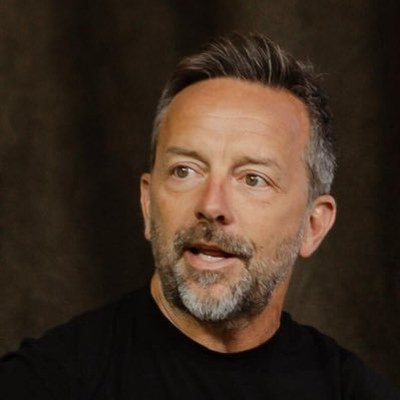 Brad Gerstner
5
27 Oct 2020 – 28 Aug 2025
-1413 d
Brad Gerstner
5
27 Oct 2020 – 28 Aug 2025
-1413 d
-
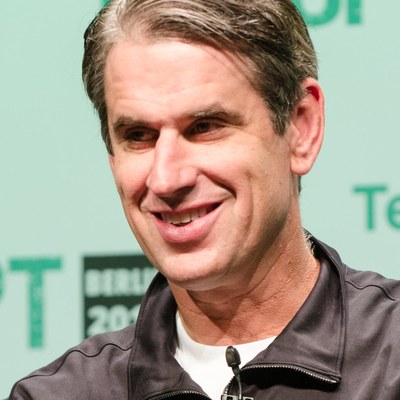 Bill Gurley
3
thin
9 Sep 2024 – 9 Sep 2024
+0 d
Bill Gurley
3
thin
9 Sep 2024 – 9 Sep 2024
+0 d
- Dylan Patel 2 thin 2 Sep 2025 – 22 Jul 2026 +358 d
- Paul Atkins 2 thin
The chronologysourced and dated, oldest first
-
-
Brad Gerstner
Gerstner argues traditional IPO bank fees of 6-7% plus historical-only financials leave investors unable to evaluate high-growth companies.
“And on top of that, of course, you can only give historical financials, which leaves most investors in the dark about a high growth company's future prospects.”
-
Brad Gerstner
Gerstner explains SPAC costs are borne by SPAC shareholders through share dilution, not by the company going public.
“All the costs are borne by the shareholders of the SPAC who gave us part of their shares when we set up the SPAC as a finder's fee for helping them invest in a world class company.”
-
-
-
Brad Gerstner
Gerstner says traditional IPO costs include upfront fees and structural underpricing as the larger expense.
“There's the upfront fee, five and a half, 6%, whatever they're paying on the amount of capital raised. But he would argue the much bigger expense, right, is the indirect cost of the structural underpricing.”
-
Brad Gerstner
Gerstner calculates over $1 billion in cost savings for Grab employees and shareholders.
“And so if you say it's 30 percent on a $4,000,000,000 raise, that's over a billion dollars of savings. Right? Over $1,000,000,000 of indirect cost savings to the employees and the shareholders.”
-
-
-
Bill Gurley
Gurley says China brings level three fission plants online at $2.5 billion per gigawatt versus $13 billion in the US.
“The plants in China that are the equivalent level three fission plants right now are coming on board at two point five billion per gigawatt.”
-
“You know, they used to call or I've heard people refer to modern day semiconductor investing as a sport of Kings. Right. Because you're 50,000,000 to first take.”
-
Bill Gurley
Gurley reports SMR startups face $60 million in fees just for NRC approval before building anything.
“And the other tough part, the NRC, which we haven't talked much about, but the regulatory commission here in The U. S.”
-
-
-
Brad Gerstner
Gerstner highlights US fission reactors cost four to five times more and none are being built.
“Why does it cost us four to five times to build a fission reactor in this country? Why are we building no nuclear reactors in this country?”
-
Dylan Patel
Patel states each gigawatt AI deployment costs tens of billions of dollars end-to-end.
“Each of these gigawatt deployments once you take it from all the way from the power to the GPUs and the cloud contract, those are tens of billions of dollars each gigawatt.”
-
-
-
Dylan Patel
Patel reports that tokens now represent 30% of his 90-person company's costs versus 70% for employees.
“My my own company of 90 people, 30% of my cost now is tokens versus 70% employee costs.”
-
-
-
Paul Atkins
Atkins claims the SEC reduced CAT operating costs and eliminated personally identifiable information reporting during his tenure.
“During my tenure, the Commission has achieved significant reductions in the annual operating costs of the Consolidated Audit Trail (“CAT”) and eliminated reporting of personally identifiable information to the CAT.”
-
Paul Atkins
Atkins argues default paper delivery creates unnecessary expenses that reduce American investors' returns.
“Default paper delivery results in a constant source of unnecessary expenses that are paid for by American investors and reduce their investment returns.”
-