Who is on this subjectordered by the date of their first quote here
2 of 5 lanes rest on fewer than 5 quotes and are marked thin. Offsets are days from the middle first-quote date, 23 Jun 2020 — a date, and nothing else. It is not a claim about who reached a view first.
-
 David Friedberg
6
21 May 2020 – 9 Jan 2024
-33 d
-
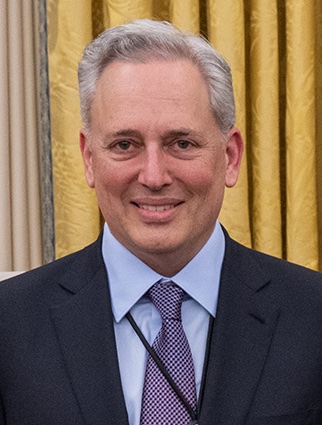 David Sacks
2
thin
20 Jun 2020 – 20 Jun 2020
-3 d
-
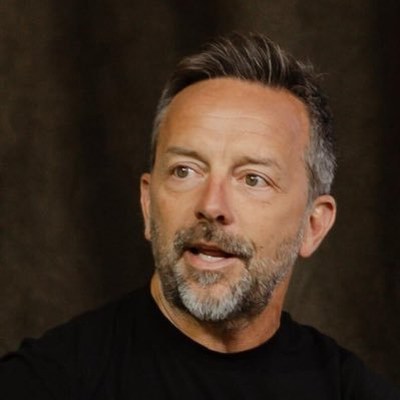 Brad Gerstner
7
23 Jun 2020 – 10 Dec 2024
+0 d
-
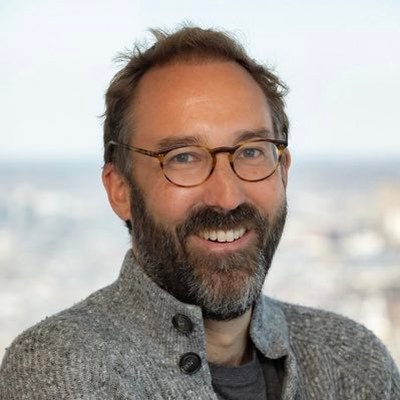 Gavin Baker
1
thin
25 Jan 2022 – 25 Jan 2022
+581 d
-
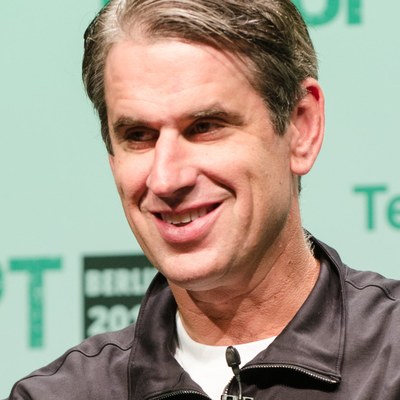 Bill Gurley
6
16 Sep 2023 – 23 Apr 2026
+1180 d
The chronologysourced and dated, oldest first
-
-
David Friedberg
Friedberg admits he vastly overestimated lockdown effectiveness, predicting under 20,000 deaths and return to work by April 7.
“I was like, Oh, April 7, we'll be back to work. And I also had a bet going with you guys and I said, gonna have less than twenty thousand deaths in The US.”
-
David Friedberg
Friedberg cites recent paper showing 40-60% of population has T-cell immunity to COVID from prior common cold exposure.
“And the reason is that they've had other coronaviruses through a common cold and they've developed this immune response.”
-
David Sacks
Sacks cites Japan, South Korea, and Czech Republic as proof that mask-wearing controls COVID.
“South Korea, fifty one million people under three hundred deaths. You take a a Western European nation like Czech Republic, they had a huge COVID outbreak, a spike just like the rest of Europe.”
-
David Sacks
Sacks says the right policy is ending lockdowns while wearing masks, but politicians split on both.
“I think the right policy is to end lockdowns but wear masks. The problem with the politicians is half of them didn't want to end lockdowns and the other half didn't want to wear masks.”
-
Brad Gerstner
Gerstner deployed hundreds of millions into private software in late March/early April 2020 during COVID crisis.
“During periods of crisis like we've experienced over the last ninety days, I mean we put hundreds of millions of dollars to work in the private software market at the end of March and early April, because we weren't thinking about the next six minutes or the next six weeks”
-
David Friedberg
Friedberg compares COVID behavioral changes to post-9/11, arguing permanent shifts aren't driven by science but politics.
“It's all politics and social behavior. It has nothing to do with science. Like, after nine eleven, there were no more serious, like, terrorist attacks on The United States, but our fucking lives changed dramatically.”
-
David Friedberg
Friedberg compares COVID response to post-9/11 changes, arguing behavioral shifts persist regardless of actual risk levels.
“It has nothing to do with science. Like, after nine eleven, there were no more serious, like, terrorist attacks on The United States, but our fucking lives changed dramatically.”
-
David Friedberg
Friedberg argues COVID behavioral changes will persist like post-9/11 TSA security measures that remain twenty years later.
“We go sit in TSA lines and, you know, get our asses swabbed when we get on an airplane now, And that's still going on twenty years later.”
-
Brad Gerstner
Gerstner argues markets correctly priced digital transformation arc despite initial concerns after 50% bounce in May.
“What it has been slow in pricing in is how dramatically different the arc will be for many of these digital businesses. I remember having conversations with Rich and many others in May.”
-
-
-
Gavin Baker
Baker says goods spending is $500B above trend while services spending is $500B below trend.
“If you trend out and look at real personal consumption expenditures, goods spending is roughly $500,000,000,000 above the pre COVID trend line. Services spending is 500,000,000,000 below the trend line.”
-
-
-
Bill Gurley
Gurley says Germany validated 96 COVID test vendors while US approved only three.
“Germany leaned heavily into rapid tests. They got their scientists together, and they evaluated a 122 different vendors and validated 96 of them.”
-
Bill Gurley
Gurley contrasts Germany validating 96 COVID test vendors against US regulatory approach limiting competition.
“Germany leaned heavily into rapid tests. They got their scientists together, and they evaluated a 122 different vendors and validated 96 of them. Here they are on the right, 96 different vendors that they ok'd.”
-
Bill Gurley
Gurley reveals FDA antigen test overseer Timothy Stenzel previously worked five years at Quidel and four at Abbott.
“This guy's name is Timothy Stenzel. Now, he works for the FDA, and he runs the group that oversees which antigen test gets approved.”
-
Bill Gurley
Gurley observes all seven antigen tests at Walgreens and CVS are identically priced at $23.99.
“Yesterday, just for kicks kinda, I went online. This is Walgreens and CVS antigen test. There's seven tests. They're all exactly $23.99. What is that? That's not a marketplace.”
-
-
-
David Friedberg
Friedberg states global malnutrition rose from 600 million to over 1 billion people since COVID.
“In the last two years since COVID, we've unfortunately seen a reversal in global malnutrition statistics. You know, we were at 600,000,000 people, living on less than 1,500 calories a day just before COVID.”
-
Brad Gerstner
Gerstner explains auto insurers lost money in 2021 because safe miles disappeared while accidents per mile spiked.
“But what turned out to be true is that the miles that came off the road for some reason were safe miles, and the mile the accidents per mile driven actually spiked a lot.”
-
Brad Gerstner
Gerstner argues media blocked research on COVID origin and response, labeling disagreement with Fauci as misinformation.
“And some of this came out in the in the Twitter files where if you said anything that wasn't a 100% consistent with what Fauci and Collins were saying, it was labeled misinformation, conspiracy theory.”
-
Brad Gerstner
Gerstner claims research shows lockdowns achieved nothing when measured by excess deaths across countries.
“they've gone back through and looked at excess deaths at a number of different countries and lockdowns achieved nothing.”
-
Brad Gerstner
Gerstner states lockdowns achieved nothing according to excess death data and lost generations of kids from school.
“I think most people believe there were consequences to lockdowns definitely with kids. Yes. Lost generations of kids from school.”
-
Bill Gurley
Gurley says Collins and Fauci called lab leak a conspiracy theory but now before Congress admit it's not.
“Now it turns out that both Francis Collins and doctor Fauci, Collins in '2 different emails and Fauci in his book called the lab leak theory a conspiracy theory.”
-
Brad Gerstner
Gerstner says COVID and zero interest rates led to gross excesses and misallocation.
“You know, we had these negative interest rates, this zerp period that just led to gross excesses across the economy, misallocation of resources.”
-
-
-
“I think the marginal cost of a PCR test was below $2, and the average price that was recompensated by the government was over $100.”
-
Where they overlapsame programme, same subject
- All-In Podcast also carries Bill Gurley, David Friedberg and David Sacks on this subject, at different times.
- BG2 Pod also carries Bill Gurley and Brad Gerstner on this subject, at different times.
- Invest Like the Best also carries Brad Gerstner and Gavin Baker on this subject, at different times.