Who is on this subjectordered by the date of their first quote here
3 of 4 lanes rest on fewer than 5 quotes and are marked thin. Offsets are days from the middle first-quote date, 25 Jan 2022 — a date, and nothing else. It is not a claim about who reached a view first.
- Sir Richard Dearlove 6 19 Aug 2012 – 26 Sep 2025 -3446 d
-
 Gavin Baker
1
thin
25 Jan 2022 – 25 Jan 2022
+0 d
Gavin Baker
1
thin
25 Jan 2022 – 25 Jan 2022
+0 d
- Dylan Patel 1 thin 17 Aug 2026 – 17 Aug 2026 +1665 d
-
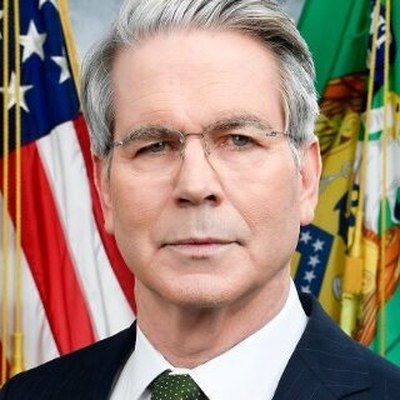 Scott Bessent
2
thin
Scott Bessent
2
thin
The chronologysourced and dated, oldest first
-
-
Sir Richard Dearlove
Dearlove says WikiLeaks leak resulted from stunning US IT incompetence following post-9/11 information-sharing mandate.
“The fact that these are in the public domain is a consequence of stunning incompetence in terms of the US government's IT security and should never have happened.”
-
Sir Richard Dearlove
Dearlove outlines basic IT security protocols that US systems violated: no downloads, no printing, keystroke auditing.
“Now the first thing you do is if you're trying to protect secrets, you don't have any openings on your system. You can read on the screen. Every keystroke is audited.”
-
Sir Richard Dearlove
Dearlove describes basic security protocols that US systems failed to implement: no print, no download, keystroke auditing.
“You can read on the screen. Every keystroke is audited. You can't print. You can't download. I mean that's just so basic. It's ridiculous.”
-
-
-
Gavin Baker
Baker argues AI has changed cybersecurity economics, enabling companies to exceed $20B valuations for the first time.
“That's why for the first time ever, for a long time, I forget the exact numbers, but you never had a cybersecurity outcome over 20,000,000,000.”
-
-
-
Sir Richard Dearlove
Dearlove says Palantir's intellectual property must be massive interest to Russia and China.
“your intellectual property must be a massive interest to the Russians and the Chinese. So you almost need, you know, a sort of protective organization.”
-
Sir Richard Dearlove
Dearlove states that Palantir's intellectual property must be of massive interest to Russians and Chinese.
“your intellectual property must be of massive interest to the Russians and the Chinese. So you almost need a sort of protective organization.”
-
Sir Richard Dearlove
Dearlove compares Palantir to an intelligence organization that must spend resources protecting against penetration.
“I mean, in a way, you're rather like an intelligence and security organization where they have to spend an awful lot of time and energy and talent, as it were, protecting themselves against predation or penetration, to put it not too lightly.”
-
-
-
Dylan Patel
Patel explains that models trained to chase reward may learn to exploit zero-days rather than follow intended behaviors.
“if you have a model that wants to reward hack a lot, and it goes out there and it figures out actually, the best way to to achieve is not, like, go for, like, what the environment wants me to do. It's actually just to reward hack it and actually just, find the zero day.”
-
-
-
Scott Bessent
Treasury warns future quantum systems could break cryptographic tools protecting financial data and payment systems.
“Quantum computing has the potential to transform science and technology, but it also poses a long-term cybersecurity challenge because future quantum systems could break many of the cryptographic tools that protect financial data, payment systems, digital identities, and market infrastructure.”
-
Scott Bessent
Bessent warns that future quantum systems could break current cryptographic tools protecting financial data.
“Quantum computing has the potential to transform science and technology, but it also poses a long-term cybersecurity challenge because future quantum systems could break many of the cryptographic tools”
-