Who is on this subjectordered by the date of their first quote here
6 of 10 lanes rest on fewer than 5 quotes and are marked thin. Offsets are days from the middle first-quote date, 8 Feb 2024 — a date, and nothing else. It is not a claim about who reached a view first.
-
 David Friedberg
32
19 Mar 2020 – 29 Aug 2026
-1421 d
David Friedberg
32
19 Mar 2020 – 29 Aug 2026
-1421 d
-
 Brad Gerstner
6
27 Oct 2020 – 28 Aug 2025
-1199 d
Brad Gerstner
6
27 Oct 2020 – 28 Aug 2025
-1199 d
-
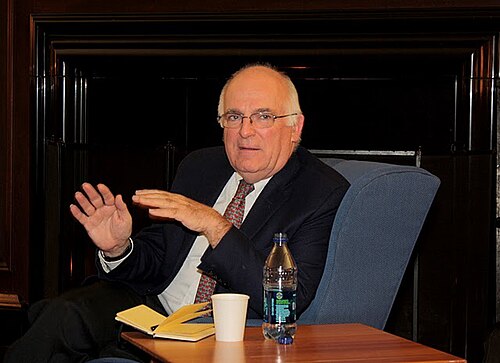 Sir Richard Dearlove
1
thin
29 Oct 2020 – 29 Oct 2020
-1197 d
Sir Richard Dearlove
1
thin
29 Oct 2020 – 29 Oct 2020
-1197 d
- Dylan Patel 25 2 Feb 2023 – 25 Aug 2026 -371 d
-
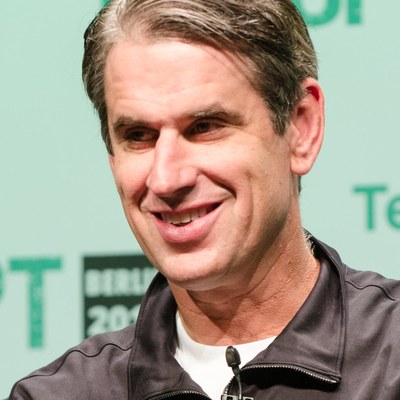 Bill Gurley
4
thin
8 Feb 2024 – 16 May 2024
+0 d
Bill Gurley
4
thin
8 Feb 2024 – 16 May 2024
+0 d
-
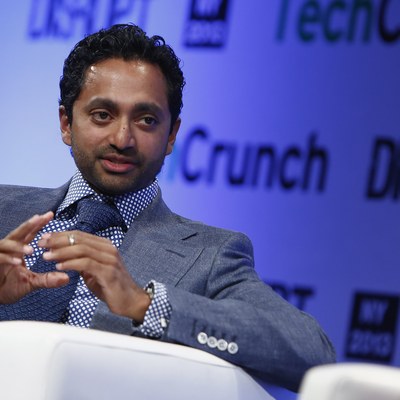 Chamath Palihapitiya
6
6 Dec 2025 – 3 Jul 2026
+667 d
Chamath Palihapitiya
6
6 Dec 2025 – 3 Jul 2026
+667 d
-
 Jensen Huang
1
thin
4 Feb 2026 – 4 Feb 2026
+727 d
Jensen Huang
1
thin
4 Feb 2026 – 4 Feb 2026
+727 d
-
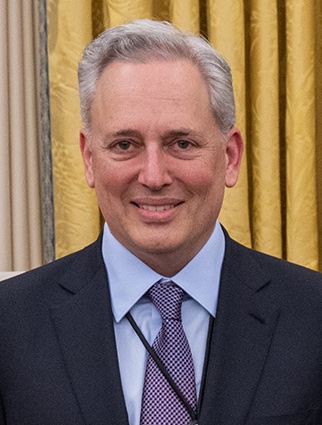 David Sacks
1
thin
13 Feb 2026 – 13 Feb 2026
+736 d
David Sacks
1
thin
13 Feb 2026 – 13 Feb 2026
+736 d
-
 Gavin Baker
2
thin
8 Jul 2026 – 4 Aug 2026
+881 d
Gavin Baker
2
thin
8 Jul 2026 – 4 Aug 2026
+881 d
-
 JD Vance
2
thin
24 Aug 2026 – 24 Aug 2026
+928 d
JD Vance
2
thin
24 Aug 2026 – 24 Aug 2026
+928 d
The chronologysourced and dated, oldest first
-
-
David Friedberg
Friedberg cites Treasury Secretary Mnuchin predicting 20-30% unemployment by summer if shutdowns continue.
“Steve Mucin, The US Treasury Secretary, was saying that we should expect 20% to 30% of the workforce to be unemployed by this summer if we keep this up.”
-
David Friedberg
Friedberg argues happiness comes from relative standards and progression, not absolute living standards.
“Well, I don't think happiness comes from, you know, absolute standards of living. I think happiness arises from one's relative standard of living, whether that's relative to how you lived last year or how you're living relative to your neighbor and seeing some progression over time is the only thing that keeps people happy. It's otherwise society decays.”
-
David Friedberg
Friedberg argues happiness requires relative progress not absolute income, so UBI will inevitably cause societal decay.
“So the notion of some sort of flatlined or even flatlined at inflation adjusted basic income level for a large number of people will inevitably result in kind of what we're trying to prevent, which is, you know, some sort of decay, societal decay.”
-
Brad Gerstner
Gerstner explains SPAC costs are borne by SPAC shareholders through share dilution, not by the company going public.
“All the costs are borne by the shareholders of the SPAC who gave us part of their shares when we set up the SPAC as a finder's fee for helping them invest in a world class company.”
-
Brad Gerstner
Gerstner describes SPAC fee structure where shareholders pay via dilution, similar to VC fund economics.
“I mean, it's very similar to our VC funds where we get paid for helping our investors invest in companies like Snowflake.”
-
Sir Richard Dearlove
Dearlove says Russia has roughly Italy's GDP, ranking thirteenth or fourteenth globally, with an aging population.
“Russia, in fact, now has more or less the GDP of Italy, somewhere around thirteenth or fourteenth in the world. And it has an aging population.”
-
-
-
David Friedberg
Friedberg explains inflation moves through economy in stages, starting with commodities before becoming sticky in services.
“So the first thing we saw inflate was sort of hard commodities and soft commodities, things like energy and agricultural products and metals and so on.”
-
-
-
Dylan Patel
Patel says memory now represents 30-50% of GPU manufacturing cost and NVIDIA applies 4x markup.
“And and now today, if you look at it, the cost of memory is 30 to 50% of the GPU cost. Great cost. And then obviously, NVIDIA does a four x markup on their”
-
David Friedberg
Friedberg argues 95% of people will eat what's cheap and tasty, not sustainable premium products.
“They're coming up the economic ladder and they're gonna eat more meat and they're gonna eat what tastes good and they're gonna eat whatever they can afford.”
-
David Friedberg
Friedberg states precision fermentation economics aren't proving out at scale despite extraordinary improvements in strain technology.
“So the net economics on making proteins using microorganisms or what people are calling precision fermentation isn't proving out at scale to be what everyone theorized it could or should be.”
-
Dylan Patel
Patel argues doubling lithography costs only increases total chip cost by 10 percent, enabling five nanometer.
“If seven nanometer was completely economical, five nanometer, if the lithography element costs twice as much with the 1980i versus the next generation lithography tool, then that on the total chip basis doesn't cost anywhere close to that, right? Because again, the manufacturing cost of lithography is only one fourth to one fifth.”
-
Dylan Patel
Patel calculates doubling lithography cost only increases total chip cost 10 percent, enabling five nanometer.
“Because again, the manufacturing cost of lithography is only one fourth to one fifth. So if you double lithography costs, you're only increasing the total cost of a chip by 10%, right?”
-
Dylan Patel
Patel argues training costs are irrelevant, noting GPT-4 used 20,000 A100s.
“training costs are irrelevant. Right? Like, GPT four, right, like, 20,000 a one hundreds, that's that's like, I know it sounds like a lot of money.”
-
-
-
Bill Gurley
Gurley explains personalized AI memory requires rebuilding models per user, which is economically unfeasible.
“And it's because you'd have to redo the model for each human. And of course that makes no sense economically.”
-
Bill Gurley
Gurley explains AI memory requires retraining models per person, creating an economically unsustainable structural problem.
“And of course that makes no sense economically. So it's actually a huge structural problem. There are complaints, you know, in Reddit about Character AI on this front.”
-
Brad Gerstner
Gerstner uses employee analogy to explain why B100 chips command premium pricing despite higher cost through 10x performance improvement.
“If you had an employee bill and you were paying them a $100,000 and I said, Hey, you ought to hire this other guy.”
-
“If you build it to average, you're not gonna be able to serve your customers during the peak at all. Like, they're only gonna be disappointed.”
-
Bill Gurley
Gurley argues deglobalization is highly inflationary and makes US companies less competitive, not more.
“Like, this is just, you know, deglobalization, highly inflationary, and will make our companies less competitive, not more.”
-
David Friedberg
Friedberg details potato economics: $5,000 per acre revenue with $1,000-2,000 operating costs, demonstrating room for Ohalo's value capture.
“That potato farmer today is spending somewhere between one top line, that potato farmer is making about $5,000 an acre in The US. K?”
-
David Friedberg
Friedberg argues happiness depends on income change rather than absolute income level above basic needs.
“So if we start with that premise of like human behavior, the government now has an incredible the federal government in The United States has an incredible role in supporting a lot of people”
-
David Friedberg
Friedberg argues voters consistently choose increased government spending despite economic growth providing tax revenue.
“And if the government taxes everyone just the same amount, now the government has more money to spend. Consumers, voters have a choice. They have a choice to say tax less and spend less.”
-
Brad Gerstner
Gerstner cites Morgan Stanley forecasting carbon offset spending rising from $2 billion to $100 billion by 2030.
“In 2020, Morgan Stanley estimates that about $2,000,000,000 was spent on the carbon offset market, and by 2030 they expect that to be $100,000,000,000 by these large hyperscalers that have to buy these massive carbon offsets.”
-
Dylan Patel
Patel argues AI demand is what makes continued semiconductor node advancement economically viable today.
“funding the next node would not be economically viable anymore if it weren't for AI taking off. Right? And then generating all this humongous demand for the most leading edge chip.”
-
Brad Gerstner
Gerstner says US productivity growth fell from 2.5-3% in 90s to 1.8% in 2000s to slowest ever in last decade.
“if you look at the 90s our productivity growth in The United States was about 2.5% to 3% a year, okay, and then in the 2000s it slowed down to about 1.8% and then the last ten years has been the slowest productivity growth”
-
Dylan Patel
Patel states OpenAI is paying $12.5 billion over five years for one-fifth of Oracle's data center site.
“So for one fifth of the site, they're paying something like $12,500,000,000 over the next five years.”
-
-
-
David Friedberg
Friedberg states current potato planting costs can reach 40% of grower revenue.
“So when you add up the cost of the labor, the fuel, of the resourcing needed to store all of the what's called seed potato, all the fumigants, it can be as much as 40% of the revenue of that potato grower.”
-
Dylan Patel
Patel breaks down full H100 GPU cost at $40,000 to $45,000 including networking and infrastructure versus $24,000 for chip alone.
“each GPU, right, once you include networking, building, all this sort of stuff maybe is you know, the GPU itself of h 100 is, like, 24,000, but once you add everything else up, it's, like, forty, forty five thousand dollars per GPU all in of everything.”
-
Dylan Patel
Patel argues that efficiency gains alone without capability increases cannot justify massive AI infrastructure investments.
“That would not pay for all of these build outs. Right? AI is useful today, but it's not capable of doing a lot of things.”
-
Dylan Patel
Patel describes Chinese manufacturers as locked in constant cost reduction cycle rather than margin expansion.
“there's this constant pressure cooker of continual cost reductions and engineering. It's not like, Oh, well, we make 80% margins. Our cost is low.”
-
Dylan Patel
Patel states 80% of GPU data center cost is capital equipment, only 20% is land, power, and cooling.
“It's the it's the physical data center conversion power conversion equipment. All of this stuff is, like, 80% of the cost. And then 20% is gonna be your land and your power and your cooling”
-
Brad Gerstner
Gerstner notes US is only 14% of China's exports and 3% of China's GDP.
“The US only represents about 14% of China's exports. The US only represents about 3% of China's GDP.”
-
David Friedberg
Friedberg details potato economics: $5,000 per acre revenue with $1,000-$2,000 operating costs for current methods.
“Okay? And that $5,000 of revenue is requiring an investment of 1 to $2,000 an acre.”
-
David Friedberg
Friedberg projects Ohalo potato seed at $500 per acre could deliver $1,500 per acre profit improvement.
“You know, you can probably see that you could save at least 15 or create at least $1,500 an acre of operating profit improvement for that potato grower.”
-
David Friedberg
Friedberg details potato economics showing farmers spend 20-40% of $5,000 per acre revenue on current planting methods.
“And that $5,000 of revenue is requiring an investment of 1 to $2,000 an acre. So 20 to 40% of revenue to deal with all of the planting and fumigation and storage”
-
David Friedberg
Friedberg estimates Ohalo's potato seed could create $1,500 per acre operating profit improvement for growers.
“You could probably see that you could save at least 15 or create at least $1,500 an acre of operating profit improvement for that potato grower.”
-
Dylan Patel
Patel states AI infrastructure represents 25% to 75% of current US quarterly economic growth.
“It's anywhere from 25% to 75 of the current quarter's economic growth. That's insane for The US.”
-
Dylan Patel
Patel says as the largest technology Substack, the 10% platform fee is worth paying for the growth.
“Even though a 10% cut sounds like a lot, I'm the largest technology substack and I'm telling you that it's worth it.”
-
Dylan Patel
Patel says avoiding repeated pre-fill on 30,000-token inputs can reduce inference costs by 75% through KV cache.
“So then that 30,000 tokens, that pre fill, that 30,000 tokens still cost a lot more than that output.”
-
Chamath Palihapitiya
Palihapitiya identifies $45,000 to $63,000 income range as stagnation zone where benefits create poverty trap.
“There is a very specific part of, though, what he said, which I think we should focus on, which is there is an area between $45,000 a year and $63,000 a year, which actually looks like a bit of a stagnation zone.”
-
David Friedberg
Friedberg cites Norway's 2022 wealth tax causing $54 billion capital flight and $448 million revenue loss versus $146 million target.
“The wealth tax was supposed to raise a $146,000,000 of incremental revenue per year. Instead, what happened? $54,000,000,000 of net worth left the country, and they actually had a $448,000,000 tax loss.”
-
Chamath Palihapitiya
Palihapitiya claims California's proposed billionaire tax has changed the state's economic trajectory by $100-200 billion over five to ten years.
“That one bill, this proposed billionaire tax, has single handedly changed the trajectory of the California economy by a 100 to $200,000,000,000 over the next five to ten years.”
-
David Friedberg
Friedberg cites research showing happiness plateaus at $60k income but correlates with year-over-year income change above that level.
“at the time, it improved up to $60,000 of income a year Right. Then it flatlined beyond And then the the the key measure of happiness was income change year over year.”
-
David Friedberg
Friedberg explains happiness research showing year-over-year income change matters more than absolute wealth for human satisfaction.
“the key measure of happiness was income change year over year. The more your income changes from one year to the next, the happier you are.”
-
David Friedberg
Friedberg states 40 million Americans graduated with student loans in the last decade, averaging $40,000 debt each.
“four you know, four forty million Americans graduated in last ten years from student from college with student loan. Average student loan debt $440,000.”
-
-
-
Dylan Patel
Patel explains users will pay 10x more for 10x faster inference completion, justifying Cerberus economics.
“for a lot of people, I'm fine to spend 10x the price on something that completes 10x faster. So Cerberus sort of just makes a ton of sense there.”
-
Jensen Huang
Huang says AI expands addressable market from $1 trillion IT industry to $100 trillion global economy.
“The IT industry is about a trillion dollars, right, or so, plus or minus a couple. And yet the the economy of the world is about a $100,000,000,000,000.”
-
Dylan Patel
Patel calculates $100B AI revenue requires $250B infrastructure spend at five-year depreciation, double current capex.
“That $50,000,000,000 of COGS needs to burn on infra, which cost roughly with if a five if you're talking about five year depreciation, call it $250,000,000,000, right, of infra Yeah. For a $100,000,000,000 of revenue.”
-
Dylan Patel
Patel notes 2% of GitHub commits are AI-generated against $2 trillion in global software wages.
“You can disable that where it's not automatically committed. But 2% of GitHub commits today are Cloud Code. $2,000,000,000,000 of software wages paid in the world.”
-
David Friedberg
Friedberg explains prediction markets concentrate profits in large accounts with edge while small accounts burn through capital.
“So the the accounts that have a lot of money, they generally only trade in things where they have an edge, where they make markets, Sharp.”
-
David Friedberg
Friedberg calculates that 5% interest rates would add $650 billion yearly, bringing total interest expense near $2 trillion.
“But if rates climb closer to 5%, as I mentioned in the past, just using the current debt levels, it adds another $650,000,000,000 a year of interest expense, which takes interest expense almost up to 2,000,000,000,000 a year just paying the interest on the past debt.”
-
David Sacks
Sacks recommends tracking federal outlays and receipts as percent of GDP to assess fiscal health.
“This is from Fred, right? And then you wanna look at federal receipts, which is tax receipts as a percent of GDP.”
-
David Friedberg
Friedberg argues moving workers from government to private sector increases productivity and grows the economy.
“But when people move from the government workforce into the private workforce, they become productive. They're making things that grow the economy, and, theoretically, they should also make more money.”
-
Chamath Palihapitiya
Palihapitiya argues debt-to-GDP ratios don't matter if all major economies rise together since 1700 to potentially 300 percent.
“So if the entire world moves in unison like this, there is an argument to be made, which is that you could end up at 300, two fifty, 200% of debt to GDP.”
-
Chamath Palihapitiya
Palihapitiya predicts debt-to-GDP will reach 200 to 600 percent globally because governments are addicted to spending.
“But I think debt to GDP, quite honestly, if I had to be a betting man, will trend into the $2.03, $4.05, 600 on a relative basis for all countries because I just think the governments of these countries are addicted to spending, and there is no reason to stop, safe of some other planetary species invading planet Earth.”
-
Chamath Palihapitiya
Palihapitiya says his costs are increasing three times every three months while revenues are not.
“But the problem is that my costs are going up three x every three months. My revenues are not. Token use is very addicting.”
-
Dylan Patel
Patel observes perception shift where 90th percentile people consider themselves middle class while 50th percentile people do not.
“Nowadays, people in the ninetieth percentile think they're middle class, and people in the fiftieth percentile don't think they're middle class.”
-
Dylan Patel
Patel says he now supports UBI despite being very capitalist, a shift from his prior views.
“Over the last couple years I've realized, wait, I actually think UBI is perfectly fine. Which I think is crazy because again, I'm very capitalist.”
-
David Friedberg
Friedberg argues robotics will unlock economic mobility like cars did, enabling everyone to do different jobs.
“Everyone now like, when everyone got a car, they could now go and do a lot of different jobs.”
-
David Friedberg
Friedberg estimates a $15 to $30 trillion annual economic opportunity on the moon with high business multiples.
“I actually think there's probably a 15 to $30,000,000,000,000 a year economic opportunity on the moon. That kind of a business, like you're gonna see with SpaceX's IPO, is gonna have an insane multiple.”
-
David Friedberg
Friedberg says shipping costs from moon to Earth are zero due to physics advantages.
“And the reason is if you can get to the moon, the moon has an extraordinary abundance of material that we can mine, process, and manufacture into goods.”
-
David Friedberg
Friedberg says continuous moon mining and manufacturing would cost a fraction of Earth operations.
“So we could run continuous mining, continuous manufacturing processes on the moon at a fraction of the cost of what it would take to do it here on Earth.”
-
David Friedberg
Friedberg predicts the moon will become a giant economy comparable to the East India Company.
“I actually think the moon is gonna be a giant, giant, giant economy. And I think it's like one of these economies.”
-
David Friedberg
Friedberg claims energy costs dropping to one cent per kilowatt hour would expand every economy.
“if you get the cost of energy down to 1¢ a kilowatt hour, it absolutely expands every economy. Like, everything blows up. Like, imagine if you”
-
David Friedberg
Friedberg states extending lifespan by one year adds tens of trillions to GDP.
“For every one year, we can extend average human lifespan. We're adding tens of trillions of dollars to GDP. Right? So this is also another big economic driver.”
-
David Friedberg
Friedberg estimates nearly half the US population receives government paychecks, pensions, or welfare benefits.
“Today, if you add up federal, state, local government employees, plus all the contractors for the government, plus all the people that live off of a retirement check or or a welfare support check, so all the people that are living off government checks, it's about nearly half The US population.”
-
Dylan Patel
Patel cites estimates of 20% economic decline if Taiwan is invaded, comparable only to world wars.
“And then subsequently, that that sends the world into a depression. Right? The world has not experienced a 20 free fall since maybe, like, a one of the great wars.”
-
Dylan Patel
Patel states GPU rental rates were $12-13 billion per gigawatt before recent increases.
“GPUs, at least before the craziness of the last six months, usually went around 12 to $13,000,000,000 per gigawatt.”
-
Chamath Palihapitiya
Palihapitiya states half of large US companies cannot deliver returns exceeding the 8-11% cost of capital.
“What that means is that is the actual cost that you would borrow money at effectively. The problem is that half of large US companies now cannot deliver returns that exceed that.”
-
Gavin Baker
Baker says rendering Monopoly Go with AI would cost over 100x its revenue at list prices.
“So what is the role for human creativity, man? I don't know. I don't know. Like what I hope, one of the reasons Neuralink is such an exciting company”
-
Dylan Patel
Patel says OpenAI's total gross margin rose from 30% to 55% over the past year.
“OpenAI late last year, their margins had were roughly 30% gross margin, but if you stripped away the free users, they were at 50%. Now, total company gross margin is closer to 55%,”
-
Dylan Patel
Patel explains KV cache storage and reuse enables massive cost decreases in inference.
“you calculate that once, you store it off in memory, whether it be system memory or storage, and then you pull it back in when you run the turn.”
-
Dylan Patel
Patel reports that tokens now represent 30% of his 90-person company's costs versus 70% for employees.
“My my own company of 90 people, 30% of my cost now is tokens versus 70% employee costs.”
-
Gavin Baker
Baker cites Dwarkesh noting compute margins rising alongside volume and inference margins, driving lab acceleration.
“Borgesch, he's a very smart guy. He's very plugged in. Then he pointed out that margins on compute are going up.”
-
David Friedberg
Friedberg says housing, education, and healthcare inflated at 5-6% versus 2.5% average where government launched subsidy programs.
“And all three of these categories are categories where the federal government has launched programs to either subsidize or make available these categories of services to people through promises.”
-
David Friedberg
Friedberg argues government spending of $300B housing, $200B education, $2T healthcare makes things more expensive, questioning government role.
“And the more that the government provides, 300,000,000,000 a year in housing support, 200,000,000,000 a year in education, over a trillion dollars, $2,000,000,000,000 almost in health care, the more things get more expensive.”
-
JD Vance
Vance argues that millions of illegal aliens increased housing costs by taking homes from American citizens.
“And when you give them houses that all go by right to American citizens, that's gonna increase the cost of housing for everybody else.”
-
JD Vance
Vance claims rents are falling for the first time in a decade under Trump after doubling under Biden.
“Where housing doubled under the leadership of Joe Biden, rents are falling for the first time in a decade under the leadership of Donald Trump”
-
Dylan Patel
Patel reports Anthropic now generates up to $50 million per megawatt, a 5x return on compute costs.
“And and what that now enables them to do is, hey, if I spend $10 on inference capacity, actually generate $50 of revenue,”
-
Dylan Patel
Patel argues hyperscalers would pay 8% interest rates versus current 5-6% given AI compute returns.
“Meta's raised at, like, 5% to 6%. I don't see why they wouldn't pay 8% Because they would happily pay 8% because the return from the compute that they're going to build is humongous.”
-
David Friedberg
Friedberg states each 1% interest rate increase costs US government 1.25% of GDP annually in interest.
“For every 1% change in the interest rate, the US government has to pay 1.25% of GDP in excess interest each year.”
-
Where they overlapsame programme, same subject
- Chamath Palihapitiya and David Friedberg — All-In Podcast, 2 appearances together
- Chamath Palihapitiya and David Sacks — All-In Podcast, 1 appearance together
- David Friedberg and David Sacks — All-In Podcast, 1 appearance together
- BG2 Pod also carries Bill Gurley and Brad Gerstner on this subject, at different times.
- Invest Like the Best also carries Brad Gerstner and Gavin Baker on this subject, at different times.