Who is on this subjectordered by the date of their first quote here
4 of 6 lanes rest on fewer than 5 quotes and are marked thin. Offsets are days from the middle first-quote date, 12 Mar 2025 — a date, and nothing else. It is not a claim about who reached a view first.
-
 Bill Gurley
18
22 Jun 2024 – 21 Jul 2026
-263 d
Bill Gurley
18
22 Jun 2024 – 21 Jul 2026
-263 d
-
 Brad Gerstner
2
thin
25 Jul 2024 – 10 Dec 2024
-230 d
Brad Gerstner
2
thin
25 Jul 2024 – 10 Dec 2024
-230 d
-
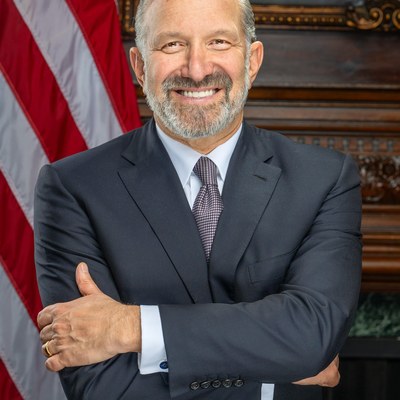 Howard Lutnick
3
thin
12 Mar 2025 – 20 Mar 2025
+0 d
Howard Lutnick
3
thin
12 Mar 2025 – 20 Mar 2025
+0 d
-
 Chamath Palihapitiya
3
thin
27 Sep 2025 – 4 Sep 2026
+199 d
Chamath Palihapitiya
3
thin
27 Sep 2025 – 4 Sep 2026
+199 d
-
 David Friedberg
9
2 Oct 2025 – 29 Aug 2026
+204 d
David Friedberg
9
2 Oct 2025 – 29 Aug 2026
+204 d
-
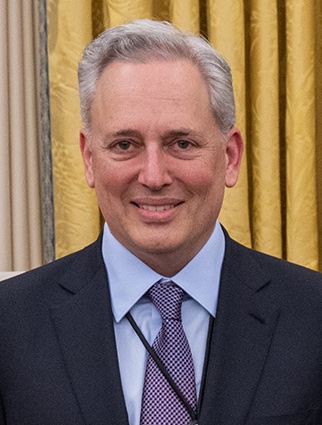 David Sacks
2
thin
4 Nov 2025 – 27 Mar 2026
+237 d
David Sacks
2
thin
4 Nov 2025 – 27 Mar 2026
+237 d
The chronologysourced and dated, oldest first
-
-
Bill Gurley
Gurley reports Trump proposed automatic green cards for anyone completing a four-year US degree.
“And he proposed something apparently at the roundtable. He said, anybody who comes here for a four year education completes their degree in The United States, we're gonna give them a green card.”
-
Brad Gerstner
Gerstner states lockdowns achieved nothing according to excess death data and lost generations of kids from school.
“I think most people believe there were consequences to lockdowns definitely with kids. Yes. Lost generations of kids from school.”
-
Bill Gurley
Gurley says China graduates 35% STEM versus below 10% in US, giving China the pieces needed to compete.
“while we are, like removing advanced STEM courses in California, the number of graduates in China's university system that are STEM is 35%, and that number is below 10 in The US.”
-
Bill Gurley
Gurley says China graduates 35% STEM versus below 10% in US, giving them necessary advantages.
“the number of graduates in China's university system that are STEM is 35%, and that number is below 10 in The US.”
-
Brad Gerstner
Gerstner cites studies showing children with investment accounts have better educational and economic outcomes.
“We know that kids who have an investment account for birth, they're more likely to graduate from high school. They're more likely to be financially literate.”
-
-
-
Howard Lutnick
Lutnick claims high school educated American workers live seven years less than college educated.
“The workforce in The United States Of America, two thirds is high school educated, one third is college educated. The life expectancy of my high school educated workforce is seven years lower.”
-
Howard Lutnick
Lutnick announces 5 million guaranteed high-tech jobs starting at $125,000-$150,000 through Commerce and Education departments.
“We, the commerce department and the education department, are gonna come out with 5,000,000 jobs where if you're gonna go into that program and get trained, you get a guaranteed job with one of the high-tech companies in America, and they guarantee you a job starting at around 125 to 150,000,”
-
Howard Lutnick
Lutnick says high school educated workers live seven years less than college educated due to despair.
“Average life expectancy of high school educated workforce so by the way, United States Of America, two thirds is high school educated, one third is college educated.”
-
Chamath Palihapitiya
Palihapitiya says masters and PhD graduates get OPT visas for multiple years to find jobs.
“They are off the charts smart. But because they did a master's or a PhD, they come with a couple of years, and you can oftentimes extend that.”
-
David Friedberg
Friedberg was the first person to review Final Frontier's app while still a student preparing for exams.
“Like, I was, I believe, the first person to review their, their app and a few other things and give feedback on it.”
-
David Friedberg
Friedberg describes treating Final Frontier with ownership mentality despite having no actual equity stake in the company.
“I view this company as my I I have ownership in this. I don't actually have ownership in this, but my mentality is I do have ownership in this.”
-
David Friedberg
Friedberg emphasizes moving on from past failures like exam attempts to focus on present goals.
“The reason I started thinking this way and saying this is because you have to move on from that past.”
-
David Sacks
Sacks says Saudi elite are US-educated and seek partnership with America, not competition.
“Many of the Saudi elite have studied in The US. Second, they want to have a good relationship and a partnership with The United States.”
-
Chamath Palihapitiya
Palihapitiya predicts tech companies would pay salaries for electrician training due to high demand.
“I bet if you went to Google, they would not only subsidize you, they would probably pay you a salary to get educated to do that job.”
-
David Friedberg
Friedberg argues federal student loans remove market checks, enabling colleges to raise tuition annually without constraint.
“And as a result, there's no market check. So in the case of education, the colleges can charge more every year, and the student is free to just get more loans.”
-
David Friedberg
Friedberg notes college administrators grew from 10% to 60% of staff over thirty years due to unlimited loans.
“My salary will go from $1.30 to 200 if I become a manager and hire four people. Fast forward thirty years, 10% of staff as administrators to 60% of staff as administrators.”
-
David Friedberg
Friedberg states 40 million Americans graduated with student loans in the last decade, averaging $40,000 debt each.
“four you know, four forty million Americans graduated in last ten years from student from college with student loan. Average student loan debt $440,000.”
-
-
-
Bill Gurley
Gurley notes colleges now require major selection at application, three years earlier than before.
“Now they make kids apply to majors when they apply to college a So lot of you've brought that forward like three years.”
-
Bill Gurley
Gurley criticizes schools requiring major declaration as high school juniors when students cannot know their passion yet.
“Now at many schools, you have to apply to your major, like, as you're applying to college. So you're a junior in high school and people are like, what's your passion?”
-
Bill Gurley
Gurley cites Stanford research showing 40% of people shift away from their college major within four to five years.
“But a lot of people do. There's Dave Evans at Stanford who does the Designing Your Life class and book, you know, they highlight that like four years, five years out, 40% of people are no longer doing the work that was in their major.”
-
Bill Gurley
Gurley notes forty percent of people shift away from college major within five years.
“I invested all of this to get to this college, to get to this degree. And if I move away from that, did I just waste all that time?”
-
Bill Gurley
Gurley says colleges now require major selection at high school junior year, three years earlier than before.
“So we've moved the decision of what major are you gonna pick from the end of your sophomore year to the end of your junior year in high school.”
-
Bill Gurley
Gurley's research found seven out of ten college graduates would do it differently if starting over.
“And seven out of 10 said yes. Wow. And we redid this study with Wharton to make sure we had done it scientifically”
-
Bill Gurley
Gurley says colleges now require major applications at high school junior year, three years earlier than before
“Today at many colleges, you have to apply to the major as a junior in high school. So that mindset has been lost.”
-
David Friedberg
Friedberg argues AI enabling humans to reach their potential is a fundamental right in education.
“Practically no one is reaching their potential. Yeah. What AI does is it allows humans to reach their true potential Yeah. As a human.”
-
David Friedberg
Friedberg argues AI enables humans to reach their potential, a fundamental right in educational systems.
“What AI does is it allows humans to reach their true potential Yeah. As a human.”
-
David Sacks
Sacks warns against banning AI for kids when China is incorporating it into K-12 education.
“In China, they're incorporating AI into k through 12 education. Are we gonna ban it for our kids and teenagers? I think that'd be a terrible mistake.”
-
Bill Gurley
Gurley says ultra competitive college path creates zero sum mindset when most fields actually have tons of winners.
“And in most fields, and I'm sure this is true in theater even though I've never worked in it, there's tons of winners.”
-
Bill Gurley
Gurley says college prep system evolved so everyone feels forced to play resume-building game starting in sixth grade.
“I don't think there's anybody that's intentionally making wrong decisions, but the system has evolved to a place where everyone feels like they have to play the game.”
-
Bill Gurley
Gurley says competitive parents start building resumes by sixth grade with programmed activities, citing Haidt's resume arms race concept.
“by the time you're in sixth grade, if you're a kid, you know, in a in a competitive environment with competitive parents, they're like, you know, okay, we gotta start pound building that resume.”
-
Bill Gurley
Gurley cites data showing over 50% of people work outside their college major ten years after graduation.
“Like over 50% of people are no longer working in the career that was was stated by their major. And I bet that number's getting worse.”
-
Bill Gurley
Gurley warns that rote knowledge taught in school is already in AI models, making it an unsafe career position.
“If you just arm yourself with the road algorithms that they taught you in school, those are in the models.”
-
Bill Gurley
Gurley says college admissions pressure creates sixth-grade resume arms race leaving kids overscheduled and unable to find fascinations.
“I think the schools are so hard to get into that parents begin this thing in sixth grade, which Jonathan Hite calls the resume arms race, where you're just cello lessons, Mandarin lessons, lacrosse lessons, the kids are over scheduled”
-
Bill Gurley
Gurley notes colleges previously prohibited major selection until end of sophomore year to allow exploration.
“when I was young, when you went to college, they would not allow you to pick a major until the end of your sophomore year.”
-
Bill Gurley
Gurley criticizes modern colleges requiring 17-year-olds to commit to majors when applying.
“Today, at many schools, you have to apply to the major. So you're talking to a 17 year old saying, what do you wanna do the rest of your life?”
-
David Friedberg
Friedberg argues government student loan intervention caused 6x administrative cost increase and 8% annual tuition inflation.
“When the government intervenes in underwriting student loans and gives everyone a loan, administrative costs went up by six x and tuition skyrocketed 8% a year compounding for thirty years because the government said we'll underwrite any student loan.”
-
Chamath Palihapitiya
Palihapitiya warns liberal cities banning AI in schools will create economic segregation trapping kids in poverty.
“In all of these highly liberal bastions, they are embracing this far left wing ideology, and I think it's going to come with these kinds of policies.”
-
Where they overlapsame programme, same subject
- All-In Podcast also carries Chamath Palihapitiya, David Friedberg and David Sacks on this subject, at different times.
- BG2 Pod also carries Bill Gurley and Brad Gerstner on this subject, at different times.