Who is on this subjectordered by the date of their first quote here
4 of 6 lanes rest on fewer than 5 quotes and are marked thin. Offsets are days from the middle first-quote date, 8 Nov 2023 — a date, and nothing else. It is not a claim about who reached a view first.
-
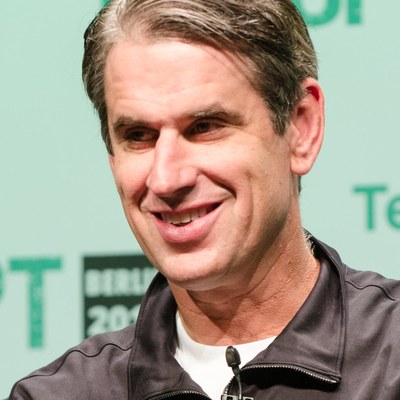 Bill Gurley
4
thin
20 Mar 2015 – 6 Jan 2025
-3155 d
Bill Gurley
4
thin
20 Mar 2015 – 6 Jan 2025
-3155 d
-
 David Friedberg
11
29 Sep 2022 – 27 Sep 2025
-405 d
David Friedberg
11
29 Sep 2022 – 27 Sep 2025
-405 d
-
 Brad Gerstner
15
8 Nov 2023 – 4 May 2026
+0 d
Brad Gerstner
15
8 Nov 2023 – 4 May 2026
+0 d
-
 Gavin Baker
3
thin
27 Aug 2024 – 27 Aug 2024
+293 d
Gavin Baker
3
thin
27 Aug 2024 – 27 Aug 2024
+293 d
- Dylan Patel 4 thin 2 Oct 2024 – 6 Jul 2026 +329 d
-
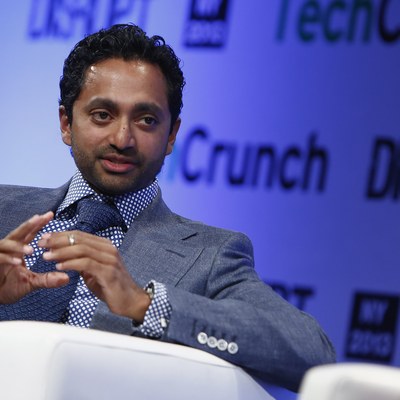 Chamath Palihapitiya
1
thin
31 Jul 2026 – 31 Jul 2026
+996 d
Chamath Palihapitiya
1
thin
31 Jul 2026 – 31 Jul 2026
+996 d
The chronologysourced and dated, oldest first
-
-
Bill Gurley
Gurley contrasts U.S. healthcare spending at 17% of GDP with Singapore's 1.7%, a 10x difference.
“The U. S. Spends 17% of GDP on healthcare and Singapore spends 1.7. So, it's a 10x delta and they have relatively reputable healthcare system.”
-
Bill Gurley
Gurley cites Morgan Stanley finding that cars are 97% idle despite representing 15% of global capital expenditure.
“There's an interesting thing that Morgan Stanley put out where they calculate that 97% of cars are idle.”
-
-
-
Bill Gurley
Gurley argues direct listings remove steps since IPOs use equivalent opening process the next day anyway.
“And so in the direct listing process, you're actually removing steps because once you do an IPO, you actually do with the exact equivalent of direct listing opening the next morning.”
-
-
-
David Friedberg
Friedberg states that producing 100 calories of animal protein requires 3,000 calories of energy and three years.
“To make a gram of animal protein, or let's say like 100 calories of animal protein, it takes 3,000 calories of energy into a system to make that animal protein.”
-
David Friedberg
Friedberg notes the $2 trillion annual beverage market is primarily shipping water, with only 1% differentiating molecules.
“Yeah, so people spend $2,000,000,000,000 a year on canned and bottled beverages from wine and beer, which is a trillion to coffee, tea, juice and soda, which is another trillion.”
-
-
-
David Friedberg
Friedberg reports the enzymatic starch synthesis system demonstrated nine times higher efficiency than growing corn for starch production.
“Now the efficiency of this system was nine times more efficient than corn, is what they demonstrated.”
-
Brad Gerstner
Gerstner notes Zuckerberg's March 'year of efficiency' followed his own 'time to get fit' letter.
“I wrote a letter last year about time to get fit. Right. You know, Andrew, Mark Zuckerberg in March wrote the year of efficiency.”
-
Brad Gerstner
Gerstner says AI is creating massive bottom-line opportunities as companies like Uber continue reducing headcount.
“The re you know, and Dara told you yesterday, quarter over quarter we've actually reduced head count again. Right. We have this massive bottom line opportunity in all these businesses because of AI.”
-
-
-
David Friedberg
Friedberg notes top US corn farmers get 300 bushels per acre versus 175 average, showing efficiency potential upside.
“And in The Us while the average is one seventy five, there are farmers who regularly get over 300 bushels.”
-
Brad Gerstner
Gerstner notes Meta reduced headcount from 87,000 to 67,000 since his letter in Q3 2022.
“When we wrote that letter in q three of twenty two, the head count at this company was 87,000 people. As of this quarter, it was 67,000 people.”
-
Brad Gerstner
Gerstner says Meta went from 87,000 to 67,000 employees and nearly tripled earnings per person in fifteen months.
“As of this quarter, it was 67,000 people. They've nearly tripled their earnings per person working at the company in in over that fifteen month period of time.”
-
Brad Gerstner
Gerstner says Meta nearly tripled earnings per employee in fifteen months.
“They've nearly tripled their earnings per person working at the company in in over that fifteen month period of time.”
-
Brad Gerstner
Gerstner contrasts Meta's headcount reduction and earnings explosion with Google's minimal changes and weaker stock performance.
“Facebook is actually reduced headcount significantly and their earnings per employee has exploded and Google kind of, you know, they're fine, but they really just haven't made many changes.”
-
Brad Gerstner
Gerstner reports major tech CEO plans 50% revenue growth with 10-20% personnel cost reduction over three years via AI.
“And he said, over the course of the next three years, we'll grow our top line 50%, and we'll reduce our personnel costs by 10 to 20%.”
-
Brad Gerstner
Gerstner says Meta grew net income from $22B to $55B while cutting headcount from 85,000 to 69,000 in two years.
“In two years, that company has gone from $22,000,000,000 in net income to $55,000,000,000 in net income. They've reduced their headcount from 85,000 people to 69,000 people.”
-
David Friedberg
Friedberg explains Ohalo's system produces uniform potato seed, eliminating need for warehouse storage of seed potatoes.
“With boosted, with our system, not only can we breed potato, but we can then make uniform seed. So every seed that comes out of that potato is the same.”
-
David Friedberg
Friedberg says Ohalo's system creates uniform potato seed, allowing a handful to replace warehouses of potato.
“So now we can take that seed and farmers can use it to plant. So eventually, a handful of seed replaces warehouses of potato”
-
Brad Gerstner
Gerstner warns excess capital distorts company behavior and makes efficiency difficult when all options can be funded.
“There is absolutely no doubt in my mind that excess capital distorts company behavior. Okay? And in particularly these early phases, it's very difficult.”
-
Brad Gerstner
Gerstner praises Jassy's efficiency focus at Amazon retail, expects margin expansion as investment thesis.
“Why are we in Amazon? Because we think the retail businesses margins are gonna go up. Jassy has absolutely found religion.”
-
Brad Gerstner
Gerstner says Amazon CEO Jassy is aggressively focused on running the retail business efficiently.
“Jassy has absolutely found religion. He's in animal mode when it comes to making sure that they're running that as efficiently as possible.”
-
Gavin Baker
Baker explains MFU runs at 35-40%, measuring the percentage of theoretical compute actually used for training.
“MFU, model flops utilization, and that generally runs around 35 to 40%. And that's literally the percentage of compute, theoretical compute flops that you're actually applying to trading.”
-
Gavin Baker
Baker explains higher MFU allows 25% faster time to market with same GPU and power spending.
“You have the same amount of GPUs and the same amount of power presumably. You could choose between faster time to market.”
-
Gavin Baker
Baker explains that 50% MFU versus 40% MFU enables 25% faster time to market for AI models.
“You could choose between faster time to market. If you run a 50% MFU and your competitor's running 40 for an equivalent amount of trading flops, you could be in market 25% faster.”
-
David Friedberg
Friedberg reports Chinese enzymatic starch synthesis system is nine times more efficient than growing corn.
“Now the efficiency of this system was nine times more efficient than corn, is what they demonstrated.”
-
Dylan Patel
Patel claims 100x efficiency gains possible from chip architecture improvements even without further process node shrinking.
“There are 100 x gains from architecture. Even if we, like, literally stop shrinking, I think we could have 100 x gains from architectural advancements.”
-
Brad Gerstner
Gerstner says NVIDIA generates $4M revenue and $2M profit per employee, unprecedented efficiency.
“You know NVIDIA is in a league of its own really, know, at about 4,000,000 of revenue per employee, about 2,000,000 of profits or free cash flow per employee.”
-
Brad Gerstner
Gerstner observes companies can now cut tens of thousands of employees while increasing customer satisfaction, unprecedented historically.
“Never have has he seen or have I seen the ability for companies to take out 10,000 people and actually see customer satisfaction scores increase.”
-
Brad Gerstner
Gerstner says COVID and zero interest rates led to gross excesses and misallocation.
“You know, we had these negative interest rates, this zerp period that just led to gross excesses across the economy, misallocation of resources.”
-
-
-
Bill Gurley
Gurley criticizes rural broadband spending, contrasting $250 marginal cost with expensive fiber buildout.
“And instead of a $250 marginal cost to implement a rural broadband, we're gonna get bulldozers out and drop fiber lines to a ranch in the middle of nowhere.”
-
David Friedberg
Friedberg says Ohalo's system creates uniform potato seed, replacing warehouses of chopped potatoes with handfuls of seed.
“With boosted with our system, not only can we breed potato, but we can then make uniform seed. So every seed that comes out of that potato is the same.”
-
David Friedberg
Friedberg says Ohalo's potato seed will replace warehouses of chopped potatoes currently used for planting.
“So eventually a handful of seed replaces warehouses of potato, chopped up potato that are being put in the ground.”
-
David Friedberg
Friedberg envisions replacing warehouse-scale potato storage with handfuls of true seed for planting.
“So now we can take that seed and farmers can use it to plant. So eventually, handful of seed replaces warehouses of potato chopped up potato that are being put in the ground.”
-
David Friedberg
Friedberg states new architecture reduces AI energy consumption by 70,000x compared to H100 chips.
“And the energy was reduced by 40,000 x compared to Jetson Nano, 90,000 x compared to RDX forty ninety, and a 70,000 x energy reduction for the same outcome over an h 100.”
-
-
-
Brad Gerstner
Gerstner says NVIDIA is one of the most efficient on token per watt per dollar basis.
“Token per watt per dollar. NVIDIA is one of the most efficient in the world.”
-
Dylan Patel
Patel argues three years of improvement came from model layer advances plus hardware-software co-design, citing smaller Qwen models outperforming GPT-4.
“If you look back three years, it's GPT-four. Now it's maybe like quen, one of the smaller quen models that's like 27B parameters total and 2,000,000,000 active is way better.”
-
Dylan Patel
Patel argues co-optimizing hardware, software, and models produces 100x gains instead of 8x from multiplicative 2x improvements per layer.
“The real breakthrough innovation is when you leapfrog a few layers, you co optimize and co design them, and now all of a sudden you've taken what could have been a 2x here, 2x here, 2x here, and instead of being multiplicative to 8x, it's actually 100x, because you've optimized it across all three layers.”
-
Dylan Patel
Patel claims smaller Quen models with 27B total parameters and 2B active outperform GPT-4 from three years ago.
“If you look back three years, it's GPT-four. Now it's like maybe like quen one of the smaller quen models that's like 27 b parameters total and like 2,000,000,000 active is like way better.”
-
Chamath Palihapitiya
Palihapitiya previews upcoming AI efficiency gains that will cut token consumption by 50 to 75 percent for identical tasks.
“What I would tell you is that there are some incredible efficiencies that I think are about to be demonstrated, which effectively cut token consumption by about 50 to 75% for the same task.”
-
Where they overlapsame programme, same subject
- All-In Podcast also carries Chamath Palihapitiya and David Friedberg on this subject, at different times.
- CNBC Television also carries Bill Gurley and Brad Gerstner on this subject, at different times.