Who is on this subjectordered by the date of their first quote here
8 of 10 lanes rest on fewer than 5 quotes and are marked thin. Offsets are days from the middle first-quote date, 10 Oct 2025 — a date, and nothing else. It is not a claim about who reached a view first.
-
 David Friedberg
37
19 Sep 2020 – 13 Aug 2026
-1847 d
David Friedberg
37
19 Sep 2020 – 13 Aug 2026
-1847 d
-
 Brad Gerstner
4
thin
4 Apr 2024 – 1 Oct 2024
-554 d
Brad Gerstner
4
thin
4 Apr 2024 – 1 Oct 2024
-554 d
-
 Gavin Baker
1
thin
27 Aug 2024 – 27 Aug 2024
-409 d
Gavin Baker
1
thin
27 Aug 2024 – 27 Aug 2024
-409 d
-
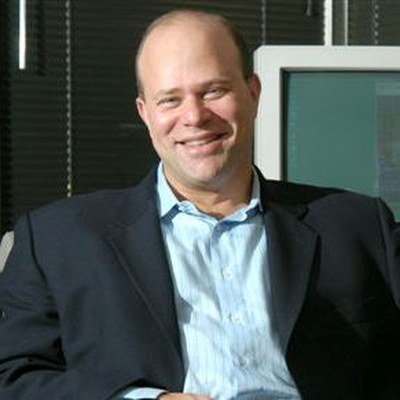 David Tepper
2
thin
26 Sep 2024 – 26 Sep 2024
-379 d
David Tepper
2
thin
26 Sep 2024 – 26 Sep 2024
-379 d
-
 Chamath Palihapitiya
21
10 Oct 2025 – 31 Jul 2026
+0 d
Chamath Palihapitiya
21
10 Oct 2025 – 31 Jul 2026
+0 d
-
 Marc Rowan
3
thin
10 Dec 2025 – 21 Dec 2025
+61 d
Marc Rowan
3
thin
10 Dec 2025 – 21 Dec 2025
+61 d
- Dylan Patel 2 thin 3 Feb 2026 – 3 Feb 2026 +116 d
-
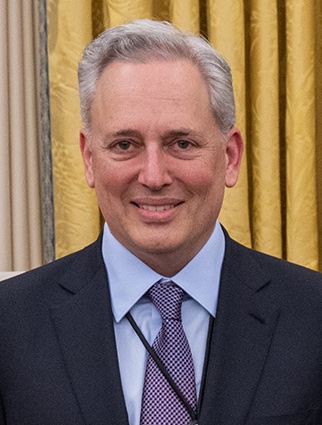 David Sacks
3
thin
22 Apr 2026 – 18 Jul 2026
+194 d
David Sacks
3
thin
22 Apr 2026 – 18 Jul 2026
+194 d
-
 Bill Gurley
1
thin
8 Jul 2026 – 8 Jul 2026
+271 d
Bill Gurley
1
thin
8 Jul 2026 – 8 Jul 2026
+271 d
-
 John Williams
1
thin
John Williams
1
thin
The chronologysourced and dated, oldest first
-
-
David Friedberg
Friedberg says nuclear plant regulatory costs rose from $100 million to $10 billion over two decades.
“And now it is so cost prohibitive. It's something like $10,000,000,000 now from maybe, you know, a 100,000,000, you know, two decades ago.”
-
-
-
David Friedberg
Friedberg states that producing 100 calories of animal protein requires 3,000 calories of energy and three years.
“To make a gram of animal protein, or let's say like 100 calories of animal protein, it takes 3,000 calories of energy into a system to make that animal protein.”
-
David Friedberg
Friedberg states that producing 100 calories of animal protein requires 3,000 calories of energy and three years.
“To make a gram of animal protein, or let's say like 100 calories of animal protein, it takes 3,000 calories of energy into a system to make that animal protein.”
-
David Friedberg
Friedberg claims a 10-meter cube of ocean water could provide all of Earth's electricity via plasma fusion.
“if you look at the amount of electricity that humans consume on planet Earth today, it would take about a 10 meter by 10 meter by 10 meter cube of ocean water to make all the electricity that we consume today if we could put that into a plasma fusion system”
-
David Friedberg
Friedberg explains inflation moves through economy in stages, starting with commodities before becoming sticky in services.
“So the first thing we saw inflate was sort of hard commodities and soft commodities, things like energy and agricultural products and metals and so on.”
-
-
-
David Friedberg
Friedberg predicts energy production should increase 100-fold over the next century versus 20-fold in the last.
“So we've increased energy production by about 20 fold in the last hundred years on earth. I think in the next hundred years, we can and should increase energy production by over a 100 fold.”
-
David Friedberg
Friedberg predicts energy production should increase 100-fold over the next century versus 20-fold in the last.
“So we've increased energy production by about 20 fold in the last hundred years on earth. I think in the next hundred years, we can and should increase energy production by over a 100 fold.”
-
David Friedberg
Friedberg argues renewables cannot replace everything and a portfolio of energy sources including fusion is needed.
“Great. But they're not going to kind of replace everything. Fission has this regulatory. So we have to have a portfolio of stuff.”
-
David Friedberg
Friedberg argues for a portfolio approach to energy, noting fusion's physics is proven by the sun's existence.
“So we have to have a portfolio of stuff. Fusion, from a first principles perspective, as you know, works because we see it working in the sky. So we know that this physics is real.”
-
David Friedberg
Friedberg reports venture-funded fusion companies grew from 7 three years ago to 70 today.
“So a couple of years ago, three years ago, was about seven venture funded fusion companies. As of the end of last year, Q3 of last year, count was 47.”
-
-
-
David Friedberg
Friedberg redefines founder as whoever drives innovation through persistent failure, not necessarily the original starter.
“The founder is the person who, from whom the energy to drive, to innovate and change the business comes from. And that could be a different person.”
-
Brad Gerstner
Gerstner argues people would be more excited about nuclear fission if discovered today than they are about AI.
“if World War II never happened, the atomic bomb never happened, and someone just showed up in 2024 and said, I figured out this thing, it's nuclear fission, people would be like, oh my god, like, probably be more excited than you are about AI.”
-
Brad Gerstner
Gerstner notes Amazon bought land near nuclear facility while 30-35% US production comes from independent sellers.
“And, once again, according to Phil, about 35%, 30% of the production in The US is from independent energy producers who who basically sell to whoever they decide they want to sell to.”
-
Brad Gerstner
Gerstner warns data centers acquiring independent energy producers could trigger regulatory intervention on grid pressure.
“if you start to see data centers pick off the independents, that could put pressure on the grid in a way that might bring the regulators in to voice their opinion.”
-
David Friedberg
Friedberg says true potato seed replaces warehouses of chopped potato, reducing cost and environmental impact.
“eventually, a handful of seed replaces warehouses of potato chopped up potato that are being put in the ground. So you can move to an, you know, a low cost, more energy, more environmentally friendly,”
-
David Friedberg
Friedberg argues industrialization of agriculture solved food crises but increased carbon, energy and land footprints.
“So the industrialization of agriculture has largely supported these crises and and resolved these crises for humanity, but the industrialization of agriculture has also driven us into a higher carbon footprint, a higher energy footprint, a higher land footprint.”
-
Gavin Baker
Baker argues global warming is solved because solar efficiency compounds at 10% yearly and batteries at 8%.
“And it is solved because photovoltaic cell efficiency is compounding just under 10% a year, and battery efficiency is compounding 200 bps less than that.”
-
David Tepper
Tepper says meeting AI power needs will require using natural gas.
“It has to be if you're gonna meet these power needs of what they need for AI, you're gonna have to use natural gas. You're gonna have to use natural gas.”
-
David Tepper
Tepper argues meeting AI power needs will require natural gas, not just nuclear.
“It has to be if you're gonna meet these power needs of what they need for AI, you're gonna have to use natural gas.”
-
Brad Gerstner
Gerstner argues AI policy and energy policy must be integrated at national level.
“you cannot have a strategic AI policy at a national level without a strategic energy policy at a at a national level. They're really tight at the hip.”
-
-
-
David Friedberg
Friedberg says dysfunctional mitochondria may be a key driver for cancers, Alzheimer's, Parkinson's, ALS, and autism.
“So every cell in our body gets its energy, which is what it uses to function from the mitochondria.”
-
David Friedberg
Friedberg reports Chinese researchers produced stem cells making 854 times normal mitochondria levels, 5.7 times more energy-efficient.
“And those mitochondria were on average 5.7 times more efficient at making energy, ATP. So they created highly energetic mitochondria and they made a lot of them.”
-
David Friedberg
Friedberg notes we could theoretically synthesize any element using heavy ion beams if energy costs dropped sufficiently low.
“So theoretically, we could make any element we want if energy costs were low enough.”
-
David Friedberg
Friedberg notes we could theoretically synthesize any element using heavy ion beams if energy costs dropped sufficiently low.
“So theoretically, we could make any element we want if energy costs were low enough.”
-
David Friedberg
Friedberg argues once robots automate labor, cost becomes purely a function of electricity at 3500 calories per person globally.
“So, you know, we have if robots are making all of our stuff, we could get robots to make housing for us, make roads for us.”
-
David Friedberg
Friedberg reports new German AI architecture achieved 7000x speedup over Jetson Nano and 100x over H100.
“Their architecture led to a speed up of 7,000 x compared to the NVIDIA Jetson Nano, 300 x compared with NVIDIA RTX forty ninety, and then a 100 x compared to the NVIDIA h 100.”
-
David Friedberg
Friedberg states new architecture reduces AI energy consumption by 70,000x compared to H100 chips.
“And the energy was reduced by 40,000 x compared to Jetson Nano, 90,000 x compared to RDX forty ninety, and a 70,000 x energy reduction for the same outcome over an h 100.”
-
David Friedberg
Friedberg states new architecture reduces AI energy consumption by 70,000x compared to H100 chips.
“And the energy was reduced by 40,000 x compared to Jetson Nano, 90,000 x compared to RDX forty ninety, and a 70,000 x energy reduction for the same outcome over an h 100.”
-
Chamath Palihapitiya
Palihapitiya argues Middle East countries seek peace because oil is becoming less valuable over time in the ground.
“So when that oil sits in the ground, the longer it sits in the ground, the less valuable it is to you because it doesn't actually add to your balance sheet.”
-
Chamath Palihapitiya
Palihapitiya predicts nuclear, natural gas, and solar will create electron abundance that diminishes oil demand within ten to twenty years.
“In the meantime, you have an abundance of electrons from nat gas. You have an abundance of electrons, frankly, from solar. And all of these things will ultimately diminish the net long bid to oil.”
-
Chamath Palihapitiya
Palihapitiya asserts energy control will enable equity participation in AI companies, elevating suppliers from low-margin to high-leverage positions.
“What's a different example? Brad mentioned this before, but energy will be the gating item beyond a shadow of a doubt.”
-
Chamath Palihapitiya
Palihapitiya asserts energy control will enable equity participation in AI companies, elevating suppliers from low-margin to high-leverage positions.
“What's a different example? Brad mentioned this before, but energy will be the gating item beyond a shadow of a doubt.”
-
David Friedberg
Friedberg explains 100 mega electron volt protons can shred DNA and circuits at microscopic level during solar storms.
“The green one is actually 100 mega electron volts. This is a massive amount of energy in a proton that can cause serious damage on a microscopic level. So it can shred DNA, for example.”
-
Marc Rowan
Rowan says consulting firms' 2030 energy projections are wildly inconsistent, showing experts have no clear view on data center future.
“I have a chart on the wall in my office, which is just about energy usage in the year 2030, not that far away.”
-
Marc Rowan
Rowan says consulting firms' 2030 energy forecasts are wildly inconsistent, resembling a scattered plot.
“And each of the good and the great consulting firms have weighed in, and it looks like a child scattered dark plot.”
-
David Friedberg
Friedberg says China has 400 nuclear reactor sites under construction, representing 60% of total US power production capacity.
“Suddenly, that's 60% of The US power production capacity being built right now in just nuclear by China.”
-
Marc Rowan
Rowan says consulting firms' 2030 energy forecasts are wildly scattered, showing data center equity is a fundamental bet.
“The fact is if experts looking out not all that far have no idea, we are making a fundamental bet on equity.”
-
-
-
Chamath Palihapitiya
Palihapitiya proposes a $100-200 billion tax equity vehicle for hyperscalers to subsidize homeowner solar and storage.
“The next major thing is when you actually create a 100 or $200,000,000,000 tax equity vehicle, and you have them completely subsidize and pay for the electricity costs of homeowners.”
-
Chamath Palihapitiya
Palihapitiya calls for a $300-500 billion tax equity fund to eliminate electricity costs for 50-100 million households.
“I think the president should try to create a $3.04, $500,000,000,000 tax equity fund and help eliminate the electricity costs of 50 to a 100,000,000 American households.”
-
Chamath Palihapitiya
Palihapitiya predicts utilities will be the biggest short trade if homeowners become their own power sources.
“I think the single biggest dollar short, it's not clear when, that one will be able to make will be on these utilities.”
-
Dylan Patel
Patel notes semiconductor industry doubles transistors yearly but energy industry wasn't prepared for similar growth.
“Whereas the energy industry in America wasn't. And and so, like, initially, people were, like, not creative. They're like, let's do let's do these kinds of gas plants.”
-
Dylan Patel
Patel says data center power capacity is growing from 15-18 gigawatts this year to 30 gigawatts next year.
“What was it It's this it's or this year is like I think it's like 18 ish, 10 ish. Okay. Fifteen fifteen to 18”
-
Chamath Palihapitiya
Palihapitiya says China's economy is enormously dependent on imported oil, about 20% of their economy.
“If you look at the conditions inside of the Chinese economy, the most interesting takeaway is that they are enormously dependent on imported oil, So about 20% of their economy.”
-
Chamath Palihapitiya
Palihapitiya argues that a fifth of China's imported oil from Iran and Venezuela is now off the table.
“And of that 19%, about a fifth of it comes exclusively from Iran and Venezuela. And now all of that is off the table.”
-
David Friedberg
Friedberg reports maritime insurance premiums spiked five-fold from 0.25% to 1.25% after IRGC announced Strait of Hormuz shutdown.
“The insurance premium spiked initially from a quarter percent, so point 25% of the value of the ship to 1.25%. So it went up by like five x.”
-
David Friedberg
Friedberg calculates 500 square meters of solar panels can ship one ton from moon every ten to fifteen minutes.
“It's like 500 square meters of solar panels will let you run a four kilometer mass driver to ship material back to the Earth every ten to fifteen minutes.”
-
David Friedberg
Friedberg explains moon's one-sixth gravity and lack of atmosphere enable frictionless, low-energy material transport.
“It's about one sixth the gravity and the complete lack of an atmosphere, meaning that it's frictionless to move material off of the moon and very low energy to move it off of the moon.”
-
David Friedberg
Friedberg explains moon's one-sixth gravity and lack of atmosphere enable frictionless, low-energy material transport.
“It's about one sixth the gravity and the complete lack of an atmosphere, meaning that it's frictionless to move material off of the moon and very low energy to move it off of the moon.”
-
David Friedberg
Friedberg claims energy costs dropping to one cent per kilowatt hour would expand every economy.
“if you get the cost of energy down to 1¢ a kilowatt hour, it absolutely expands every economy. Like, everything blows up. Like, imagine if you”
-
David Friedberg
Friedberg claims energy costs dropping to one cent per kilowatt hour would expand every economy.
“if you get the cost of energy down to 1¢ a kilowatt hour, it absolutely expands every economy. Like, everything blows up. Like, imagine if you”
-
David Friedberg
Friedberg reports AI has increased fusion plasma stability from seventeen seconds to thirty minutes in three years.
“AI seems to be solving that problem because they're now using AI to train the control of the magnetic fields in a way that's working.”
-
David Friedberg
Friedberg claims a swimming pool of ocean water could power Earth for a year via fusion.
“Basically, you could use a a swimming pool sized amount of ocean water to make all the electricity needed for an entire year for the planet Earth. That's what this can do.”
-
David Friedberg
Friedberg claims fusion could produce Earth's annual electricity from a swimming pool of ocean water.
“Basically, you could use a a swimming pool sized amount of ocean water to make all the electricity needed for an entire year for the planet Earth.”
-
David Friedberg
Friedberg says a swimming pool of ocean water could power Earth for a year through fusion.
“you could use a a swimming pool sized amount of ocean water to make all the electricity needed for an entire year for the planet Earth.”
-
David Sacks
Sacks says hyperscalers pledged not to raise residential electricity prices in exchange for easier permitting to build own power generation.
“But in exchange for that, the quid pro quo is we'd make it easier to do permitting and make it easier for them to basically stand up their own power generation.”
-
David Sacks
Sacks says Trump proposed letting AI companies build their own power generation behind the meter over a year ago.
“And I think a really good example of that was his idea around data centers where he said over a year ago, before data centers even became a hot political topic, that we should let our AI companies stand up their own power generation behind the meter.”
-
Chamath Palihapitiya
Palihapitiya claims AI company forecast misses are entirely due to power supply constraints, not demand issues.
“The reason that these folks may miss a number or a forecast have nothing to do with demand. It is entirely 100% due to the supply of the power necessary to generate the output token.”
-
Chamath Palihapitiya
Palihapitiya notes less than half of announced energy infrastructure projects are actually being constructed.
“People have announced all these projects, Jason, but less than half of it is actually being built.”
-
Chamath Palihapitiya
Palihapitiya reveals Microsoft's Three Mile Island energy deal costs more than double the prevailing spot rate.
“Do you know what their forward purchase agreement was? It was for more than two x the prevailing spot rate for energy. More than two x.”
-
Chamath Palihapitiya
Palihapitiya reveals Microsoft's Three Mile Island energy deal costs more than double the prevailing spot rate.
“Do you know what their forward purchase agreement was? It was for more than two x the prevailing spot rate for energy. More than two x.”
-
David Friedberg
Friedberg describes Koch Industries as a family business founded in 1940 with 120,000 employees across diverse sectors in 60 countries.
“It's a family owned business based out of Wichita founded in 1940 by Fred Koch with businesses ranging from energy, agriculture, chemicals, building products, consumer products, even cloud computing, and a very active minority investment portfolio a 120,000 plus employees, that statistic might be off across 60 countries.”
-
“If I had to make a guess, I think what's gonna happen is that since 2021, about 40% of all data centers get contested. Right?”
-
Bill Gurley
Gurley argues studying what fascinates you generates energy while unwanted study depletes it.
“Like like you get done reading it, you go, ah, you wanna tell somebody you're excited, you get energy. When you study things you don't wanna be studying, they sap energy.”
-
Chamath Palihapitiya
Palihapitiya's analysis shows U.S. faces energy shortage equivalent to three Californias by 2050 from expected load growth.
“If you just look at the load growth that's expected between now and 2050, we are about three entire California's worth of energy short.”
-
Chamath Palihapitiya
Palihapitiya's analysis shows U.S. faces energy shortage equivalent to three Californias by 2050 from expected load growth.
“If you just look at the load growth that's expected between now and 2050, we are about three entire California's worth of energy short.”
-
David Sacks
Sacks states US will face energy deficit equivalent to 2.5 Californias by 2050.
“By 2050, The United States Of America will be two and a half California's worth of energy in deficit. 2.5 California's, the fourth largest economy in the world.”
-
David Friedberg
Friedberg argues China's open source AI models may deflate model value, shifting it to compute infrastructure.
“Yeah. Perhaps the application layer, but fundamentally, this model energy being shifted to China and deflated and commoditized puts a real wrinkle.”
-
Chamath Palihapitiya
Palihapitiya cites New Mexico data showing natural gas falling from all energy production to under 30% since 2003.
“Mexico just published solar and batteries. Yeah. New Mexico just published a study that said since 2003 to now, nat gas production went from effectively all the energy to less than 30%, again, replaced by a combination of wind and solar plus batteries.”
-
Chamath Palihapitiya
Palihapitiya cites New Mexico data showing natural gas falling from all energy production to under 30% since 2003.
“Mexico just published solar and batteries. Yeah. New Mexico just published a study that said since 2003 to now, nat gas production went from effectively all the energy to less than 30%, again, replaced by a combination of wind and solar plus batteries.”
-
Chamath Palihapitiya
Palihapitiya reports Tesla plans to increase US solar production by an order of magnitude to over 100 gigawatts annually.
“They said, well, I think we're just going to increase the production of solar in America by an entire order of magnitude.”
-
Chamath Palihapitiya
Palihapitiya warns the US will face a 1.7 terawatt hour electricity deficit by 2050, equivalent to six times California's consumption.
“We will be 1.7 terawatt hours short by 2050, which is when you calculate it as energy, it is six x of California's entire energy consumption. Six California's short of energy.”
-
Chamath Palihapitiya
Palihapitiya warns the US will face a 1.7 terawatt hour electricity deficit by 2050, equivalent to six times California's consumption.
“We will be 1.7 terawatt hours short by 2050, which is when you calculate it as energy, it is six x of California's entire energy consumption. Six California's short of energy.”
-
“So China's got this massive amount of of energy that they can use to power electrified things. They've got 20 times the manufacturing square footage of The US, and much of it is automated.”
-
“So China's got this massive amount of of energy that they can use to power electrified things. They've got 20 times the manufacturing square footage of The US, and much of it is automated.”
-
-
-
John Williams
Williams attributes about one percentage point of March inflation to tariffs and energy prices.
“The combination of higher tariffs and energy prices has contributed about a percentage point to that figure.”
-
Where they overlapsame programme, same subject
- Chamath Palihapitiya and David Friedberg — All-In Podcast, 2 appearances together