Who is on this subjectordered by the date of their first quote here
2 of 4 lanes rest on fewer than 5 quotes and are marked thin. Offsets are days from the middle first-quote date, 20 Nov 2023 — a date, and nothing else. It is not a claim about who reached a view first.
-
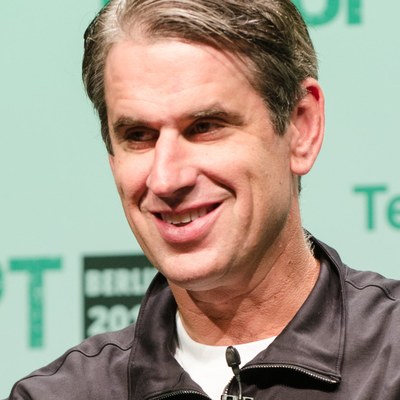 Bill Gurley
5
23 Mar 2012 – 29 Apr 2024
-4259 d
-
 Brad Gerstner
2
thin
20 Nov 2023 – 16 May 2024
+0 d
- Dylan Patel 3 thin 18 Sep 2025 – 9 Mar 2026 +668 d
-
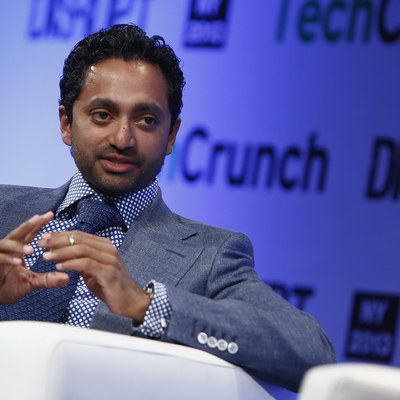 Chamath Palihapitiya
8
13 Feb 2026 – 14 Jul 2026
+816 d
The chronologysourced and dated, oldest first
-
-
Bill Gurley
Gurley says cloud migration is the most investable theme, predicting ten years of pulling enterprise computing infrastructure out.
“one of the most investable themes of our time simply because we spent the last thirty to forty years putting computing technology inside the enterprise Right.”
-
Bill Gurley
Gurley predicts the next ten years will involve removing enterprise technology and moving systems outside via SaaS.
“I say we spent forty years cramming technology into the enterprise. We're going to spend the next ten yanking it out. It's just so wholesale that you're moving systems outside.”
-
Bill Gurley
Gurley says industry spent forty years putting technology into the enterprise before SaaS reversal.
“The second thing is SaaS. I say we spent forty years cramming technology into the enterprise.”
-
-
-
Brad Gerstner
Gerstner claims AI delivers 30 to 50 percent productivity gains to engineers, unprecedented in technology history.
“If you think about what AI is already doing for the enterprise, we're seeing 30 to 50% productivity improvements in engineers. There's never been a technology history of technology.”
-
-
-
Bill Gurley
Gurley cites CrowdStrike as example of network effects in enterprise security through shared threat intelligence across customers.
“But they posted a memo four years ago titled the CrowdStrike Security Cloud Network Effect.”
-
Bill Gurley
Gurley says Sam Altman warned developers using OpenAI lightly that they'll be steamrolled unless they fully commit data.
“But then he said, if you do that, we're going to steamroll you and you need to bet on us being successful. Which would mean dumping your data and trusting OpenAI more fully.”
-
Brad Gerstner
Gerstner reports data company lamenting OpenAI sets pricing umbrella with no margin floor for models.
“I was talking to a large data company this week who's in the business of serving models, they were lamenting the fact that the pricing umbrella was set by OpenAI and there is no price, right? So that it's a much lower margin business than the traditional software business.”
-
-
-
Dylan Patel
Patel dismisses possibility of unofficial MCP servers for sensitive company data like Slack or SAP.
“There's not gonna be an unofficial MCP running out there. Right? Like, you know, it's like like, fuck off. Right? Like, that's just not gonna happen.”
-
Dylan Patel
Patel describes public inference as a loss leader to generate private sovereign and enterprise engagements.
“And so I think that's what a lot of this is, is you end up with the public business as like a loss leader just to generate private engagements, whether it be sovereigns or enterprises.”
-
-
-
Chamath Palihapitiya
Palihapitiya predicts enterprises will face a critical decision between cloud convenience and on-prem data security due to AI.
“When they realize that that is a problem, the enterprise will have to decide, do I just give up and keep running all of this stuff in the cloud in a shared experience, or do I bear the incremental cost of running this stuff in a more coordinated manner that I control on prem?”
-
Chamath Palihapitiya
Palihapitiya uses GEICO actuaries as an example of why companies cannot use open LLM instances with proprietary data.
“Do I, if I'm GEICO, want to have all of my actuaries using all of our proprietary private and confidential data on risk pricing in an open instance of an LLM?”
-
Chamath Palihapitiya
Palihapitiya says his company now sets token budgets for developers due to AI costs escalating rapidly.
“We're getting to a place where we have to basically now say, what is the token budget that we're willing to give our best devs?”
-
Dylan Patel
Patel says his company's AI coding spend hit $6 million annual run rate, with single engineers spending $8,000.
“Literally, we we you know, like, one day my head of ops was like, guys, our run rate of spend is $6,000,000. This is not sustained.”
-
Chamath Palihapitiya
Palihapitiya says a $100 billion revenue customer brings retirees out of retirement to explain COBOL code.
“They have to go and get retirees to I swear to God, dude, this is a $100,000,000,000 a year company out of retirement to come into the office to explain what this COBOL code does.”
-
Chamath Palihapitiya
Palihapitiya reports Fortune 20 company spent $200M on AI tokens seeking $1B savings but got minimal results.
“CEO asked for a billion in AI generated OpEx savings at the beginning of the year. So we're six months in. The team has spent $200,000,000 on tokens and with minimal results.”
-
Chamath Palihapitiya
Palihapitiya asserts AI has not delivered measurable productivity gains yet despite token consumption in enterprises.
“But underneath that is not AI because we know this. It hasn't done anything measurable yet at the end consumption of these tokens.”
-
Chamath Palihapitiya
Palihapitiya concludes actual AI ROI from publicly available data is between zero and two percent of EPS growth.
“And so the answer, far as all publicly available data, was that the actual ROI was somewhere between zero and two percent.”
-
Chamath Palihapitiya
Palihapitiya predicts CEOs will discover unexpected OpEx misses from runaway AI token spending they don't know about.
“for us. The CEOs and the CFOs, in my opinion, probably have no idea how much token maxing is going on inside of their organizations.”
-
Where they overlapsame programme, same subject
- BG2 Pod also carries Bill Gurley and Brad Gerstner on this subject, at different times.