Who is on this subjectordered by the date of their first quote here
1 of 6 lane rests on fewer than 5 quotes and is marked thin. Offsets are days from the middle first-quote date, 23 Jun 2020 — a date, and nothing else. It is not a claim about who reached a view first.
-
 David Friedberg
9
8 Oct 2011 – 8 Aug 2026
-3181 d
David Friedberg
9
8 Oct 2011 – 8 Aug 2026
-3181 d
-
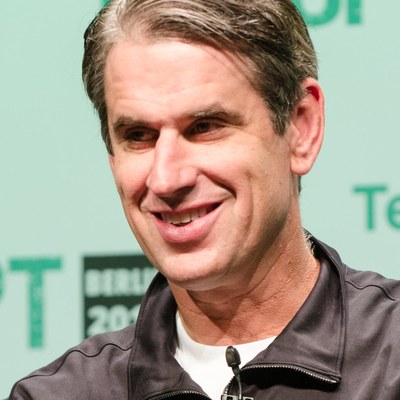 Bill Gurley
16
2 Oct 2019 – 21 Apr 2026
-265 d
Bill Gurley
16
2 Oct 2019 – 21 Apr 2026
-265 d
-
 Brad Gerstner
56
23 Jun 2020 – 7 Jan 2026
+0 d
Brad Gerstner
56
23 Jun 2020 – 7 Jan 2026
+0 d
-
 Gavin Baker
7
25 Jan 2022 – 9 Dec 2025
+581 d
Gavin Baker
7
25 Jan 2022 – 9 Dec 2025
+581 d
- Dylan Patel 17 5 Dec 2023 – 6 Jul 2026 +1260 d
-
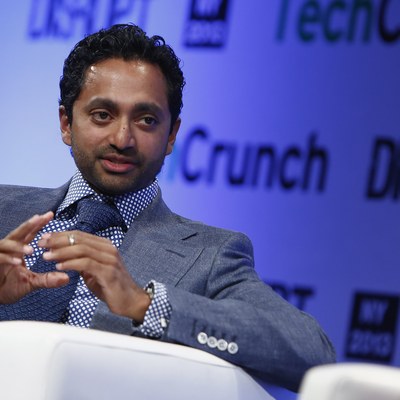 Chamath Palihapitiya
3
thin
7 Sep 2025 – 6 Dec 2025
+1902 d
Chamath Palihapitiya
3
thin
7 Sep 2025 – 6 Dec 2025
+1902 d
The chronologysourced and dated, oldest first
-
-
David Friedberg
Friedberg estimates Google starting salaries at $105,000 for new graduates as a startup comparison baseline.
“And if you were to get a job at Google when you graduate, the anecdotal evidence suggests that your first year salary would be about $105,000 this year.”
-
-
-
Bill Gurley
Gurley traces Silicon Valley's criticism of IPO unfairness through eBay, Hambrick and Quist, and Google's Dutch auction.
“Pierro Midiard had at eBay calling it undemocratic. You know, Hambrick and Quist, Bill Hambrick, twenty years ago called the IPO an insider's game.”
-
-
-
Brad Gerstner
Gerstner invested in Priceline at $1B valuation; it became Google's largest advertiser and built a $100B business.
“We started investing in it when it was a billion dollar business and Priceline became the single largest global advertiser on Google and build a $100,000,000,000 vertical search business by providing better access to hotels and hotel inventory but that business would not have existed without Google.”
-
“We started investing in it when it was a billion dollar business and Priceline became the single largest global advertiser on Google and build a $100,000,000,000 vertical search business”
-
Brad Gerstner
Gerstner says Priceline built a $100 billion vertical search business by becoming Google's largest global advertiser.
“We started investing in it when it was a billion dollar business and Priceline became the single largest global advertiser on Google and build a $100,000,000,000 vertical search business by providing better access to hotels and hotel inventory”
-
Brad Gerstner
Gerstner says Priceline built a $100 billion vertical search business by becoming Google's largest global advertiser.
“We started investing in it when it was a billion dollar business and Priceline became the single largest global advertiser on Google and build a $100,000,000,000 vertical search business by providing better access to hotels”
-
Brad Gerstner
Gerstner's core Google insight was search volume and revenue per search would both increase over time.
“The high quality insight was simply that Google was going to do more searches in the future than they did in the past and that the revenue per search was going to go up over time.”
-
Brad Gerstner
Gerstner notes Google compounded at similar rates to other platforms despite his early worries about search's future.
“And I was talking of I was worried about the future of search and the future of vertical search starting in 2010, But look at Google's compounded at about the rate the other big platforms have in The US.”
-
-
-
Gavin Baker
Baker says Google was first cloud provider to stop competing with independent infrastructure software providers.
“But they try and force the open source infrastructure build themselves. And I think Google was the first one to realize, like, Hey, this is kind of silly.”
-
Gavin Baker
Baker argues Google was first cloud provider to embrace rather than compete with third-party infrastructure software.
“B, there's a lot of money to be made just in providing these primitives. Let's stop trying to compete with these independent infrastructure software providers right on top of the cloud.”
-
David Friedberg
Friedberg recounts Larry Page and Sergey Brin calling third-party cookies evil in early Google days, proving prescient.
“Wesley and I kind of started working together after that because the first thing Larry and Sergei said to me was that's evil. Third party cookies are evil.”
-
David Friedberg
Friedberg says Google AdWords aimed for zero bounce-back rate, meaning users never returned to search after clicking an ad.
“And then 100% of the time they don't come back. So the bounce back rate is zero.”
-
David Friedberg
Friedberg says Google Analytics drove $500 million in additional AdWords revenue within a year of the $25 million acquisition.
“Within a year, I think we had shown through Hal Varian, who was our chief economist, we had demonstrated that Google Analytics increased AdWords revenue by $500,000,000 because so many advertisers were using it to improve their websites and make the conversions better that they were spending more on AdWords.”
-
-
-
Bill Gurley
Gurley notes the two best VCs at the time, Doerr and Moritz, invested in Google when he passed.
“I'd like to highlight, and I always do, the two best venture capitalists in the world at the time, John Doerr and Mike Maritz, kinda locked hands and said yes.”
-
Brad Gerstner
Gerstner warns that companies relying on Google's search ecosystem face potential value destruction from AI disruption.
“You're not gonna have to search through 10 blue links. And so, yes, a lot of the companies that were beneficiaries of the Google ecosystem are now suspect.”
-
Brad Gerstner
Gerstner says top tech leaders now believe the $20 trillion web search market is up for grabs.
“And I will tell you that the conversation around that table, there's increasing confidence that whatever comes next, right, the top of the funnel is up for grabs,”
-
Brad Gerstner
Gerstner says there's growing confidence that search dollars will redistribute over 5-7 years, even Google must cannibalize search.
“And make no mistake, Google is well positioned to make its claim for that, but its claim is going to come at the expense of search.”
-
Brad Gerstner
Gerstner characterizes Google as a monopoly that has been a tax collector on the Internet for twenty years.
“Google has been a monopoly, a tax collector on everything on the Internet for twenty years.”
-
Brad Gerstner
Gerstner characterizes Google as a twenty-year monopoly tax collector on the Internet with monopoly search pricing.
“Google has been a monopoly, a tax collector on everything on the Internet for twenty years. Okay? And they have monopoly pricing on search.”
-
Brad Gerstner
Gerstner argues Google's culture evolved from product-led growth to a research institution.
“the culture at Google had evolved in such a way that it had become more of a research institution than a product led growth institution.”
-
Brad Gerstner
Gerstner contends GPT has become the default verb for AI, not Google's Bard.
“So what is the verb in the age of AI? Do you bard or do you chat GPT? GPT has become the default verb for all things AI.”
-
Brad Gerstner
Gerstner says GPT has become the default verb for AI, not Google's Bard.
“Do you bard or do you chat GPT? GPT has become the default verb for all things AI.”
-
Brad Gerstner
Gerstner says Google made a mistake letting OpenAI go first despite having the technology and capabilities.
“And to relinquish that spot by letting OpenAI go first, when you had the technology, you had the supercompute, you had the capabilities to release that product, I think was a mistake.”
-
“I think there's plenty of time. If this is going to be as big and as transformational as humanity as we all think it will be, remember, you didn't have to invest in search until Google's IPO in 2004 to capture 95% of all ever generated by Internet search.”
-
Brad Gerstner
Gerstner argues waiting until Google's 2004 IPO still captured 95% of all search value ever created.
“you didn't have to invest in search until Google's IPO in 2004 to capture 95% of all ever generated by Internet search.”
-
Brad Gerstner
Gerstner conducted search experiment with Paul Reeder showing ChatGPT delivered answer instantly versus three to four minutes on Google.
“I said to Paul, you use Google and I'll use ChatGPT. I got the answer instantaneously. It took him three or four minutes of hunting and pecking around.”
-
Brad Gerstner
Gerstner argues Google 2004 IPO investors captured 90 percent of internet search profits, illustrating patience in venture.
“You could have waited to invest in Google in 2004 and their IPO and you would have captured 90 plus percent of all the profits ever generated in internet search.”
-
Dylan Patel
Patel claims Google is massively ramping TPU production, a closely guarded secret most DeepMind employees don't know.
“Google's actually ramping up TPU production massively. And I think people in AI would be like, Well, duh. But like, okay, who has the capability of figuring out the number?”
-
Dylan Patel
Patel says Google's TPU production numbers are closely guarded secrets that even most Google DeepMind employees don't know.
“Right? That's like a very closely guarded secret, most people that work at Google DeepMind don't even know number.”
-
Dylan Patel
Patel claims Google will have more compute than any other company by a large factor.
“Google is going to have more compute than any other company in the world period by like a large, large factor.”
-
Dylan Patel
Patel says OpenAI has a lot less total FLOPS than Google despite having more GPUs than most perceive.
“whole point was that Google you know, OpenAI, who everyone would be like, oh, yeah. They have more GPUs than anyone else. Right? But they have a lot less flops than Google.”
-
-
-
David Friedberg
Friedberg describes Google's book-scanning project as exemplifying leadership through big audacious goals that challenge teams.
“And those big thinking, those big ideas, those big audacious concepts, as a framing for the team, really, I think personified what I consider to be true leadership in an organization of people,”
-
Brad Gerstner
Gerstner contrasts Meta's 87,000 to 67,000 headcount reduction with Google staying flat at 187,000 to 183,000.
“You know? And like I said, they've tripled their earnings per per employee while going from 87,000 to 67,000 employees.”
-
Brad Gerstner
Gerstner notes Google barely reduced headcount from 187,000 to 183,000 over the same period.
“You know, if you look at Google over that same period of time, I pulled the numbers this morning.”
-
Brad Gerstner
Gerstner calls Google the greatest monopoly with greatest monopoly profits in capitalism history.
“But we also saw in the case of Google, as I've said, it's the greatest monopoly with the greatest monopoly profits in the history of capitalism.”
-
Brad Gerstner
Gerstner contrasts Meta's headcount reduction and earnings explosion with Google's minimal changes and weaker stock performance.
“Facebook is actually reduced headcount significantly and their earnings per employee has exploded and Google kind of, you know, they're fine, but they really just haven't made many changes.”
-
Bill Gurley
Gurley argues Google's cage-match ad model generates far higher revenue than transactional models could achieve.
“Their business model is to throw their customers in a cage match and let them compete with one other to the death.”
-
Bill Gurley
Gurley argues transaction models produce 10x less revenue per visit than ad models due to CAC-to-LTV dynamics.
“You're not going to get to the same revenue per visit with a transaction model that you do with the ad model, because you already mentioned CAC TV.”
-
Bill Gurley
Gurley argues Google lacks the internal culture to partner in win-win ways due to their cage-match business model.
“In addition to everything I brought up, because their core business model is to throw their customers in a cage match, they don't they don't have the culture internally to partner in a friendly win win way.”
-
Brad Gerstner
Gerstner states Google processes 10 billion queries daily, more than one per human globally.
“So, you know, a couple queries are more than a query for every human on the planet, and it has the most efficient system in the world for doing that.”
-
Brad Gerstner
Gerstner says Google's query growth had already slowed to 4% annually before AI, with 10 billion queries daily.
“And so the first thing that we just say is that the basing engagement, even before AI had slowed down a lot, because you're already at 10,000,000,000 queries a day.”
-
Brad Gerstner
Gerstner calculates AI answers cost 10x more than traditional search: 4 cents versus 0.3 cents per query.
“Now, what does it cost to do that for $7.50 tokens today? And of course, this will go down over time, but it's 10x more, right? It's 4¢ per query.”
-
Brad Gerstner
Gerstner says Google offers AI engineers $500K cash plus $1.5M in monthly-vesting RSUs, totaling millions annually.
“Okay? But instead of cash, for example, Google's offering 500,000 in cash plus a million and $0.5 in RSUs vesting monthly, right, to these engineers.”
-
Brad Gerstner
Gerstner says Google offers AI engineers $500k cash plus $1.5M in monthly-vesting RSUs.
“Google's offering 500,000 in cash plus a million and $0.5 in RSUs vesting monthly, right, to these engineers. So every single month, those RSUs are immediately available for sale.”
-
Brad Gerstner
Gerstner reports using ChatGPT exclusively instead of Google for a 45-minute tutoring session with his son.
“I found myself we never opened Google a single time, Bill. And it really unlocked a lot of learning and led to this forty five minute conversation back and forth that we had.”
-
Brad Gerstner
Gerstner's survey work shows people are turning to ChatGPT, Claude, and Apple Intelligence over traditional search.
“We do lots of survey work on this, Scott. People are turning to chat GPT, they're turning to Claude, they're turning to, why are we so excited about Apple Intelligence?”
-
Brad Gerstner
Gerstner argues users are shifting from Google's ten blue links to ChatGPT, Claude, and Apple Intelligence.
“Because people are going to turn to Apple Intelligence instead of 10 blue links to find answers to the questions they have.”
-
Brad Gerstner
Gerstner states Google was dominant in 10 blue links but is not dominant in the new AI era.
“They were dominant in 10 blue links. They are not dominant in this. There are a lot of other players in the age of What”
-
Brad Gerstner
Gerstner asserts Google lost its dominance in the AI era despite dominating traditional search.
“They were dominant in 10 blue links. They are not dominant in this. There are a lot of other players in the age of”
-
Brad Gerstner
Gerstner explains Google released Kubernetes for free as defensive move against Amazon's AWS dominance.
“Google did it again with Kubernetes, which is a piece of technology that lets you move your workloads very easily between clouds. They were worried Amazon was running away with AWS.”
-
Brad Gerstner
Gerstner says big four tech companies will spend $220 billion on capex this year.
“if you look at the big four, they're gonna spend $220,000,000,000 this year on CapEx.”
-
Bill Gurley
Gurley says Google and Apple present completely one-sided partnership terms that would be unacceptable with other parties.
“And you're presented with a set of terms that you would never consider with any other party out there. It's a completely one-sided deal.”
-
Gavin Baker
Baker reports Larry Page has said internally he is willing to go bankrupt rather than lose the AI race.
“Larry Page has evidently said internally at Google many times, I am willing to go bankrupt rather than lose this race.”
-
Brad Gerstner
Gerstner reports Google confirmed AI-enhanced search results monetize at the same rate as traditional search results.
“one of the key questions there was whether or not the AI enhanced search results were gonna monetize at the same level as non AI enhanced search results.”
-
Bill Gurley
Gurley explains Google's revenue per visit will fall with completed transactions because advertisers pay less for white-label rails.
“Because someone is spending marketing dollars to take that customer to their website and run the transaction with the hopes that they'll come directly back to that website.”
-
Dylan Patel
Patel reports Google has publicly confirmed training across multiple data centers in one region.
“Google has actually publicly stated that they've done this. They've trained across multiple data centers in a region.”
-
Dylan Patel
Patel says Google built rack-scale AI systems with Broadcom in 2018 before NVIDIA deployed similar architecture.
“Google did something very similar in 2018, right, with the TPU. Now they couldn't do it alone. Right? They know the software.”
-
Dylan Patel
Patel says Google deployed water cooling years before NVIDIA and achieves higher reliability than NVIDIA GPUs.
“Google's brought in water cooling for years. Right? NVIDIA only just realized they needed water cooling on this generation. And Google's brought in a level of reliability that NVIDIA GPUs don't have.”
-
-
-
Bill Gurley
Gurley explains missing Google despite negative signs including Yahoo's collapse and Larry and Sergey both wanting to be CEO.
“These were other search companies, right, at the time. Right. Larry and Sergey both wanted to be CEO and they were PhD students at Stanford.”
-
Brad Gerstner
Gerstner reports organic search traffic down 20-40% as companies push AI-embedded answers above traditional results.
“They're saying organic search is down 20 to 40%. Why? Because they're putting AI on top of it. They got to push it down the page.”
-
Brad Gerstner
Gerstner compares Biden's AI diffusion rule to hypothetically blocking Google exports in 2000.
“Can you imagine if in the year 2,000, Washington DC had said, oh my god, Google is so powerful that we're not gonna allow any other country in the world to have access to this Google machine that might give them answers to questions unless Google comes to Washington and gets federal approval”
-
Brad Gerstner
Gerstner says OpenAI reached 400 billion annual searches eight years faster than Google did.
“I did I saw some analysis from my team this week will post that OpenAI reached, you know, 400,000,000,000 annual searches, eight years faster than Google.”
-
Brad Gerstner
Gerstner says OpenAI reached 400 billion annual searches eight years faster than Google.
“I saw some analysis from my team this week will post that OpenAI reached, you know, 400,000,000,000 annual searches, eight years faster than Google. Right? So they're doing over a billion searches a day now.”
-
Brad Gerstner
Gerstner says ChatGPT reached a billion searches daily eight years faster than Google did.
“ChatGPT got to a billion searches a day. Eight years faster than Google did. Is not internet time. Is AI hyper speed. It is way faster.”
-
Brad Gerstner
Gerstner states OpenAI is four times the size Google was at IPO in revenue and searches.
“OpenAI today is four times the size that Google was when it went public in terms of revenue, in terms of searches.”
-
Brad Gerstner
Gerstner says Google page views grow 4% annually per user before ChatGPT subscription adoption.
“what you see on that chart is that absent ChatGDP, ChatGPT, maybe Google page views for a particular user are growing 4% per year.”
-
Brad Gerstner
Gerstner's data shows Google page views grow 4% annually for users without ChatGPT subscriptions, contrasting with ChatGPT subscribers.
“absent ChatGDP, ChatGPT, maybe Google page views for a particular user are growing 4% per year. So we are consuming more Google.”
-
Brad Gerstner
Gerstner reports Google page views drop 8-11% peak to trough after users subscribe to ChatGPT.
“And you can see peak to trough is down 8% year over year. Peak to trough is, let's say, down 11.”
-
Brad Gerstner
Gerstner's analysis shows Google page views decline 8-11% year-over-year for users who subscribe to ChatGPT.
“And you can see peak to trough is down 8% year over year. Peak to trough is, let's say, down 11. So clearly, page views are going down,”
-
Brad Gerstner
Gerstner notes the world changed dramatically in 24 months, switching from Google to ChatGPT.
“Sam's like the world has already changed dramatically over the course of last twenty four months, but people aren't, you know, it's not changed that much about our daily lives.”
-
Dylan Patel
Patel reports Google is backing out of Scale AI, spending around $250 million this year but reducing future commitment.
“Google's backing out, I think they're gonna spend on the order I've heard like $250,000,000 this year with them. And they're backing out.”
-
Dylan Patel
Patel reports Google is spending $250 million with Scale AI this year but backing out of the partnership.
“And they're backing out. Obviously, they've spent a lot of money and there's stuff they can't back out of, but it's like, that's gonna go down a lot.”
-
Brad Gerstner
Gerstner argues consumer ownership, not hardware, determines value; Google dominated for twenty years this way.
“The battle for the consumer is ultimately where the value accrues, Sonny, not who runs, you know, what hardware.”
-
Brad Gerstner
Gerstner reports Google inference generation increased 100x in a year, from 9 trillion to 980 trillion tokens monthly.
“A year ago, Google per month was doing about 9,000,000,000,000 tokens a month in terms of inference generation, right, compute generation. Today, it's 980,000,000,000,000 tokens.”
-
Brad Gerstner
Gerstner says Google's monthly token generation exploded 100x in a year, from 9 trillion to 980 trillion tokens.
“Today, it's 980,000,000,000,000 tokens. So from 9,000,000,000,000 to nine eighty, it's a 100 x increase in a year.”
-
Brad Gerstner
Gerstner contrasts Google's unrestricted global expansion with current AI restrictions, wants same for AI companies.
“They just went and competed around the world, and now the world runs on the democratic principles that are embedded within Google. I wanna see the same thing happen in the age of AI.”
-
Chamath Palihapitiya
Palihapitiya says the judge ruled against severe Google remedies because the free market is already reallocating billions in revenue.
“As a byproduct, we're reallocating tens of... Maybe hundreds of billions of dollars of revenue. And so the judge said the most severe remedies aren't necessary because the free market is doing this job.”
-
Brad Gerstner
Gerstner recalls Gurley warning Zillow that relying on Google's free links was dangerous and they built brand independently.
“Eventually Google will pull the rug on, you know, these free links. And so they really, unlike a lot of other websites, focus on building the brand outside of Google.”
-
Brad Gerstner
Gerstner warns that requiring AI companies to get Washington approval for foreign launches would prevent American technology dominance.
“Imagine in 2001, 2002, if we had said to Google, You can't launch in any other country unless you come to Washington and beg for a license to launch in any other country.”
-
Dylan Patel
Patel notes YouTube holds unique video data that gives Google training advantage despite scraping restrictions.
“I don't know what ungodly percentage of video is only on available on YouTube. And sure, you can scrape YouTube, blah blah blah.”
-
David Friedberg
Friedberg left Google at 25 in 2005, walking away from stock worth a couple million dollars without full funding.
“I left all my stock options on the table, all my RSUs I'd been given. It was worth a couple million dollars, and I was 25 years old back in 2005.”
-
Brad Gerstner
Gerstner states Google consumed 98% of all upside in search despite 20 competitors with good technology.
“Google had a lot of competitors. 20 competitors in search. They all have pretty good technologies, but Google consumed 98% of all the upside ever associated with search.”
-
Brad Gerstner
Gerstner argues Google captured 98% of all upside in search despite having 20 competitors with good technology.
“20 competitors in search. They all have pretty good technologies, but Google consumed 98% of all the upside ever associated with search.”
-
Dylan Patel
Patel says Google will make five to seven million TPU chips while Amazon targets three to five million.
“They're going to make something like five to 7,000,000 chips, right? Of their own TPUs. You look at Amazon, they're trying to make three to 5,000,000.”
-
David Friedberg
Friedberg details Google's specific depreciation schedule changes from 2021 to 2023 for servers and networking equipment.
“The chart shows the combination of servers and networking equipment. Separately, in 2021, Google took networking equipment from three to five years, and then in 2023, they took it from five to six years.”
-
Chamath Palihapitiya
Palihapitiya says distribution matters most in AI markets, favoring Google and Meta despite Meta being behind.
“And, ultimately, what we are learning, especially as all these markets converge, is that distribution still matters a ton, which favors Google. It favors Meta, although Meta's quite behind.”
-
Chamath Palihapitiya
Palihapitiya says Google stock doubled on Gemini success, justifying $50 billion spend for trillion in market cap.
“And so if you wanna make Gemini even more incredible, just get pour another billion users into it. And if that costs you 50,000,000,000, it's okay because you'll make a trillion of market cap.”
-
Gavin Baker
Baker argues Google has a temporary pre-training advantage as the lowest cost producer of tokens using advanced TPUs.
“So I think Google for sure has this temporary advantage right now from a pre training perspective. I think it's also important that they've been the lowest cost producer of tokens.”
-
Gavin Baker
Baker says AI is the first time in his career that being the low-cost producer matters in tech.
“And this is really important because AI is the first time in my career as a tech investor that being the low cost producers ever matter.”
-
Gavin Baker
Baker explains Google pays Broadcom 50-55% gross margins for back-end TPU design and Taiwan Semi management.
“I think part of that is, so Google, let's say the TPU, so there's front end and back end of semiconductor design, and then there's dealing with Taiwan Semi.”
-
Gavin Baker
Baker explains Google pays Broadcom a 50 to 55 percent gross margin for back-end chip design and Taiwan Semi management.
“And the managing Taiwan Semi is like stamping out that house like Lennar or, you know, D. R. Horton. And for doing those two latter parts, Broadcom earns a 50 to 55% gross margin.”
-
-
-
Brad Gerstner
Gerstner predicts Google's TPU will not match NVIDIA Rubin's token efficiency despite advantages.
“First, Google is a massive consumer of NVIDIA GPUs, Right? Not only for its own workloads, but also the workloads, you know, in Google Cloud.”
-
Bill Gurley
Gurley says his biggest career mistake was not pursuing Google when Larry and Sergei presented at 25 employees.
“The there's a there's a notion in venture capital about asymmetric risks. So if you if you you know, the biggest mistake of my career is I had Larry and Sergei present to the partnership when there were 25 employees at Google and we failed to chase the deal.”
-
Bill Gurley
Gurley says missing Google at 25 employees was his biggest career mistake, not failed investments.
“I had Larry and Sergei present to the partnership when there were 25 employees at Google and we failed to chase the deal.”
-
Bill Gurley
Gurley brought Larry and Sergey to Benchmark at 25 employees but the firm failed to invest in Google.
“I had the, both the fortune and now the, the kind of weight of having brought Larry and Sergey in to present to our partnership when they were 25 employees.”
-
Bill Gurley
Gurley clarifies Google presented to Benchmark at 25 employees shortly after he joined the firm.
“I had Larry and Sergei present to the Benchmark partnership shortly after I joined Benchmark with the company had 25 employees, Google.”
-
David Friedberg
Friedberg predicts Google will launch virtual Cowork competitor within 90 days and sweep the market with G Suite integration.
“And once Google, like, has this integrated with G Suite and you have a virtual hosted version of Cowork, I think Google sweeps the market with the same competitor.”
-
Dylan Patel
Patel predicts Google will eliminate its $100 billion annual cash flow next year by spending everything on AI infrastructure.
“Google will have no cash flow next year because they're they see AI so clearly, and they know that they need to spend every dollar they make on compute,”
-
Dylan Patel
Patel explains Google woke up to AI compute needs after Gemini models drove user growth.
“Google had Nano Banana and Gemini three, which caused their user metrics to skyrocket, and leadership at Google was like, oh.”
-
“They had 25 employees at the time, to tell you how early it was. And they presented and we failed to chase that.”
-
Bill Gurley
Gurley says he brought Larry and Sergei to his partnership but failed to chase the Google investment.
“I met Larry and Sergei, was very early in my career, I brought them into the partnership and they presented and we failed to lay chase.”
-
“Well, biggest mistake I made in my career is when I was three years into the venture capital business, I met Larry and Sergey at their office with 25 employees.”
-
Bill Gurley
Gurley reveals he met Larry and Sergey when Google had 25 employees but Benchmark failed to invest.
“I met Larry and Sergey at their office with 25 employees. They pitched Benchmark, and we failed to invest”
-
Dylan Patel
Patel predicts Google and OpenAI will both release new models in two weeks.
“Release New release in two weeks. Everyone's releasing in two weeks. Google, OpenAI, maybe Anthropic. I don't know about Anthropic, but Google and open AI definitely releasing in two weeks.”
-
Dylan Patel
Patel reveals Google runs three separate TPU design programs with Broadcom, MediaTek, and undisclosed partner.
“They're making a TPU with Broadcom, that's a different architecture than a TPU with MediaTek, that's a different TPU than the architecture that is, I won't disclose, by research.”
-
Dylan Patel
Patel explains NVLink connects only 72 GPUs while Google ICI connects 8,000 chips without switches, creating architectural trade-offs.
“NVIDIA, the NVLink can only connect 72 GPUs. For Google, their ICI can connect 8,000 chips at super high bandwidth, but you have to pass through other chips to get there because there's no switch.”
-
Dylan Patel
Patel contrasts Nvidia's NVLink connecting 72 GPUs via switches versus Google's ICI connecting 8,000 chips without switches.
“For Google, their ICI can connect 8,000 chips at super high bandwidth, but you have to pass through other chips to get there because there's no switch.”
-
David Friedberg
Friedberg states Google committed $200 billion in AI infrastructure CapEx this year, hugely tax advantaged due to accelerated depreciation.
“Google has made a commitment to deploy $200,000,000,000 in CapEx this year in AI infrastructure data center build out.”
-
Where they overlapsame programme, same subject
- Bill Gurley and Brad Gerstner — BG2 Pod, 3 appearances together
- All-In Podcast also carries Brad Gerstner, Chamath Palihapitiya and David Friedberg on this subject, at different times.
- Invest Like the Best also carries Brad Gerstner and Gavin Baker on this subject, at different times.