Who is on this subjectordered by the date of their first quote here
6 of 7 lanes rest on fewer than 5 quotes and are marked thin. Offsets are days from the middle first-quote date, 5 Dec 2023 — a date, and nothing else. It is not a claim about who reached a view first.
-
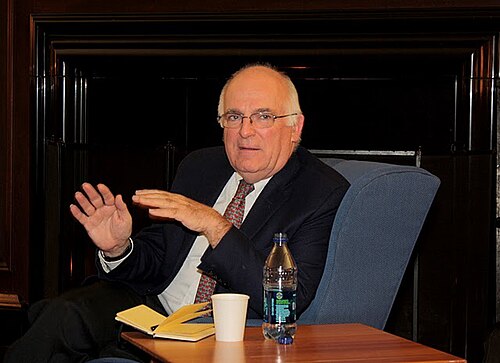 Sir Richard Dearlove
2
thin
19 Aug 2012 – 22 Dec 2025
-4125 d
Sir Richard Dearlove
2
thin
19 Aug 2012 – 22 Dec 2025
-4125 d
-
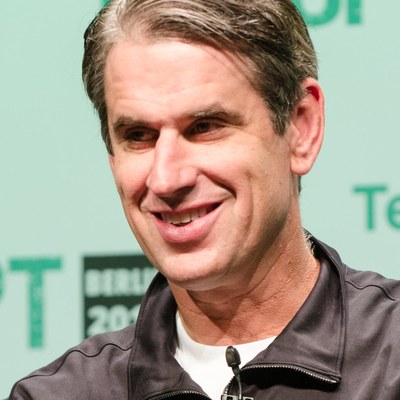 Bill Gurley
20
17 Nov 2017 – 21 Jul 2026
-2209 d
Bill Gurley
20
17 Nov 2017 – 21 Jul 2026
-2209 d
-
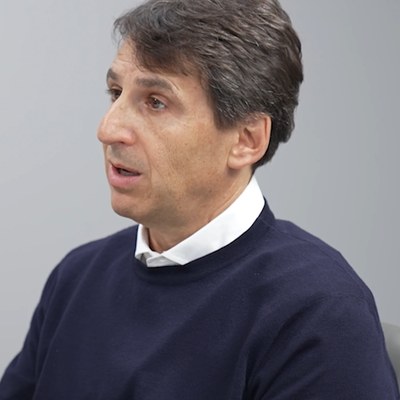 Marc Rowan
1
thin
5 Dec 2023 – 5 Dec 2023
+0 d
Marc Rowan
1
thin
5 Dec 2023 – 5 Dec 2023
+0 d
-
 David Friedberg
3
thin
11 Sep 2025 – 11 Sep 2025
+646 d
David Friedberg
3
thin
11 Sep 2025 – 11 Sep 2025
+646 d
-
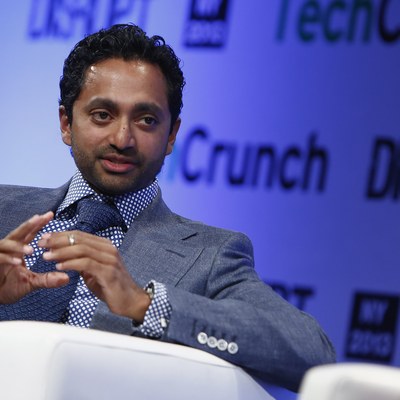 Chamath Palihapitiya
2
thin
23 Jun 2026 – 3 Jul 2026
+931 d
Chamath Palihapitiya
2
thin
23 Jun 2026 – 3 Jul 2026
+931 d
-
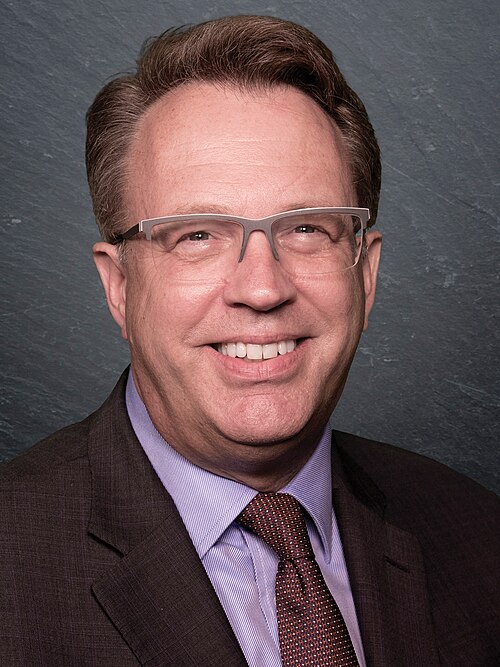 John Williams
2
thin
John Williams
2
thin
-
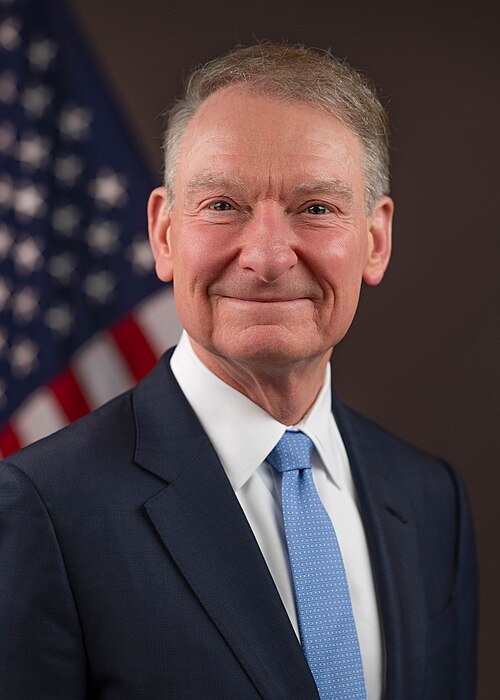 Paul Atkins
4
thin
Paul Atkins
4
thin
The chronologysourced and dated, oldest first
-
-
Sir Richard Dearlove
Dearlove warns WikiLeaks may cause government officials to stop writing records, eliminating crucial audit trails.
“And that is to, let's say, encourage government servants not to write full records to conduct business by word-of-mouth.”
-
-
-
Bill Gurley
Gurley says Uber's entire stakeholder base was at risk before leadership change.
“We reached a point where we felt like, you know, the entire company, you know, and all of its constituencies, drivers, riders, employees, shareholders, were at risk if the company continued to move in the direction it was.”
-
Bill Gurley
Gurley reveals five investors including Fidelity felt all Uber constituents were at risk before taking action.
“So people typically say benchmark, but there was five investors, including Fidelity, who felt like all of the constituents at Uber were at risk, if action didn't happen sooner.”
-
Bill Gurley
Gurley argues excessive capital in Silicon Valley allows entrepreneurs to run without discipline or accountability.
“The the I guess the thing I would say is that, you know, the excessive amount of capital that's been available to Silicon Valley has allowed a lot of entrepreneurs to run without much discipline because if you if if you're not running out of money, you're not constantly being regraded and asked to come back to the table.”
-
Bill Gurley
Gurley argues excessive capital availability lets entrepreneurs run without discipline since they never get regraded.
“I guess the thing I would say is that, you know, the excessive amount of capital that's been available to Silicon Valley has allowed a lot of entrepreneurs to run without much discipline because if you if if you're not running out of money, you're not constantly being regraded”
-
Bill Gurley
Gurley argues excessive capital allows entrepreneurs to run without discipline by avoiding constant regrade cycles.
“I guess the thing I would say is that, you know, the excessive amount of capital that's been available to Silicon Valley has allowed a lot of entrepreneurs to run without much discipline because if you if if you're not running out of money, you're not constantly being regraded and asked to come back to the table.”
-
-
-
Bill Gurley
Gurley says competitive dynamics have eliminated stewardship for discipline and results in venture capital.
“And I think it's led to a situation where there's not a lot of of stewardship for discipline and and results and that kind of thing.”
-
Bill Gurley
Gurley argues being public helps companies run better through enforced discipline and smart questioning.
“one of the things that I believe strongly that I think is less well understood is that being public actually helps the companies run better. It's an enforced discipline.”
-
-
-
Bill Gurley
Gurley argues governance tokens without economic rights would be worth a small fraction of tokens with revenue capture.
“And everything from my history of studying finance and economics would say that if you declared you'd never rake the system governance token, simply the right to kind of control a group or community would be worth a fraction, a small fraction of what an economic token would be.”
-
-
-
Bill Gurley
Gurley says every VC speaking publicly is performing for future founders, creating pressure to look supportive.
“There is so much important criticality in getting in front of the right pitches that everyone wants to look like the best actor.”
-
Bill Gurley
Gurley links VC cheerleading behavior directly to governance failures like FTX.
“The problem is that's the exact same type of behavior that leads to the FTX situation because you take yourself out of a governance role completely because you just become the founder cheerleader.”
-
Bill Gurley
Gurley criticizes FTX investors for funding a company with no board and commingled businesses.
“I mean, the markets have a way of separating, very risk seeking individuals from their capital. It may not happen overnight, but it always happens eventually. Like there's no easy money.”
-
Bill Gurley
Gurley questions investors who funded FTX despite no board and commingled businesses.
“I love the FTX story, not because I wanna pick on anybody, but to make the decision to give money to somebody that has no board and that has a side business that's commingled, who tells you it's not commingled, it turns out it was commingled. Like, what are you doing?”
-
Bill Gurley
Gurley says FTX investors ignored basic governance red flags including no board and commingled side business.
“I love the FTX story, not because I wanna pick on anybody, but to make the decision to give money to somebody that has no board and that has a side business that's commingled, who tells you it's not commingled, it turns out it was commingled.”
-
Bill Gurley
Gurley says new non-financial objectives injected into startups make execution harder when employees and executives aren't aligned.
“In the past five years, there have been objective functions injected into startups that aren't solely how well is the company doing or how well is the company stock doing.”
-
Marc Rowan
Rowan warns the worst outcome for universities would be donor apathy replacing current engagement.
“be more constructive about the prospect of change here. You think there is a better path ahead. I think the worst thing that can happen to these universities is apathy. Right now there's not apathy.”
-
-
-
Bill Gurley
Gurley says VCs earn two and twenty writing $300-400M checks without taking board seats.
“But like these people are getting two and twenty to write a check for 3 or $400,000,000 and not take a board seat.”
-
Bill Gurley
Gurley criticizes investors earning 2% annual fees on $300-400M checks without taking board seats.
“And for the listeners that may not know that 2 represents an annual management fee,”
-
-
-
Bill Gurley
Gurley argues successful sovereign wealth funds exist in autocracies not democracies and US fund would face political raiding.
“And I would highlight that probably the most successful sovereign wealth funds in the world are all in autocracies. They're not in democracies.”
-
David Friedberg
Friedberg explains CEOs drive business outcomes while board members cannot control or lead companies from board seats.
“I cannot control a company, I cannot direct a company, I cannot lead a company from the board.”
-
David Friedberg
Friedberg contrasts board service as waiting versus CEO role as making things happen daily.
“I said to someone, it feels like when you're on the board, every day you're waiting for shit to happen.”
-
David Friedberg
Friedberg contrasts board service versus CEO role: boards wait for events while CEOs drive them.
“Yeah. And that's what it feels like to me, you know, being able to step back into an operating role as CEO again”
-
Bill Gurley
Gurley quotes Dan Wong saying America is run by lawyers while China is run by engineers.
“I think Dan Wong does a good job of saying that America is run by lawyers the author of of Breakneck. Our country's run by lawyers and theirs is run by engineers.”
-
Sir Richard Dearlove
Dearlove argues state security is government's first responsibility, more important than the NHS or individual health.
“It's more important than National Health Service. I mean, you take a Ciceronean view of the state, the security of the state is the first responsibility of the government.”
-
-
-
Bill Gurley
Gurley says he would agree to Elon's Tesla pay structure for every company, but ISS evaluators oppose it.
“And I would do that deal over and over and over and over again. None of these ISS like evaluators agree with that.”
-
Chamath Palihapitiya
Cohen criticizes eBay board for earning hundreds of thousands without buying stock while media favors them.
“And you've got a board board that's making hundreds of thousands of dollars a year. They don't buy stock with their own money.”
-
Chamath Palihapitiya
Palihapitiya claims California's management is worse than Illinois when compared to Florida's performance.
“And then just ask your favorite AI, compare California on the spectrum of Florida versus Illinois. And what you'll find is California is even worse than Illinois in most of those comparisons.”
-
Bill Gurley
Gurley says people elect officials based on intentions without tracking whether they create actual change.
“And I think we elect a lot of people because we like what they're saying, but no one follows up to see if they can actually create change.”
-
-
-
Paul Atkins
Atkins notes a D.C. Circuit court vacated SEC's 75% independent director and independent chair requirement over 20 years ago.
“More than 20 years ago, the U.S. Court of Appeals for the District of Columbia Circuit vacated a rulemaking that would have mandated a board with no less than 75% independent directors and an independent chair as a condition to reliance on certain exemptive rules.”
-
Paul Atkins
Atkins says aligning regulations with the court's vacatur reaffirms commitment to sound regulatory principles.
“which bring our regulations into alignment with the Federal court’s vacatur of both the 75% requirement and the independent chair requirement. These amendments are a necessary step to reaffirm our commitment to sound regulatory principles.”
-
Paul Atkins
Atkins reports commenters want the SEC to take more responsibility for managing and funding the CAT.
“One theme emerges from the comment file: investors and market participants want the Commission to take more responsibility for managing and funding this project.”
-
Paul Atkins
Atkins says the Commission must move quickly to restructure the CAT to address cost, governance, and funding issues.
“I believe that it is critical for the Commission to move quickly and lay the groundwork necessary to restructure the CAT to address persistent cost, governance, and funding issues.”
-
John Williams
Williams describes how diffused accountability means no single person makes a bad decision, yet the system fails.
“Later, when the risk materializes, we conduct a review and find that no single person made a bad decision. Instead, the system as a whole failed to “see” the risk clearly.”
-
John Williams
Williams argues the next frontier of risk management is integration across functions, not deeper specialization.
“That’s why the next frontier of risk management is not deeper specialization. It’s integration: strategic, ethical, and operational coherence—across functions, levels, and tools.”
-
Where they overlapsame programme, same subject
- Bloomberg Television also carries Bill Gurley and Marc Rowan on this subject, at different times.