Who is on this subjectordered by the date of their first quote here
7 of 8 lanes rest on fewer than 5 quotes and are marked thin. Offsets are days from the middle first-quote date, 10 Dec 2025 — a date, and nothing else. It is not a claim about who reached a view first.
-
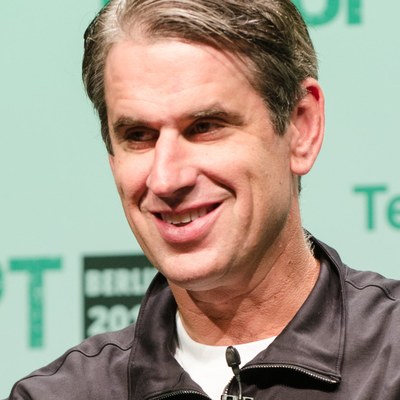 Bill Gurley
2
thin
7 Apr 2017 – 4 Aug 2026
-3169 d
-
 David Friedberg
8
2 Jul 2024 – 29 Aug 2026
-526 d
-
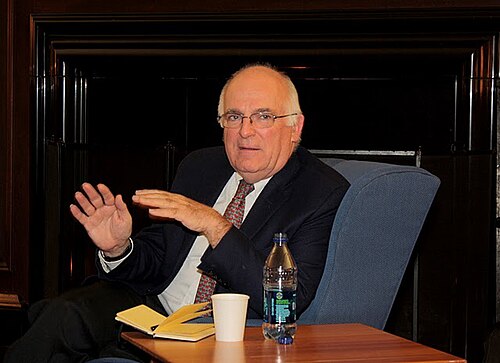 Sir Richard Dearlove
1
thin
16 Oct 2025 – 16 Oct 2025
-55 d
-
 Marc Rowan
2
thin
10 Dec 2025 – 21 Dec 2025
+0 d
- Dylan Patel 2 thin 9 Mar 2026 – 9 Mar 2026 +89 d
-
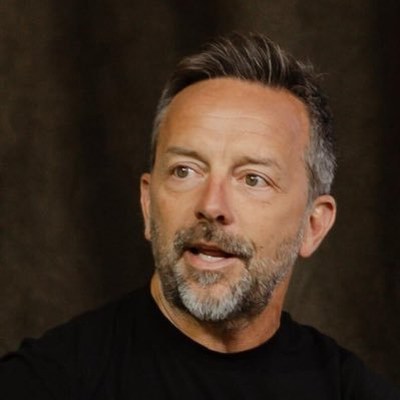 Brad Gerstner
1
thin
2 Jul 2026 – 2 Jul 2026
+204 d
-
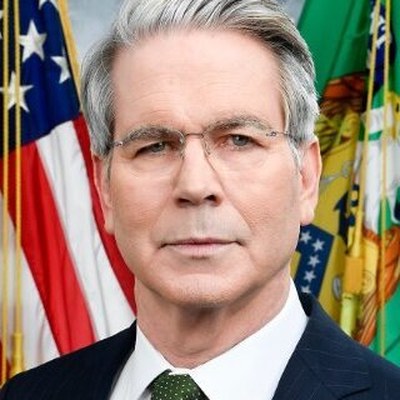 Scott Bessent
1
thin
10 Aug 2026 – 10 Aug 2026
+243 d
-
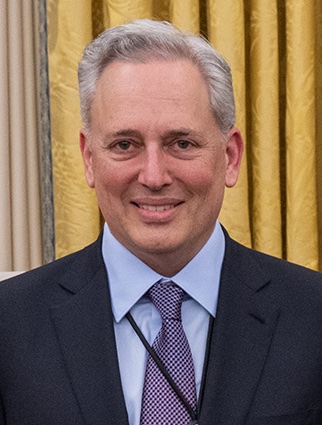 David Sacks
1
thin
24 Aug 2026 – 24 Aug 2026
+257 d
The chronologysourced and dated, oldest first
-
-
Bill Gurley
Gurley says lobbyists from regulated companies literally talk to congressmen about what goes into new laws.
“If they're striking a new federal law, like the lobbyists from the companies being regulated are on M Street talking to the congressman about what to put into the bill.”
-
-
-
David Friedberg
Friedberg estimates 30-40% of US workers are employed by or depend on government as primary customer.
“And I think a study I I tried to pull together all this data a couple months ago, but something north of like 30 or 40% of The US working force is touched by the government as a customer of their business, the primary customer of their business or as the employer of those individuals.”
-
-
-
Sir Richard Dearlove
Dearlove says dropped prosecution is another nail in credibility of current UK government.
“And, of course, it's another nail in the credibility of this government. Unfortunately, it puts them in a very damaging and weak position.”
-
Marc Rowan
Rowan argues governments are borrowing record amounts while fragmenting labor and goods flows through immigration and tariff policies.
“We have governments around the world who are borrowing record amounts of money. We are, for maybe good and valid reasons, fractionalizing our labor supply through immigration reform.”
-
Marc Rowan
Rowan says governments are borrowing record amounts while fracturing labor and goods flows through immigration and tariff policies.
“We have governments around the world who are borrowing record amounts of money. We are, for maybe good and valid reasons, fractionalizing our labor supply through immigration reform.”
-
-
-
David Friedberg
Friedberg argues safety regulators are not tasked with considering economic or affordability impacts.
“Because their job, the job of that individual sitting in that role, whether it's a local, state, or federal government agency, is to increase safety.”
-
David Friedberg
Friedberg states Social Security trust fund holds only a $4 trillion IOU from the US government, not actual assets.
“People don't realize this, but Social Security is an independent trust fund that's set up, and it holds one asset. That asset is an IOU from the US government to that From tax.”
-
David Friedberg
Friedberg predicts federal bailout of state and local governments under Democratic control to avoid economic crisis.
“If you end up with a democrat controlled house and a democrat president in 2028, you'll very likely see a federalization of that obligation, meaning that the federal government will step in to bail out or support those state and local governments because otherwise there's gonna be a real kind of economic crisis afoot.”
-
David Friedberg
Friedberg argues moving workers from government to private sector increases productivity and grows the economy.
“But when people move from the government workforce into the private workforce, they become productive. They're making things that grow the economy, and, theoretically, they should also make more money.”
-
Dylan Patel
Patel criticizes Dario's response to hypothetical nuclear scenario as inadequate for government AI policy discussions.
“If a nuclear missile's heading from China to America and we can use AI to stop it, but it requires surveillance and autonomous weapons, what do we do?”
-
Dylan Patel
Patel recounts Dario reportedly said call us to figure it out when asked about AI stopping nuclear missiles.
“And Dario was like, well, you can call us. I'm sure we can figure something out.”
-
David Friedberg
Friedberg estimates nearly half the US population receives government paychecks, pensions, or welfare benefits.
“Today, if you add up federal, state, local government employees, plus all the contractors for the government, plus all the people that live off of a retirement check or or a welfare support check, so all the people that are living off government checks, it's about nearly half The US population.”
-
David Friedberg
Friedberg says federal government spent hundreds of millions on useless workforce training for desktop computers in the eighties.
“In fact, the federal government did this deal in the early eighties. They spent hundreds of millions of dollars in workforce training programs that literally did nothing.”
-
Brad Gerstner
Gerstner opposes any government seizure of company equity regardless of party, calling it unconstitutional and un-American.
“You pick the number. I don't care who's suggesting it. I don't care if a Republican suggesting it. I don't care if a Democrat's suggesting it.”
-
Bill Gurley
Gurley argues NIH-funded research should be open source rather than becoming proprietary.
“Why wouldn't we say if you take NIH dollars, your research is open source? Why do we use government dollars to fund stuff that becomes proprietary? That doesn't make any sense to me.”
-
Scott Bessent
Bessent states Graham believed the federal government's first obligation is to keep people safe.
“Course, Lindsey Graham believed that the first obligation of the federal government is to keep its people safe.”
-
David Sacks
Sacks argues government officials lack technical expertise to set AI safety standards independently.
“Because frankly, people in government have no idea how to monitor and control and set standards for AI safety. Technologically, this is way beyond them.”
-
David Friedberg
Friedberg argues government student loan intervention caused 6x administrative cost increase and 8% annual tuition inflation.
“When the government intervenes in underwriting student loans and gives everyone a loan, administrative costs went up by six x and tuition skyrocketed 8% a year compounding for thirty years because the government said we'll underwrite any student loan.”
-