Who is on this subjectordered by the date of their first quote here
4 of 5 lanes rest on fewer than 5 quotes and are marked thin. Offsets are days from the middle first-quote date, 15 Jan 2026 — a date, and nothing else. It is not a claim about who reached a view first.
-
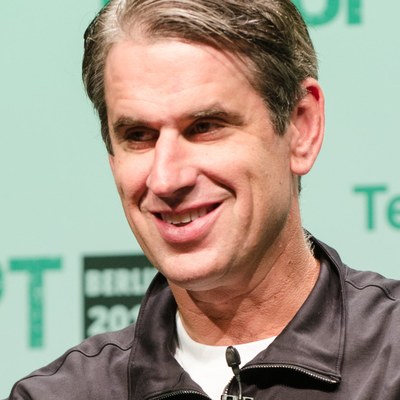 Bill Gurley
27
17 Dec 2012 – 4 Aug 2026
-4777 d
-
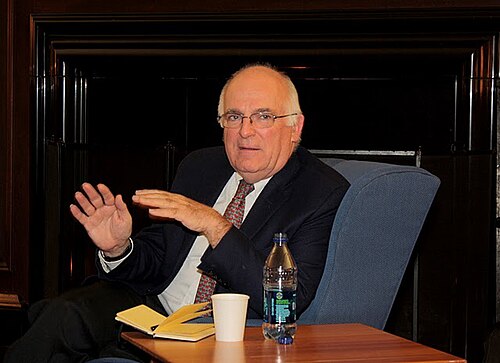 Sir Richard Dearlove
2
thin
25 Sep 2025 – 25 Sep 2025
-112 d
-
 David Friedberg
2
thin
15 Jan 2026 – 15 Jan 2026
+0 d
-
 Chamath Palihapitiya
1
thin
27 Jan 2026 – 27 Jan 2026
+12 d
-
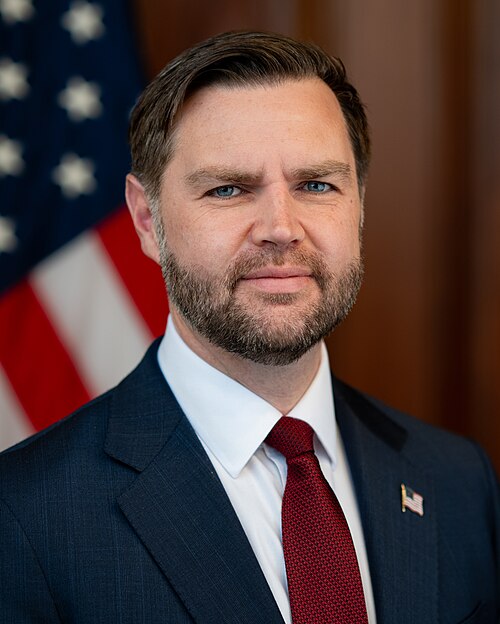 JD Vance
4
thin
24 Aug 2026 – 24 Aug 2026
+221 d
The chronologysourced and dated, oldest first
-
-
Bill Gurley
Gurley warns consolidation of independent practitioners into large medical groups is bad for healthcare innovation.
“the large medical groups have been building out these huge platforms of MRI centers and labs and x-ray, and they're increasingly inviting general practitioners to live under their umbrella, and as that happens, the number of independent general practitioners is dropping as a percentage of all doctors, and that's really bad for innovation.”
-
-
-
Bill Gurley
Gurley says the government paid doctors $44,000 to implement electronic health records in 2009.
“So in 2009, when the government passed the Reinvestment Act to try and get America going or whatever it was called, they put in place a program where a doctor is paid, believe this or not, paid $44,000 to implement EHR, electronic health records.”
-
Bill Gurley
Gurley says the government paid doctors $44,000 to implement electronic health records under the 2009 Reinvestment Act.
“So, it'd basically be like telling a construction company if you put in NetSuite, you get paid $50.”
-
Bill Gurley
Gurley reports the government has paid $29 billion for doctors to implement EHR software.
“So, the payments for these incentive programs, because I just looked it up to get the recent update, dollars 29,000,000,000.”
-
Bill Gurley
Gurley reports the government has paid $29 billion total for doctors to implement electronic health record software.
“So, the payments for these incentive programs, because I just looked it up to get the recent update, dollars 29,000,000,000. So, our government has paid $29,000,000,000 for doctors to implement software”
-
Bill Gurley
Gurley reports the government has paid $29 billion total for doctors to implement electronic health record software.
“So, our government has paid $29,000,000,000 for doctors to implement software that they weren't naturally implementing on their own.”
-
Bill Gurley
Gurley contrasts U.S. healthcare spending at 17% of GDP with Singapore's 1.7%, a 10x difference.
“The U. S. Spends 17% of GDP on healthcare and Singapore spends 1.7. So, it's a 10x delta and they have relatively reputable healthcare system.”
-
Bill Gurley
Gurley notes US healthcare costs 17% of GDP versus Singapore's 1.7%, a 10x difference explained by making everyone a payer.
“Spends 17% of GDP on healthcare and Singapore spends 1.7. So, it's a 10x delta and they have relatively reputable healthcare system. And the key thing they do is they make everyone a payer.”
-
-
-
Bill Gurley
Gurley argues the most regulated US industries like finance, telecom, and healthcare become the least capitalistic.
“what happens is capitalism and democracy evolve over time, especially in The US federal system. The most regulated industries become the ones that are least capitalistic. And so finance, telecom, healthcare are completely,”
-
Bill Gurley
Gurley says the most regulated industries like finance, telecom, and healthcare become the least capitalistic due to regulatory capture.
“The most regulated industries become the ones that are least capitalistic. And so finance, telecom, healthcare are completely, you know, notion of regulatory capture.”
-
Bill Gurley
Gurley says healthcare investing is extremely dangerous because marketplace dynamics don't apply and consumers don't pay directly.
“looking at health care, and it's extremely dangerous. It's extremely dangerous because the the laws of most, marketplaces doesn't exist. You know, there's not a simple gravity.”
-
Bill Gurley
Gurley calls healthcare marketplaces extremely dangerous with forces in five directions and misaligned incentives.
“It's extremely dangerous because the the laws of most, marketplaces doesn't exist. You know, there's not a simple gravity. There's forces in five different directions.”
-
-
-
Bill Gurley
Gurley cites $44 billion spent paying doctors to implement EHR systems as regulatory capture example.
“of my favorite examples, the Obama administration came up with this program where they spent $44,000,000,000 paying doctors to implement EHR systems.”
-
Bill Gurley
Gurley cites $44 billion Obama program paying doctors for EHR where Epic's CEO sat on the advisory board.
“Obama administration came up with this program where they spent $44,000,000,000 paying doctors to implement EHR systems.”
-
Bill Gurley
Gurley describes $38 billion program paying doctors $44,000 each to buy electronic health record software.
“They came up with a brilliant idea. I have to assume she helped encourage this. Doctors would receive $44,000 each if they bought software. $38,000,000,000.”
-
“I have to assume she helped encourage this. Doctors would receive $44,000 each if they bought software. $38,000,000,000. This is true. You can look it up.”
-
Bill Gurley
Gurley says Obama's stimulus included $38 billion paying doctors $44,000 each to buy EHR software.
“Doctors would receive $44,000 each if they bought software. $38,000,000,000. This is true. You can look it up. I'm not making it up. $44,000, give it to a doctor, implement some software.”
-
Bill Gurley
Gurley says Germany validated 96 COVID test vendors, resulting in prices of 75 cents per test.
“Here they are on the right, 96 different vendors that they ok'd. And as a result, in the German market, you could buy five tests for $3.75 or €75 cents a test.”
-
-
-
Bill Gurley
Gurley notes noteworthy hospitals ignored Congressional price disclosure mandate and simply paid fines without press accountability.
“And these are pretty noteworthy institution, and the press doesn't really take them down for doing that.”
-
Bill Gurley
Gurley says healthcare startups trying to monetize end up reinforcing bad system dynamics instead of changing them
“And then and then some of them end up in a place where they're actually reinforcing the bad stuff, you know, and making it worse.”
-
Bill Gurley
Gurley cites claim that over 90% of NIH grants fund monetizable products versus preventative behavioral interventions.
“over 90% of NIH grants go towards things that are potentially monetizable, so either a product or a drug, and that the NIH is less interested in funding things that might be just preventative behavior, like behavioral things, like what you eat or your diet or things that don't lead to monetization.”
-
Bill Gurley
Gurley argues U.S. may have created healthcare industrial complex focused on profit maximization over prevention.
“And we may have created a people talk about the military industrial complex, we may have created a healthcare industrial complex that really can't stop maximizing profitability and different ways of making money not focus necessarily on the lowest cost, best, most preventative process.”
-
-
-
Bill Gurley
Gurley suggests a healthcare industrial complex has emerged that prioritizes profit over cost-effective preventative care.
“People talk about the military industrial complex. We may have created a health care industrial complex that really can't stop maximizing profitability and not focus necessarily on the lowest cost, best, most preventative process.”
-
Sir Richard Dearlove
Dearlove argues AI diagnosis combined with Palantir could make NHS a powerhouse of medical knowledge.
“AI has already proved it can do it a hell of a lot better than the human being in in many, many cases, not every case.”
-
Sir Richard Dearlove
Dearlove predicts Britain's NHS could become a powerhouse of medical knowledge through Palantir's technology.
“You'll be able to aggregate using your technology, more health statistics from the Britain's National Health Service. It will become a powerhouse of medical knowledge in my view or it could.”
-
-
-
David Friedberg
Friedberg states US healthcare costs 15% of GDP and continues rising annually.
“Healthcare today costs roughly 15% of our GDP. That's an insane statistic and it is rising year after year in The United States, and it's such a complex issue.”
-
David Friedberg
Friedberg states US drug prices are nearly triple those in other countries by some measures.
“By some measurements though, the price of drugs in The United States is almost three times what it is outside The United States.”
-
Chamath Palihapitiya
Palihapitiya explains that one third of breast cancer lumpectomies have errors requiring repeat surgeries.
“So I did like a breast cancer thing where a third of all breast cancer surgeries, like lumpectomies, are written with an error, which means that for every ten, three women have to get another lumpectomy because they leave cancer behind. Of those three, another one.”
-
Bill Gurley
Gurley says drug companies focus on symptom support rather than cures because there is more money in it.
“A lot of drug companies end up focused on symptom support rather than solving it because there's more money in that, and unfortunately, that's less, you know, it'd be much better if we cured the disease.”
-
Bill Gurley
Gurley notes radiologists have increased in number despite AI automation speeding up reading scans.
“I think there was someone at TED talking about the fact that the number of radiologists has gone up, not down, despite the fact that you can read these things so much faster.”
-
“We only had two manufacturers, and they charged, like, $12 a test, so 10 x higher.”
-
Bill Gurley
Gurley says Obama administration spent $44 billion paying doctors to implement EHR systems.
“the Obama administration came up with this program where they spent forty four billion dollars paying doctors to implement EHR systems.”
-
JD Vance
Vance attributes Maine becoming a capital of fraud to state officials' incompetence or worse.
“And I think the problem is that their incompetence or their something worse is one of the reasons why Maine has become such a capital of fraud, and particularly it's a lot of health care fraud.”
-
JD Vance
Vance identifies healthcare fraud in Medicaid and Medicare as Maine's primary fraud problem.
“it's a lot of health care fraud. You think about this, the two big federal programs, Medicaid and Medicare.”
-
JD Vance
Vance describes fraudsters claiming to provide healthcare services while collecting money but providing no care.
“You see fraudsters taking advantage of those programs. You see people saying that they're providing health care services, collecting a whole lot of money, but not doing a single bit of health care.”
-
JD Vance
Vance describes fraudsters claiming to provide healthcare services while collecting money without delivering care.
“You see people saying that they're providing health care services, collecting a whole lot of money, but not doing a single bit of health care. It's got to stop.”
-