Who is on this subjectordered by the date of their first quote here
11 of 14 lanes rest on fewer than 5 quotes and are marked thin. Offsets are days from the middle first-quote date, 13 Oct 2022 — a date, and nothing else. It is not a claim about who reached a view first.
-
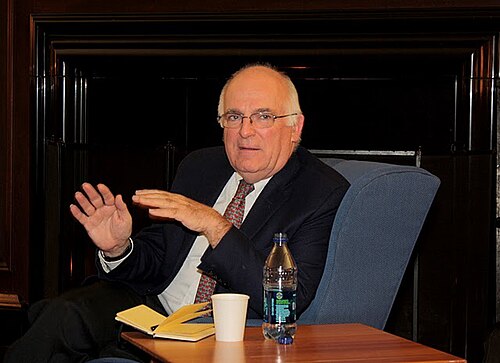 Sir Richard Dearlove
8
16 May 2016 – 22 Aug 2026
-2341 d
Sir Richard Dearlove
8
16 May 2016 – 22 Aug 2026
-2341 d
-
 Bill Gurley
1
thin
2 Oct 2019 – 2 Oct 2019
-1107 d
Bill Gurley
1
thin
2 Oct 2019 – 2 Oct 2019
-1107 d
-
 Gavin Baker
1
thin
26 Nov 2019 – 26 Nov 2019
-1052 d
Gavin Baker
1
thin
26 Nov 2019 – 26 Nov 2019
-1052 d
-
 David Friedberg
8
15 Mar 2020 – 6 Mar 2026
-942 d
David Friedberg
8
15 Mar 2020 – 6 Mar 2026
-942 d
-
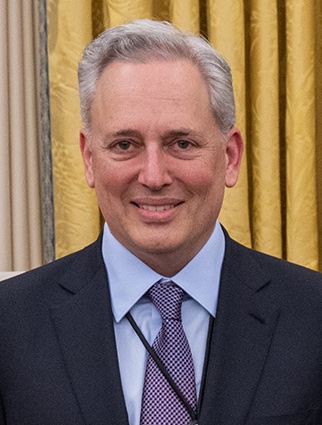 David Sacks
1
thin
25 May 2022 – 25 May 2022
-141 d
David Sacks
1
thin
25 May 2022 – 25 May 2022
-141 d
-
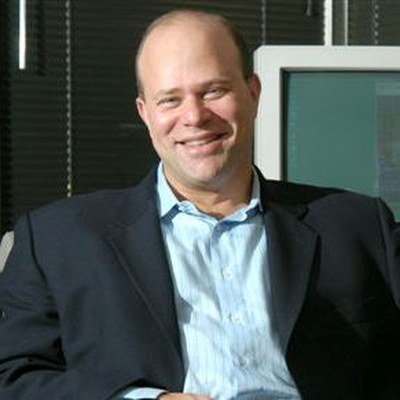 David Tepper
1
thin
13 Oct 2022 – 13 Oct 2022
+0 d
David Tepper
1
thin
13 Oct 2022 – 13 Oct 2022
+0 d
-
 Howard Marks
7
21 Feb 2024 – 12 Jun 2026
+496 d
Howard Marks
7
21 Feb 2024 – 12 Jun 2026
+496 d
-
 Brad Gerstner
3
thin
1 Oct 2024 – 20 Jun 2025
+719 d
Brad Gerstner
3
thin
1 Oct 2024 – 20 Jun 2025
+719 d
-
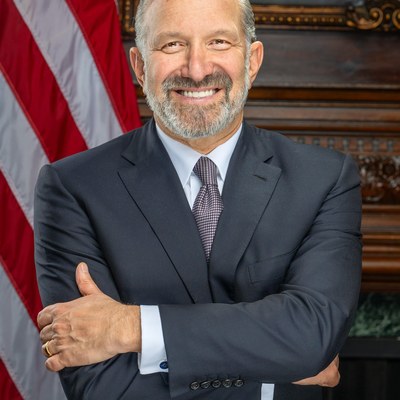 Howard Lutnick
2
thin
20 Mar 2025 – 20 Mar 2025
+889 d
Howard Lutnick
2
thin
20 Mar 2025 – 20 Mar 2025
+889 d
- Dylan Patel 1 thin 27 Mar 2025 – 27 Mar 2025 +896 d
-
 Marc Rowan
1
thin
22 May 2025 – 22 May 2025
+952 d
Marc Rowan
1
thin
22 May 2025 – 22 May 2025
+952 d
-
 JD Vance
1
thin
21 Aug 2026 – 21 Aug 2026
+1408 d
JD Vance
1
thin
21 Aug 2026 – 21 Aug 2026
+1408 d
-
 John Williams
3
thin
John Williams
3
thin
-
 Paul Atkins
1
thin
Paul Atkins
1
thin
The chronologysourced and dated, oldest first
-
-
Sir Richard Dearlove
Dearlove invokes Rome's fall to barbarian migration as a historical precedent for today's challenges.
“Edward Gibbon elegantly charted how Rome, with all its civic and administrative sophistication and military prowess, could not stop its empire being overrun by the mass movement of Europe's tribes.”
-
-
-
Bill Gurley
Gurley traces Silicon Valley's dissatisfaction with IPO process back two decades, citing eBay and Hambrick criticisms.
“Silicon Valley's been, unhappy with the way the IPO works for a couple of decades now. I dug up, you know, some conversations Pierro Midiard had at eBay calling it undemocratic.”
-
Gavin Baker
Baker argues we may be entering peak disruption, seventy to one hundred years after the microchip's invention in 1959.
“I would argue peak economic, political, social change as a result of that invention was seventy to one hundred years later during the peak of the industrial revolution eighteen twenty to eighteen fifty.”
-
-
-
David Friedberg
Friedberg compares market retracements: 1987 saw 33%, 2000 saw 47%, 2008 saw 56%, but we're only 20% into this one.
“1987, we saw 33% retracement. 2000, we saw 47%. 2008, we saw 56% and we're only 20 into this one.”
-
-
-
David Sacks
Sacks notes US wars in Iraq, Afghanistan, and Vietnam were popular when entered but unpopular by their end.
“And I'm not old enough to remember The US getting into Vietnam. But the thing to understand about all those wars is that they were incredibly popular at the time that we entered them.”
-
Sir Richard Dearlove
Dearlove says MI6 was formally established in 1909 because of scaremongering from fictional spy thrillers.
“And actually, it's because of that scaremongering, if you look at the historical record, that MI6 was started in 1900 It had been a section of specifically naval intelligence before that, and then it was formalized into a separate organization.”
-
Sir Richard Dearlove
Dearlove states MI6 was founded in 1909 partly due to scaremongering from fictional spy novels.
“it's because of that scaremongering, if you look at the historical record, that MI6 was started in 1900 It had been a section of specifically naval intelligence before that, and then it was formalized into a separate organization. So its origins are tied up, strangely, with a certain amount of fiction.”
-
Sir Richard Dearlove
Dearlove asserts Russia has never experienced a coup, only revolutions throughout its history.
“Historically, there's never been a coup in Russia. There have been revolutions, there haven't been coups.”
-
David Tepper
Tepper says the Panthers have never had two consecutive winning seasons or a real winning culture.
“This team has never had two winning seasons. So I don't really think it ever had a real culture of winning.”
-
-
-
Howard Marks
Marks describes his first viral moment when a 1990s memo reached Russia within hours unexpectedly.
“I'll never forget the time in the late nineties when I put out a memo, and within an hour or two, I had a, response back from somebody in Russia.”
-
David Friedberg
Friedberg recalls buying 17 megabytes of weather data on CD-ROM for $10,000 in 2006 when founding Climate Corp.
“when I started Climate Corp 2006, the first thing I did when I got a seed check to start the company is I went out and bought weather data, and I bought it from a company called RMS that sold weather data. The sales guy was a guy named Jeff Hamlin.”
-
David Friedberg
Friedberg reveals Ohalo is named after a 23,000-year-old archaeological site showing early seed cultivation.
“The company, Ohalo, is named after a site discovered next to the Sea Of Galilee called Ohalo 2. It's an archaeological site.”
-
David Friedberg
Friedberg contrasts 1950s technology optimism with current negative associations toward technological progress.
“Go back to the 1950s. There were all of these crazy posters about humans will go on rockets to the moon and we're all going to live on star bases on the moon.”
-
David Friedberg
Friedberg notes that Disneyland's Tomorrowland in 1955 originally celebrated future technology opportunities optimistically.
“In 1955, Disneyland opened, I've told this story before with this ride called Tomorrowland. This area called Tomorrowland. I mean, you've been there. And every ride there was about the future opportunity with technology.”
-
Brad Gerstner
Gerstner claims 99% of humans who ever lived never saw a single invention.
“99 of them never saw a single invention in their entire life. Their entire life, right, was about survival.”
-
-
-
Howard Lutnick
Lutnick argues America was built on tariffs with no income tax until 1913, defining Trump's Make America Great Again reference.
“America was built on tariffs with no income tax. No income tax till 1913. None. Greatest, richest country in the world.”
-
Howard Lutnick
Lutnick argues America was richest from 1880 to 1913 using tariffs without income tax.
“No income tax till 1913. None. Greatest, richest country in the world. So when Donald Trump says, Make America great again, what he's talking about is from 1880 to 1913,”
-
Dylan Patel
Patel explains AlexNet was the first recognizable AI model, trained on NVIDIA GPUs because CPUs were too slow.
“This is because, well, CPUs were really slow because they're really single focused on a single task. GPUs are focused on doing many tasks at once.”
-
Marc Rowan
Rowan contrasts the private markets landscape forty years ago with today's more diversified options.
“Forty years ago, private was three products, Private equity, venture capital, and hedge funds. All can be good investments, but all have risk. And public were 8,000 public companies, diversified portfolios of stocks and bonds.”
-
Brad Gerstner
Gerstner notes 70% of current jobs didn't exist in 1940 to illustrate technology's job creation.
“70% of the jobs that exist today did not exist in 1940. Okay? So we have to evolve and we have to expand.”
-
Sir Richard Dearlove
Dearlove notes Five Eyes survived the political crisis of Suez 1956, demonstrating its institutional durability.
“Mean think of the relationship with The United States after the Suez invasion of nineteen fifty six am I right?”
-
Sir Richard Dearlove
Dearlove notes Five Eyes intelligence sharing continued despite appalling UK-US political relations after Suez in 1956.
“I think '56. The state of play politically between The UK and The US was appalling it didn't stop Five Eyes from operating.”
-
Brad Gerstner
Gerstner notes 1990s experts wrongly predicted debt-to-GDP would rise to 80%; instead it fell from 60 to 40.
“in 1993, debt to GDP was supposed to go from 40 to or 60 to 80 by experts, it in fact went from 60 to 40. Yes. So experts can be wrong by a lot.”
-
David Friedberg
Friedberg recalls buying weather data on CD-ROM for $10,000 when starting Climate Corp in 2006.
“The sales guy was a guy named Jeff Hamlin. I'll give him a shout out because he still works at Climate Corp to this day.”
-
David Friedberg
Friedberg recounts buying a CD-ROM with 30 years of weather data for 200 stations when founding Climate Corp.
“I'll give him a shout out because he still works at Climate Corp to this day I hired him after so he sold me a CD ROM of weather data.”
-
-
-
David Friedberg
Friedberg explains Lloyd's of London started as maritime traders meeting in a coffee shop to underwrite shipping route risks.
“So in the seventeenth century, Lloyd's of London, which was a coffee shop in London where all the maritime traders would get together and they'd talk about, hey.”
-
Howard Marks
Marks recalls Nifty Fifty PE ratios were sixty to ninety, revealing his role as research director.
“So, it was a and so that was a real disaster for the people who invested in the Nifty Fifty, which was most of the money center banks.”
-
Howard Marks
Marks lists historical technological innovations from railroads in 1860s through internet in 2000 as comparisons.
“So the technological innovations I'm talking about, let's just for a starting point, let's say the railroads back in the 1860s And then radio in the nineteen twenties, the automobile, computers in the nineteen fifties and sixties, internet in 2000.”
-
Howard Marks
Marks says every prior technological bubble saw too much capital flow in, too much infrastructure built, and investors lose money.
“In every case, too much capital flowed in. I think it's fair to say too much infrastructure was built and prices were paid that were too high.”
-
“When I started in this business as a young man, 1969, in the research department at Citibank, the bank and most of the banks invested in what were called the nifty 50, which were considered to be the best and fastest growing companies in America,”
-
Howard Marks
Marks dates his 1969 start at Citibank research department when banks invested in Nifty Fifty stocks.
“When I started in this business as a young man, 1969, in the research department at Citibank, the bank and most of the banks invested in what were called the nifty 50, which were considered to be the best and fastest growing companies in America, Xerox, IBM, Kodak, Polaroid, Merck, Lilly, Texas Instruments, Hewlett Packard, Coca Cola, Avon, etcetera.”
-
Howard Marks
Marks argues the current credit cycle is likely the longest in history despite pandemic interruption.
“I think the credit cycle has been very strong. It's gone on with the interruption of the pandemic, probably the longest time in history.”
-
JD Vance
Vance references Huey Long, the southern populist, calling him interesting and crazy.
“The great southern the great southern populace, probably most of you in the in the room don't know who I'm talking about, but he's an interesting guy, kind of a crazy guy.”
-
Sir Richard Dearlove
Dearlove notes MI6 was founded in 1909, giving it unique historical depth among European services.
“bearing in mind MI6 is a historical creation that goes back to 1909 and there is no other European service that has a history with that depth.”
-
Sir Richard Dearlove
Dearlove notes MI6's founding in 1909 gives it unmatched historical depth among European services.
“MI6 is a historical creation that goes back to 1909 and there is no other European service that has a history with that depth.”
-
-
-
“at that time stock exchange floors were loud places crowded with people and paper, Paul Volcker was the Federal Reserve chairman, having helped steer the country out of a period of high inflation, and a single European currency remained just an idea.”
-
Paul Atkins
Atkins notes the SEC first recognized electronic delivery potential in 1995.
“Starting in 1995, the Commission recognized the potential of new technology to electronically deliver information to investors and other market participants.”
-
John Williams
Williams links 1970s productivity slowdown to stagflation and 1990s-2000s boom to low-inflation prosperity.
“The productivity slowdown of the 1970s contributed to stagflation. And the productivity boom of the late 1990s and early 2000s was a contributing factor to that decade’s economic prosperity with low inflation.”
-
John Williams
Williams identifies two distinct productivity regimes: 3 percent during boom periods versus 1.5 percent otherwise.
“In each of these episodes, productivity growth averaged around 3 percent. At other times, relatively slow productivity growth of around 1-1/2 percent prevailed.”
-
Where they overlapsame programme, same subject
- All-In Podcast also carries David Friedberg and David Sacks on this subject, at different times.
- Barron's also carries Howard Marks and Marc Rowan on this subject, at different times.