Who is on this subjectordered by the date of their first quote here
2 of 4 lanes rest on fewer than 5 quotes and are marked thin. Offsets are days from the middle first-quote date, 4 Oct 2023 — a date, and nothing else. It is not a claim about who reached a view first.
-
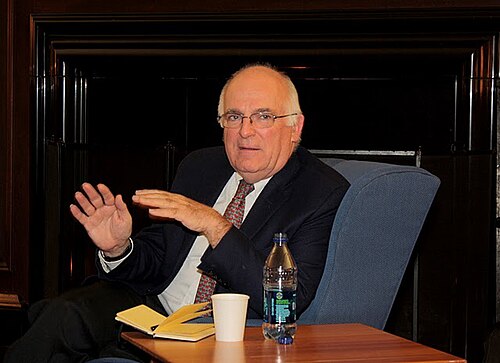 Sir Richard Dearlove
6
3 Jun 2020 – 10 Jun 2025
-1218 d
- Dylan Patel 6 4 Oct 2023 – 22 Sep 2025 +0 d
-
 Brad Gerstner
4
thin
5 Jun 2025 – 12 Jun 2025
+610 d
-
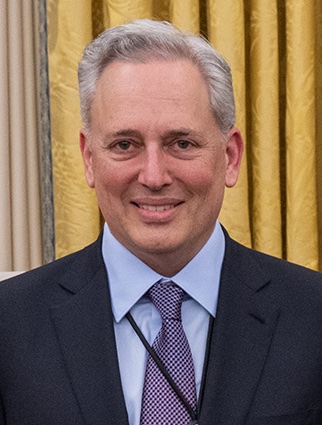 David Sacks
1
thin
19 Oct 2025 – 19 Oct 2025
+746 d
The chronologysourced and dated, oldest first
-
-
Sir Richard Dearlove
Dearlove reveals British Telecom signed a deal with Huawei in 2001-2002 while he was MI6 chief, creating significant entanglement.
“The problem is that British Telecom signed a deal back in 2001, 2002 actually, whilst I was chief with Huawei.”
-
Sir Richard Dearlove
Dearlove reveals British Telecom signed a deal with Huawei in 2001-2002 while he was MI6 chief.
“The problem is that British Telecom signed a deal back in 2001, 2002 actually, whilst I was chief with Huawei. And we became very much involved with this company and entangled with them.”
-
Sir Richard Dearlove
Dearlove says UK must halt Huawei involvement in 5G despite existing entanglement with the company.
“But just because they are, given, as it were, the importance of five gs in terms of our national infrastructure, I really think we have to call a halt and step back,”
-
Sir Richard Dearlove
Dearlove says China embedded in UK 5G is a serious security problem given Chinese intelligence nature.
“The fact is, if you understand the nature of Chinese leadership, Chinese intelligence, having China embedded in our five gs is a security problem, a serious one.”
-
-
-
Dylan Patel
Patel argues export restrictions clearly failed because China manufactured advanced Huawei chip demonstrating broader capabilities.
“The export restrictions have clearly failed because China is still able to manufacture. And what's surprising about the chip that Huawei did is, you know, it's a phone chip.”
-
Dylan Patel
Patel notes SMIC announced 7 million phones this year, calling it very high volume production.
“SMIC just came out yesterday and said they're gonna ship 7,000,000 of these phones this year. Right? That is not low volume. That is very high volume, 7,000,000 phones.”
-
-
-
Brad Gerstner
Gerstner reports Saudi minister said Huawei went from 0% to 40% market share, nearly winning full adoption.
“One of the ministers in Saudi Arabia said to me that Huawei had gone from 0% market share to 40% market share and they were months away from making the decision to go with the Huawei stack right? Because they can't be left behind.”
-
Brad Gerstner
Gerstner reports Saudi minister said Huawei went from 0% to 40% market share, nearly winning the contract.
“One of the ministers in Saudi Arabia said to me that Huawei had gone from 0% market share to 40% market share and they were months away from making the decision to go with the Huawei stack right? Because they can't be left behind. They have to do something.”
-
Sir Richard Dearlove
Dearlove reveals intelligence community objected to BT's original China deal but was overruled by policymakers.
“Now at the time that that deal was signed there were strong objections from people like me in the intelligence community. We were totally overruled.”
-
Sir Richard Dearlove
Dearlove argues any Chinese corporation is ultimately controlled by the Communist Party and must obey in crisis.
“The fact is you cannot get around the security problem that any Chinese corporation is ultimately under the control of the Chinese Communist Party. If in a crisis they are told to jump.”
-
Brad Gerstner
Gerstner reports Huawei went from 0% to 50% market share in Saudi Arabia.
“when I was in Saudi Arabia, right, Huawei has gone from 0% market share in Saudi Arabia to 50% market share in Saudi Arabia.”
-
Brad Gerstner
Gerstner warns Huawei went from 0% to 50% Saudi market share, arguing US must export AI technology.
“Huawei has gone from 0% market share in Saudi Arabia to 50% market share in Saudi Arabia.”
-
Dylan Patel
Patel says Huawei brought seven nanometer AI chips to market first in 2020 with minimal gap to NVIDIA.
“In 2020, they released an Ascend chip and submit it to impartial public benchmarks, and they were the first to bring seven nanometer AI chips to market.”
-
Dylan Patel
Patel says Huawei trained significant models on Ascend chips before 2020 Trump ban took full effect.
“The the full ban. And so they were only able to make a small volume of these chips, but they had trained significant models on these chips that they made then.”
-
Dylan Patel
Patel reveals Huawei acquired nearly 3 million chips from TSMC through shell companies resulting in billion-dollar TSMC fine.
“But they were able to acquire 3,000,000 chips, 2,900,000 chips from TSMC through these other entities. Right?”
-
Dylan Patel
Patel reports Huawei acquired 2.9 million chips worth $500 million from TSMC through shell companies before getting caught.
“they were able to acquire 3,000,000 chips, 2,900,000 chips from TSMC through these other entities. Right?”
-
David Sacks
Sacks argues selling some chips to China takes market share from Huawei, preventing its dominance.
“And what Huawei wants is for all American chips to be banned in China so they can dominate that huge market for themselves.”
-