Who is on this subjectordered by the date of their first quote here
5 of 8 lanes rest on fewer than 5 quotes and are marked thin. Offsets are days from the middle first-quote date, 21 Dec 2025 — a date, and nothing else. It is not a claim about who reached a view first.
-
 Brad Gerstner
11
2 Feb 2024 – 5 May 2026
-688 d
Brad Gerstner
11
2 Feb 2024 – 5 May 2026
-688 d
-
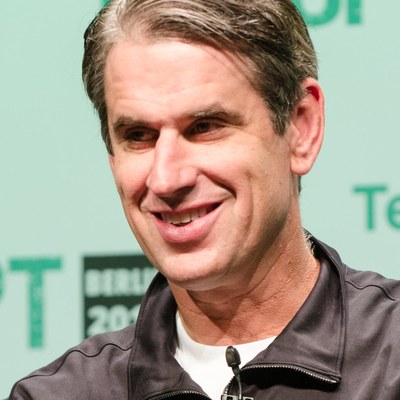 Bill Gurley
2
thin
25 Sep 2024 – 20 Jun 2025
-452 d
Bill Gurley
2
thin
25 Sep 2024 – 20 Jun 2025
-452 d
- Dylan Patel 10 21 Jan 2025 – 25 Aug 2026 -334 d
-
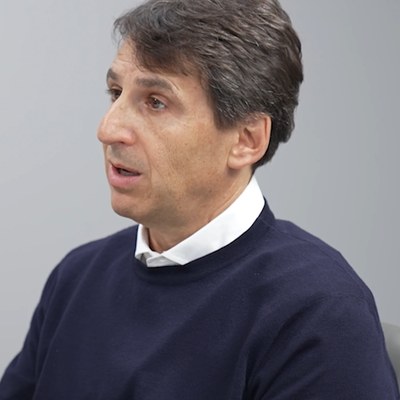 Marc Rowan
1
thin
21 Dec 2025 – 21 Dec 2025
+0 d
Marc Rowan
1
thin
21 Dec 2025 – 21 Dec 2025
+0 d
-
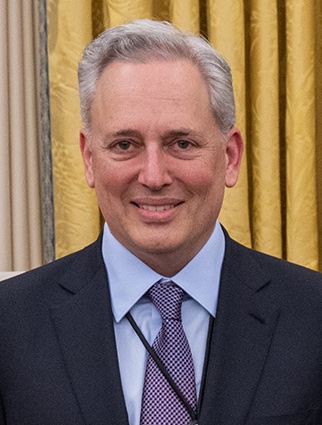 David Sacks
1
thin
10 Apr 2026 – 10 Apr 2026
+110 d
David Sacks
1
thin
10 Apr 2026 – 10 Apr 2026
+110 d
-
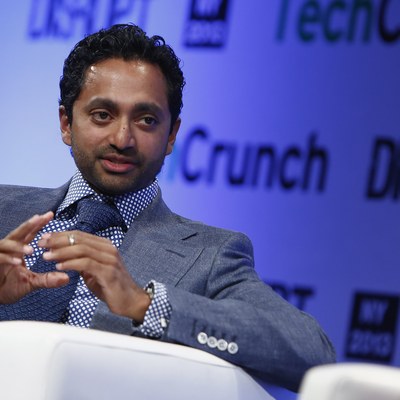 Chamath Palihapitiya
5
1 May 2026 – 14 Jul 2026
+131 d
Chamath Palihapitiya
5
1 May 2026 – 14 Jul 2026
+131 d
-
 Howard Marks
1
thin
12 Jun 2026 – 12 Jun 2026
+173 d
Howard Marks
1
thin
12 Jun 2026 – 12 Jun 2026
+173 d
-
 Gavin Baker
2
thin
4 Aug 2026 – 4 Aug 2026
+226 d
Gavin Baker
2
thin
4 Aug 2026 – 4 Aug 2026
+226 d
The chronologysourced and dated, oldest first
-
-
Brad Gerstner
Gerstner notes hyperscalers added over $15 billion in ARR this quarter, the largest ever aggregated.
“In the quarter, if you aggregate the hyperscalers together, we added over $15,000,000,000 in ARR. That's annual recurring revenue, the single largest quarter in the history when you look at that aggregated number.”
-
Brad Gerstner
Gerstner reports hyperscalers added over $15 billion ARR in the quarter, a record.
“In the quarter, if you aggregate the hyperscalers together, we added over $15,000,000,000 in ARR. That's annual recurring revenue, the single largest quarter in the history”
-
Brad Gerstner
Gerstner says Microsoft, Amazon, and Meta all signaled massive inference and infrastructure investments driving NVIDIA higher.
“It's up because Amazon told us the same thing. It's up because Susan Lee from Meta just told us yesterday that they're going to make huge future investments in infrastructure, read NVIDIA,”
-
Brad Gerstner
Gerstner notes cloud providers set record $15 billion net new ARR while reaccelerating from $100 billion run rate.
“Now mind you, these things are reaccelerating in the case of AWS from a $100,000,000,000 run rate, right? So like the, you know, you're reaccelerating.”
-
Brad Gerstner
Gerstner identifies hyperscaler total CapEx at $200 billion as the real concern drawing criticism and return questions.
“In fact, I think if people are gonna be critical of anything, a lot of people are looking at the total CapEx of the hyperscalers now at $200,000,000,000”
-
Brad Gerstner
Gerstner says hyperscalers' total capex is now at $200 billion, raising questions about return on investment.
“In fact, I think if people are gonna be critical of anything, a lot of people are looking at the total CapEx of the hyperscalers now at $200,000,000,000 and saying, when are you gonna get a return on the dollars that you're spending?”
-
Brad Gerstner
Gerstner proposes dedicating individual nuclear reactors at Diablo to major tech companies for their data centers.
“I could imagine if you had four more reactors sitting here, right, if you could land them at the right price, you could have one reactor for Meta, one for Amazon, one for Microsoft, one for Nvidia, you could have the data center sitting right next to them.”
-
Brad Gerstner
Gerstner reports Oracle, Amazon, and Microsoft are all moving forward with nuclear-powered data center projects.
“Amazon is buying this nuclear powered Talon data center facility, and now Microsoft this week announces with CEG that they're going to bring 3 Mile Island out of retirement.”
-
Bill Gurley
Gurley says hyperscalers as nuclear customers may be 10x better than utilities, bringing more risk-tolerant innovators to SMR market.
“if the hyperscalers become part of the customer set for the nuclear startups that may be like 10x better than selling just to utilities alone.”
-
Brad Gerstner
Gerstner cites Morgan Stanley forecasting carbon offset spending rising from $2 billion to $100 billion by 2030.
“In 2020, Morgan Stanley estimates that about $2,000,000,000 was spent on the carbon offset market, and by 2030 they expect that to be $100,000,000,000 by these large hyperscalers that have to buy these massive carbon offsets.”
-
-
-
Dylan Patel
Patel explains the 7% rule limits non-US data centers, benefiting only Microsoft, Meta, Amazon, and Google.
“So, like, it's, like, Microsoft, Meta, Amazon, Google. Right? These four companies have, you know you know, 70 plus percent of their data center AI data center capacity in The US.”
-
Dylan Patel
Patel notes CoreWeave got H100 services online six months before every hyperscaler in many cases.
“Get services online with h one hundreds before every hyperscaler by a factor of, like, as much as, like, six months in many cases.”
-
Dylan Patel
Patel observes hyperscaler data centers started in 2023 remain incomplete even with expedited equipment delivery.
“Even if they even if they had the electrical equipment in in you know, not on lead time, they paid a bunch to skip the queue.”
-
Dylan Patel
Patel describes a 10,000+ GPU customer whose engineers preferred CoreWeave infrastructure over their acquirer's hyperscaler setup.
“What's what's funny is there was a customer that had more than 10,000 GPUs with you. They got acquired. They had to start using some clusters at their acquiring company, the company that acquired them.”
-
Bill Gurley
Gurley argues Amazon's lower GPU demand stems from lacking a major consumer AI application unlike Microsoft and Oracle.
“Microsoft derivatively is supporting ChatGPT as is Oracle and CoreWeave on this slide. Amazon doesn't really have a big consumer application, right?”
-
Dylan Patel
Patel forecasts hyperscaler CapEx at $455-500 billion for next year versus Wall Street consensus of $360 billion.
“The consensus for the banks is $360,000,000,000 of spend next year across all of them. And my number is closer to, like it's, like, $45,500.”
-
Dylan Patel
Patel argues neo clouds with long-term enterprise and hyperscaler deals will succeed over on-demand providers.
“And so those are probably less likely to be able to succeed versus those who are locking in these massive deals with or long term deals that may not be massive but with enterprises or with AI labs, or with the hyperscalers who have no capacity because the demand is just so incredible.”
-
Marc Rowan
Rowan says hyperscaler debt is not a concern given their massive cash flows from diverse businesses.
“They have massive amounts of cash flow coming from lots of other businesses. And if I am worried about the debt of hyperscalers, the economy and The US have way bigger issues.”
-
-
-
Dylan Patel
Patel says Google spending $180B and Amazon $200B on AI infrastructure represents 4x increase from recent years.
“If we start looking at like, hey, this year, Google spending 2 Amazon spending $200,000,000,000, Google spending a $180,000,000,000 on on AI infrastructure primarily. Right?”
-
Dylan Patel
Patel notes Google's $180B and Amazon's $200B capex announcements caused stock declines despite hyperscalers seeing massive AI demand.
“Google announced a 180,000,000,000 of capex. The stock went down. And then Amazon announced 200,000,000,000 of capex and their stock went down like, I wanna say like 10%.”
-
Dylan Patel
Patel predicts Google and Amazon will take on debt for AI infrastructure following Meta's example.
“Google and Amazon haven't taken on debt yet for AI infrastructure, but they will. Right?”
-
David Sacks
Sacks cites $350 billion hyperscaler capex this year, heading to $1 trillion by 2030 per Jensen.
“Again, just the top four hyperscalers, $350,000,000,000 of expected capex this year. On its way, I think Jensen said 1,000,000,000,000 by 2030.”
-
Chamath Palihapitiya
Palihapitiya predicts hyperscalers will become heavily leveraged industrial businesses within five years due to infrastructure spending.
“They'll have all kinds of different vehicles and term loans and revolvers and all of this stuff. And so they're gonna look like this big bulky industrial business in five years.”
-
Chamath Palihapitiya
Palihapitiya suggests investing in companies receiving the trillion dollars annually spent by hyperscalers, claiming they are underpriced.
“Like, a trillion dollars a year going out of the hyperscalers. Where is it going? Just follow those dollars and buy those companies because those companies are already underpriced.”
-
Brad Gerstner
Gerstner cites hyperscaler revenue growth: Amazon 28%, Azure 39%, Google 63%, and Anthropic at historic rates.
“28% revenue growth out of Amazon at tremendous scale or 39% for Azure, 63% for Google, extraordinary. And of course, Anthropic is adding revenues at rates we've never seen before.”
-
Brad Gerstner
Gerstner notes hyperscalers grew collective revenue from $150 billion to $350 billion in just eight quarters.
“Let me just give you a statistic. It's just eight quarters ago that collectively they were doing a $150,000,000,000 in revenue. Now they're doing $350,000,000,000 in revenue.”
-
Howard Marks
Marks describes hyperscalers as mostly the greatest companies he has ever seen, engaged in an arms race.
“I would describe, what we call the hyperscalers as mostly the greatest companies I've ever seen. And they're engaged in an armory, arms race.”
-
Chamath Palihapitiya
Palihapitiya predicts hyperscalers will pitch governments on becoming AI gatekeepers using KYC and audit trails to control access.
“And the very simple opportunity is to convince governments all around the world, not just America, that they should be the gatekeeper.”
-
Chamath Palihapitiya
Palihapitiya argues neoscalers cannot match hyperscalers' decades and trillions invested in infrastructure, making their data centers obsolete.
“It's an impossibility, Jason. So you can take all of those data centers off the map.”
-
Chamath Palihapitiya
Palihapitiya states Meta, Google, and Elon price AI tokens at $1-1.50 per million versus Anthropic's $26-56.
“Zuck is about to sell it to you for a buck 50. Demis and Sundar are trying to sell it to you for a dollar.”
-
Gavin Baker
Baker reports hyperscaler operating cash flow accelerated from $28B to $32B despite unusual legal expenses.
“Operating cash flow from Microsoft, Meta, and Amazon has reported accelerated from '28 to '32. There are some actually pretty big unusual items now like these hyperscalers.”
-
Gavin Baker
Baker says adjusting for one-time items shows hyperscaler operating cash flow accelerated from $28B to $35B.
“But there is an unusual amount of onetimers this quarter. And if you adjust for that, we went from 28 to 35. That's that's a material acceleration at this scale.”
-
Dylan Patel
Patel identifies multi-trillion dollar funding gap as hyperscalers exhaust cash flows and raise debt.
“No one is generating that much cash from the business yet. Right? Hyperscalers, they funded all of the growth up until now. Google, Microsoft, Amazon, Meta.”
-
Where they overlapsame programme, same subject
- Bill Gurley and Brad Gerstner — BG2 Pod, 1 appearance together
- All-In Podcast also carries Chamath Palihapitiya and David Sacks on this subject, at different times.
- CNBC Television also carries Brad Gerstner and Chamath Palihapitiya on this subject, at different times.