Who is on this subjectordered by the date of their first quote here
9 of 11 lanes rest on fewer than 5 quotes and are marked thin. Offsets are days from the middle first-quote date, 4 Oct 2025 — a date, and nothing else. It is not a claim about who reached a view first.
-
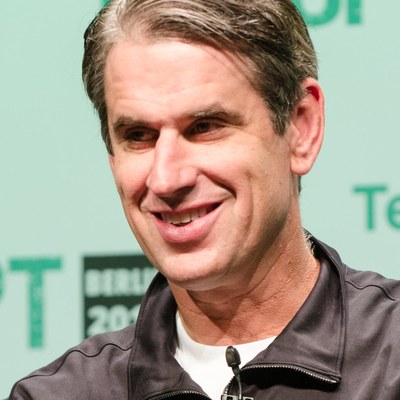 Bill Gurley
12
7 Apr 2017 – 11 May 2026
-3102 d
Bill Gurley
12
7 Apr 2017 – 11 May 2026
-3102 d
-
 David Friedberg
14
13 Jul 2021 – 12 May 2026
-1544 d
David Friedberg
14
13 Jul 2021 – 12 May 2026
-1544 d
-
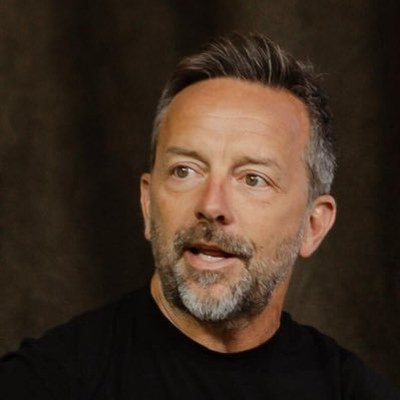 Brad Gerstner
2
thin
1 Oct 2024 – 1 Oct 2024
-368 d
Brad Gerstner
2
thin
1 Oct 2024 – 1 Oct 2024
-368 d
- Dylan Patel 1 thin 2 Oct 2024 – 2 Oct 2024 -367 d
-
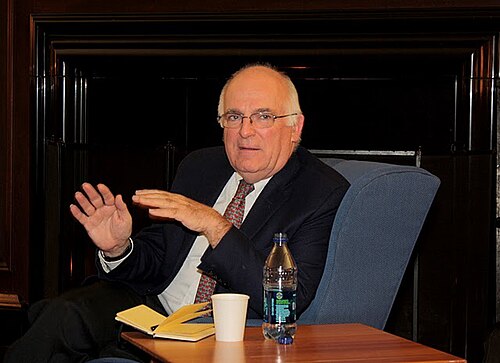 Sir Richard Dearlove
2
thin
4 Oct 2025 – 4 Oct 2025
+0 d
Sir Richard Dearlove
2
thin
4 Oct 2025 – 4 Oct 2025
+0 d
-
 Howard Marks
2
thin
21 Feb 2026 – 4 May 2026
+140 d
Howard Marks
2
thin
21 Feb 2026 – 4 May 2026
+140 d
-
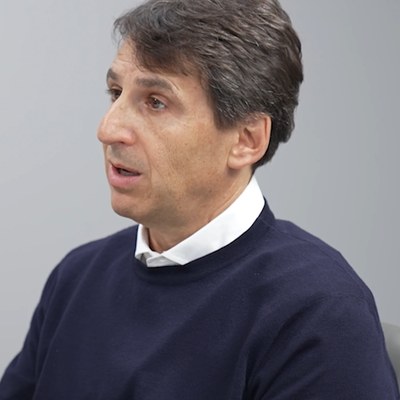 Marc Rowan
1
thin
16 Apr 2026 – 16 Apr 2026
+194 d
Marc Rowan
1
thin
16 Apr 2026 – 16 Apr 2026
+194 d
-
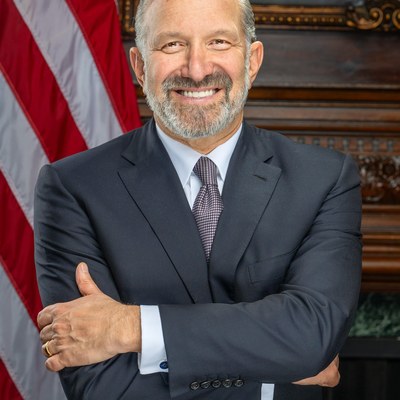 Howard Lutnick
1
thin
11 May 2026 – 11 May 2026
+219 d
Howard Lutnick
1
thin
11 May 2026 – 11 May 2026
+219 d
-
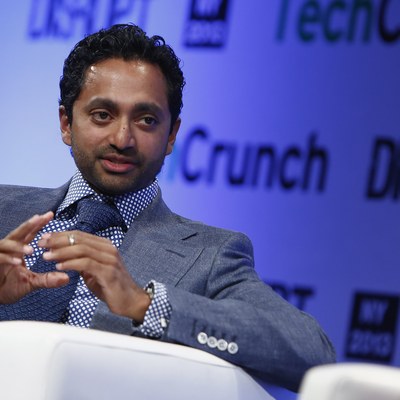 Chamath Palihapitiya
2
thin
29 May 2026 – 14 Jul 2026
+237 d
Chamath Palihapitiya
2
thin
29 May 2026 – 14 Jul 2026
+237 d
-
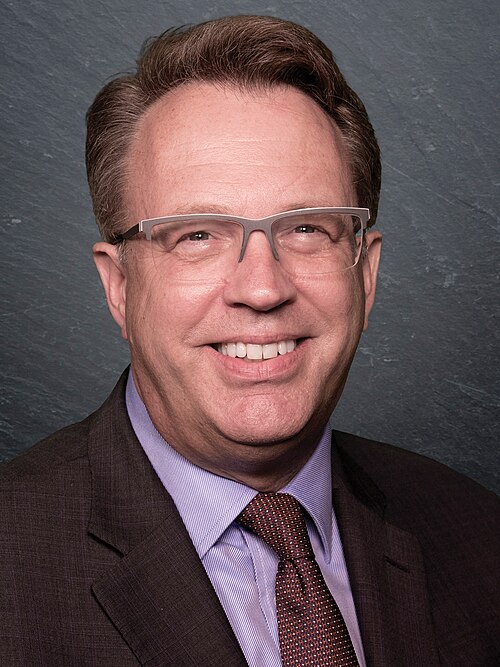 John Williams
1
thin
John Williams
1
thin
-
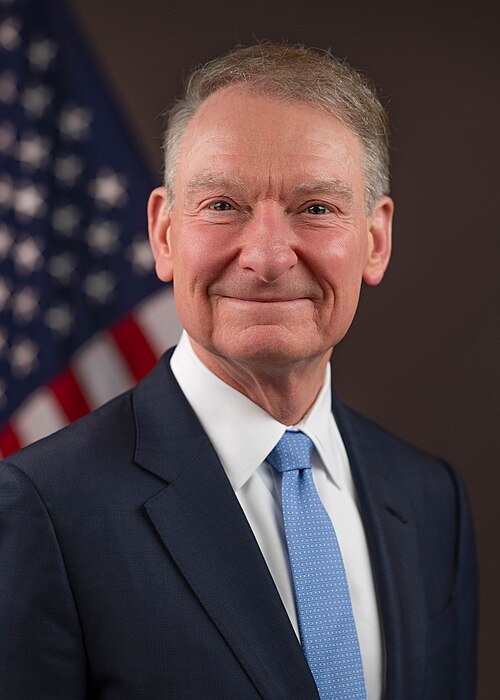 Paul Atkins
3
thin
Paul Atkins
3
thin
The chronologysourced and dated, oldest first
-
-
Bill Gurley
Gurley explains Innovator's Dilemma: disruptive products succeed by targeting customers who reject incumbent complexity.
“Products that are able to be disruptive get over designed. They get over feature rich, they get complex, they get heavy.”
-
-
-
David Friedberg
Friedberg says traditional financial firms ruin tech acquisitions when they try to integrate them, creating an innovator's dilemma.
“And if they try and do that, then they step in and they try and run a tech company and the whole thing gets ruined and falls apart as we've seen in M and A over and over again in many different So it is this kind of classic innovator dilemma moment that we're seeing in financial services”
-
-
-
David Friedberg
Friedberg argues ninety-nine percent of business value comes from execution, not the original invention or idea.
“99% of the value, unfortunately, comes from that business building exercise because that's where the scrum happens. Right.”
-
-
-
David Friedberg
Friedberg argues complexity breeds fear of failure, explaining why people pursue smaller ideas requiring fewer things to go right.
“Well, there's I don't know about, using the term thinker, but I think that the, the big concepts are scary because there's so many things that have to go right to get them to work.”
-
David Friedberg
Friedberg explains people avoid big ideas because complexity breeds fear of higher failure probability.
“And, you know, complexity breeds fear because it breeds a higher chance of failure. You know, you have to get each of these things right for something to work.”
-
David Friedberg
Friedberg argues that capital diffusion into small software projects prevents concentration on transformative breakthroughs like semiconductors.
“And you could probably make 50,000,000 in return. That's a nice little 10 bagger. Great. Let's do that.”
-
Bill Gurley
Gurley compares AI regulatory threats to how scare tactics shut down supersonic aviation and nuclear innovation.
“Here's a technology much like supersonic aviation, where scare tactics literally shut down all of the innovation in massive industries that would have inured to our national strategic advantage, the environmental advantage.”
-
David Friedberg
Friedberg argues agtech is innovating despite poor investor returns, distinguishing between VC performance and farmer value creation.
“Everyone views the ag tech market negatively because the returns for the ag tech investor class isn't there. But that doesn't mean that ag tech isn't innovating and that we aren't improving productivity”
-
David Friedberg
Friedberg argues ag tech is innovating successfully despite poor VC returns from over-investment.
“that doesn't mean that ag tech isn't innovating and that we aren't improving productivity and bringing value to farmers and improving the quality of our food systems.”
-
David Friedberg
Friedberg describes successfully turning off DNA reduction in sex cells to preserve complete genomes in crops.
“The idea was we could turn off the process that causes the fusion, the reduction of the DNA, and have it have all the DNA. And so we did this. It started to work.”
-
David Friedberg
Friedberg notes US farms still use 100-year-old Russet Burbank variety, requiring football-field-sized warehouses for storage.
“we've still been farming Russet Burbank in The US for a hundred plus years. That's a hundred year old variety.”
-
Bill Gurley
Gurley argues AI wave is unprecedented because incumbents like Microsoft moved fast from the start, unlike typical disruption patterns.
“This is one of the very first waves where the incumbents were eyes wide open at the beginning of the technology shift.”
-
Brad Gerstner
Gerstner says GDP was flat for 1800 years then went parabolic after 1800.
“Eighteen hundred years, okay? Almost zero growth in GDP. And then just after the year 1800, you have this parabolic move in global GDP.”
-
Brad Gerstner
Gerstner claims 99% of humans who ever lived never saw a single invention.
“99 of them never saw a single invention in their entire life. Their entire life, right, was about survival.”
-
Dylan Patel
Patel claims 100x efficiency gains possible from chip architecture improvements even without further process node shrinking.
“There are 100 x gains from architecture. Even if we, like, literally stop shrinking, I think we could have 100 x gains from architectural advancements.”
-
-
-
David Friedberg
Friedberg says boosted breeding enables true seed propagation in crops that currently rely on vegetative propagation.
“So it unlocks a significant yield gain and it creates new opportunities for creating seed products in markets where it doesn't exist.”
-
Bill Gurley
Gurley reports 1,300 variants of DeepSeek R1 appeared on Hugging Face within days of its release.
“And so, like, forty eight hours after r one was posted, they had 500 variants on Hugging Face. And today I pinged them this morning before we started, they're up to 1,300.”
-
Bill Gurley
Gurley argues community sharing best practices achieves higher global output than proprietary competition alone over time.
“I don't know who would force them, but they're forced to share all their best practices from that week with everybody and everyone does it and everyone shares their best practice.”
-
Bill Gurley
Gurley reports Chinese founders and VCs study Western podcasts and speeches exhaustively while West ignores China.
“over lunch, this individual told me, you know, every founder and every VC in China studies the West at a nauseating level. So they listen to all the podcasts.”
-
David Friedberg
Friedberg argues ag tech delivers real innovation and value despite poor VC returns in the sector.
“But that doesn't mean that ag tech isn't innovating and that we aren't improving productivity and bringing value to farmers and improving the quality of our food systems.”
-
David Friedberg
Friedberg argues ag tech is innovating successfully despite poor VC returns, separating farmer value from investor outcomes.
“I think that the ag market is going through a lot of fantastic innovation cycles right now. Everyone views the ag tech market negatively because the returns for the ag tech investor class isn't there.”
-
David Friedberg
Friedberg argues ag tech delivers real innovation and farmer value despite poor VC returns in the sector.
“But that doesn't mean that ag tech isn't innovating, and that we aren't improving productivity and bringing value to farmers and improving the quality of our food systems.”
-
Sir Richard Dearlove
Dearlove says Palantir uniquely had the conceptual approach to fully adapt democratic security structures to data.
“and make it, let's say, fully adapt it to the world of data in a way that no one else has seemed to have had the conceptual approach.”
-
Sir Richard Dearlove
Dearlove argues Palantir uniquely adapted democratic security structures to the world of data through conceptual approach.
“make it, let's say, fully adapt it to the world of data in a way that no one else has seemed to have had the conceptual approach.”
-
Bill Gurley
Gurley calls claims that China lacks innovation capabilities flat wrong based on direct observation during visits.
“And that's just flat wrong. Whoever's saying that just hasn't been there. They don't know the facts on the ground.”
-
Bill Gurley
Gurley refutes claims that Chinese companies lack innovation, saying entrepreneurs there are as capable as American ones.
“Whoever's saying that just hasn't been there. They don't know the facts on the ground. These entrepreneurs are every bit as good as the entrepreneurs they are here.”
-
Bill Gurley
Gurley says Chinese entrepreneurs match US quality, citing MEMS LiDAR at $130 per car versus thousands.
“These entrepreneurs are every bit as good as the entrepreneurs they are here. There are examples like in LiDAR, they built a MEMS LiDAR product that's like $130 a car.”
-
-
-
“I always make this point that the bubbles are very, very around something new because the imagination is untrammed and it can go off in a flight of fancy.”
-
Bill Gurley
Gurley argues Microsoft's late nineties regulatory threat enabled Amazon and Google to emerge.
“I think that had Microsoft not been under threat in the late nineties, you may not have seen Amazon or Google or a lot of companies you may not have seen.”
-
Marc Rowan
Rowan notes major innovation companies like SpaceX, OpenAI, and Stripe all remain private despite US capital market strength.
“But I'll go through the companies who are creating massive change. SpaceX, Anthropic, OpenAI, Stripe, Cursor, Cognition, Andoril. What do all of them have in common?”
-
Howard Marks
Marks questions whether AI can identify future Amazon or Steve Jobs from present information.
“Can AI sit down with five business plans and figure out which one is Amazon? Can AI sit down with five CEOs and figure out which one is Steve Jobs.”
-
Howard Lutnick
Lutnick commits Commerce will never pick just one winner in technology solutions.
“That is an easy commitment for us. We will never pick just one winner. That that makes no sense for America.”
-
Bill Gurley
Gurley argues China built a highly competitive system inside communism through provincial competition mechanisms.
“They have built, inside of a communist country, have built a system that's highly competitive. And it comes from leveraging provincial competition and some other things.”
-
Bill Gurley
Gurley argues China has built a system with more intense competition than the United States.
“In fact, I could argue the model they've created has more intense competition than we have here.”
-
David Friedberg
Friedberg argues salaried employees avoid failure to keep jobs, making it hard to create a culture of creative destruction.
“Most people in most enterprises that aren't owner operators don't want to fail. They want to keep their job. They want to move up the ladder by being repeatedly successful.”
-
Chamath Palihapitiya
Palihapitiya predicts silicon and software innovations will drop AI training costs from $10B to $10M runs.
“At the scale of what they're trying to do, those kinds of innovations are going to make the cost of model training so much cheaper that it's like, why would we stick to the $10,000,000,000 training runs when we can have the $10,000,000 training runs?”
-
Chamath Palihapitiya
Palihapitiya proposes posting hundreds of millions himself to create turnkey IPOs with all his risk.
“But I've talked to Paul Atkins about this. I'll post the hundreds of millions of dollars. Now it's a turnkey IPO. It's all my risk. If I find something I like, I'll just underwrite it.”
-
-
-
Paul Atkins
Atkins argues the trade-through rule has fueled disorder by encouraging exchange proliferation and dampening innovation.
“Indeed, the release shows that, in today’s markets, the trade-through rule has helped fuel disorder by encouraging the proliferation of exchanges, dampening innovation within them, and inspiring ever more complex order types on those exchanges.”
-
Paul Atkins
Atkins hopes e-delivery will enable interactive and customized disclosures impossible with paper.
“I hope to see interactive and customized disclosures, something that is not possible with paper.”
-
Paul Atkins
Atkins argues SEC rules prevent firms from using modern technologies like apps, video, and podcasts for disclosure.
“We have made it hard for firms to experiment with cellphone apps, streaming video, podcasts, virtual conference room presentations, and anything else that is not an e-delivered pdf.”
-
John Williams
Williams describes Fed conducting hands-on research on technological innovation through New York Innovation Center with BIS.
“Through the New York Innovation Center in the Markets Group at the New York Fed, and in collaboration with the Bank for International Settlements (BIS), we conduct hands-on research projects around technological innovation.”
-
Where they overlapsame programme, same subject
- CNBC Television also carries Chamath Palihapitiya and David Friedberg on this subject, at different times.