Who is on this subjectordered by the date of their first quote here
2 of 3 lanes rest on fewer than 5 quotes and are marked thin. Offsets are days from the middle first-quote date, 14 Jan 2019 — a date, and nothing else. It is not a claim about who reached a view first.
-
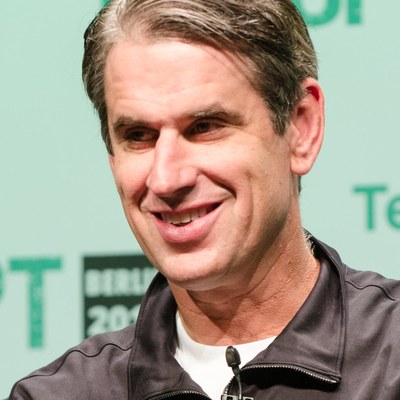 Bill Gurley
1
thin
11 Dec 2012 – 11 Dec 2012
-2225 d
Bill Gurley
1
thin
11 Dec 2012 – 11 Dec 2012
-2225 d
-
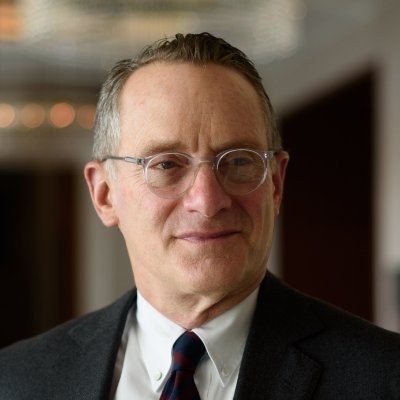 Howard Marks
16
14 Jan 2019 – 12 Jun 2026
+0 d
Howard Marks
16
14 Jan 2019 – 12 Jun 2026
+0 d
-
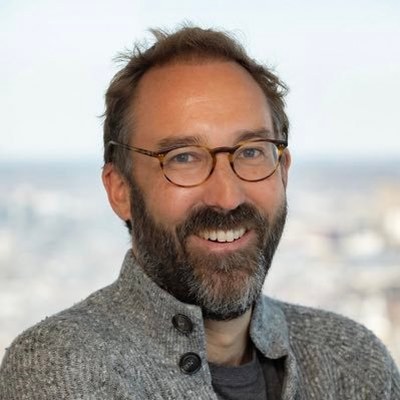 Gavin Baker
1
thin
8 Jul 2026 – 8 Jul 2026
+2732 d
Gavin Baker
1
thin
8 Jul 2026 – 8 Jul 2026
+2732 d
The chronologysourced and dated, oldest first
-
-
Bill Gurley
Gurley explains Benchmark uses the phrase long term greedy and is not judged on IRR.
“We have a phrase that not all the partners like to use, say we're long term greedy. You know, we're luckily in a business where we're not judged on IRR per se.”
-
-
-
Howard Marks
Marks argues good investing is not buying good things but buying things well.
“And there's a really important lesson in that, that good investing is not a matter of buying good things, but buying things well.”
-
-
-
Howard Marks
Marks states that price, not asset quality, determines risk, and good investing means buying things well, not buying good things.
“B, that good investing is not a matter of buying good things, but buying things well. And the difference is not only grammatical.”
-
“Was he was in every year for fourteen years in a row. He was between the twenty seventh and the forty seventh percentile measuring from the top.”
-
Howard Marks
Marks argues risk cannot be quantified even after the fact, using a doubling investment as example.
“Or was it a really clever thing that nobody else had figured out where you were sure to double your money? And the answer is you can't tell.”
-
-
-
Howard Marks
Marks states that controlling risk while making money is the real investment accomplishment, not just returns.
“To me, the real accomplishment is making money with the risk under control. And that's what thinking about risk, I think, helps you do. So, you know, Bernstein's, writing is very important.”
-
Howard Marks
Marks defines real investment accomplishment as making money with controlled risk, not just returns.
“To me, the real accomplishment is making money with the risk under control. And that's what thinking about risk, I think, helps you do.”
-
-
-
Howard Marks
Marks states if you avoid losers in equities, winners will take care of themselves, his core motto.
“And it happens to say in there, simply put what the pension funds record tells me is that in equities, if you can avoid the losers and losing years, the winners will take care of themselves.”
-
“And when we started Oaktree in 1995, I wrote that down, and that became our motto and still is.”
-
Howard Marks
Marks says Oaktree's founding motto is that avoiding losers lets winners take care of themselves.
“And when we started Oaktree in 1995, I wrote that down, and that became our motto and still is. If you can avoid the losers, the winners will take care of themselves.”
-
-
-
Howard Marks
Marks distinguishes risk control from risk avoidance, emphasizing intelligent risk-bearing is integral to good returns.
“Exposing yourself to the risk of loss is integral in trying to have a good investment return. So, you know, even though our investment philosophy, stresses, risk control, we're not talking about risk avoidance.”
-
Howard Marks
Marks argues good investing is not just buying good things but buying things well at the right price.
“it's not what you buy, it's what you pay. And good investing is not just a function of buying good things, but of buying things well.”
-
Howard Marks
Marks says good investing is not just buying good things but buying things well at the right price.
“And good investing is not just a function of buying good things, but of buying things well.”
-
Howard Marks
Marks describes Oaktree's core philosophy as taking advantage of the mistakes of others.
“Bob said, essentially, what we do is take advantage of the mistakes of others. And that caused me to write a memo shortly after entitled, it's all a big mistake.”
-
Howard Marks
Marks explains excess returns require buying from sellers making mistakes, which nobody volunteers for.
“It requires cooperation for someone who's willing to sell something for less than it's worth. And who volunteers for that job? We want to buy from sellers who are making mistakes.”
-
Howard Marks
Marks identifies the biggest investor mistake as believing something can outperform forever, leading to overvaluation.
“The the biggest I thought I've spent a lot of time thinking about the biggest mistake that investors make. It is the belief that something can go up more than something else forever.”
-
Howard Marks
Marks argues investing in AI is closer to speculating than analytical investing, describing it as a spectrum.
“You have to accept the likelihood that what you're doing is closer to speculating. And I don't say that word pejoratively than analytical investing.”
-
Gavin Baker
Baker quotes mentor Jennifer Yurig: investors either panic early or double down late, not both.
“Ultimately, as an investor, you either have to panic early or double down late. And essentially no one does both. And know thyself.”
-