Who is on this subjectordered by the date of their first quote here
6 of 9 lanes rest on fewer than 5 quotes and are marked thin. Offsets are days from the middle first-quote date, 29 Sep 2022 — a date, and nothing else. It is not a claim about who reached a view first.
-
 Bill Gurley
9
26 Aug 2011 – 15 Jul 2026
-4052 d
Bill Gurley
9
26 Aug 2011 – 15 Jul 2026
-4052 d
- Stanley Druckenmiller 1 thin 19 Dec 2019 – 19 Dec 2019 -1015 d
-
 David Sacks
2
thin
11 Apr 2020 – 11 Apr 2020
-901 d
David Sacks
2
thin
11 Apr 2020 – 11 Apr 2020
-901 d
-
 Marc Rowan
7
1 Dec 2020 – 5 Dec 2023
-667 d
Marc Rowan
7
1 Dec 2020 – 5 Dec 2023
-667 d
-
 David Friedberg
12
29 Sep 2022 – 3 Oct 2025
+0 d
David Friedberg
12
29 Sep 2022 – 3 Oct 2025
+0 d
-
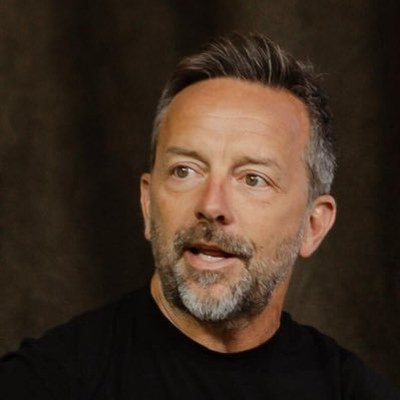 Brad Gerstner
1
thin
3 Mar 2023 – 3 Mar 2023
+155 d
Brad Gerstner
1
thin
3 Mar 2023 – 3 Mar 2023
+155 d
-
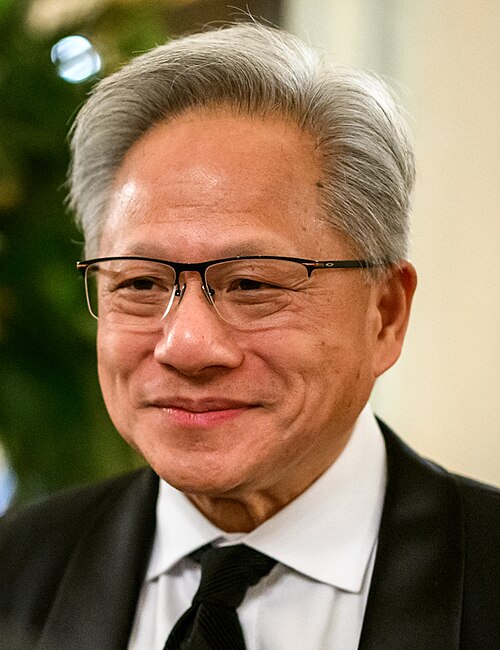 Jensen Huang
1
thin
21 May 2024 – 21 May 2024
+600 d
Jensen Huang
1
thin
21 May 2024 – 21 May 2024
+600 d
-
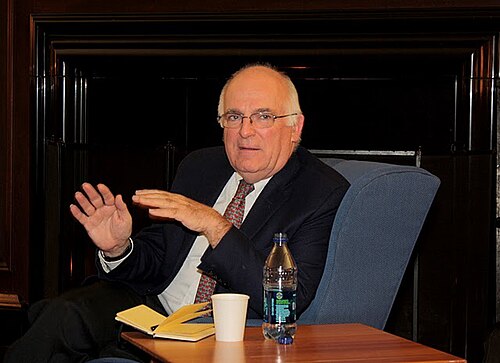 Sir Richard Dearlove
2
thin
22 Jun 2025 – 22 Jun 2025
+997 d
Sir Richard Dearlove
2
thin
22 Jun 2025 – 22 Jun 2025
+997 d
- Dylan Patel 2 thin 18 Sep 2025 – 22 Jul 2026 +1085 d
The chronologysourced and dated, oldest first
-
-
Bill Gurley
Gurley argues most great leaders delegate because no one can be expert in everything at scale.
“I think there are very few great leaders. If you were to just take a picture of a whole bunch of great leaders, most of them are good at delegation, getting other people to make decisions because organizations are so large, and no one has the capacity to be an expert in so many things.”
-
Bill Gurley
Gurley says Jobs's CEO execution level is unprecedented, crediting Cook's operational contributions.
“I don't know if whoever sees CEO execution of this level. Of course, it's not just the CEO execution. You got what Tim Cook's done in operation.”
-
-
-
Bill Gurley
Gurley says Thomas Layton was interim CEO for six-and-a-half years, taking OpenTable from $100K monthly to $20M run rate.
“a guy on the board, Thomas Layton, agreed to come in and be interim CEO, which he held for six and a half years.”
-
-
-
Bill Gurley
Gurley notes Stitch Fix has over 80% female employees, over 60% female management and board.
“Stitch Fix, people may not know this. Over 80% of the employees are female. Over 60% of the management team's female. Over 60% of the board is female.”
-
-
-
Bill Gurley
Gurley expresses high confidence in Dara's track record addressing Uber's problems.
“the DAR is starting to build up a track record of having put out these fires and and attack these problems.”
-
-
-
Stanley Druckenmiller
Druckenmiller calls Powell a weaker version of Yellen without the monetary framework Bernanke had.
“He's a weaker version of Yellen without the monetary framework. Bernanke and I philosophically disagree about easy money and helicopter money.”
-
-
-
David Sacks
Sacks proposes a separate czar for creating an exit strategy from lockdown without retriggering viral spread.
“I think that there should be a separate team, kind of a czar for the 2.0 response, which should be focused on how do we create a new system that gets us out of lockdown but doesn't re trigger the exponentiality of the virus.”
-
David Sacks
Sacks notes FDR was reelected in 1936 during the Depression because he was seen as a man of action.
“We're still in the Great Depression in 1936 when he gets reelected, you know, and because he's seen as a man of action, he does these fireside chats and he's doing things.”
-
Marc Rowan
Rowan quotes Rabbi Sacks distinguishing good leaders who create followers from great leaders who create leaders.
“He said, good leaders create followers, great leaders create more leaders. That is what I see looking at all of you.”
-
-
-
Marc Rowan
Rowan says Apollo aims to be the best place to be a partner in financial services industry.
“Team, the articulation I've given internally is we are striving to be the best place to be a partner in the financial services industry bar none.”
-
-
-
David Friedberg
Friedberg claims grit, bias to action, and narrative ability are universal predictors of entrepreneurial success.
“Yeah, so those are my three traits that I think are the greatest predictors of entrepreneurial success.”
-
David Friedberg
Friedberg argues social media democracy elects representatives of mob opinion rather than actual leaders.
“Because of the fast feedback cycles that we talked about earlier, and that a point of view, kind of the mob coalesces around the point of view, you end up electing the person who represents the mob, which means that ultimately over time in a democracy, in the social media age, is you don't end up electing leadership.”
-
David Friedberg
Friedberg argues social media democracy elects mob representatives rather than contrarian leaders willing to inspire.
“And leadership, as Sax points out, needs to and has to be willing and able to lead, which means being contrarian and being inspiring.”
-
David Friedberg
Friedberg argues social media age democracies elect mob representatives instead of contrarian leaders willing to be unpopular.
“leadership, as Sax points out, needs to and has to be willing and able to lead, which means being contrarian and being inspiring.”
-
-
-
Brad Gerstner
Gerstner says courage has gained momentum in Silicon Valley over the last six months.
“And so to me, what's more significant is over the last six months, we've seen courage gain momentum in Silicon Valley, right?”
-
Marc Rowan
Rowan uses 9/11 analogy to criticize Penn's qualified response to attacks on Israel.
“You know, imagine telling a group of firefighters a week after nine eleven that you're sorry for their loss, and then adding the word but as if you're going to explain the action of the terrorist.”
-
Marc Rowan
Rowan reveals four Jewish board members including himself were asked to step down after signing an open letter.
“In the background, there are three trustees and one chairman in my instance who are being asked to step off the board, all of whom signed this open letter, disagreeing with what the university is doing, and all four of us Jewish.”
-
Marc Rowan
Rowan says the question is whether President McGill is the right person to manage the problem.
“This is not president McGill didn't create this problem. The question is, is she the right person to manage this problem?”
-
Marc Rowan
Rowan warns that apathy is the worst outcome for universities currently facing donor pressure.
“I think the worst thing that can happen to these universities is apathy. Right now there's not apathy. Donors are engaged. They want change.”
-
Marc Rowan
Rowan lists America's advantages: immigration demand, knowledge base, energy, technology, market size, and military strength.
“Think about it. People want to come here. We have an incredible knowledge base. We have abundant energy. We're leaders in technology. We have a massive domestic market. We're the strongest military power.”
-
-
-
David Friedberg
Friedberg describes Google's book-scanning project as exemplifying leadership through big audacious goals that challenge teams.
“And those big thinking, those big ideas, those big audacious concepts, as a framing for the team, really, I think personified what I consider to be true leadership in an organization of people,”
-
David Friedberg
Friedberg redefines founder as whoever drives innovation through persistent failure, not necessarily the original starter.
“The founder is the person who, from whom the energy to drive, to innovate and change the business comes from. And that could be a different person.”
-
Jensen Huang
Huang says 60 direct reports removes seven organizational layers and gives everyone equal information access.
“Number two, if the CEO's direct staff is 60 people, the number of layers you've removed in a company is probably something like seven,”
-
David Friedberg
Friedberg contrasts board role as reactive versus CEO role as proactive in driving outcomes.
“when you're on the board, every day you're waiting for shit to happen. But if you're the CEO, every day you get to wake up and make shit happen.”
-
-
-
Bill Gurley
Gurley contrasts Dario and Sam's platitudes with Zuckerberg being transparent and in the arena on AI.
“And Zuck was down in the weeds in the meet. He's in the arena. Yeah. Being super transparent.”
-
Sir Richard Dearlove
Dearlove notes Blaise is unusually young for the MI6 chief role, suggesting exceptional ability.
“What's striking about her is that she's really quite young for the appointment, and I hope that's an indicator of the level of her ability as the strongest candidate.”
-
Sir Richard Dearlove
Dearlove assesses Blaise as forceful and tough with the makings of an effective intelligence chief.
“I gather she's really quite a forceful and tough personality, and I think she has the makings of a head of service and will do credit to the fact that she's the first woman to lead British intelligence.”
-
David Friedberg
Friedberg contrasts board service as waiting versus CEO role as making things happen daily.
“I said to someone, it feels like when you're on the board, every day you're waiting for shit to happen.”
-
David Friedberg
Friedberg contrasts board role as waiting for things to happen versus CEO role as making things happen.
“it feels like when you're on the board, every day you're waiting for shit to happen. But if you're the CEO, every day you get to wake up and make shit happen.”
-
David Friedberg
Friedberg contrasts board service versus CEO role: boards wait for events while CEOs drive them.
“Yeah. And that's what it feels like to me, you know, being able to step back into an operating role as CEO again”
-
Dylan Patel
Patel contrasts Anthropic's multiple technical cofounders with OpenAI where Sam Altman is not technical.
“They've got cofounders who are extremely technical, whereas OpenAI, right, you know, they they they don't have necessarily like, Sam's not super technical. You know, the obvious Greg Greg is a cofounder, he's super technical.”
-
David Friedberg
Friedberg describes treating Final Frontier with ownership mentality despite having no actual equity stake in the company.
“I view this company as my I I have ownership in this. I don't actually have ownership in this, but my mentality is I do have ownership in this.”
-
David Friedberg
Friedberg describes treating Final Frontier with ownership mentality despite having no actual equity stake in the company.
“I have been with the company for such a long time where I view this company as my I have ownership in this.”
-
-
-
Bill Gurley
Gurley describes Collison probing how Elon uses extreme time constraints to force creative problem-solving.
“I think the world has been trying to figure out how Elon does what he does, especially from a leadership standpoint.”
-
Bill Gurley
Gurley explains Elon Musk uses time constraints like Jobs used physical constraints to force creative problem-solving.
“And I realized what he's doing is the exact jobs would tell them the phone has to be this thick.”
-
Bill Gurley
Gurley argues founders are constantly selling to investors, employees, customers, and in deals.
“if you're a founder, you're selling to new investors, you're selling to employees, you own the company culture and the perception of the company, you're striking deals, you're selling to customers, you're just out selling all”
-
Dylan Patel
Patel warns companies will lose if managers cannot distinguish LCMs from transformers and understand different architectures.
“Right? If if you're not gonna understand these systems if your managers haven't taken the time to understand the different architectures.”
-
Where they overlapsame programme, same subject
- All-In Podcast also carries Brad Gerstner and David Sacks on this subject, at different times.
- Bloomberg Television also carries Bill Gurley and Stanley Druckenmiller on this subject, at different times.