Who is on this subjectordered by the date of their first quote here
5 of 6 lanes rest on fewer than 5 quotes and are marked thin. Offsets are days from the middle first-quote date, 28 Aug 2025 — a date, and nothing else. It is not a claim about who reached a view first.
-
 Jensen Huang
1
thin
21 May 2024 – 21 May 2024
-464 d
Jensen Huang
1
thin
21 May 2024 – 21 May 2024
-464 d
- Dylan Patel 1 thin 10 Jun 2025 – 10 Jun 2025 -79 d
-
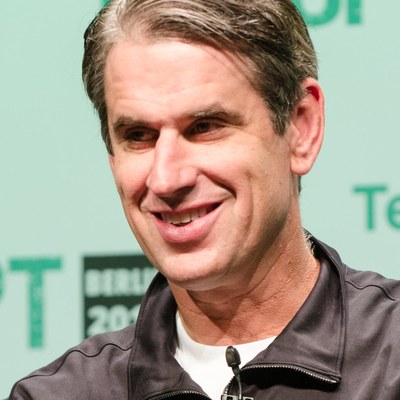 Bill Gurley
43
28 Aug 2025 – 8 Jul 2026
+0 d
Bill Gurley
43
28 Aug 2025 – 8 Jul 2026
+0 d
-
 David Friedberg
1
thin
3 Oct 2025 – 3 Oct 2025
+36 d
David Friedberg
1
thin
3 Oct 2025 – 3 Oct 2025
+36 d
-
 Howard Marks
1
thin
2 Mar 2026 – 2 Mar 2026
+186 d
Howard Marks
1
thin
2 Mar 2026 – 2 Mar 2026
+186 d
-
 John Williams
2
thin
John Williams
2
thin
The chronologysourced and dated, oldest first
-
-
Jensen Huang
Huang argues feedback should be public because everyone should learn from one person's mistakes.
“Now, you created the conditions because of some mistake that you made or silliness that you brought upon yourself. We should all learn from that opportunity.”
-
-
-
Dylan Patel
Patel advises becoming a foremost expert in what you enjoy and reaching out to anyone online.
“Or try and talk to those people because one of the things I learned early on is you can talk to anyone on the Internet,”
-
Bill Gurley
Gurley reports Chinese founders and VCs study Western podcasts and speeches exhaustively while West ignores China.
“over lunch, this individual told me, you know, every founder and every VC in China studies the West at a nauseating level. So they listen to all the podcasts.”
-
Bill Gurley
Gurley says Chinese study Western financials and speeches but West does not reciprocate for China.
“Possibly can. They study any speech. They look at the financials. And he said, the West doesn't do that of China.”
-
David Friedberg
Friedberg distinguishes between mere acceptance and learning from failure to achieve growth and progression.
“You accepted it, but you're not growing from it. Once you actually learn from that, then you have that growth and you have a progression.”
-
-
-
Bill Gurley
Gurley recommends executives develop five peers in similar companies for quarterly knowledge sharing.
“I've often gone to my founders or CEOs and I say, you should tell every one of your direct reports to develop five peers in nearby companies, not direct competitors, things that look similar, and have them meet with them four times a year and then bring back and report up.”
-
Bill Gurley
Gurley says he encourages founders to have executives develop five external peers and meet quarterly, but gets pushback.
“And I've been very unable to make that programmatic or make that successful and people find it foreign.”
-
Bill Gurley
Gurley cites 58% disengagement and 15% quiet quitting data, contrasts with founders' constant learning requirements.
“15 of those 58 say they're quiet quitting. These are horrible numbers. Founders live on the edge of a new technological shift constantly, and they can't not know what's happening next.”
-
Bill Gurley
Gurley argues founders must constantly study new technology at a level uncommon in most other industries.
“Founders live on the edge of a new technological shift constantly, and they can't not know what's happening next. It requires a level of studying that is foreign in other industries and other fields.”
-
Bill Gurley
Gurley's test for career passion is whether you would spend free time learning about the topic.
“And that is simply, would you spend time outside of work learning about this topic?”
-
Bill Gurley
Gurley claims learning and finding mentors is 10 to 100 times easier in industry epicenters.
“But the thing is many of the principles that I have in the book from constant learning to peers and mentors are just 10 to a 100 times easier if you're right in the middle of it with everybody else.”
-
Bill Gurley
Gurley argues workers must understand AI's impact on their industry, comparing it to farmers adopting tractors and drones.
“Like if this technology has the ability to impact your industry, you need to know about it.”
-
Bill Gurley
Gurley argues current moment offers unprecedented learning speed, making AI an advantage for continuous learners.
“And so if you're constantly learning, honing, if you're figuring out how to get AI to help you be more productive, you're gonna have even better chance of winning.”
-
Bill Gurley
Gurley read tech articles in business magazines because that was what genuinely excited him personally.
“And I was, of course, reading the tech articles because that's what I was excited about.”
-
Bill Gurley
Gurley recommends keeping fanboy journals studying people defining your field to accelerate learning.
“Like, there's there's never been a better time in the history of the world to learn on your own time.”
-
Bill Gurley
Gurley quotes Cuban's distinction between using LLMs to learn faster versus not learning at all.
“Mark Cuban the other day tweeted, he said he said there's two types of people. The the people that use LLMs to learn faster and the people that use LLMs to not learn at all.”
-
Bill Gurley
Gurley cites Mark Cuban distinguishing people who use LLMs to learn faster versus not learn at all.
“The the people that use LLMs to learn faster and the people that use LLMs to not learn at all. I thought that was profound.”
-
Howard Marks
Marks argues it's desirable to learn investment lessons early when there's not much money at stake.
“And so that was very informative and it's very desirable to learn your lessons early and also preferable to learn your lessons when there's not a lot of money at stake, which I did.”
-
“He enrolled in a in a $300 restaurant management course that he found in a magazine on a corner of the street in those boxes, you know, in New York.”
-
Bill Gurley
Gurley recommends profiling field-defining figures to study what makes them great using available resources.
“Like if you're gonna go be a writer, you know, have a profile of Michael Lewis and Malcolm Gladwell and Krakauer and like study what makes them great.”
-
Bill Gurley
Gurley recommends creating profiles studying great practitioners in your field, saying there's never been better time to learn.
“Like, there's there's never been a better time in the history of the world to learn on your own time. Right. There's so much stuff out there.”
-
Bill Gurley
Gurley recommends studying profiles of field leaders noting unprecedented learning resources available including podcasts YouTube and AI.
“Like, there's there's never been a better time in the history of the world to learn on your own time. Right. There's so much stuff out there. Yep. Podcasts, interviews on YouTube, AI.”
-
Bill Gurley
Gurley cites Cuban's distinction between using LLMs to accelerate learning versus avoiding learning entirely.
“Mark Cuban the other day tweeted, he said he said there's two types of people. The the people that use LLMs to learn faster and the people that use LLMs to not learn at all.”
-
Bill Gurley
Gurley explains fascination on the edge lets you become the most learned in the world very quickly, citing MrBeast example.
“And a fascination on the edge, which is one of the things about having a fascination about something on the edge is you become the most learned very quickly.”
-
Bill Gurley
Gurley used AI to analyze best nonfiction conclusions, discovering eight of ten take orthogonal directions.
“And in reading through that list, I noticed that eight or nine of the 10 took an orthogonal direction to the book, so it didn't summarize.”
-
Bill Gurley
Gurley describes Bob Dylan as always having been a historian, insanely studious about music.
“Dylan is a, and and always was going way back to when he when he got started is is a historian. He, he liked, and he's insanely studious about music.”
-
Bill Gurley
Gurley quotes Cuban dividing people into those who use LLMs to learn faster versus those avoiding learning.
“He said, there are two types of people in the world, those that use LLMs to learn faster and even more, and those that use LLMs to avoid learning.”
-
Bill Gurley
Gurley quotes Mark Cuban saying people either use LLMs to maximize learning or avoid it entirely.
“Mark Cuban, who you mentioned had a tweet the other day. He said, there are two types of people, those that use an LLM to learn as much as they possibly can.”
-
Bill Gurley
Gurley argues studying what fascinates you gives energy while studying uninteresting subjects drains it, creating competitive advantage.
“If you're completely fascinated with something, the hone your craft, the continuous learning gives you energy. If you're forced to study a subject you're not that interested in, it feels like work.”
-
Bill Gurley
Gurley describes MrBeast and three peers doing sixteen-hour daily Skype calls for four years, all becoming millionaires.
“he says, sixteen hours a day for four years. And they were sharing what they were learning. And they didn't view themselves as competitors. They all ended up with over a million followers.”
-
Bill Gurley
Gurley quotes MrBeast saying any random person on those Skype calls would have achieved the same millionaire success.
“And he said another thing which I think really drives home the point. He said, if any random person had been on those Skype calls, they would have achieved those same things.”
-
Bill Gurley
Gurley recounts MrBeast saying anyone on their sixteen-hour-a-day Skype calls would have succeeded on YouTube.
“He said, if any random person had been on those Skype calls, they would have achieved those same things.”
-
Bill Gurley
Gurley quotes MrBeast reframing Gladwell's ten thousand hours as forty thousand when multiplied across four peer learners.
“MrBeast borrowed the Malcolm Gladwell ten thousand hours and said we got forty thousand hours because we had four of us. That's pretty profound way to say it, right? And so it all gets better.”
-
Bill Gurley
Gurley describes Danny Meyer creating a list of ten impressive people in his field and keeping journals studying them.
“Danny created a list right when he decided to go do it of the 10 most impressive people in the restaurant industry at that moment in time, from his perspective, and started keeping a journal on each one of them and studying them from afar.”
-
Bill Gurley
Gurley argues studying industry pioneers differentiates you and tests whether you're truly fascinated by the field.
“And one, I think you develop a really awesome bedrock for thinking about your industry and just knowing this history. It's a good test as to whether you're really fascinated by it”
-
Bill Gurley
Gurley says Brett Taylor became an AI expert in three years despite not being one previously.
“Well guess what like three years ago he wasn't an AI expert but he became one.”
-
Bill Gurley
Gurley argues learning has never been easier or freer than today for high-agency people.
“For people that have high agency and want to learn, there's never been a time in the history of the world where that is as easy and free as it is today.”
-
Bill Gurley
Gurley explains that when fascinated with something, learning gives energy rather than consuming it, creating unfair advantage.
“when you're fascinated with something, obsessive with something, the learning's free. And what I mean by free is it doesn't suck energy, it gives you energy.”
-
Bill Gurley
Gurley argues understanding the masters of your field is wildly differentiating in job interviews.
“Imagine you're interviewing for a job at P and G or Pepsi out of college, and there's 20 people there, and you're the one that understands the masters of marketing more than the others, and you're able to bring that up in the interview. Isn't that wildly differentiating?”
-
Bill Gurley
Gurley argues knowing the masters of your field would be wildly differentiating in job interviews.
“Imagine you're interviewing for a job at P and G or Pepsi out of college, and there's 20 people there, and you're the one that understands the masters of marketing more than the others, and you're able to bring that up in the interview.”
-
Bill Gurley
Gurley argues fascination makes learning free and energizing rather than draining like studying uninteresting subjects.
“when you're fascinated with something, the learning is free. Like like you you study things for fun.”
-
Bill Gurley
Gurley argues fascination makes learning effortless and energizing, while unfascinating work depletes energy and requires breaks.
“Like like you you study things for fun. Like like you get done reading it, you go, ah, you wanna tell somebody you're excited, you get energy.”
-
Bill Gurley
Gurley argues studying what fascinates you generates energy while unwanted study depletes it.
“Like like you get done reading it, you go, ah, you wanna tell somebody you're excited, you get energy. When you study things you don't wanna be studying, they sap energy.”
-
Bill Gurley
Gurley describes how MrBeast at 17 formed a peer group of four who spent 16 hours daily together learning YouTube.
“And he was trying to figure out how to be better at the game of YouTube, and he met three other people that were on that same journey.”
-
Bill Gurley
Gurley recounts how MrBeast and three peers spent sixteen hours daily on Skype for four years learning YouTube together.
“And they claim, this is probably an overstatement, but they claimed they were on Skype together sixteen hours a day for four years.”
-
Bill Gurley
Gurley quotes Mark Cuban dividing people into those using LLMs to learn faster versus skip learning.
“Mark Cuban said there are two types of people in this world, those that use LLMs to learn faster than they ever could before and those that use LLMs to skip learning altogether.”
-
“And I mean so at this recent TED, I just went to Neil Cotyal who argued the supreme court case on the tariffs and won.”
-
-
-
John Williams
Williams says regular engagement helps central banks fine-tune approaches by learning from each other's experiences.
“I’ve found that regular engagement allows central banks to fine-tune their individual approaches, so that we can learn from one another’s experiences to better meet the needs of our constituencies.”
-
John Williams
Williams says central bankers must constantly learn and listen across disciplines, functions, and institutions.
“To stay on top of these developments, central bankers must remain in a constant state of learning and listening, hearing from voices across disciplines, functions, and institutions.”
-