Who is on this subjectordered by the date of their first quote here
2 of 3 lanes rest on fewer than 5 quotes and are marked thin. Offsets are days from the middle first-quote date, 13 Jul 2021 — a date, and nothing else. It is not a claim about who reached a view first.
-
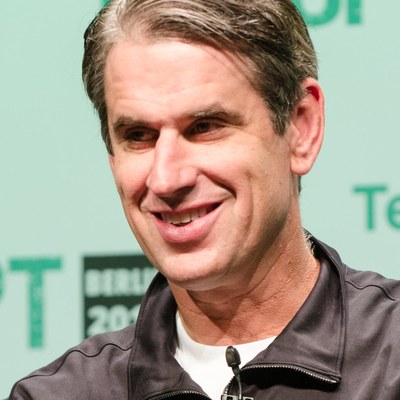 Bill Gurley
8
1 Oct 2010 – 20 Jun 2025
-3938 d
Bill Gurley
8
1 Oct 2010 – 20 Jun 2025
-3938 d
-
 David Friedberg
4
thin
13 Jul 2021 – 18 Jul 2026
+0 d
David Friedberg
4
thin
13 Jul 2021 – 18 Jul 2026
+0 d
-
 Brad Gerstner
3
thin
12 Mar 2025 – 28 Aug 2025
+1338 d
Brad Gerstner
3
thin
12 Mar 2025 – 28 Aug 2025
+1338 d
The chronologysourced and dated, oldest first
-
-
Bill Gurley
Gurley cites Data Domain and ArcSight as examples of IPO-then-acquisition premium strategy working.
“Another interesting thing is with Data Domain and ArcSight and three part, you've seen companies go public, establish a valuation and then get an M and A premium on top of that.”
-
Bill Gurley
Gurley points out that public mergers have no escrow while private ones typically hold 10 to 15 percent in escrow.
“And one last thing most entrepreneurs probably don't know, when you do a public merger, there's no escrow. And most private ones have 10 to 15% escrow,”
-
Bill Gurley
Gurley notes public mergers avoid the 10-15% escrow typical of private acquisitions.
“And one last thing most entrepreneurs probably don't know, when you do a public merger, there's no escrow.”
-
Bill Gurley
Gurley notes public mergers have no escrow while private ones typically hold 10 to 15 percent in escrow.
“when you do a public merger, there's no escrow. And most private ones have 10 to 15% escrow, so that's even another part of the price that doesn't”
-
Bill Gurley
Gurley notes public mergers avoid the 10-15% escrow typical in private deals, adding financial advantage.
“And most private ones have 10 to 15% escrow, so that's even another part of the price that doesn't you know, that's advantageous to the public.”
-
-
-
“I think that creates, I think it should create a rather healthy M and A market, but I also think it helps create opportunities because you know, you look at the Yelp and OpenTable integration with Apple, you know, if there were only one monolith and there weren't five, that probably doesn't happen.”
-
-
-
David Friedberg
Friedberg argues traditional financial firms face a catch-22 in M&A: autonomy loses cross-sell leverage.
“And if they do that, they lose the leverage of their over their existing customer base, which is to cross sell digital services in.”
-
David Friedberg
Friedberg says traditional firms trying to run acquired tech companies typically ruin them through M&A integration.
“And if they try and do that, then they step in and they try and run a tech company and the whole thing gets ruined and falls apart as we've seen in M and A over and over again in many different”
-
-
-
David Friedberg
Friedberg sees massive M&A opportunity in genomics and gene editing as they fundamentally threaten big input companies.
“I do think that there's gonna be some big opportunities for the next transformation in agriculture in multiplex precision gene editing, and in metagenomics in the soil microbiome, even in breakthroughs in biologics or other platforms that can discover the next set, or the next range of biologics.”
-
-
-
Brad Gerstner
Gerstner cites CoreWeave's $12 billion OpenAI Stargate deal and $3 billion ServiceNow acquisition as evidence deals are happening.
“so two quick things. Number one, CoreWeave announced yesterday a $12,000,000,000 deal with OpenAI on Stargate. Those things are getting constructive. We're investors there.”
-
Brad Gerstner
Gerstner says M&A teams dormant for three years are back to work after ServiceNow's $3 billion Moveworks deal.
“I can tell you every company has pulled their m and a teams off the beach. They haven't done anything for three years, and they're all back to work.”
-
Bill Gurley
Gurley explains liquidation preference mechanics where aggregate capital raised can claim majority of M&A proceeds in down-round scenarios.
“And in M and A outcomes, the investor can choose to take the LIC preference and not convert to common so they can get their money back.”
-
Bill Gurley
Gurley describes Meta's Scale AI acquisition structure: 49% stake for $15B at $30B valuation to avoid regulatory scrutiny.
“Meta has done this interesting structured deal, they're buying 49% of the company, they're paying a $30,000,000,000 valuation so they're paying effectively 15,000,000,000, they're avoiding regulatory scrutiny, the CEO of scale is going to help lead efforts at Meta.”
-
Brad Gerstner
Gerstner suggests Apple should acquire AI capabilities given their $2 trillion market cap and cash position.
“What's your opinion on the build it versus buy it debate around Apple? I feel like for $2,025,000,000,000, they should just buy it, just given how much cash they have”
-
-
-
David Friedberg
Friedberg predicts wave of AI-native operators acquiring stale first-generation digital businesses to unlock AI opportunities.
“And when you take a look at those businesses as a modern day AI operator, you're like, what the hell? This thing is so underutilized.”
-
Where they overlapsame programme, same subject
- CNBC Television also carries Brad Gerstner and David Friedberg on this subject, at different times.