Who is on this subjectordered by the date of their first quote here
4 of 6 lanes rest on fewer than 5 quotes and are marked thin. Offsets are days from the middle first-quote date, 31 Oct 2025 — a date, and nothing else. It is not a claim about who reached a view first.
-
 David Sacks
6
28 May 2022 – 13 Dec 2025
-1252 d
-
 Brad Gerstner
1
thin
25 Jul 2024 – 25 Jul 2024
-463 d
- Dylan Patel 1 thin 31 Oct 2025 – 31 Oct 2025 +0 d
-
 Chamath Palihapitiya
6
14 Nov 2025 – 14 Jul 2026
+14 d
-
 Marc Rowan
2
thin
10 Dec 2025 – 15 Apr 2026
+40 d
-
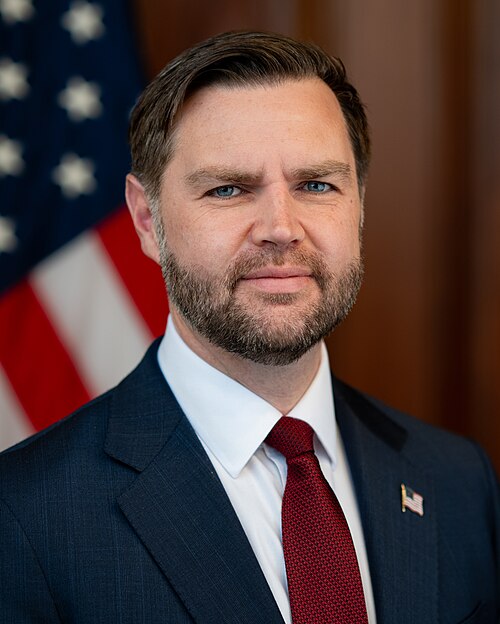 JD Vance
3
thin
22 Aug 2026 – 24 Aug 2026
+295 d
The chronologysourced and dated, oldest first
-
-
David Sacks
Sacks observes that Greenwald and Taibbi have been excluded from what is now considered liberalism despite prior credentials.
“both these guys have, I'd say, you know, well established bona fides, you know, used to be considered left wing sort of liberal bona fides, but now today somehow they've been read out of what you would call liberalism today.”
-
David Sacks
Sacks frames the central question as how journalists with liberal credentials got read out of modern liberalism.
“And so that comment that Jason made sort of, I think there's so much to unpack there on how that happened.”
-
-
-
Brad Gerstner
Gerstner argues media blocked research on COVID origin and response, labeling disagreement with Fauci as misinformation.
“And some of this came out in the in the Twitter files where if you said anything that wasn't a 100% consistent with what Fauci and Collins were saying, it was labeled misinformation, conspiracy theory.”
-
-
-
Dylan Patel
Patel says his Substack revenue alone reached multi-million dollars, sufficient to fund significant coverage.
“Now, scaled to be And it has scaled to be multi million dollar Substack revenue.”
-
Chamath Palihapitiya
Palihapitiya says a billion-dollar short position would have gotten his attention, unlike the erroneously reported amount.
“If you saw a yard short, I mean, yeah, like, that would have probably gotten my attention had I read it. A billion dollars is, you know, reasonable position to have.”
-
David Sacks
Sacks argues The New York Times has lost its power to intimidate people into silence over the past decade.
“You know, ten years ago, if The New York Times ran a hippie on somebody, even if other people didn't like it, they wouldn't wanna say anything because they'd be afraid that they would be the next target. And that mystique and that fear has completely broken down.”
-
Chamath Palihapitiya
Palihapitiya dismisses New York Times article on Sacks as having no substance, only inflammatory headline.
“There is nothing here. Okay? There was no crime here. There's no smoke here. There's no fire here. What you did get right, though, is the headline, was the goal.”
-
Chamath Palihapitiya
Palihapitiya argues the article's purpose is to intimidate experienced people from serving in government.
“What this article does is it tries to intimidate those kinds of people to say, wow. This is not worth it.”
-
David Sacks
Sacks reveals NYT fact-check alleged he heard chip export arguments at a dinner with Jensen Huang that never happened.
“During the dinner, Sachs heard a convincing counterargument that selling American chips to rivals, including China, will get those nations hooked on US tech.”
-
Marc Rowan
Rowan says most private credit is investment grade, contrary to financial press focus on levered lending.
“In much of the financial press, private credit means levered lending, a below investment grade deal related activity.”
-
Chamath Palihapitiya
Palihapitiya says the future of media is unscripted user-generated content, with YouTube already dominating.
“But at the very specific thing about this deal, the reality is that the future is unscripted, uncontrolled, user generated content. You see it on YouTube.”
-
David Sacks
Sacks says Netflix pays showrunners well but offers no equity, unlike traditional studios that offer entrepreneurial upside.
“And he says the big difference is Netflix will pay you pretty well, but you don't get any equity in your show.”
-
David Sacks
Sacks expresses surprise Warner's board chose Netflix over Paramount's higher bid that had better regulatory prospects.
“I'm a little surprised actually that the Warner's board went with Netflix when they had Paramount as an option, assuming this Paramount offer was on the table because it seems like a better deal and it's probably a little bit more likely to get through the regulators.”
-
-
-
Chamath Palihapitiya
Palihapitiya says realizing media lied about Trump made him feel betrayed by institutions responsible for truth to power.
“So for me it was an evolution where I was like I can't believe I'm being lied to by this group of people whose sole responsibility is to hold truth to power.”
-
Marc Rowan
Rowan says media focuses on $2 trillion of levered lending, ignoring the broader $40 trillion private credit market.
“What we spend all our time talking about on the press is $2,000,000,000,000 of $40,000,000,000,000 which should properly be called levered lending.”
-
Chamath Palihapitiya
Palihapitiya says his biggest SPAC mistake was talking about them on CNBC and Twitter.
“The thing that I would have changed is I would have had nary a comment on Twitter. I would have not come on CNBC and talked about them at all.”
-
JD Vance
Vance recalls a media anchor dismissing Venezuelan gangs taking over 'only one or two' apartment complexes in Aurora, Colorado.
“And the anchor comes back and says to me, she says, well, they've only taken over one or two apartment complexes.”
-
JD Vance
Vance recounts being shocked when an anchor suggested only one or two Venezuelan gang takeovers wasn't concerning.
“I was like, did she really just say it's okay for a Venezuelan drug gang to only take over one or two apartment complexes? I was ready to jump out of my seat”
-
JD Vance
Vance frames media and Democrat criticism of border enforcement as calling it heartless.
“By closing the Southern border, the media and the democrats, they say that it's heartless. It's heartless to enforce your border,”
-
Where they overlapsame programme, same subject
- Chamath Palihapitiya and David Sacks — All-In Podcast, 2 appearances together
- CNBC Television also carries Chamath Palihapitiya and Marc Rowan on this subject, at different times.