Who is on this subjectordered by the date of their first quote here
2 of 5 lanes rest on fewer than 5 quotes and are marked thin. Offsets are days from the middle first-quote date, 21 Jan 2025 — a date, and nothing else. It is not a claim about who reached a view first.
-
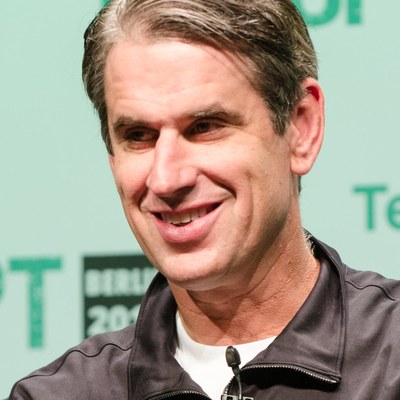 Bill Gurley
7
7 Dec 2021 – 20 Jun 2025
-1141 d
Bill Gurley
7
7 Dec 2021 – 20 Jun 2025
-1141 d
-
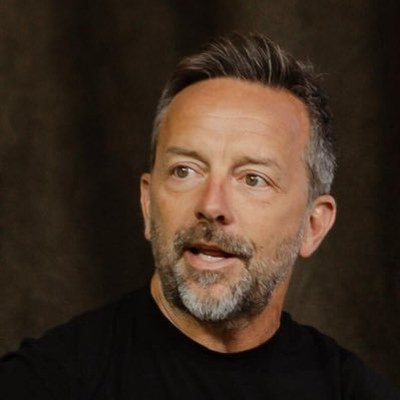 Brad Gerstner
21
3 Mar 2023 – 6 Jan 2026
-690 d
Brad Gerstner
21
3 Mar 2023 – 6 Jan 2026
-690 d
- Dylan Patel 15 21 Jan 2025 – 25 Aug 2026 +0 d
-
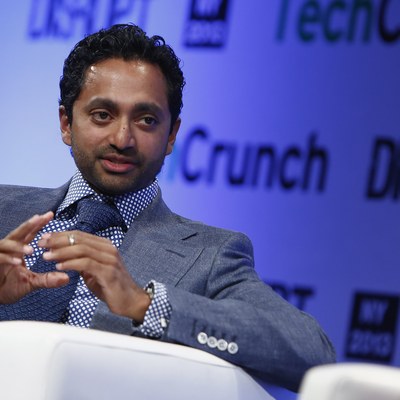 Chamath Palihapitiya
2
thin
29 May 2026 – 25 Jun 2026
+493 d
Chamath Palihapitiya
2
thin
29 May 2026 – 25 Jun 2026
+493 d
-
 Gavin Baker
1
thin
4 Aug 2026 – 4 Aug 2026
+560 d
Gavin Baker
1
thin
4 Aug 2026 – 4 Aug 2026
+560 d
The chronologysourced and dated, oldest first
-
-
Bill Gurley
Gurley expresses skepticism about Meta's avatar work meetings, having done eight board meetings with avatars himself.
“I'm very skeptical when I see Facebook show like a work scenario that we're gonna go do board meetings with avatars. And we've done them.”
-
-
-
Bill Gurley
Gurley believes Facebook's stock would double if they shut down VR, which costs $5-10 billion annually.
“Wall Street's on my side on this one. I think if they shut down the VR effort, not only will the profitability would soar because they're spending real money, like 5 to 10,000,000,000 a”
-
Brad Gerstner
Gerstner contextualizes AI investment by noting Meta alone spends $20B yearly on AR/VR for comparison.
“Meta's gonna spend 20,000,000,000 in one year alone on ARVR, and this is on an entire platform. So I I don't know.”
-
Brad Gerstner
Gerstner says courage has gained momentum in Silicon Valley over the last six months.
“And so to me, what's more significant is over the last six months, we've seen courage gain momentum in Silicon Valley, right?”
-
Brad Gerstner
Gerstner details ByteDance financials: $120B revenue, $25B profit similar to Meta, US TikTok only $3-4B.
“So a 120,000,000,000 top line. It's also been leaked that in that TikTok is about 14,000,000,000 of that and that US TikTok is 3 to 4,000,000,000.”
-
Brad Gerstner
Gerstner references his letter to Zuckerberg urging AI investment and predicts Meta will be a major AI winner.
“I said on your program, you know, six or nine months ago, and in my letter to Mark Zuckerberg, I said double down on AI.”
-
Brad Gerstner
Gerstner notes Zuckerberg's March 'year of efficiency' followed his own 'time to get fit' letter.
“I wrote a letter last year about time to get fit. Right. You know, Andrew, Mark Zuckerberg in March wrote the year of efficiency.”
-
-
-
Brad Gerstner
Gerstner cites Zuckerberg announcing Meta will have 600,000 H100 GPUs by year end.
“You saw that, tweet or thread out of Zuckerberg this week, where he said by the end of the year, they're gonna have the equivalent or this year, 600,000 h 100 GPUs,”
-
Brad Gerstner
Gerstner reveals Meta was trading at 6x fully taxed earnings at the start of 2023.
“Meta was trading at six times fully taxed earnings, right? And so unless you were doing the work”
-
Brad Gerstner
Gerstner notes Meta reduced headcount from 87,000 to 67,000 since his letter in Q3 2022.
“When we wrote that letter in q three of twenty two, the head count at this company was 87,000 people. As of this quarter, it was 67,000 people.”
-
Brad Gerstner
Gerstner says Meta went from 87,000 to 67,000 employees and nearly tripled earnings per person in fifteen months.
“As of this quarter, it was 67,000 people. They've nearly tripled their earnings per person working at the company in in over that fifteen month period of time.”
-
Brad Gerstner
Gerstner says Meta nearly tripled earnings per employee in fifteen months.
“They've nearly tripled their earnings per person working at the company in in over that fifteen month period of time.”
-
Brad Gerstner
Gerstner claims Meta is the largest AI profit beneficiary in public markets outside NVIDIA.
“They are the single largest beneficiary of AI from a profit perspective in the public markets today outside of NVIDIA.”
-
Brad Gerstner
Gerstner declares Meta the single largest AI profit beneficiary in public markets outside NVIDIA.
“They are the single largest beneficiary of AI from a profit perspective in the public markets today outside of NVIDIA. And so I really think it's about that.”
-
Brad Gerstner
Gerstner contrasts Meta's 87,000 to 67,000 headcount reduction with Google staying flat at 187,000 to 183,000.
“You know? And like I said, they've tripled their earnings per per employee while going from 87,000 to 67,000 employees.”
-
Brad Gerstner
Gerstner calculates the market assigns negative $120 per share valuation to Reality Labs.
“The market's assigning a 20 times multiple to the company. So that's effectively an implied valuation of negative $120 per share for Reality Labs.”
-
Brad Gerstner
Gerstner contrasts Meta's headcount reduction and earnings explosion with Google's minimal changes and weaker stock performance.
“Facebook is actually reduced headcount significantly and their earnings per employee has exploded and Google kind of, you know, they're fine, but they really just haven't made many changes.”
-
Bill Gurley
Gurley says no one will pay $20 for AI services as long as Meta AI remains free.
“from consumer. And so that's gone as long as Met is free. I don't think anyone pays the $20”
-
Brad Gerstner
Gerstner says only a few companies can afford 100,000 GPU clusters that Microsoft, Elon, and Meta are building.
“I think the latest discussions, whether it's Stargate out of Microsoft, a 100,000 GPU cluster, Elon's talking about a 100,000 GPU cluster, Mark is talking about that.”
-
Brad Gerstner
Gerstner confirms data clouds pay revenue share to open AI models, though amount is unknown.
“I can definitely confirm that the data clouds are paying a revenue share to the open models. I don't know what the revenue share is, but there will be some compensation.”
-
Brad Gerstner
Gerstner says Meta grew net income from $22B to $55B while cutting headcount from 85,000 to 69,000 in two years.
“In two years, that company has gone from $22,000,000,000 in net income to $55,000,000,000 in net income. They've reduced their headcount from 85,000 people to 69,000 people.”
-
Bill Gurley
Gurley says Zuckerberg described Apple blocking product improvements as soul crushing, motivating Meta's open source commitment.
“Great word. When you develop, work really hard on a product improvement, and then you have a company that says, no.”
-
Bill Gurley
Gurley says closed AI model companies must compete with frontier performance while Meta gives it away free.
“If you're a closed model company, the question first is, okay, I'm going to have to compete and keep up with this frontier level competition. That's hard enough. It takes a lot of resources.”
-
Bill Gurley
Gurley says Meta may cut Reality Labs spending by 20 percent to reallocate billions toward AI development.
“Remember, Meta had allocated $20,000,000,000 a year to Reality Labs. And there was a report last week that they may, you know, tighten their belt on Reality Labs”
-
Brad Gerstner
Gerstner says COVID and zero interest rates led to gross excesses and misallocation.
“You know, we had these negative interest rates, this zerp period that just led to gross excesses across the economy, misallocation of resources.”
-
-
-
Dylan Patel
Patel reveals Meta has code called PowerPlant node blowup that runs fake matrix multiplications to stabilize grid power.
“Meta, they accidentally open sourced this code. It's literally called PowerPlant node blowup. It's a flag.”
-
Dylan Patel
Patel says Meta is building two gigawatts of capacity in Louisiana powered by natural gas.
“They they uncensored politics. There's a bit of massive vibe shift. One of the things they're doing is, like, they're setting up two gigawatts.”
-
Dylan Patel
Patel predicts Meta's upcoming Llama will achieve similar cost decreases to DeepSeek v3 without causing alarm.
“And Meta's Meta's gonna release their new llama soon enough. Right? And that one is gonna be, you know, a similar level of cost decrease,”
-
Bill Gurley
Gurley describes Meta's Scale AI acquisition structure: 49% stake for $15B at $30B valuation to avoid regulatory scrutiny.
“Meta has done this interesting structured deal, they're buying 49% of the company, they're paying a $30,000,000,000 valuation so they're paying effectively 15,000,000,000, they're avoiding regulatory scrutiny, the CEO of scale is going to help lead efforts at Meta.”
-
Dylan Patel
Patel explains how MOE routing works and how some of Meta's experts weren't being used at all.
“And and each expert learns its own independent things and it's like really not something observable by people. But what you can see is tokens when which experts do they route to?”
-
Dylan Patel
Patel identifies a major shift in Zuckerberg's strategy toward pursuing superintelligence recently.
“He was chasing like AI is good and great, but like AGI is not a thing that is gonna happen soon. So sort of this is a big shift in strategy”
-
Dylan Patel
Patel directly contradicts Sam Altman's claim that no top researchers have left OpenAI for Meta.
“As far as Sam is saying that no top researchers have gone, I don't believe that's accurate. I initially the top researchers definitely did say no, the best researchers, the best people.”
-
Dylan Patel
Patel claims Meta offered over $1 billion to one OpenAI researcher as retention or acquisition offer.
“And you said $100,000,000 I've heard a number for someone over 1,000,000,000 actually, for one person at OpenAI. But anyways, you know, it's a ridiculous amount of money,”
-
Dylan Patel
Patel reports hearing Meta offered over one billion dollars to a single OpenAI researcher.
“I've heard a number for someone over 1,000,000,000 actually, for one person at OpenAI. But anyways, you know, it's a ridiculous amount of money,”
-
Dylan Patel
Patel reveals Meta is building temporary tent structures to house GPUs because permanent buildings take too long to construct.
“Meta is literally building these, like, temporary, like, tent structures to put GPUs in because building the building takes too long, and it takes too much labor, as you mentioned labor.”
-
Dylan Patel
Patel says new Trump tax bill allows year-one depreciation of GPU clusters, saving Meta ten billion dollars annually.
“If Jensen was here, you know, I think I think he has a massive, massive balance sheet. Right? Jensen does.”
-
Dylan Patel
Patel reports new Trump tax bill allows year-one GPU depreciation, worth $10 billion annually to Meta alone.
“the new the new Trump, you know, tax bill institutes something really incredible, which is that you can depreciate all of the GPU cluster cost in year one, which we put out, like, a note about how, like, the tax implications to, like, meta are, like, $10,000,000,000 a year. And across each of the major hyperscalers, it's, like, massive.”
-
Brad Gerstner
Gerstner states Meta cut from 87,000 to 62,000 employees and reorganized around AI in February 2023.
“They went from 87,000 employees to 62,000 employees in October of 'twenty two. They reorganized the company around AI starting in February of 'twenty three.”
-
Dylan Patel
Patel describes Meta's temporary tent-like data centers designed for single GPU generation lifecycles instead of 30-year buildings.
“Meta has got a data center design that's only built to last for a single generation. They put them in these tent buildings.”
-
Dylan Patel
Patel says OpenAI and Meta run NVIDIA GPUs at lower power to fit 10% more chips despite worse TCO.
“Even though it's terrible on a TCO basis, they were able to get, you know, 10% more GPUs in, and it's great. And Meta has done similar.”
-
-
-
Brad Gerstner
Gerstner says Meta is not a market leader in AI today but remains a huge AI beneficiary.
“But the fact of the matter is they're not market leaders today in AI. They're huge beneficiaries from AI. We think the company is going to continue to do well.”
-
Chamath Palihapitiya
Palihapitiya claims Meta could have stopped at 3,000 employees instead of 90,000 and burning $50B on VR.
“You could have stopped the company at 3,000 people when I left, and it would not have changed the outcome of that company.”
-
Chamath Palihapitiya
Palihapitiya says Meta profoundly fumbled opportunity to be third leg of AI stool alongside closed and open source.
“I mean, they have completely fumbled it. I don't know the organization well enough, nor do I understand the political dynamics to understand why they failed as miserably as they have. But they've profoundly failed.”
-
Dylan Patel
Patel names Meta, Oracle, and OpenAI as public customers adopting AMD's MI450X Helios platform.
“There's there's quite a bit of, public customer traction, Meta, Oracle for OpenAI, and there's many other customers who are who are looking to adopt it.”
-
Gavin Baker
Baker explains Meta's compute rental was inspired by SpaceX selling clusters at massive premiums to contracted rates.
“What it was is they saw SpaceX have a big installed base of compute and sell some big trading optimized clusters into the market at a truly massive premium to these contracted rates.”
-
Dylan Patel
Patel argues Meta could pay 8% interest rates versus current 5-6% because compute returns are enormous.
“So why wouldn't interest rates Yep. For Amazon go from, you know, from where they are today? I think Meta pay okay, let's like so this is going be extremely lived out.”
-
Where they overlapsame programme, same subject
- Bill Gurley and Brad Gerstner — BG2 Pod, 1 appearance together
- All-In Podcast also carries Brad Gerstner and Chamath Palihapitiya on this subject, at different times.
- Invest Like the Best also carries Bill Gurley and Gavin Baker on this subject, at different times.