Who is on this subjectordered by the date of their first quote here
1 of 2 lane rests on fewer than 5 quotes and is marked thin. Offsets are days from the middle first-quote date, 2 Jul 2019 — a date, and nothing else. It is not a claim about who reached a view first.
-
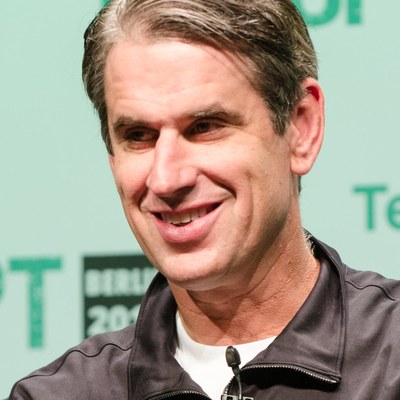 Bill Gurley
12
2 Jul 2019 – 9 Jun 2026
+0 d
Bill Gurley
12
2 Jul 2019 – 9 Jun 2026
+0 d
- John Williams 3 thin
The chronologysourced and dated, oldest first
-
-
Bill Gurley
Gurley criticizes banks for maintaining slow ACH settlement times for thirty years to protect themselves.
“I these banks made a huge mistake, which is they've sat on their hands with ACH for thirty years, and they did it for all the wrong reasons.”
-
Bill Gurley
Gurley argues banks deliberately kept ACH slow for thirty years to protect themselves while other countries mandated faster payments.
“They did it to protect themselves, like, three days to settle a transaction. There are other countries that just mandated UK faster payments.”
-
-
-
Bill Gurley
Gurley says Visa and Mastercard have the highest operating margins in North American markets.
“And there's another fact that you should know in North America, which is Visa and Mastercard have the two highest operating margin percentages in our markets total.”
-
-
-
Bill Gurley
Gurley calls investigation of Brazil's PIX for undercutting Visa absurd given Visa and Mastercard's record operating incomes.
“I mean, that's the most absurd thing I've ever heard. Undercutting Visa? Like, do do they realize they have Visa and Mastercard have, like, the top two operating incomes in the history of American business?”
-
Bill Gurley
Gurley contrasts US payment friction with instant settlement systems in Brazil, UK, China, and India.
“Your ACH takes three days to settle. Your wire costs $25 for domestic, $50 for international, and you have to fill out pages and pages exactly.”
-
Bill Gurley
Gurley criticizes Trump administration investigating Brazil's PIX for undercutting Visa and Apple.
“As part of its aggressive economic and political campaign against Brazil is investigating PICS, accusing the payment system of unfairly utter undercutting US financial and technology companies like Visa and Apple.”
-
“I mean, that's the most absurd thing I've ever heard. Undercutting Visa? Like, do do they realize they have Visa and Mastercard have, like, the top two operating incomes in the history of American business?”
-
-
-
Bill Gurley
Gurley cites UK, China, India, and Brazil all created instant digital payment systems years ago.
“The UK created something called Faster Payment seventeen years ago. And China has one and India has one. Brazil created one seven years ago, six years ago called PIX that's wildly successful.”
-
Bill Gurley
Gurley says with crypto wallets you can send $25,000 in two seconds for two cents.
“And now if you have a wallet of any kind and I have a wallet of any kind, I can send you, you know, 25,000 US dollars in two seconds, and it'll cost me 2¢ to send it to”
-
Bill Gurley
Gurley contrasts stablecoins' instant penny transfers with traditional credit cards' two-plus percent fees.
“If you have a Coinbase account, you can put your money in a USDC stablecoin and earn 4%. And within seconds immediately transfer money to someone else for pennies.”
-
Bill Gurley
Gurley says China's instant transfers enabled Alibaba and Tencent to build wallets used for everything from street vendors to cars.
“In China, because they had this digital immediate transfer, Alibaba and Tencent were able to very quickly build digital wallets that people carry around.”
-
Bill Gurley
Gurley describes how China's digital payment system lets people pay for everything via QR codes.
“You scan a QR code, like, at a you check out of a restaurant. Like, can just pay at your table. There's a QR code on the table.”
-
-
-
John Williams
Williams asks how payment technology and digital asset adoption affect the dollar's international reach.
“How do changes in payment technology and digital asset adoption alter the dollar’s international reach?”
-
John Williams
Williams reports banks say instant 24/7 payments and stablecoins could increase their demand for reserves.
“Respondents widely noted that movement toward instant 24/7 payments could increase their demand for reserves, and some also indicated that greater adoption of payment stablecoins could have similar implications.”
-
John Williams
Williams says banks cite liquidity regulation changes and 24/7 payments transition as key drivers of reserve demand.
“Banks cite changes to liquidity regulations, as well as shifts in liquidity management amid the transition toward 24/7 payments and the adoption of payment innovations, as important drivers of their preferred levels over the next two years ( Panel 11 ).”
-