Who is on this subjectordered by the date of their first quote here
1 of 3 lane rests on fewer than 5 quotes and is marked thin. Offsets are days from the middle first-quote date, 2 Oct 2024 — a date, and nothing else. It is not a claim about who reached a view first.
-
 Gavin Baker
29
26 Nov 2019 – 4 Aug 2026
-1772 d
Gavin Baker
29
26 Nov 2019 – 4 Aug 2026
-1772 d
- Dylan Patel 15 2 Oct 2024 – 5 Feb 2026 +0 d
-
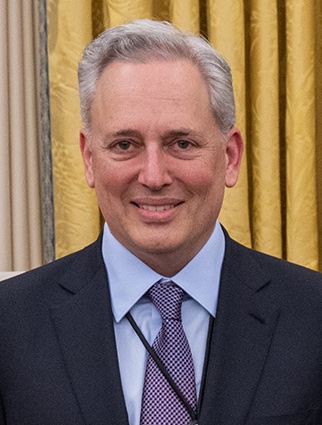 David Sacks
1
thin
6 Dec 2025 – 6 Dec 2025
+430 d
David Sacks
1
thin
6 Dec 2025 – 6 Dec 2025
+430 d
The chronologysourced and dated, oldest first
-
-
Gavin Baker
Baker explains Intel's historical advantage of reaching semiconductor nodes first gave them 15-20% embedded advantage.
“Intel for the last, I don't know, fifty years, sixty years always got to the next node in semiconductor manufacturing first.”
-
Gavin Baker
Baker argues AI revolution stems from cloud computing power and mobile-generated data, not algorithmic advances.
“The only thing that has enabled the AI revolution that we're living through, which I think we're at the bottom of the first inning in, is one, we had the ability to do cloud computing, so just apply significantly more computational power to old algorithms, and then b, we had dramatically more data.”
-
Gavin Baker
Baker states data quantity is the single most predictive element of AI quality, not algorithms or infrastructure.
“The single most predictive element of knowledge about AI quality is the quantity of data used to train the algorithm.”
-
-
-
Gavin Baker
Baker explains higher MFU allows 25% faster time to market with same GPU and power spending.
“You have the same amount of GPUs and the same amount of power presumably. You could choose between faster time to market.”
-
Gavin Baker
Baker says only three US locations can provide gigawatt power to data centers at 10x normal cost.
“There's only basically three places in The United States today where you can get a gigawatt of power to a single data center that's reliable enough, I.”
-
Gavin Baker
Baker says only three US locations can provide gigawatt power to data centers at 10x normal cost.
“There's only basically three places in The United States today where you can get a gigawatt of power to a single data center that's reliable enough, I.”
-
Gavin Baker
Baker says only three US locations can provide gigawatt nuclear power, charging 10x average electricity rates.
“There's only basically three places in The United States today where you can get a gigawatt of power to a single data center that's reliable enough, I. E. That's nuclear.”
-
Gavin Baker
Baker says only three US locations can provide gigawatt nuclear power, charging 10x average electricity rates.
“There's only basically three places in The United States today where you can get a gigawatt of power to a single data center that's reliable enough, I. E. That's nuclear.”
-
Dylan Patel
Patel claims China could build a gigawatt data center in six months near Three Gorges Dam due to power infrastructure.
“China could just build it in six months, I think, around the 3 Gorges Dam or many other places. Right? Because they have they have the ability to do the substations.”
-
Dylan Patel
Patel claims China could build a gigawatt data center in six months near the Three Gorges Dam but hasn't.
“China could just build it in six months, I think, around the 3 Gorges Dam or many other places. Right?”
-
Dylan Patel
Patel describes Microsoft's shift from 48-megawatt buildings to 300-megawatt AI-specific data centers for increased power density.
“Here you can see that same data center, that same type of data center vertically. And that's 48 megawatts, or 57, And then this data center center is like 300 megawatts.”
-
-
-
“Well, one, there's a gigawatt natural gas plant Yeah. That helps. Right next door. Right? Two, there's a natural gas line, a main that they tapped, and they set up their own generation capacity on-site.”
-
Dylan Patel
Patel forecasts data center power will grow from 150 megawatts today to gigawatt-scale clusters by 2026.
“We're seeing, like, you know, 400, 500 megawatts cluster sort of being built out now. Right? Like you know? And and then, you know, in 2026, I'd imagine it'll be, like, gigawatt scale clusters.”
-
“Or or that's what it looks like based on or, you know, one gigawatt in twenty twenty six ish. And Meta's Meta's, like, trying to do, like, two gigawatts by early to mid twenty seven.”
-
Dylan Patel
Patel says TSMC approaches 20% of Taiwan's power consumption, projecting 30-40% within five years.
“And if they were to continue to build out what we expect them to build out in the next four or five years, it's going get to 30%, 40%.”
-
Dylan Patel
Patel identifies a 40 gigawatt power shortfall for US data centers even with all planned capacity additions.
“There is an over 40 gigawatt hole in power for The US. Even if we don't turn off any more coal, in fact we restart some, we take all the natural gas dual combined cycle reactor deliveries that we're going to have, and you add in renewables, you have a 40 gigawatt hole of power production in The US.”
-
Dylan Patel
Patel identifies a 40 gigawatt power deficit in US even with all planned gas and restarted coal.
“Even if we don't turn off any more coal, in fact we restart some, we take all the natural gas dual combined cycle reactor deliveries that we're going to have,”
-
Dylan Patel
Patel says certain states will see over half their power consumed by AI within a few years.
“When we look at power consumption by state, something pretty simple, there are certain states where more than half their power is going be consumed by AI just in the next few years.”
-
Dylan Patel
Patel contrasts GB200 rack consuming 140 kilowatts with H100 servers at 10 kilowatts each.
“It's liquid cooled. It's an entire rack that consumes 140 kilowatts, whereas H100 servers consumed 10 kilowatts. And you might put two, you might put four in a rack, right? And it was air cooled.”
-
Dylan Patel
Patel questions Supermicro's conviction engineering high-density GPU systems when early volume was minimal despite reaching 4,000-5,000 watts per 1U.
“watts in 1U. You look at GV200, I think it's like 4,000 or 5,000 watts in 1U, right? Yes. Very, very funny.”
-
Dylan Patel
Patel reveals OpenAI runs GPUs at lower power in Arizona training cluster to fit 10% more GPUs despite worse TCO.
“They run the NVIDIA GPUs at lower power. Even though it's terrible on a TCO basis, they were able to get, you know, 10% more GPUs in, and it's great.”
-
David Sacks
Sacks argues The New York Times has lost its power to intimidate people into silence over the past decade.
“You know, ten years ago, if The New York Times ran a hippie on somebody, even if other people didn't like it, they wouldn't wanna say anything because they'd be afraid that they would be the next target. And that mystique and that fear has completely broken down.”
-
“And the reason for that is it was by far the most complex product transition we've ever gone through in technology. Going from hopper to Blackwell, first you go from air cooled to liquid cooled.”
-
Gavin Baker
Baker details Blackwell's complexity: racks tripled in weight and quadrupled in power consumption versus Hopper.
“Going from hopper to Blackwell, first you go from air cooled to liquid cooled. The rack goes from weighing round numbers, a thousand pounds to 3,000 pounds.”
-
Gavin Baker
Baker explains Blackwell racks weigh 3,000 pounds and consume 130 kilowatts, equivalent to 130 American homes.
“The rack goes from weighing round numbers, a thousand pounds to 3,000 pounds. Goes from round numbers, 30 kilowatts, which is 30 American homes to 130 kilowatts, which is 130 American homes.”
-
Gavin Baker
Baker details Blackwell transition: racks triple in weight and quadruple in power from 30 to 130 kilowatts.
“Goes from round numbers, 30 kilowatts, which is 30 American homes to 130 kilowatts, which is 130 American homes.”
-
Gavin Baker
Baker explains space offers six times more solar irradiance than Earth due to constant sunlight and intensity.
“You can have the satellite always kind of catching light. The sun is 30% more intense and this results in six times more irradiance”
-
Gavin Baker
Baker explains space data centers get six times more solar irradiance than earth-based facilities.
“The sun is 30% more intense and this results in six times more irradiance in outer space than on planet earth. So you're getting a lot of solar energy.”
-
Gavin Baker
Baker explains space offers six times more solar irradiance than Earth for data centers.
“The sun is 30% more intense and this results in six times more irradiance in outer space than on planet earth.”
-
-
-
Dylan Patel
Patel says data center power capacity will nearly double from 15-18 gigawatts this year to 30 gigawatts next year.
“next year, 30 gigawatts are being added and we think the power is there for it. Wow.”
-
Dylan Patel
Patel says data centers will reach 10% of US power by 2027-28 but under 1% of water consumption.
“US Grid will get to like 10% of power by like '28, 27 is data centers. For water consumption, it's not even gonna crack 1%. Yeah. By the end of the decade.”
-
Gavin Baker
Baker predicts orbital compute will solve power shortages in five to seven years but wafer shortages will persist longer.
“We're gonna address the watt shortages with orbital compute for sure in the next five to seven years. But the wafer shortage, I think, is going to persist for a long time.”
-
Gavin Baker
Baker emphasizes only 0.1% of the world uses AI models properly yet there's massive shortage despite trillions spent.
“And we're in an insane shortage despite spending cumulatively trillions of dollars. What happens when 5% of the world's population is using these models the way the cutting edge 10 basis points are?”
-
Gavin Baker
Baker states only NVIDIA and Amazon Trainium have functioning switched scale-up networks for inference today.
“And the only two functioning switched scale up networks in the world today are the ones that power NVIDIA GPUs and Amazon's Trainiums.”
-
Gavin Baker
Baker reveals Atreides could have invested over $50 million in CoreWeave at $1.1 billion valuation but was conflicted out.
“I could've Atreides could've invested over $50,000,000 in the round at 1,100,000,000, And I was conflicted out by Crusoe,”
-
Gavin Baker
Baker predicts within seven years we may stop building terrestrial data centers, causing pain for infrastructure companies beforehand.
“But I can't imagine a day when in the next seven years, when we never build another terrestrial data center. Mhmm.”
-
Gavin Baker
Baker predicts terrestrial data center buildout will stop within seven years, causing pain for power and cooling companies.
“And the years leading up to that are gonna be very painful for a lot of the companies and the power cooling spaces, you know, these industrial names,”
-
Gavin Baker
Baker predicts terrestrial data center buildout will stop within seven years, causing pain for power and cooling companies.
“And the years leading up to that are gonna be very painful for a lot of the companies and the power cooling spaces, you know, these industrial names,”
-
Gavin Baker
Baker describes orbital compute as Blackwell-sized racks in space with 500-foot solar wings, not giant data centers.
“It's eight feet high. It's four feet deep, three feet wide. It's racks in space and SpaceX has showed you an illustration and it's a rack.”
-
Gavin Baker
Baker describes orbital compute as Blackwell-sized racks in space with 500-foot solar wings in sun-synchronous orbit.
“It has these solar wings that are probably 500 feet long on each side. You keep it in a sun synchronous orbit.”
-
Gavin Baker
Baker argues America will consume all available compute, reducing edge AI bear case concerns.
“And I just think the same is true of compute. It's why I'm probably less worried about like an edge AI bear case than I was.”
-
Gavin Baker
Baker argues TSMC remains a bottleneck even if orbital data centers solve power shortages.
“But even if we solve the shortage of Watts with orbital data centers, the TSM is still a bottleneck. And semi's and semiconductor manufacturing, you have a big advantage if you were ahead.”
-
Gavin Baker
Baker explains breaking memory LTAs could destroy companies by losing allocations when market tightens again.
“Well, if they're breaking their LTAs, it probably means, you know, your oversupply, prices are coming down, and then, you know, capacity naturally contracts. Well, what do you think is gonna happen to Google's allocations?”
-
Gavin Baker
Baker cites report that SpaceX plans to bring on eight gigawatts of compute in eighteen months, calling it incredible.
“A Substack writer will fund the AI. They think that SpaceX is gonna try and bring on eight gigawatts of compute over the next eighteen months.”
-
Gavin Baker
Baker notes SpaceX brought on over 500 megawatts annually, matching only hyperscalers, CoreWeave, and Crusoe, versus $73B consensus estimate.
“But to this day, the only companies that have brought on more than 500 megawatts of power in a year are the hyperscalers, Coraweave, Crusoe, and SpaceX.”
-