Who is on this subjectordered by the date of their first quote here
1 of 3 lane rests on fewer than 5 quotes and is marked thin. Offsets are days from the middle first-quote date, 15 Jul 2021 — a date, and nothing else. It is not a claim about who reached a view first.
-
 Howard Marks
41
30 Mar 2015 – 12 Jun 2026
-2299 d
Howard Marks
41
30 Mar 2015 – 12 Jun 2026
-2299 d
-
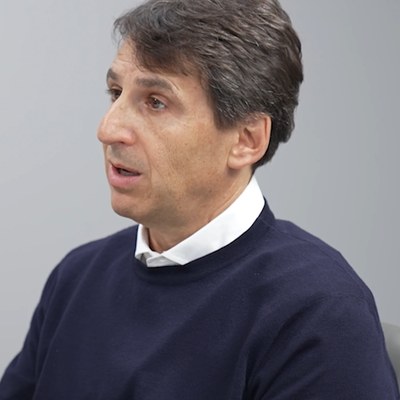 Marc Rowan
71
15 Jul 2021 – 4 Aug 2026
+0 d
Marc Rowan
71
15 Jul 2021 – 4 Aug 2026
+0 d
-
 Gavin Baker
1
thin
20 May 2026 – 20 May 2026
+1770 d
Gavin Baker
1
thin
20 May 2026 – 20 May 2026
+1770 d
The chronologysourced and dated, oldest first
-
-
Howard Marks
Marks describes investing in best companies lost 90% while worst companies made most money.
“Then you go to the high yield bond business, you invest in the worst companies in America, you make the most money.”
-
Howard Marks
Marks explains bonds as fixed promises where all paying bonds deliver identical returns.
“You give me $100 and I promise to give you 5% interest every year and then give you a bonding back in twenty years. Fixed income, it's called, because all the events are fixed.”
-
Howard Marks
Marks explains bonds as fixed contracts where all returns are identical if promises are kept.
“Fixed income, it's called, because all the events are fixed. The contract is fixed. The return is fixed, assuming the promise is kept.”
-
Howard Marks
Marks launched the first distressed debt fund in 1988, investing in bonds already in default.
“in 'eighty eight, we brought out the first distressed debt fund. Now we're not investing in companies that have a risk of default.”
-
Howard Marks
Marks launched the first distressed debt fund in 1988, investing in bonds of bankrupt or near-bankrupt companies.
“we brought out the first distressed debt fund. Now we're not investing in companies that have a risk of default. We're investing in bonds that are either in default or sure to be.”
-
Howard Marks
Marks reports Oaktree made 23% annually for 28 years in distressed debt without leverage.
“And we've made about 23% a year for twenty eight years investing in distressed debt before fees without any leverage. So that's pretty astronomical. Why?”
-
Howard Marks
Marks reports 23% annual returns for 28 years in distressed debt without leverage by buying below intrinsic value.
“we've made about 23% a year for twenty eight years investing in distressed debt before fees without any leverage. So that's pretty astronomical. Why?”
-
-
-
Howard Marks
Marks identifies too much money chasing too few deals as the seven worst words in investing.
“Now remember, the four worst words in the world were, it's different this time, the seven worst words in the world are too much money chasing too few deals.”
-
-
-
Marc Rowan
Rowan says Apollo's yield business will double from $330 billion today to twice that size in five years.
“We are in, as I sometimes say, the fixed income replacement business. We're $330,000,000,000 today. Five years from now, that'll be twice its size.”
-
Marc Rowan
Rowan says the pool of assets yielding less than 5% is vastly larger than opportunistic credit.
“I like to say it's the pile of assets in the world that yields less than 5% is like this big.”
-
Marc Rowan
Rowan notes the 2008 crisis permanently shifted lending activities from banks to nonbank lenders like Apollo.
“You know, the financial crisis in two thousand and eight pushed a lot of activities out of the banking sector and into the nonbank lending sector.”
-
Marc Rowan
Rowan says origination strategy earns 150 to 200 basis points premium at near investment-grade level.
“And if you could earn 150 to 200 basis points more in origination at a very safe near investment grade level, that's a business we want to build.”
-
Marc Rowan
Rowan forecasts Apollo's yield business will double from $330 billion to roughly $600-700 billion in five years.
“And the ability to get it to $607,100,000,000,000, it sounds massive, but in the context of the markets in which they participate, it's just not all that big.”
-
-
-
Howard Marks
Marks says Oaktree deployed ten billion dollars in fifteen weeks after Lehman collapsed, averaging 650 million per week.
“after the global financial crisis, some people thought it represented an existential threat, we swung into action and we were able to invest $650,000,000 a week on average for fifteen weeks between Lehman's September 15 bankruptcy and the end of the year, that's $10,000,000,000”
-
-
-
Marc Rowan
Rowan says the private credit industry grew from $40 billion AUM in 2008 to $550 billion at Apollo.
“Our entire industry was 40,000,000,000 of AUM. Every one of the companies plus minus in 2008. We ended the year at 550,000,000,000.”
-
Marc Rowan
Rowan says Apollo focused on private investment grade markets and now competes for assets amid banking turbulence.
“We went for the private investment grade market. That is the dominant franchise we have built. What we're seeing right now, particularly the turbulence in banking, these are the kind of assets we compete for.”
-
Marc Rowan
Rowan says Apollo's $400 billion in private credit is still irrelevant in a $40 trillion market.
“At 400,000,000,000 of private credit, mostly investment grade, unfortunately, we're not relevant. It sounds like a lot, 400,000,000,000, but we're talking about a $40,000,000,000,000 market.”
-
Marc Rowan
Rowan says Apollo's $400 billion in private credit is still irrelevant in a $40 trillion market.
“At 400,000,000,000 of private credit, mostly investment grade, unfortunately, we're not relevant. It sounds like a lot, 400,000,000,000, but we're talking about a $40,000,000,000,000 market.”
-
Marc Rowan
Rowan states Apollo ended the year with $550 billion AUM including $400 billion in mostly investment-grade private credit.
“Apollo Asset Management ended the year roughly $550,000,000,000 $400,000,000,000 of private credit, mostly investment grade, dollars 75,000,000,000 of hybrid equity, 75,000,000,000 of private equity.”
-
Marc Rowan
Rowan states Apollo ended the year with $550 billion AUM including $400 billion in mostly investment-grade private credit.
“Apollo Asset Management ended the year roughly $550,000,000,000 $400,000,000,000 of private credit, mostly investment grade, dollars 75,000,000,000 of hybrid equity, 75,000,000,000 of private equity.”
-
Marc Rowan
Rowan says investors can earn single A corporate rates plus 300 basis points for 90-180 days of illiquidity.
“If you can earn single A corporate bond rates plus 300 for being less liquid for ninety or one hundred and eighty days, it seems like a pretty good trade.”
-
Howard Marks
Marks says credit instruments now offer equity-type returns with high single to low double digit yields.
“Today, you can get equity type returns from what we call credit instruments, loans, corporate corporate loans, loans for buyouts.”
-
Marc Rowan
Rowan says Apollo has no daily or quarterly liquid money, structured to exploit illiquid assets.
“There is no daily liquid, quarterly liquid money at Apollo. We are ideally situated to take advantage of less liquid assets. We've structured ourselves that way.”
-
Marc Rowan
Rowan argues regulators have only two choices for credit: banking system or investment marketplace.
“And regulators have only two choices as to where credit comes from. It can come from the banking system or it can come from the investment marketplace.”
-
-
-
Marc Rowan
Rowan argues that excess returns in private credit come from origination capacity, not from illiquidity premiums.
“I believe excess return comes from origination. The capacity of an investor, someone like us, and we're not the only ones who do this, who can go out and work with a company and solve their unique issues and make the commitment and structure and take the whole thing down and originate a credit.”
-
Marc Rowan
Rowan reveals Apollo has invested nearly $8 billion and employs 4,000 people dedicated solely to credit origination.
“And for us, we are very focused on scaling origination. We've spent nearly $8,000,000,000. We have 4,000 people who wake up every day, and all they do is origination.”
-
Marc Rowan
Rowan says Apollo has done $100 billion in investment grade private deals since AB InBev.
“A $100,000,000,000 later we're still doing investment grade private deals. And I I see nothing but a long line of interesting borrowers and interesting situations”
-
Marc Rowan
Rowan predicts investors won't distinguish between public and private investment grade credit within 18 months.
“Eighteen months from now, I do not believe investors will actually know the difference between investment grade public and investment grade private.”
-
Marc Rowan
Rowan says Apollo's $550 billion credit business needs to find $300-350 billion in assets over five years to double.
“There's mostly alpha, but there's a chunk of beta in there. For us to double that business, it's finding 300,000,000,000 of assets or 350,000,000,000 of assets over the next five years.”
-
Marc Rowan
Rowan argues European regulators told banks to do less lending but forgot to enable investor alternatives, unlike the US.
“Everywhere in the world as I suggested, regulators have two choices as to where debt capital comes from, the banking system or the investor marketplace. Everywhere they've told the banks to do less.”
-
-
-
Marc Rowan
Rowan explains all financing comes from only two sources: the banking system or the investment marketplace.
“At the top of the house the fundamental trends are retirees, need for income and what we're building here because financing comes from only two sources.”
-
Howard Marks
Marks deployed $450 million weekly for fifteen weeks during financial crisis, $650 million weekly across all Oaktree funds.
“So as you say, we invested $450,000,000 a week for the next fifteen weeks in that fund, which was 7,000,000,000 and Oaktree overall invested an average of $650,000,000 a week for the next fifteen weeks.”
-
Marc Rowan
Rowan distinguishes between traditional private equity and a new model of private equity without leverage or fund structures.
“I think we're heading to a world where we not just have private credit, but we have equity that is private, not just private equity.”
-
Marc Rowan
Rowan distinguishes between traditional private equity and a new model of private equity without leverage or fund structures.
“I think we're heading to a world where we not just have private credit, but we have equity that is private, not just private equity.”
-
Marc Rowan
Rowan recalls that 25 years ago, the idea of levered loans trading seemed impossible because every loan was different.
“Twenty five years ago, the notion that levered loans would trade was a fantasy. How could they trade? Every loan was different.”
-
Marc Rowan
Rowan recalls that twenty-five years ago the idea of tradable levered loans seemed impossible due to lack of standardization.
“Twenty five years ago, the notion that levered loans would trade was a fantasy. How could they trade? Every loan was different. Every company was private. There were no benchmarks.”
-
Marc Rowan
Rowan argues one bank's decision to make a market transformed levered loans into a tradable asset class over 25 years.
“Twenty five years later, levered loans trade because this one bank made a market in it, and then other banks came and made a market in it.”
-
Marc Rowan
Rowan notes the levered loan market now has ETFs and mutual funds that are taken for granted.
“And lo and behold, we take for granted that the broadly syndicated market trades. We have ETFs. We have open end mutual funds.”
-
“And lo and behold, we take for granted that the broadly syndicated market trades. We have ETFs. We have open end mutual funds. We have a series of products.”
-
Marc Rowan
Rowan argues the boundary between public and private markets is currently in transition.
“We don't think of them as private anymore. This notion of what's public and what's private, I think, is in transition.”
-
Marc Rowan
Rowan says most private credit is investment grade, contrary to financial press focus on levered lending.
“In much of the financial press, private credit means levered lending, a below investment grade deal related activity.”
-
Marc Rowan
Rowan says most private credit is investment grade, contrary to financial press focus on levered lending.
“In much of the financial press, private credit means levered lending, a below investment grade deal related activity.”
-
Marc Rowan
Rowan contrasts tolerance for equity volatility with outsized reaction to single private credit defaults.
“We don't think anything of Nvidia or the S and P going up or down 10 or 15%, and yet one private credit loan or one broadly syndicated loan defaults and people lose their mind.”
-
Marc Rowan
Rowan contrasts tolerance for equity volatility with outsized reaction to single private credit defaults.
“We don't think anything of Nvidia or the S and P going up or down 10 or 15%, and yet one private credit loan or one broadly syndicated loan defaults and people lose their mind.”
-
Marc Rowan
Rowan says investors move from equity and high yield to levered lending for same returns with less volatility.
“Generally, what investors are doing is they're taking money out of equity or out of high yield bonds and moving into levered lending. It's roughly the same return, and it is less volatile.”
-
Howard Marks
Marks says smart lending requires good visibility on repayment likelihood, not purely conjectural outcomes.
“I mean, in order to be a smart lender, you have to have good visibility on the extent to which the thing has is likely to repay interest and principal.”
-
Howard Marks
Marks argues lending to high-risk activities creates unlimited downside with limited upside, making it the wrong risk-reward combination.
“You certainly shouldn't do that in in in activities that have a high probability of not paying off at all because then you have unlimited downside and limited upside.”
-
Marc Rowan
Rowan corrects misconception that private credit means levered lending when most is actually investment grade.
“And the reality is most private credit is investment grade, And most of the credit in the financial system that is private, banks, insurers, pension funds, is investment grade.”
-
Marc Rowan
Rowan corrects misconception that private credit means levered lending when most is actually investment grade.
“And the reality is most private credit is investment grade, And most of the credit in the financial system that is private, banks, insurers, pension funds, is investment grade.”
-
Marc Rowan
Rowan says investors use levered lending to reduce risk compared to equities and high yield bonds.
“We don't think anything of Nvidia or the S and P going up or down 10 or 15%, and yet one private credit loan or one broadly syndicated loan defaults and people lose their mind.”
-
Marc Rowan
Rowan says investors use levered lending to reduce risk compared to equities and high yield bonds.
“We don't think anything of Nvidia or the S and P going up or down 10 or 15%, and yet one private credit loan or one broadly syndicated loan defaults and people lose their mind.”
-
Marc Rowan
Rowan says recent private credit defaults reflected sloppy underwriting, not economic problems.
“The answer from my point of view is no. This was just sloppy underwriting. In both those instances, the warning signs were there. It was avoidable.”
-
-
-
Marc Rowan
Rowan contrasts tolerance for daily equity volatility with outsized reaction to small private credit moves.
“In fact, every day the market goes up or down, but we don't think of those as losses. And yet, the private credit market moves down two points and the world comes apart.”
-
Marc Rowan
Rowan contrasts tolerance for daily equity volatility with outsized reaction to small private credit moves.
“In fact, every day the market goes up or down, but we don't think of those as losses. And yet, the private credit market moves down two points and the world comes apart.”
-
Marc Rowan
Rowan argues private credit democratization has increased financial system resilience by diversifying credit away from banks.
“In fact, what's happened is the democratization of private credit has made our system more resilient. Rather than credit being concentrated in a handful of banks, it's now throughout the investment marketplace.”
-
Marc Rowan
Rowan argues private credit democratization has increased financial system resilience by diversifying credit away from banks.
“In fact, what's happened is the democratization of private credit has made our system more resilient. Rather than credit being concentrated in a handful of banks, it's now throughout the investment marketplace.”
-
Marc Rowan
Rowan argues private credit democratization has diversified risk and reduced system leverage versus bank concentration.
“We've diversified the risk. We've increased the resilience of the system. We've reduced the leverage of the system by doing it.”
-
Howard Marks
Marks's firm deployed $10 billion in fifteen weeks during the financial crisis after earlier caution.
“See, the lead up was that because we were worried in 'five and assets, we liquidated a lot of funds, if we raised funds, we raised only small funds, we increased our selectivity.”
-
Howard Marks
Marks says Oaktree raised fund targeting $3 billion but got $8 billion in orders within a month.
“And the biggest fund in history was $2,500,000,000 That was our 'one fund for. And so we went out to raise $3,000,000,000 and within a month we had orders for eight.”
-
“The vast majority of the private market is investment grade. There's a $40,000,000,000,000 market, and 99% of the headlines are focused on a little slice of a trillion and 0.5 called levered lending.”
-
Marc Rowan
Rowan says investors fund BDC investments by selling equities, making safer first-lien choice.
“people are not funding their investments in these BDCs with their treasury portfolio. They're selling their equities. Last I looked, first lien debt is senior to equity.”
-
“That felt really good on the way up. That's not going to feel so good on the way down.”
-
Marc Rowan
Rowan says Apollo focused on first lien, cash pay loans to large companies with low leverage.
“And there are companies of which we are one, but not the only one who went all first lien, who went almost all cash pay, who went large companies, who work with low leverage.”
-
Marc Rowan
Rowan criticizes managers with 30% portfolio concentration in a single industry being disrupted by technology.
“If 30% of your portfolio is in one industry and that one industry is being impacted by technology, you have not been a good risk manager.”
-
Marc Rowan
Rowan predicts good risk managers will make record profits this year and next from defensive positioning.
“If you were a good risk manager, you are going to make more money this year and next year if it continues than you ever have before because you've been risk off.”
-
“The vast majority of the private market is investment grade. There's a $40,000,000,000,000 market and 99% of the headlines are focused on a little slice of a trillion and 0.5 called levered lending.”
-
Marc Rowan
Rowan argues private credit formation derisk economy by moving credit off bank balance sheets and democratizing it.
“It's derisking because it moved it off bank balance sheets and essentially democratized it throughout our economy.”
-
Howard Marks
Marks says AI can eliminate a huge percentage of knowledge work, citing Block laying off 4,000 people.
“Clearly, it can eliminate a a huge percentage of of knowledge work. And you we saw Friday block 10,000 employees, let 40%, 4,000 people let go”
-
Howard Marks
Marks traces private credit's origins to 2011 when regulated banks withdrew from buyout lending and non-bank lenders filled the gap.
“in 2011, when the banks chastened and regulated because of the global financial crisis, pulled back from lending for buyouts, so called non bank lenders stepped in and started to engage in direct lending, lending for mid sized buyouts.”
-
Howard Marks
Marks says non-bank lenders could demand high rates and safety in 2011 when limited supply met strong private equity demand.
“And of course, since the demand for capital from the private equity industry was strong, and the supply of capital from the non bank lenders was limited, the non bank lenders could demand high interest rates and good safety.”
-
Howard Marks
Marks says three months ago direct lending at 8.25% versus public credit at 7% represented fair equilibrium with no specialness.
“I would say that public credit was yielding about seven, and direct lending was yielding about eight and a quarter. It struck me that 125 basis points for a liquidity premium was about fair.”
-
Howard Marks
Marks says private credit's yield advantage over public credit recently narrowed to just 125 basis points, eliminating its specialness.
“It struck me that 125 basis points for a liquidity premium was about fair. It was probably adequate, but certainly not lush, and so, in my opinion, the specialness had gone away.”
-
Howard Marks
Marks dates the origin of nonbank direct lending to 2011 when banks became unable to meet private equity demand.
“And so so called nonbank lenders stepped in to make the loans that the banks weren't making.”
-
Howard Marks
Marks says direct lending stopped offering excess returns one to two years ago, delivering only adequate returns.
“I would say that as of a year or so, maybe two years ago, direct lending was, as you say, you use the term alpha, it was no longer special.”
-
Howard Marks
Marks reports direct lending now offers only 100 to 125 basis points over public credit.
“Direct lending was fine. It was fair. You got a 100 or a 125 basis points of incremental interest over public credit.”
-
Howard Marks
Marks questions why investors focus exclusively on private credit while ignoring public credit alternatives.
“And I would say, let's talk about credit. Why do you skip all the way from zero to private credit, glossing over public credit,”
-
Howard Marks
Marks questions why investors focus exclusively on private credit while ignoring public credit alternatives.
“And I would say, let's talk about credit. Why do you skip all the way from zero to private credit, glossing over public credit,”
-
Howard Marks
Marks says defaults have not yet revealed who made bad loans but expects that to come.
“We actually haven't had many defaults yet, so we haven't had a chance yet to see who made bad loans. That's coming too. But I think that we were reserved in 2025.”
-
Marc Rowan
Rowan says the private credit market is $40 trillion, but press coverage focuses on only $2 trillion of levered lending.
“Loans to customers, loans to companies, they're all private. What we spend all our time talking about on the press is $2,000,000,000,000 of $40,000,000,000,000 which should properly be called levered lending.”
-
Marc Rowan
Rowan says media focuses on $2 trillion of levered lending, ignoring the broader $40 trillion private credit market.
“What we spend all our time talking about on the press is $2,000,000,000,000 of $40,000,000,000,000 which should properly be called levered lending.”
-
Marc Rowan
Rowan argues private credit has de-risked the United States by moving risky lending out of the government-backed banking system.
“I would say that private credit levered lending, direct lending, has actually been a de risking for the entire United States and for investors.”
-
Marc Rowan
Rowan argues private credit has de-risked the United States by moving risky lending out of the government-backed banking system.
“I would say that private credit levered lending, direct lending, has actually been a de risking for the entire United States and for investors.”
-
Marc Rowan
Rowan says investors de-risked by selling equities for private credit, not by selling safe bonds.
“no one sold their treasuries or their investment grade bonds to buy private credit. Investors sold their equities. Investors made a logical decision to get equity like returns by owning first lien debt,”
-
Marc Rowan
Rowan says investors de-risked by selling equities for private credit, not by selling safe bonds.
“no one sold their treasuries or their investment grade bonds to buy private credit. Investors sold their equities. Investors made a logical decision to get equity like returns by owning first lien debt,”
-
Marc Rowan
Rowan says investors sold equities, not bonds, to buy private credit, thereby de-risking their portfolios.
“no one sold their treasuries or their investment grade bonds to buy private credit. Investors sold their equities.”
-
Marc Rowan
Rowan says investors sold equities, not bonds, to buy private credit, thereby de-risking their portfolios.
“no one sold their treasuries or their investment grade bonds to buy private credit. Investors sold their equities.”
-
Marc Rowan
Rowan says Apollo's insurance company holds only 0.4% in levered lending due to regulatory inefficiency.
“to give you a sense for our insurance company, we round closer to zero than to 1%. It's like point 4%.”
-
Marc Rowan
Rowan explains banks excel at short-term lending while Apollo excels at long-term lending backed by retirement liabilities.
“And if you think about people like us, we borrow really long because we back retirement liabilities. And institutions, pension funds, endowments, sovereign wealth funds, they borrow really long.”
-
Marc Rowan
Rowan says credit managers unable to meet 5% quarterly redemptions are idiots.
“For us, if you can't, as a first lien credit manager, meet 5% redemptions per quarter, I'll say it frankly, you're an idiot.”
-
Howard Marks
Marks argues private credit managers took in too much money and invested it too fast, making bad decisions.
“There's nothing wrong with lending money to companies. The question is, do you do it wisely?”
-
Howard Marks
Marks argues private asset valuation is fundamentally ambiguous with no clear standard for what constitutes fair value.
“Am I supposed to value these things at what they're worth? What I could sell them for? What I could sell half for?”
-
Howard Marks
Marks defines proper private asset valuation as the price an intelligent, unemotional buyer would pay today.
“I think it should be valued at what an intelligent, unemotional buyer would pay for it today.”
-
Howard Marks
Marks quotes Jamie Dimon saying when you see one cockroach there are probably more.
“Jamie Dimon of JPMorgan says a lot of things best. He said, you know, when you see one cockroach, there are probably more. So, people started to say, well, maybe there's something wrong here.”
-
Howard Marks
Marks reports Oaktree achieved 99% success rate in bonds paying interest and principal as promised over 48 years.
“in our experience, ninety nine percent of the bonds have paid interest in principle as promised. So I think I can say almost every time.”
-
Howard Marks
Marks states Oaktree's default rate over 40 years was one-third the market average of 3.6-3.7% annually.
“over the last forty years, on average, something like 3.6 or 3.7% of all high yield bonds have gone into default every year, and our default rate has been roughly a third.”
-
Gavin Baker
Baker predicts disaggregation extends GPU lives to 10-15 years, lowering financing costs and saving private credit.
“This is going to be really good for the whole private credit industry. It's going to help finance the AI build out.”
-
Marc Rowan
Rowan says the investment grade private credit market is $38 trillion, making the total private credit opportunity $40 trillion.
“The investment grade private credit market, which is being driven by the global industrial renaissance, is a $38,000,000,000,000 market. Therefore, the total opportunity in private credit is some $40,000,000,000,000”
-
Marc Rowan
Rowan says the investment grade private credit market is $38 trillion, making the total private credit opportunity $40 trillion.
“The investment grade private credit market, which is being driven by the global industrial renaissance, is a $38,000,000,000,000 market. Therefore, the total opportunity in private credit is some $40,000,000,000,000”
-
Marc Rowan
Rowan calls the industry's focus on the $2 trillion levered lending market a failure of imagination.
“The obsession with this very narrow corner of the market, this $2,000,000,000,000 slice levered lending is frankly a failure of imagination.”
-
Marc Rowan
Rowan says Apollo will provide daily pricing for all corporate investment grade assets by June 30.
“For our platform, which is the largest private credit platform in the world, by sixthirty, our investors will have daily pricing for all corporate investment grade fixed income assets.”
-
Marc Rowan
Rowan says Athene's exposure to levered lending is 0.4% and software exposure is 0.1%.
“Our exposure to levered lending, which people sometimes call private credit is de minimis. Rounds closer zero than to 1% came in at 0.4%. Our exposure to software, 0.1%.”
-
Marc Rowan
Rowan predicts Europe will become the strongest investment grade private market on a percentage basis.
“Europe is going to be on a percentage basis, in our opinion, the strongest investment grade private market in the world.”
-
Howard Marks
Marks says 700 direct lending managers emerged to manage $1.7 trillion in a favorable environment with declining interest rates.
“I'm told that there are roughly 700 direct lending managers. So the the the And the availability of that $1,700,000,000,000 put a lot of people into business and made a lot of people extremely successful along with a very favorable economy and with low or generally low or generally declining interest rates, which are salutary.”
-
Howard Marks
Marks reports roughly 700 direct lending managers now manage $1.7 trillion in a favorable economy that made many extremely successful.
“So the the the And the availability of that $1,700,000,000,000 put a lot of people into business and made a lot of people extremely successful along with a very favorable economy”
-
Howard Marks
Marks notes only 3% of 700 direct lending managers existed before the financial crisis, questioning their ability to handle adversity.
“I'm told that of the 700, roughly 3% were in business before the global financial crisis. So we don't know how many of them are have what it takes to deal with a harsh environment.”
-
Howard Marks
Marks notes only 3 percent of 700 direct lending managers existed before the financial crisis.
“of the 700, roughly 3% were in business before the global financial crisis. So we don't know how many of them are have what it takes to deal with a harsh environment.”
-
Howard Marks
Marks describes competitive pressure forcing lenders to cut loan prices to avoid losing deals.
“If I don't cut the price of this loan, my competitor will make the loan, and I'll have to look on. So these this is what happens.”
-
Howard Marks
Marks admits he didn't foresee private credit growing from zero to $1.7 trillion in fifteen years.
“I didn't foresee the growth of private credit, which the part of private credit which loans money for mid sized buyouts we call direct lending.”
-
Howard Marks
Marks admits he didn't foresee private credit growing from zero to $1.7 trillion in fifteen years.
“I didn't foresee the growth of private credit, which the part of private credit which loans money for mid sized buyouts we call direct lending.”
-
Howard Marks
Marks says direct lending grew from essentially zero fifteen years ago to $1.7 trillion today, which he didn't foresee.
“the part of private credit which loans money for mid sized buyouts we call direct lending. It went from essentially 0 fifteen years ago to 1,700,000,000,000 today. I I didn't know that was coming.”
-
Howard Marks
Marks says direct lending grew from essentially zero fifteen years ago to $1.7 trillion today, which he didn't foresee.
“the part of private credit which loans money for mid sized buyouts we call direct lending. It went from essentially 0 fifteen years ago to 1,700,000,000,000 today. I I didn't know that was coming.”
-
Marc Rowan
Rowan reports Q2 originations of $74 billion, excluding Broadcom which was the sector's largest ever origination.
“Origination here was a very strong quarter, 74,000,000,000. Just to give you some perspective, that does not include Broadcom, the largest origination in our sector ever, or a number of others.”
-
Marc Rowan
Rowan reports consistent spreads of 340 basis points over treasuries at BBB average rating on originations.
“But most importantly, it's coming at consistent spread, three forty basis points over treasuries off an average rating of BBB.”
-
Where they overlapsame programme, same subject
- Barron's also carries Howard Marks and Marc Rowan on this subject, at different times.
- Bloomberg Podcasts also carries Howard Marks and Marc Rowan on this subject, at different times.
- Bloomberg Television also carries Howard Marks and Marc Rowan on this subject, at different times.
- CNBC Television also carries Howard Marks and Marc Rowan on this subject, at different times.