Who is on this subjectordered by the date of their first quote here
4 of 5 lanes rest on fewer than 5 quotes and are marked thin. Offsets are days from the middle first-quote date, 31 Oct 2024 — a date, and nothing else. It is not a claim about who reached a view first.
-
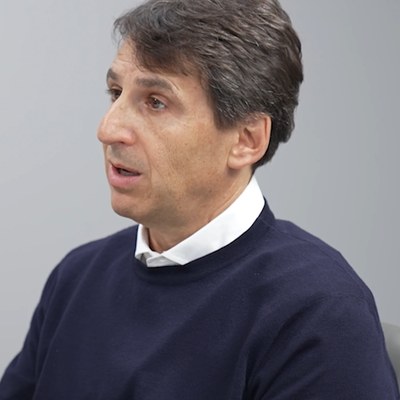 Marc Rowan
10
15 Jul 2021 – 16 Apr 2026
-1204 d
Marc Rowan
10
15 Jul 2021 – 16 Apr 2026
-1204 d
-
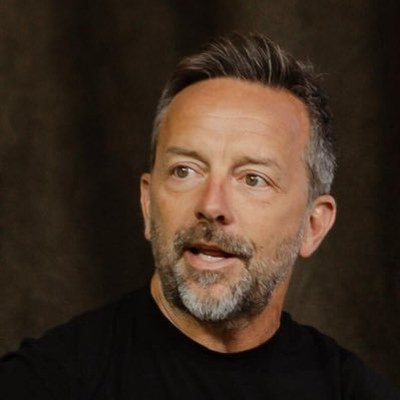 Brad Gerstner
1
thin
18 Apr 2024 – 18 Apr 2024
-196 d
Brad Gerstner
1
thin
18 Apr 2024 – 18 Apr 2024
-196 d
-
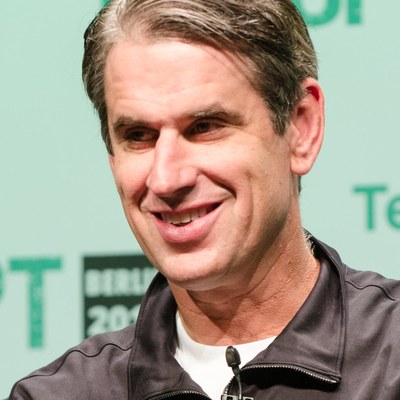 Bill Gurley
4
thin
31 Oct 2024 – 14 Mar 2026
+0 d
Bill Gurley
4
thin
31 Oct 2024 – 14 Mar 2026
+0 d
-
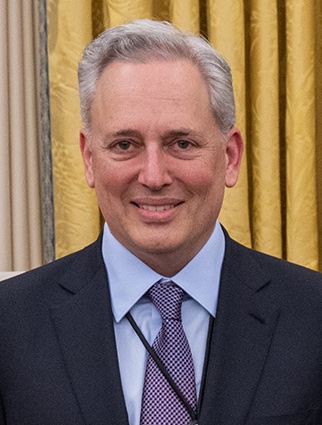 David Sacks
1
thin
8 Aug 2026 – 8 Aug 2026
+646 d
David Sacks
1
thin
8 Aug 2026 – 8 Aug 2026
+646 d
- Dylan Patel 1 thin 17 Aug 2026 – 17 Aug 2026 +655 d
The chronologysourced and dated, oldest first
-
-
Marc Rowan
Rowan cites 44% net returns on Apollo's 2001 fund to counter concerns about too much money chasing deals.
“And in that fund, which was the two thousand and one fund, 44% net returns. So now you fast forward and you look at the last three funds we've done.”
-
Marc Rowan
Rowan cites 44% net returns in Apollo's 2001 fund and recent funds ranging from $15-25 billion.
“And in that fund, which was the 2,001 fund, 44% net returns. So, now you fast forward and you look at the last three funds we've done.”
-
Marc Rowan
Rowan reports 44% gross and high 20s net returns on Apollo's $25 billion fund.
“For the last time we announced results, 44% gross on the $25,000,000,000 fund, high 20s net.”
-
Marc Rowan
Rowan reports Apollo's $25 billion fund is delivering 44% gross returns and high-20s net returns.
“44% gross on the $25,000,000,000 fund, high 20s net. The world just keeps moving. The world just keeps changing. It's our job to continue to reinvent ways to extract and to produce value.”
-
-
-
Marc Rowan
Rowan reports Apollo's 32-year track record shows 36% gross and 26% net returns with every fund profitable.
“If you look at the now thirty two year history, 36% gross 26% net returns every fund has made carry. We've done really well.”
-
Marc Rowan
Rowan questions whether massively scaling private equity benefits investors or is even possible given return requirements.
“It is unclear to me that massively scaling that business is good for investors or good for us or possible. Our job as investors and alternatives is to produce excess return per unit of risk.”
-
-
-
Marc Rowan
Rowan says Apollo runs private equity for returns not growth, calling it a farming business.
“But literally, we run this business for rate of return. If we do a good job for investors, we will grow a little.”
-
-
-
Brad Gerstner
Gerstner notes pension funds representing firefighters and teachers increasingly access private companies through growth equity LPs.
“Increasingly pension funds, right, which represent firefighters and teachers and police officers in the city of New York or the city of San Francisco or the state of Texas.”
-
Bill Gurley
Gurley recounts PE firm making billion dollars on DoubleClick exit but struggling because it was in $4 billion fund.
“I said to him, I want to say, congratulations, man, that's incredible. He goes, well, it's in a $4,000,000,000 fund. Wow. Wow. You know? Yeah. So, That's you have an incredible outcome.”
-
-
-
Marc Rowan
Rowan distinguishes between traditional private equity and a new model of private equity without leverage or fund structures.
“I think we're heading to a world where we not just have private credit, but we have equity that is private, not just private equity.”
-
-
-
Bill Gurley
Gurley argues most US endowments and foundations are now overinvested in private equity and venture capital.
“I think the Swinson mimic effect has now played out. And I think personally that most of the endowments and foundations in The US are over invested in private, both PE and venture.”
-
Bill Gurley
Gurley argues most US endowments and foundations are over-invested in private markets with no incentive to get paper marks right.
“And I think that the way the industry is structured in this would require longer conversation. There's no incentive for the operators inside of the endowments or foundations to get the paper marks right.”
-
Bill Gurley
Gurley dismisses mid-market private equity work as unmotivating though acknowledging money can be made there.
“I don't even I would never be motivated by it, but but, you know, I'm not not necessarily shitting on them too bad. Like, somebody there are you can make money.”
-
Marc Rowan
Rowan says the real story is private equity's 30% concentration in enterprise software during an AI-driven technology shift.
“we're seeing, this technology shift take place at a point in time when the private equity industry spent a decade where 30% of their activity was enterprise software. That to me is the story.”
-
Marc Rowan
Rowan argues enterprise software losses are about sector concentration and AI disruption, not public versus private structure.
“Because if you're public and you are concentrated in enterprise software, the stocks are down 6070%.”
-
David Sacks
Sacks predicts most of Airtable's cost structure can be eliminated while keeping users.
“I don't think you need to keep most of this business or most of the cost structure associated with this business.”
-
Dylan Patel
Patel argues AI business transformation has severe upfront spend spike then major cost efficiency gains.
“Like you spike up on spend a lot for the one time and then you spike down a lot and your cost efficiency is way better.”
-
Where they overlapsame programme, same subject
- BG2 Pod also carries Bill Gurley and Brad Gerstner on this subject, at different times.