Who is on this subjectordered by the date of their first quote here
2 of 5 lanes rest on fewer than 5 quotes and are marked thin. Offsets are days from the middle first-quote date, 23 Jun 2020 — a date, and nothing else. It is not a claim about who reached a view first.
-
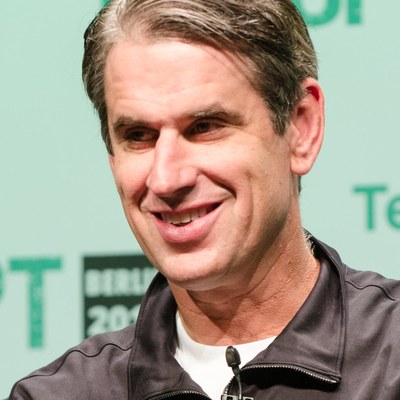 Bill Gurley
15
1 Oct 2010 – 13 Jul 2026
-3553 d
Bill Gurley
15
1 Oct 2010 – 13 Jul 2026
-3553 d
-
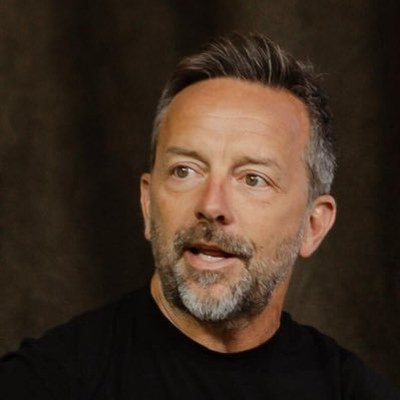 Brad Gerstner
8
23 Jun 2020 – 28 Aug 2025
+0 d
Brad Gerstner
8
23 Jun 2020 – 28 Aug 2025
+0 d
-
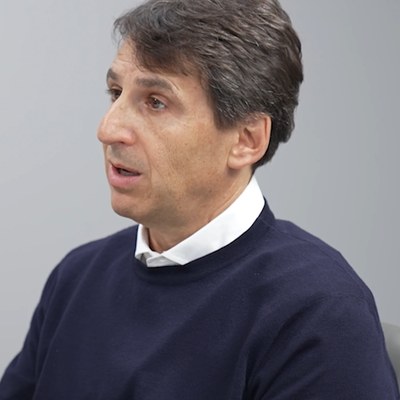 Marc Rowan
21
1 May 2023 – 16 Apr 2026
+1042 d
Marc Rowan
21
1 May 2023 – 16 Apr 2026
+1042 d
-
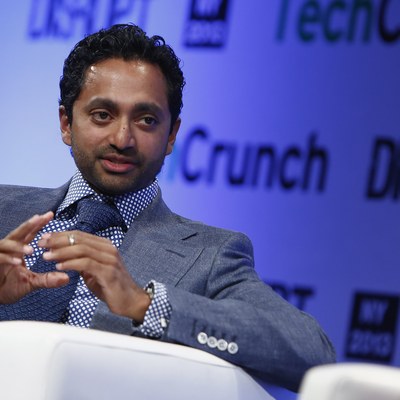 Chamath Palihapitiya
1
thin
11 Mar 2026 – 11 Mar 2026
+2087 d
Chamath Palihapitiya
1
thin
11 Mar 2026 – 11 Mar 2026
+2087 d
-
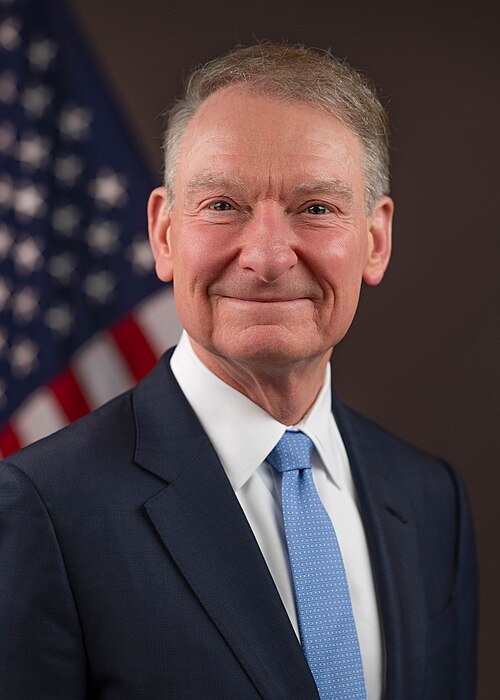 Paul Atkins
3
thin
Paul Atkins
3
thin
The chronologysourced and dated, oldest first
-
-
Bill Gurley
Gurley predicts staying private will eventually cost more than going public for some companies.
“Well, at some point, I think they're gonna be spending more dollars avoiding public than being public. It's just going be more of a hassle.”
-
-
-
Bill Gurley
Gurley claims late-stage private market investments have less information than pink sheet stocks and may be historically uninformed.
“I mean, you you could have more financial information on a thinly traded pink sheet Canadian public company than you have.”
-
Bill Gurley
Gurley argues late-stage private investments may be the least informed in history and shouldn't be equated to public valuations.
“These these might be these might be the least informed investment actions in in our history. And so I don't know that you can pay too much attention to the price because they're very uninformed.”
-
-
-
Bill Gurley
Gurley cites JPMorgan research showing 15% of companies lose 70% of value annually, now invisible in private markets.
“And that's happening in the private market, just like the public market, but it's invisible.”
-
-
-
Bill Gurley
Gurley argues staying private forever is unhealthy and going public is advantageous for companies.
“But I don't think it's healthy for companies to stay private forever. I think it's super advantageous to companies to pass through and become public.”
-
Bill Gurley
Gurley criticizes SoftBank's strategy of deploying hundreds of millions, which forces companies into massive losses.
“I've I've been quoted publicly, like, they've, you know, played a strategy where you hand hundreds of millions of dollars to a company and say, here, go win in the market with this.”
-
-
-
Bill Gurley
Gurley argues it is easier to survive downturns as a public company than as a late-stage private company.
“And so oddly, it's easier as a public company than a late stage private company to go through these types of periods.”
-
Brad Gerstner
Gerstner argues large investors must be in private markets to capture value; notes inability to sell as advantage.
“If you want if you're Fidelity, if you're TRO, if you're one of these companies that wants to participate in all of that value creation, you can't not be in the private markets.”
-
-
-
Marc Rowan
Rowan calls this the golden age of annuities due to massive money flows into retirement services.
“Amazing amount of money flowing into retirement services, particularly annuities. I would say the golden age of annuities, but we are borrowed You think”
-
Marc Rowan
Rowan reframes public versus private markets as fundamentally about liquidity rather than risk.
“We now know public can be risky as well. We now have found out that private can be both safe and risky. What we're talking about is differing degrees of liquidity.”
-
“2022 was a good opportunity for us to realize that public can be both safe and risky, and private can be both safe and risky. The only difference is a degree of liquidity.”
-
Brad Gerstner
Gerstner predicts private market valuations will normalize to match public market declines of 50%, not just 5-10%.
“There was some you know, there's a report out this week that lots of people comment on Twitter where public markets were down 50% and private marks were down, I don't know, five to 10%.”
-
Marc Rowan
Rowan argues retirement systems know their liquidity needs for ten years and should get paid for illiquidity.
“Liquidity liquidity is a risk to everyone but in differing degrees. So if you are a retirement plan or a retirement system, you know your liquidity requirements for the next ten years.”
-
-
-
“Like like, you're just fooling yourself. Right? In fact, like, because of a a lack of liquidity premium, you're probably worth less than that public company.”
-
Brad Gerstner
Gerstner identifies deep private capital from sovereign wealth funds as structural change preventing companies from going public unlike past decades.
“And if you look at the private market alternatives for them for capital, we didn't have sovereign wealth funds that were writing multi billion dollar checks at that point in time.”
-
Marc Rowan
Rowan states public companies halved to 4,000 while 80% of large companies are now private.
“We now have 4,000 public companies. People think most of the action is in public markets. 80% of companies over 100,000,000 of revenue and 80% of employment is in private companies.”
-
Marc Rowan
Rowan credits Australia's superannuation success partly to giving public investors access to private markets under supervision.
“But a big part of the return, superannuation, the design of it was to give public investors access to private markets under professional supervision.”
-
Brad Gerstner
Gerstner says Philippe implied companies need $10 billion market cap to go public, calling this threshold problematic.
“He implied that in the modern era, you need to be $10,000,000,000 to go public. Yeah. Market cap. Yes. Which if it's 10,000,000,000 or bust, that's a bitch, man.”
-
Marc Rowan
Rowan claims Apollo's private markets plus guaranteed income offering is 60% better, not just 5-10% better.
“the outcome that we can offer with access to private markets and guaranteed income is not 5% better or 10% better, it's 60% better.”
-
-
-
Bill Gurley
Gurley says private companies with weak metrics aren't better off than public ones; staying private is self-deception.
“If you're private at a 100,000,000 revenue with a 10% growth rate, it's not like you're better off. Like like, you're just fooling yourself.”
-
Bill Gurley
Gurley states over a thousand private unicorns have average growth rates below 10 percent.
“There's over a thousand private unicorns. Some people estimate that the average growth rate, which we should talk about because it ties into unit economics and pragmatism, is below 10%.”
-
“So we're three years into this recovery. We've got this incredible group of companies that are still private, you know, think of the Stripes and Databricks and SpaceX, etcetera.”
-
Brad Gerstner
Gerstner says OpenAI's $150 billion round with 10 investors created a dream IPO cap table, calling it a private IPO.
“If you looked at that, the cap table for the 10 investors in that round, it would be a dream day one IPO cap table for any company that wanted to enter the public markets.”
-
Brad Gerstner
Gerstner says OpenAI's $10B raise at $150B valuation is essentially public but excludes retail investors.
“You know, it's just nomenclature to not call that public. The problem with it is, the only people who get access to that are accredited investors, and retail investors are completely cut out.”
-
Marc Rowan
Rowan challenges the perception that public markets are safe and private markets risky.
“We have a perception that what's public is safe and what's private is risky. But what if we're wrong?”
-
Marc Rowan
Rowan challenges the perception that public markets are safe and private markets are risky.
“We have a perception that what's public is safe and what's private is risky. But what if we're wrong? What if public is safe and risky and private is safe and risky?”
-
Marc Rowan
Rowan contrasts the private markets landscape forty years ago with today's more diversified options.
“Forty years ago, private was three products, Private equity, venture capital, and hedge funds. All can be good investments, but all have risk. And public were 8,000 public companies, diversified portfolios of stocks and bonds.”
-
Marc Rowan
Rowan identifies retirement insurance companies and traditional asset managers as third and fourth markets now accessing private investments.
“We now have a third market, which is retirement insurance companies. People have seen what we have done by accessing private investment grade, and others are doing it. We now have a fourth market.”
-
Marc Rowan
Rowan suggests active management is evolving from trading securities to adding private markets to public portfolios.
“Maybe the new form of active management is not the buying and selling of stocks and bonds, but the addition of private markets to public beta portfolios.”
-
Bill Gurley
Gurley states there are approximately a thousand private companies valued over a billion dollars pre-LLM.
“There's somewhere around a thousand. So these are a thousand private companies that have raised money over a billion dollars.”
-
Bill Gurley
Gurley identifies approximately 1,000 private companies valued over $1 billion pre-LLM era.
“So these are a thousand private companies that have raised money over a billion dollars. And Chad GBD told me it was $12.50. NBCA says 900. Let's just say it's near a thousand.”
-
Bill Gurley
Gurley estimates zombie unicorns have collectively raised $300 billion in capital.
“Yeah. Seems like they've raised somewhere between 2 and 300,000,000 each. And so you roll all that up, it's 300,000,000,000.”
-
Bill Gurley
Gurley argues GPs self-report private investment valuations to LPs with no incentive for accuracy.
“No one has an incentive to get the marks right. For those that don't know this world, private investing, both on the PE side and the VC side is this weird world where the GPs, the people responsible for the investments, report the price to the LPs. They get to pick it.”
-
Brad Gerstner
Gerstner says OpenAI and Anthropic deals are bigger than any tech IPO in five years.
“I was just looking at these. I think these are bigger private IPOs than any public IPO done in the last five years in the tech market.”
-
Marc Rowan
Rowan says private market capital enables companies to invest long-term without quarterly pressure or accessing public markets.
“I think what we're seeing is the availability of capital in private markets is allowing companies to do a series of things, to invest for the long term, not to be driven by quarterly earnings, and to obtain massive amounts of debt and equity to finance their business plan without accessing public markets.”
-
Marc Rowan
Rowan notes the trend extends beyond AI to defense and other future sectors remaining private.
“And it is not just AI companies. The defense companies of the future, they're also still private in many instances.”
-
Marc Rowan
Rowan predicts large manufacturing and consumer companies will remain private in the future.
“It will not surprise me to have large manufacturing consumer companies that are private in the future.”
-
Marc Rowan
Rowan predicts a private company index will exist alongside the S&P 500.
“It will not surprise me that we end up with an S and P 500 index and an index of companies that are private.”
-
-
-
Marc Rowan
Rowan predicts individuals will match institutions in size for alternative investments.
“All of a sudden, we have this second thing called individuals. And I predict that individuals will be at least as big as institutions in their alternative bucket.”
-
Marc Rowan
Rowan predicts individual investors will match institutional scale in alternative investments.
“I predict that individuals will be at least as big as institutions in their alternative bucket.”
-
Marc Rowan
Rowan notes the major alternative asset managers grew from $40 billion combined in 2008 to nearly $1 trillion.
“I mean, we were the whole, the entirety of the companies that you see that are public today, everyone was 40,000,000,000 in 2008. We're now close to a trillion Blackstone more KKR, a little less.”
-
Chamath Palihapitiya
Palihapitiya argues investors capturing returns in private markets changed how public markets behave and delayed IPOs.
“And so investors said, well, let's go capture these in the private markets for us and our LPs. But what it also does is then change the nature of how these markets behave.”
-
Marc Rowan
Rowan notes major innovation companies like SpaceX, OpenAI, and Stripe all remain private despite US capital market strength.
“But I'll go through the companies who are creating massive change. SpaceX, Anthropic, OpenAI, Stripe, Cursor, Cognition, Andoril. What do all of them have in common?”
-
Marc Rowan
Rowan notes major tech companies like SpaceX and OpenAI remain private without concern from investors.
“We think nothing about private companies in growth and technology just staying private longer, and these are massive companies.”
-
Bill Gurley
Gurley explains private cap tables are structured to only go up, unlike public stocks.
“private one last thing. Yeah. Sorry. Private cap tables are not structured very well to go down.”
-
-
-
Paul Atkins
Atkins says public market benefits cannot be re-created privately and focuses on extending them to more issuers.
“benefits that “simply cannot be re-created privately.” 1 This morning, I would like to focus on the Commission’s recent efforts to extend those benefits to a broader range of issuers and the process behind those efforts.”
-
Paul Atkins
Atkins says market access should not be limited to wealthy insiders.
“Exposure to the full dynamism of our markets – both public and private – should not be reserved for wealthy insiders.”
-
Paul Atkins
Atkins proposes facilitating retail investor participation in private markets with safeguards.
“Our agenda includes a proposal to better facilitate retail investor participation in private markets while preserving their protection with appropriate safeguards.”
-
Where they overlapsame programme, same subject
- Bill Gurley and Brad Gerstner — BG2 Pod, 1 appearance together
- All-In Podcast also carries Brad Gerstner and Chamath Palihapitiya on this subject, at different times.
- Invest Like the Best also carries Bill Gurley and Brad Gerstner on this subject, at different times.