Who is on this subjectordered by the date of their first quote here
2 of 5 lanes rest on fewer than 5 quotes and are marked thin. Offsets are days from the middle first-quote date, 21 Nov 2025 — a date, and nothing else. It is not a claim about who reached a view first.
-
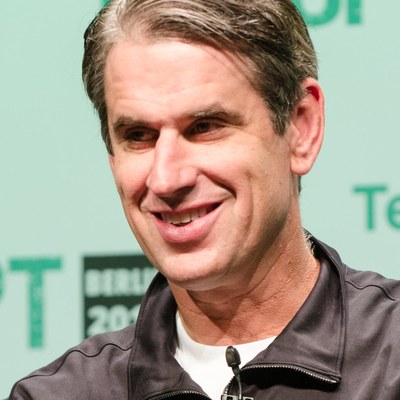 Bill Gurley
13
1 Oct 2010 – 6 Jan 2025
-5530 d
Bill Gurley
13
1 Oct 2010 – 6 Jan 2025
-5530 d
-
 Brad Gerstner
1
thin
12 Jan 2024 – 12 Jan 2024
-679 d
Brad Gerstner
1
thin
12 Jan 2024 – 12 Jan 2024
-679 d
- Dylan Patel 10 21 Nov 2025 – 25 Aug 2026 +0 d
-
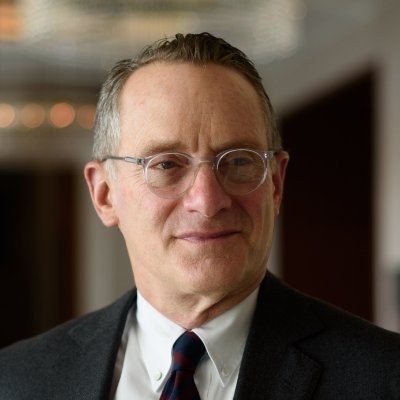 Howard Marks
9
13 Dec 2025 – 12 Jun 2026
+22 d
Howard Marks
9
13 Dec 2025 – 12 Jun 2026
+22 d
-
 Gavin Baker
1
thin
20 May 2026 – 20 May 2026
+180 d
Gavin Baker
1
thin
20 May 2026 – 20 May 2026
+180 d
The chronologysourced and dated, oldest first
-
-
Bill Gurley
Gurley states that only three out of 25-30 IPOs this year were unprofitable at launch.
“I think of the 25 or 30 this year, three were not profitable at the time of going out.”
-
-
-
Bill Gurley
Gurley explains Stitch Fix stayed under unicorn status by avoiding fundraising while maintaining profitability for several years.
“One of the unique things about Stitch Fix relative to all of the unicorns out in Silicon Valley is that they've run very disciplined and profitable approach. They've been profitable for several years.”
-
Bill Gurley
Gurley notes Stitch Fix remained profitable for years and never raised above $1B valuation.
“They've been profitable for several years. The reason that you never heard of them as a unicorn was because they never raised money above 1,000,000,000 because they didn't really do raise money.”
-
Bill Gurley
Gurley says Stitch Fix was never valued above a billion because they ran profitably and didn't need to raise money.
“The reason that you never heard of them as a unicorn was because they never raised money above 1,000,000,000 because they didn't really do raise money.”
-
Bill Gurley
Gurley predicts many unicorns afraid of public markets will hurt equity value by not achieving profitability and understanding unit economics.
“And if you want to be better, if you wanna succeed, if you wanna play at the next level, you have to step it up and go there.”
-
Bill Gurley
Gurley predicts many unicorns will damage equity value by avoiding public markets and profitability.
“I think you're gonna see a large number of unicorns who were afraid to play on Sunday, afraid to be in the public markets, that didn't get their act together in time, didn't get profitable, didn't understand unit economics, and and hurt the value of the equity as a result.”
-
Bill Gurley
Gurley observes maturing unicorns recognizing they must become profitable or go public.
“I do think we are also watching, however, as many of the unicorns mature in age, that many of them are having to come to the recognition that they either need to grow up, get profitable, go public, or do something along those lines.”
-
Bill Gurley
Gurley observes aging unicorns recognizing they must become profitable or go public as staying private forever fails.
“And that this this silly notion of we're gonna stay private forever is not playing out in a very positive way.”
-
Bill Gurley
Gurley says Stitch Fix reached billion-dollar run rate profitably, generating $60M free cash flow on just $40M raised.
“So we're at a billion dollar run rate. We've been profitable for many quarters. In fact, when the company came public, it is over a $100,000,000 of cash on the balance sheet.”
-
Bill Gurley
Gurley says Stitch Fix created $60 million in free cash flow, raising only $40 million before IPO.
“The company had only raised $40,000,000. Hence, we had created $60,000,000 in free cash flow, something that's extremely rare in Silicon Valley these days.”
-
-
-
Brad Gerstner
Gerstner says Uber went from losing $2.5B to profiting $3.5B in free cash flow under Khosrowshahi.
“The company went from losing over 2,500,000,000 or around 2,500,000,000 when Dara took over to profiting over 3,500,000,000, and we're talking free cash flow.”
-
Bill Gurley
Gurley calculates AI companies burning $20M monthly need $500M revenue run rate to reach profitability at 50% margins.
“if you're spending 20,000,000 a month, you're burning $240,000,000 a year. You know, if these companies in AI are 50% gross margin or whatever, you got to get revenue to twice that, you know, you're right at that 500,000,000 run rate before you could think about being profitable.”
-
Bill Gurley
Gurley explains traditional venture model was to grow burn then converge to profitability.
“I used to always think about venture capital as, you know, you invest in a company and you grow that burn up until a point.”
-
-
-
Bill Gurley
Gurley suggests a healthcare industrial complex has emerged that prioritizes profit over cost-effective preventative care.
“People talk about the military industrial complex. We may have created a health care industrial complex that really can't stop maximizing profitability and not focus necessarily on the lowest cost, best, most preventative process.”
-
Dylan Patel
Patel states top neo clouds achieve 35-40% gross margins while many others are losing money.
“And this has enabled, you know, the top in the industry companies to have gross margins of 35, 40%. And now there's a ton of Neo Clouds that are losing money.”
-
Howard Marks
Marks cites Buffett's distinction that productivity gains from Internet and AI may not translate to profitability.
“There's no doubt that the Internet will produce a great increase in productivity. It's not clear that it'll have a positive impact on profitability. And I think the same is true of AI.”
-
Howard Marks
Marks questions whether AI eliminating half of entry-level jobs will translate into profits or just lower consumer prices.
“if you can produce The US GDP and eliminate half the entry level jobs, it could be more profitable or certainly more productive. But the question is, will it be more profitable?”
-
-
-
Howard Marks
Marks quotes Buffett distinguishing productivity gains from profitability in technology like internet and AI.
“There's no doubt that the internet will produce a great increase in productivity. It's not clear that it'll have a positive impact on profitability.”
-
Howard Marks
Marks cites Buffett's point that productivity gains from internet and AI may not translate to profitability, now applied to AI.
“There's no doubt that the internet will produce a great increase in productivity. It's not clear that it'll have a positive impact on profitability. And I think the same is true of AI.”
-
Howard Marks
Marks notes AI could eliminate half of entry level jobs but questions whether productivity gains translate to profitability.
“You say that AI has the ability to eliminate half of entry level jobs. That was the whole conversation because then they cut to something else. But the point is that may be true.”
-
Howard Marks
Marks questions whether AI savings will accrue as profits or be competed away through lower prices.
“To whom will the savings accrue? If different companies are competing to provide the AI service, maybe they'll compete on price to the point where it's not profitable for them.”
-
Howard Marks
Marks suggests AI savings may accrue to consumers through price competition rather than to company profits.
“If different companies are competing to provide the AI service, maybe they'll compete on price to the point where it's not profitable for them.”
-
Howard Marks
Marks argues tech companies' incremental profitability is enormous because virtual products have almost no marginal cost.
“Their incremental profitability is enormous. When your product is virtual and you're selling one, you're making some money, you want to sell two, there's almost no cost in the second one.”
-
Gavin Baker
Baker believes Anthropic is likely already generating cash or will start this year.
“I think Anthropic probably starts generating cash this year if they are not already generating cash, which I think is probably the case.”
-
Howard Marks
Marks states nobody can specify what AI will do, when, for whom, or how much profit it will produce.
“I've never heard anybody tell me exactly what AI will be able to do or when or for whom or how much profit it'll produce and for whom.”
-
Dylan Patel
Patel states Anthropic is profitable excluding stock compensation in Q2 with 80% margins on Opus tokens.
“Anthropic in Q2 is profitable, their net income profitable, excluding stock based compensation. And I think by Q3 they may even be profitable, including stock based compensation.”
-
Dylan Patel
Patel reports Anthropic is Q2 profitable excluding SBC, expects Q3 profitability including SBC with 80% margins on Opus tokens.
“And I think by Q3 they may even be profitable, including stock based compensation. That's how profitable they're getting, and their margins on an Opus token, at least Opus 4.8 token, is north of 80”
-
Dylan Patel
Patel reports Anthropic achieved over 80% margins on Opus tokens and expects full profitability including stock compensation by Q3.
“That's how profitable they're getting, and their margins on an Opus token, at least Opus 4.8 token, is north of 80 for the API price.”
-
Dylan Patel
Patel reports Anthropic achieved profitability and positive free cash flow in April and May 2025.
“Anthropic is free cash flow positive, and they are profitable in q two. Even in April. In April, they closed April's books. They were profitable.”
-
Dylan Patel
Patel reveals Anthropic turned first profit in Q2 and will hit billion-dollar operating profit in Q3 before IPO.
“So Anthropic turned their first gross profit in Q2 in June. And then in Q3, they will be turning a billion dollars of operating profit, slightly over.”
-
Dylan Patel
Patel says Anthropic will turn over a billion dollars of operating profit in Q3 2025.
“Anthropic turned their first gross profit in Q2 in June. And then in Q3, they will be turning a billion dollars of operating profit, slightly over.”
-
Dylan Patel
Patel says OpenAI's gross margins rose from 30% to 55% overall, reaching 65% excluding free users.
“Now, total company gross margin is closer to 55%, and if you strip away the free users, they're at about 65%.”
-
Dylan Patel
Patel says AWS beat on gross margins because Bedrock was highly profitable.
“On Amazon's most recent earnings call, they talked about how AWS had a strong gross margin beat. Right? They won on gross margin because Bedrock was so profitable.”
-
Dylan Patel
Patel says anyone can profitably run inference by renting GB300 racks and deploying open models.
“Go download the Kimi weights. Go download VLM or SGLANG. Set it up. You know, Codecs and Fable can actually help you do this.”
-