Who is on this subjectordered by the date of their first quote here
5 of 6 lanes rest on fewer than 5 quotes and are marked thin. Offsets are days from the middle first-quote date, 29 Sep 2022 — a date, and nothing else. It is not a claim about who reached a view first.
-
 Howard Marks
2
thin
14 Jan 2019 – 23 Feb 2026
-1354 d
Howard Marks
2
thin
14 Jan 2019 – 23 Feb 2026
-1354 d
-
 Gavin Baker
1
thin
25 Jan 2022 – 25 Jan 2022
-247 d
Gavin Baker
1
thin
25 Jan 2022 – 25 Jan 2022
-247 d
-
 David Friedberg
4
thin
29 Sep 2022 – 21 Dec 2025
+0 d
David Friedberg
4
thin
29 Sep 2022 – 21 Dec 2025
+0 d
-
 Bill Gurley
6
11 Sep 2023 – 17 Mar 2026
+347 d
Bill Gurley
6
11 Sep 2023 – 17 Mar 2026
+347 d
-
 Brad Gerstner
1
thin
31 Jan 2024 – 31 Jan 2024
+489 d
Brad Gerstner
1
thin
31 Jan 2024 – 31 Jan 2024
+489 d
-
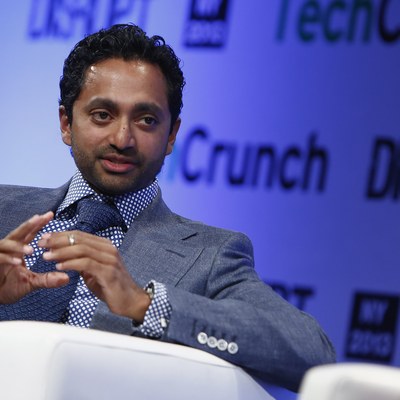 Chamath Palihapitiya
4
thin
2 Mar 2026 – 19 Jun 2026
+1250 d
Chamath Palihapitiya
4
thin
2 Mar 2026 – 19 Jun 2026
+1250 d
The chronologysourced and dated, oldest first
-
-
Howard Marks
Marks quotes Feynman that physics would be harder if electrons had feelings, unlike human investors.
“Richard Feynman, the great physicist, said that, physics would be much harder if electrons had feelings. We walk in the room, we turn on the light switch, the lights go on every time.”
-
-
-
Gavin Baker
Baker says the key trait for public equity investors is the ability to be rational when wrong.
“If I could know one thing about a person to know whether or not they would be a good public equity investor, it would simply be, are you capable of being rational when you're wrong?”
-
David Friedberg
Friedberg argues that experiencing repeated failures early on builds the grit necessary for entrepreneurial success.
“the simple model of success in life is you do something, you succeed, you consider yourself successful, But then when you get knocked down, it's very hard to think about yourself still being successful or having the potential to be successful if your model, your learned model is success.”
-
-
-
Bill Gurley
Gurley says valuation disparity takes time to accept because stakeholders have been repeatedly told they're worth much more.
“these this valuation disparity that they just talked about is a real issue, and it takes a while for people to come around. Like, they've been told, you're worth this.”
-
-
-
David Friedberg
Friedberg argues complexity breeds fear of failure, explaining why people pursue smaller ideas requiring fewer things to go right.
“Well, there's I don't know about, using the term thinker, but I think that the, the big concepts are scary because there's so many things that have to go right to get them to work.”
-
David Friedberg
Friedberg explains people avoid big ideas because complexity breeds fear of higher failure probability.
“And, you know, complexity breeds fear because it breeds a higher chance of failure. You know, you have to get each of these things right for something to work.”
-
Brad Gerstner
Gerstner argues asking why now is the single worst question in technology investing history.
“The single worst question or the question that's cost the most money in the history of technology investing is why now? Okay.”
-
-
-
David Friedberg
Friedberg cites research showing happiness plateaus at $60k income but correlates with year-over-year income change above that level.
“at the time, it improved up to $60,000 of income a year Right. Then it flatlined beyond And then the the the key measure of happiness was income change year over year.”
-
-
-
Howard Marks
Marks distinguishes risk control from risk avoidance, emphasizing intelligent risk-bearing is integral to good returns.
“Exposing yourself to the risk of loss is integral in trying to have a good investment return. So, you know, even though our investment philosophy, stresses, risk control, we're not talking about risk avoidance.”
-
Bill Gurley
Gurley says regrets of inaction weigh on people's minds increasingly over time, unlike mistakes they forgive themselves for.
“But the thing we never did, the thing we always thought we should do that we didn't get to, those things weigh on our brain more and more and more as we get older.”
-
Bill Gurley
Gurley says regrets of inaction weigh on people's minds more heavily over time than mistakes made.
“the thing we never did, the thing we always thought we should do that we didn't get to, those things weigh on our brain more and more and more as we get older.”
-
Chamath Palihapitiya
Palihapitiya argues pain is a fantastic amplifier of capability required for entrepreneurship at mega scale.
“Pain is a fantastic amplifier of capability, some sort of like grudge, pain, anger, but you know, the child that had a wonderful upbringing is a wonderful human being and not a great entrepreneur.”
-
Bill Gurley
Gurley cites Daniel Pink finding that humans dwell on regrets of inaction more than action mistakes.
“With Wharton, it was six out of 10. It's still a vast majority of people. Daniel Pink in his book, The Power of Regret notes that humans dwell on regrets of inaction.”
-
Bill Gurley
Gurley cites Daniel Pink finding humans dwell on boldness regrets, inactions they never tried.
“Daniel Pink in his book, The Power of Regret notes that humans dwell on regrets of inaction. He calls them boldness re regrets.”
-
Bill Gurley
Gurley contrasts humans easily forgiving action mistakes but struggling with things never tried.
“And the older you get, the more they weigh on you. Humans are fabulous at forgiving themselves for mistakes, kind of what you just walked through. Those are action mistakes.”
-
Chamath Palihapitiya
Palihapitiya describes Stanford experiment where mice normally drown in four minutes without intervention.
“They ran this experiment at Stanford where they take like a big bowl, fill it with water, and they drop in a mouse, and they measure how long it takes for the mouse to drown.”
-
Chamath Palihapitiya
Palihapitiya says mice rescued once then tread water for sixty hours instead of four minutes.
“They drop the mouse back in the water, and that mouse treads water for sixty hours”
-
Chamath Palihapitiya
Palihapitiya characterizes Dario's worldview as distrusting all actors except those who reason like him under his designed rules.
“The list of trustworthy ones is conspicuously short, and it has a suspicious tendency to resolve towards people who reason the way I do operating under the rules I help design.”
-