Who is on this subjectordered by the date of their first quote here
2 of 5 lanes rest on fewer than 5 quotes and are marked thin. Offsets are days from the middle first-quote date, 25 Jan 2022 — a date, and nothing else. It is not a claim about who reached a view first.
-
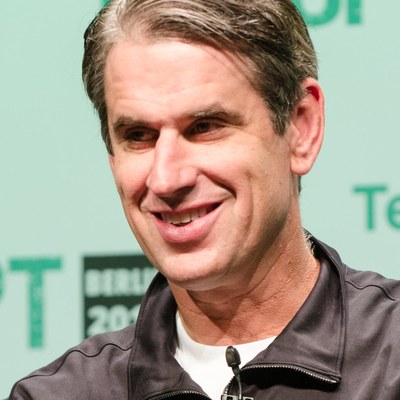 Bill Gurley
7
13 Jul 2016 – 27 Mar 2026
-2022 d
Bill Gurley
7
13 Jul 2016 – 27 Mar 2026
-2022 d
-
 Gavin Baker
1
thin
25 Jan 2022 – 25 Jan 2022
+0 d
Gavin Baker
1
thin
25 Jan 2022 – 25 Jan 2022
+0 d
-
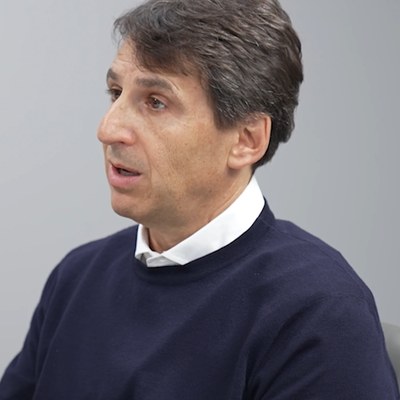 Marc Rowan
17
20 Apr 2022 – 16 Apr 2026
+85 d
Marc Rowan
17
20 Apr 2022 – 16 Apr 2026
+85 d
-
 Brad Gerstner
1
thin
13 Mar 2025 – 13 Mar 2025
+1143 d
Brad Gerstner
1
thin
13 Mar 2025 – 13 Mar 2025
+1143 d
-
 Paul Atkins
7
Paul Atkins
7
The chronologysourced and dated, oldest first
-
-
Bill Gurley
Gurley argues Apple built all its market cap in public markets without board control, countering short-termism claims.
“Apple built all its market cap in the public market. And they did not have a control position on the board.”
-
-
-
Bill Gurley
Gurley believes being public helps companies run better through enforced discipline from smart investors.
“I believe strongly that I think is less well understood is that being public actually helps the companies run better. It's an enforced discipline.”
-
-
-
Bill Gurley
Gurley argues that surviving downturns is easier as a public company because IPOs convert complex structures to common stock.
“And it turns out that surviving down periods is a lot easier as a public company than a private company because you've converted all that away.”
-
Bill Gurley
Gurley argues it is easier to survive downturns as a public company than as a late-stage private company.
“And so oddly, it's easier as a public company than a late stage private company to go through these types of periods.”
-
-
-
Gavin Baker
Baker says great public equity investors are often wrong more than right, with best batting averages around 55%.
“They're wrong more than they're right, but because they make more money when they're right, they still have a great track record.”
-
Marc Rowan
Rowan explains Athene cannot buy fixed income in public markets because there is no excess return, only beta.
“Athene as a retirement services company wants 95% fixed income and 5% alternatives. But that 95% fixed income they can't buy in the market because the market is now completely beta.”
-
-
-
Marc Rowan
Rowan says LDI crisis revealed public securities are only liquid in rising markets, not falling ones.
“LDI was nothing more than a misplaced expectation on the part of UK institutions that public securities were liquid. They found out they're only liquid on the way up.”
-
Marc Rowan
Rowan reframes public versus private markets as fundamentally about liquidity rather than risk.
“We now know public can be risky as well. We now have found out that private can be both safe and risky. What we're talking about is differing degrees of liquidity.”
-
“2022 was a good opportunity for us to realize that public can be both safe and risky, and private can be both safe and risky. The only difference is a degree of liquidity.”
-
“Twenty years ago, there was alpha left in publicly traded fixed income markets. Firms like ours offered you a high yield bond account, a levered loan account.”
-
Marc Rowan
Rowan says 100% of S&P returns this year came from 10 stocks at 50 PE, constituting 35% of the index.
“A 100% of our returns this year are from 10 stocks which constitute 35% of the S and P that traded an average PE of 50.”
-
Marc Rowan
Rowan states active management has failed to beat indexes 85% of the time over twenty years and will get harder.
“If you look at the active management, active management has failed to beat the index 85% of the time for twenty years.”
-
Marc Rowan
Rowan says 100% of returns this year came from 10 stocks at 50 PE, which few would actively buy.
“A 100% of our returns this year are from 10 stocks which constitute 35% of the S and P that traded an average PE of 50.”
-
-
-
Bill Gurley
Gurley cites Priceline returning 120x from a billion dollar public market entry as precedent for AI winners.
“Investing you know, we have Bob Mylot on last week investing in Priceline at a billion dollars. That was a 120 x in the public markets.”
-
Bill Gurley
Gurley notes public company count has shrunk by almost half, changing venture landscape.
“the number of public companies has shrunk dramatically. And Michael's written about this, but we've gone, I think, almost half. Is that right, Michael?”
-
Marc Rowan
Rowan notes active equity managers failed to beat the market 93% of the time over twenty years.
“Here are people who have spent their whole lives becoming good investors, and they as an industry have failed to beat the market 93% of the time for twenty years.”
-
Marc Rowan
Rowan states public companies halved to 4,000 while 80% of large companies are now private.
“We now have 4,000 public companies. People think most of the action is in public markets. 80% of companies over 100,000,000 of revenue and 80% of employment is in private companies.”
-
Marc Rowan
Rowan states it takes five days to sell an investment grade corporate bond, contradicting assumptions about public market liquidity.
“One of the most interesting things that changed there is no liquidity in public fixed income. The stats I've seen it takes five days to sell an investment grade corporate bond.”
-
-
-
Brad Gerstner
Gerstner earned 100x returns on Amazon in public markets, returns now going to private investors instead.
“So I earned a 100 x return in the public markets. Right? By all accounts, venture capitalists would do back flips for that return, but those returns were going to private market participants.”
-
Marc Rowan
Rowan argues equity prices are not low, with average PE in mid-twenties versus historical 16.
“I do not believe prices are low. They are lower, but we're still talking about an average PE as a reference in the mid twenties versus 16 over time.”
-
Marc Rowan
Rowan challenges the perception that public markets are safe and private markets risky.
“We have a perception that what's public is safe and what's private is risky. But what if we're wrong?”
-
Marc Rowan
Rowan challenges the perception that public markets are safe and private markets are risky.
“We have a perception that what's public is safe and what's private is risky. But what if we're wrong? What if public is safe and risky and private is safe and risky?”
-
-
-
Bill Gurley
Gurley notes US public companies have fallen to less than half their peak number.
“So the number of public companies in The US is less than half of peak. And so we've really had a fall off in the number of companies that are actually public.”
-
Marc Rowan
Rowan notes major innovation companies like SpaceX, OpenAI, and Stripe all remain private despite US capital market strength.
“But I'll go through the companies who are creating massive change. SpaceX, Anthropic, OpenAI, Stripe, Cursor, Cognition, Andoril. What do all of them have in common?”
-
Marc Rowan
Rowan notes major tech companies like SpaceX and OpenAI remain private without concern from investors.
“We think nothing about private companies in growth and technology just staying private longer, and these are massive companies.”
-
Marc Rowan
Rowan argues ten companies now represent nearly 50% of S&P 500, all concentrated on one trend.
“Have 10 companies today who account for nearly 50% of the S and P 500, and those 10 companies are all levered to one trend.”
-
-
-
Paul Atkins
Atkins states exchange-listed companies have fallen roughly 40 percent from over 7,800 in the mid-1990s.
“In the mid‑1990s, more than 7,800 companies were listed on U.S. exchanges. That number has now fallen by roughly 40 percent.”
-
Paul Atkins
Atkins says IPOs declined from 4,000 in the 1990s to only 3,200 in the following 25 years.
“During the decade of the 1990s, there were approximately 4,000 IPOs. In the 25 years since then, there have been only 3,200.”
-
Paul Atkins
Atkins says public market benefits cannot be re-created privately and aims to extend them to more issuers.
“benefits that “simply cannot be re-created privately.” 1 This morning, I would like to focus on the Commission’s recent efforts to extend those benefits to a broader range of issuers”
-
Paul Atkins
Atkins says public market benefits cannot be re-created privately and focuses on extending them to more issuers.
“benefits that “simply cannot be re-created privately.” 1 This morning, I would like to focus on the Commission’s recent efforts to extend those benefits to a broader range of issuers and the process behind those efforts.”
-
Paul Atkins
Atkins describes IPOs as invitations for workers and savers to participate in American enterprise prosperity.
“Every IPO is an invitation to workers and savers to participate in the prosperity of the next generation of American enterprise.”
-
Paul Atkins
Atkins cites a 40 percent decline in public companies over recent decades as justification for reforming SEC disclosure rules.
“Today, the SEC must do likewise. Presented with a 40 percent decline in public companies over the past few decades, we are summoned not to create more complexity nor reinvent our mandate, but to restore it to its foundation: that is, disclosure of material information.”
-
Paul Atkins
Atkins cites 40 percent decline in public companies over recent decades as rationale for returning to disclosure foundation.
“Presented with a 40 percent decline in public companies over the past few decades, we are summoned not to create more complexity nor reinvent our mandate, but to restore it to its foundation: that is, disclosure of material information.”
-
Where they overlapsame programme, same subject
- Invest Like the Best also carries Bill Gurley and Gavin Baker on this subject, at different times.