Who is on this subjectordered by the date of their first quote here
2 of 10 lanes rest on fewer than 5 quotes and are marked thin. Offsets are days from the middle first-quote date, 4 Apr 2024 — a date, and nothing else. It is not a claim about who reached a view first.
-
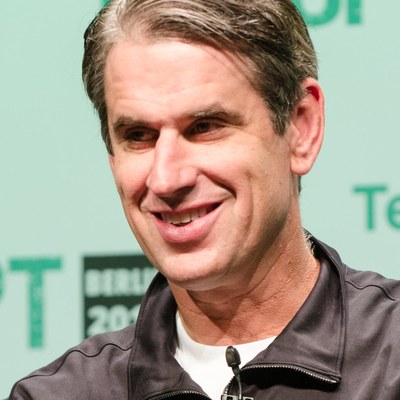 Bill Gurley
17
7 Apr 2017 – 4 Aug 2026
-2554 d
Bill Gurley
17
7 Apr 2017 – 4 Aug 2026
-2554 d
-
 David Friedberg
15
21 May 2020 – 27 Mar 2026
-1414 d
David Friedberg
15
21 May 2020 – 27 Mar 2026
-1414 d
-
 Marc Rowan
14
5 Dec 2023 – 4 Aug 2026
-121 d
Marc Rowan
14
5 Dec 2023 – 4 Aug 2026
-121 d
-
 Brad Gerstner
9
4 Apr 2024 – 21 Jun 2025
+0 d
Brad Gerstner
9
4 Apr 2024 – 21 Jun 2025
+0 d
-
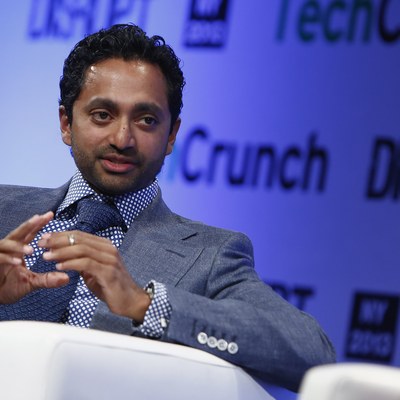 Chamath Palihapitiya
6
14 Nov 2025 – 29 May 2026
+589 d
Chamath Palihapitiya
6
14 Nov 2025 – 29 May 2026
+589 d
-
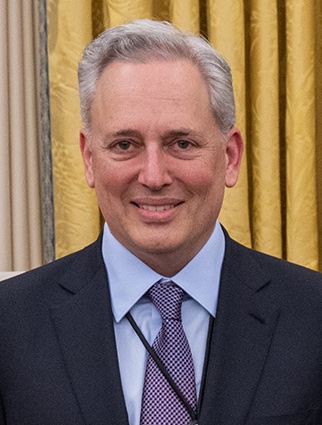 David Sacks
8
13 Dec 2025 – 24 Aug 2026
+618 d
David Sacks
8
13 Dec 2025 – 24 Aug 2026
+618 d
-
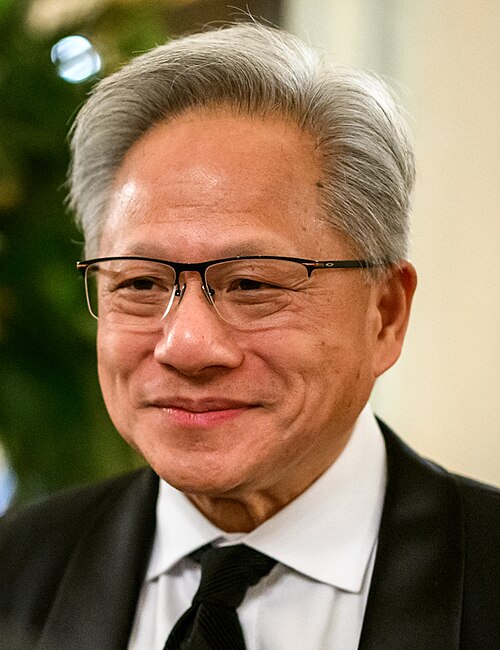 Jensen Huang
2
thin
16 Jun 2026 – 16 Jun 2026
+803 d
Jensen Huang
2
thin
16 Jun 2026 – 16 Jun 2026
+803 d
-
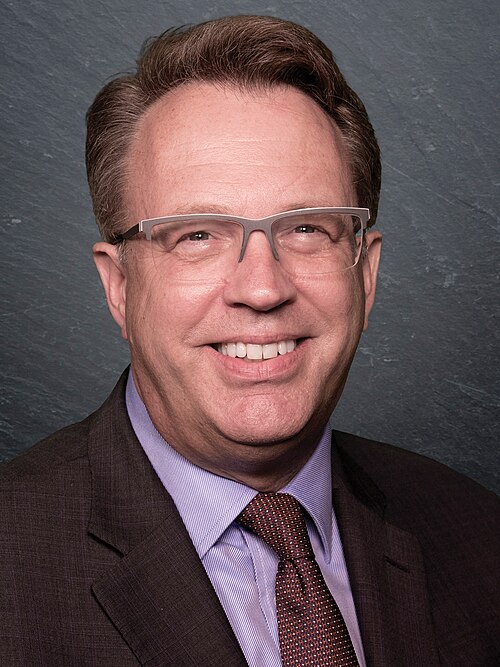 John Williams
5
John Williams
5
-
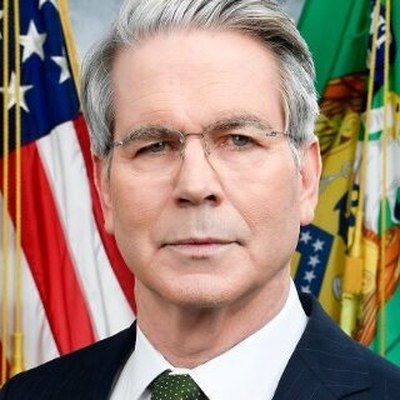 Scott Bessent
2
thin
Scott Bessent
2
thin
-
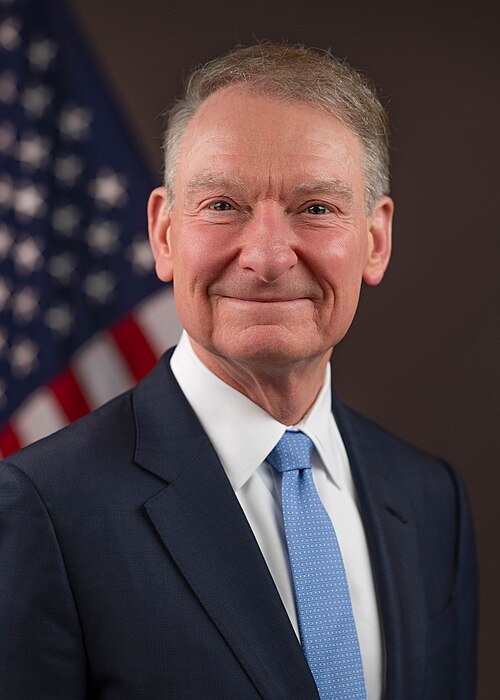 Paul Atkins
28
Paul Atkins
28
The chronologysourced and dated, oldest first
-
-
Bill Gurley
Gurley says America's litigious culture where contingency lawyers take 30-50% of recovery will delay autonomous vehicles domestically.
“Because of the regular because of the litigious thing that I brought up. I got it. I mean, look what happened with the one Tesla driver already.”
-
-
-
“One of the things that, you know, I have a strong belief in is like, I think in twenty years we could kind of eradicate all infectious disease.”
-
David Friedberg
Friedberg predicts all infectious disease could be eradicated in 20 years if not for regulatory obstacles.
“I think in twenty years we could kind of eradicate all infectious disease. The only thing holding that up is regulation because the science is known.”
-
David Friedberg
Friedberg says nuclear plant regulatory costs rose from $100 million to $10 billion over two decades.
“And now it is so cost prohibitive. It's something like $10,000,000,000 now from maybe, you know, a 100,000,000, you know, two decades ago.”
-
-
-
Bill Gurley
Gurley argues regulation typically locks in incumbents who write rules blocking new entrants.
“regulation's the friend of the incumbent. Most of the time when Washington DC leans into a new to to a new industry, you lock in the incumbents, and and the rules are written by the incumbents and make it very hard for new entrants to come up behind them.”
-
David Friedberg
Friedberg interprets the $70 million FINRA fine on Robinhood as industry self-regulation to prevent government intervention.
“I feel like the the Robinhood fine the FINRA fine of $70,000,000, was a good red herring for what's gonna happen in this industry which is that the big financial services firms wanna participate in this market and they don't want regulators coming in and reregulating the market.”
-
David Friedberg
Friedberg argues the $70 million Robinhood fine was meant to prevent broader regulatory intervention in fintech.
“They they see the opportunity in the same way that the startups do. And FINRA is a self regulatory organization.”
-
David Friedberg
Friedberg argues FINRA's $70 million fine was sized to keep the SEC from regulating digital financial services.
“And, you know, putting that $70,000,000 fine on Robinhood was a big enough fine to say, you know what? We don't want the SEC coming in.”
-
David Friedberg
Friedberg explains FINRA's $70 million fine was designed to keep the SEC from imposing stricter regulations.
“putting that $70,000,000 fine on Robinhood was a big enough fine to say, you know what? We don't want the SEC coming in.”
-
-
-
Marc Rowan
Rowan argues regulators have only two choices for credit: banking system or investment marketplace, no third option.
“And regulators have only two choices as to where credit comes from. It can come from the banking system or it can come from the investment marketplace. There's no third choice.”
-
Marc Rowan
Rowan states regulators have only two choices for credit: banking system or investment marketplace.
“And regulators have only two choices as to where credit comes from. It can come from the banking system or it can come from the investment marketplace.”
-
Marc Rowan
Rowan observes global regulators favoring investors over banks, except China, but no sudden shift expected.
“But if you look at the trend with the exception of China everywhere in the world regulators are favoring investors over banks.”
-
Marc Rowan
Rowan says regulators worldwide except China are favoring investors over banks, though not a sudden shift.
“But if you look at the trend with the exception of China everywhere in the world regulators are favoring investors over banks. That does not mean we're gonna see a sunshift.”
-
Marc Rowan
Rowan argues regulators have only two choices for credit: banking system or investment marketplace.
“And regulators have only two choices as to where credit comes from. It can come from the banking system or it can come from the investment marketplace.”
-
Marc Rowan
Rowan says regulators globally are favoring investors over banks, except in China.
“But if you look at the trend with the exception of China everywhere in the world regulators are favoring investors over banks.”
-
-
-
Brad Gerstner
Gerstner states US nuclear deployment costs are limited by regulation, not technology, creating gap with China.
“our cost of deploying new nuclear fission infrastructure is limited by our own regulatory framework, not by the technology.”
-
Brad Gerstner
Gerstner warns data centers acquiring independent energy producers could trigger regulatory intervention on grid pressure.
“if you start to see data centers pick off the independents, that could put pressure on the grid in a way that might bring the regulators in to voice their opinion.”
-
Bill Gurley
Gurley argues autocratic China has a massive advantage over the U.S. by avoiding layered regulatory constraints.
“It's likely a massive advantage for China where a more autocratic government can just decide, okay, we're gonna start doing things a new way.”
-
Bill Gurley
Gurley says SEC's well-intentioned response to fewer IPOs risks institutionalizing private investing for average investors.
“I personally don't think it's healthy because a minute that happens and everyone realizes that there's less companies going public and companies staying private longer, then the SEC, I think in a well intentioned way goes, oh my god. The average investor's missing out on this asset class.”
-
Bill Gurley
Gurley warns SEC's well-intentioned response to fewer IPOs—institutionalizing private company investing—will fail massively.
“But what they wanna do to fix it is then some kinda institutionalized investing in private companies, which I think will fail massively.”
-
Bill Gurley
Gurley says billion-dollar revenue threshold for IPOs fundamentally changes venture game and reduces accessibility.
“Anyone can start a company that can go public. If you have to get to a billion in revenue, it's just it's a totally different game.”
-
David Friedberg
Friedberg recounts how one gene therapy death in the late 1990s halted all such treatments for seven years.
“And when he died, they put a stop on gene therapy treatments for I think seven years. They weren't allowed to do any more gene therapy treatments.”
-
David Friedberg
Friedberg says one death halted gene therapy for seven years despite technology now curing dozens of diseases.
“They weren't allowed to do any more gene therapy treatments. And since then we now have literally dozens of gene therapy treatments that can cure dozens of human diseases”
-
David Friedberg
Friedberg says one gene therapy death led to a seven-year halt despite dozens of life-saving therapies now available.
“They weren't allowed to do any more gene therapy treatments. And since then we now have literally dozens of gene therapy treatments that can cure dozens of human diseases saving millions of lives.”
-
Brad Gerstner
Gerstner argues US can address nuclear cost problems through regulatory consolidation and clustered reactor construction.
“It seems to me the first two, right, we can tackle, right? You can consolidate the regulatory environment in The United States so that you reduce the time to bring one of these things online and I also think that if you clustered some of these, if we wanted to get back to building more of these reactors”
-
Bill Gurley
Gurley reports NRC charges SMR startups $60 million in fees just to reach first approval.
“the regulatory commission here in The U. S. Is fee based and all the people that are playing in this market, I've talked to say you're probably 60,000,000 to first approval, just on fees”
-
Bill Gurley
Gurley argues US infrastructure failure stems from self-imposed regulatory and litigation red tape.
“Well, he took all the regulation and lawsuits off the table. And so we have to recognize that one of the reasons we can't build infrastructure and the California high speed train thing is where it is, is because we've indoctrinated ourselves in red tape, both with regard to regulation and litigation.”
-
Marc Rowan
Rowan contrasts bank leverage of 12-14x with zero leverage at typical institutional investors and mutual funds.
“A bank is levered 12 to 14 times. The typical institutional investor is levered zero. The typical mutual fund levered zero. Typical BDC levered 1.5 times. Typical retirement services company levered eight times.”
-
Marc Rowan
Rowan argues European regulators told banks to do less lending but forgot to enable investor alternatives, unlike the US.
“Everywhere in the world as I suggested, regulators have two choices as to where debt capital comes from, the banking system or the investor marketplace. Everywhere they've told the banks to do less.”
-
Marc Rowan
Rowan predicts a change in administration will introduce illiquidity into 401(k)s, creating substantial industry demand.
“It's my belief that if we have a change in administration, we will have in a very short period of time illiquidity introduced into 04/2001 ks.”
-
Marc Rowan
Rowan predicts a new administration would quickly allow illiquid investments in 401(k)s, creating substantial industry demand.
“That will not just benefit Apollo, that will be another source of demand for the industry of a magnitude that will be quite substantial.”
-
Bill Gurley
Gurley says DOGE represents departure from pre-election spending expectations for both candidates.
“prior to the election, the papers said that both candidates were gonna spend the same amount.”
-
Bill Gurley
Gurley says Visa and Mastercard have the highest operating margins in North American markets.
“And there's another fact that you should know in North America, which is Visa and Mastercard have the two highest operating margin percentages in our markets total.”
-
Bill Gurley
Gurley says Anthropic and investor Eric Schmidt have been pushing for more AI oversight and regulation.
“based on what I've heard and seen and read and listened to on podcast, Anthropic and their investors like Eric Schmidt have been some of the people that have been encouraging, you know, more and more AI oversight and AI regulation”
-
Brad Gerstner
Gerstner argues regulation prevents retail investors from accessing OpenAI and Uber early stage investments.
“I think this is a shame because now because of a lot of this regulation, small retail investors don't get a shot on goal on investing in open AI early.”
-
Brad Gerstner
Gerstner argues regulatory burdens keep companies private longer, harming retail investors.
“I think we're better off as a country when these companies are coming public sooner. But that's that's in fact what's happened. So we invest early.”
-
-
-
David Friedberg
Friedberg notes Chevron doctrine overturn removes agencies' authority to impose regulatory rules without congressional mandate.
“And the Chevron doctrine basically allowed agencies vested agencies authority to make regulatory, rules that can then be imposed legally, statutorily.”
-
Brad Gerstner
Gerstner compares Biden's AI diffusion rule to hypothetically blocking Google exports in 2000.
“Can you imagine if in the year 2,000, Washington DC had said, oh my god, Google is so powerful that we're not gonna allow any other country in the world to have access to this Google machine that might give them answers to questions unless Google comes to Washington and gets federal approval”
-
Bill Gurley
Gurley warns US policies were creating America-only AI versus China AI dominating rest of world, reversing internet patterns.
“Bingo. And I think had we continued on that path or if we go back towards that path, because I don't think this is over.”
-
Brad Gerstner
Gerstner characterizes OpenAI as shifting from regulatory advocacy to launching open source models.
“And now I think it's like more clear, the distinction that's being drawn. OpenAI is talking about launching an open source model here shortly,”
-
Brad Gerstner
Gerstner argues it is too early to regulate AI, comparing premature regulation to regulating auto industry out of existence.
“I think we definitely are in the camp that it is way too early to obstruct American AI with you know useless regulations like we don't even know what we should be regulating.”
-
Brad Gerstner
Gerstner says AI will need regulations like seatbelts took forty years, but it's too early now.
“It took us forty years to realize we needed seat belts and airbags and that we needed speed limits and things like that and we'll need all those things for AI but I think it's way too early to be doing that”
-
David Friedberg
Friedberg explains transgenic GMO technology inserts foreign genes to produce non-native proteins in plants.
“And in the popular poll ons, it's called GMO. That system allowed us to introduce proteins into plants that aren't native to that plant.”
-
Chamath Palihapitiya
Palihapitiya claims it is extremely hard to impossible to commit financial fraud as a public company in 2025.
“It's extremely hard to impossible to commit financial fraud as a public company in 2025.”
-
David Sacks
Sacks claims AI doomerism on the left is designed to justify government intervention and surveillance of AI models.
“Because when you create enough fear in a population, the people will cry out for government to intervene and save them.”
-
-
-
David Friedberg
Friedberg argues safety regulators are not tasked with considering economic or affordability impacts.
“Because their job, the job of that individual sitting in that role, whether it's a local, state, or federal government agency, is to increase safety.”
-
David Sacks
Sacks criticizes European regulators for viewing AI leadership as setting regulations rather than driving innovation.
“Now, when I hear European regulators talk about AI, there's a little bit of main character syndrome, where when I've heard some European leaders talk about AI leadership, they're talking about setting the AI regulations and somehow the rest of the world's gonna copy that.”
-
Chamath Palihapitiya
Palihapitiya claims Warren Buffett's outperformance disappeared after Reg FD eliminated information asymmetry in 2000.
“His returns were double the market returns when this kind of information sharing was legal.”
-
Chamath Palihapitiya
Palihapitiya asks whether quarterly reporting burdens have contributed to killing the IPO market, citing Trump's proposal for longer cycles.
“But recently, Paul president Trump said maybe we should move to six month reporting or one year reporting, and it was really well received by a lot of people.”
-
David Friedberg
Friedberg says Silicon Valley felt attacked under Biden and realized government could restrict business operations.
“And under the Biden years, I think is when Silicon Valley really felt like it came under attack.”
-
David Friedberg
Friedberg says Silicon Valley felt attacked under Biden, waking up to government's influence on business operations.
“And Silicon Valley kind of woke up to the fact that the government can play an outsized role in influencing, affecting how we might be able to operate and do business.”
-
Bill Gurley
Gurley notes US public companies have fallen to less than half their peak number.
“So the number of public companies in The US is less than half of peak. And so we've really had a fall off in the number of companies that are actually public.”
-
Bill Gurley
Gurley says AI startups worrying about regulation from the beginning is unprecedented except for SBF.
“Prior I to SBF, I've never seen a startup worry about regulation this much from the very beginning. Now we're seeing it again here.”
-
Marc Rowan
Rowan argues risky lending belongs in investment markets, not government-backed banking systems.
“I always ask the provocative question, if what the activity is risky, do we want it in the government backed, government guaranteed banking system, or do we want it in the investment marketplace?”
-
Marc Rowan
Rowan argues private credit has de-risked the United States by moving risky lending out of the government-backed banking system.
“I would say that private credit levered lending, direct lending, has actually been a de risking for the entire United States and for investors.”
-
Marc Rowan
Rowan says Apollo's insurance company holds only 0.4% in levered lending due to regulatory inefficiency.
“to give you a sense for our insurance company, we round closer to zero than to 1%. It's like point 4%.”
-
Chamath Palihapitiya
Palihapitiya describes how a town board was ousted overnight to undo a $6 billion data center approval.
“A town approves a $6,000,000,000 data center build, and then half the the the board gets ousted. Just voted out overnight so that they could put in new people to undo the decision.”
-
Chamath Palihapitiya
Palihapitiya says Maine banned all data center buildings, showing compute constraints driving unusual market moves.
“So I think the reason why Allbirds went crazy is a very, very small canary in a very important coal mine, which is we are absolutely compute constrained.”
-
Bill Gurley
Gurley warns US AI regulation could create a fence around America while China serves the rest of the world.
“I think what may happen if you look at what happened with the Internet, there was a global market that the American company served, and there was a ring fence around China.”
-
Bill Gurley
Gurley states South Korea builds nuclear fission plants for one-fourth the US cost.
“South Korea, not China, South Korea can build a nuclear fission plant for one fourth the price that we can in The US.”
-
David Sacks
Sacks warns that government, not individual actors, poses the biggest AI centralization risk for surveillance and censorship.
“I think it's government that's gonna do that, not necessarily an individual actor because it's governments that ultimately have the power.”
-
Chamath Palihapitiya
Palihapitiya argues frontier AI labs use game theory to absorb capital and shape regulation by creating less capable oversight bodies.
“And how do you create an oversight body that is less capable and intellectually aware as you are about the actual details?”
-
Jensen Huang
Huang uses cars and street safety as an example of how society adapted with new social norms.
“We don't tell kids not to go play in the streets. And we have sidewalks. We have crosswalks. We have jaywalking as discouraged.”
-
Jensen Huang
Huang argues AI adoption requires simultaneous evolution of social norms, regulations, and technology like automobiles did.
“So all of that combination of social norms, regulations, safer cars, seat belts, and all the technology that comes along with it, it's it's all of it at the same time.”
-
Bill Gurley
Gurley proposes global open source standard for nuclear reactors to lower costs.
“And I wonder what if the globe had a standard for, you know, fission based nuclear reactor?”
-
Marc Rowan
Rowan says recent NAIC proposals require offshore jurisdictions to maintain reciprocal rules with U.S. regulatory standards.
“You have to be onshore. You have to be this. You just have to live with a set of rules that are reciprocal with The U. S.”
-
David Sacks
Sacks contrasts Amazon's same-day efficiency with government services on contractor regulation debate.
“When you compare Amazon's service to anything government provides, it's insane how efficient Amazon is. You order your thing and it can be there the same day.”
-
David Sacks
Sacks challenges Dario to speak out against over-regulation of data centers if he believes his own argument.
“And probably it would be a good thing if Dario really does believe in the data centers full of geniuses idea that he was arguing for last year, He should come forward and say, we're making a big mistake by over regulating data centers. Here's how we should do it.”
-
David Sacks
Sacks questions whether Dario only fights for doomer arguments and not positive AI policy positions.
“And it makes you kind of question, do you only fight for the doomer side of the argument? Or are there versions of the positive side that you're willing to fight for politically?”
-
David Sacks
Sacks predicts an open source AI ban disguised as equal standards for open and closed models.
“An open source ban is coming. They're not going to call it that. They're going to say that we simply have to apply the same standards to open models that we apply to close.”
-
David Sacks
Sacks predicts open models will be gradually shut out due to inability to meet closed-model standards.
“The open models cannot comply in the same way and gradually they will be shut out of the market.”
-
-
-
Paul Atkins
Atkins notes a D.C. Circuit court vacated SEC's 75% independent director and independent chair requirement over 20 years ago.
“More than 20 years ago, the U.S. Court of Appeals for the District of Columbia Circuit vacated a rulemaking that would have mandated a board with no less than 75% independent directors and an independent chair as a condition to reliance on certain exemptive rules.”
-
Paul Atkins
Atkins states mandatory Treasury cash clearing begins end of year, repo clearing by June 30, 2027.
“mandatory clearing for U.S. Treasury cash transactions at the end of the year and U.S. Treasury repo transactions by June 30, 2027.”
-
Paul Atkins
Atkins proposes making electronic delivery the default method for investor communications as a key pillar of his agenda.
“By proposing to permit electronic delivery (e-delivery) to become the default method for issuers, market intermediaries, and others to communicate with investors, we are taking another stride toward a regulatory framework suitable for the modern era, a key pillar of my agenda.”
-
Paul Atkins
Atkins says legislation is indispensable to prevent a future rogue regulator from unwinding current reforms.
“legislation remains indispensable to enacting “future-proofed” rules of the road that are durable enough to protect the work we are undertaking today from being unwound by a future rogue regulator.”
-
Paul Atkins
Atkins states updating federal regulations to reflect the 2006 court mandate is long overdue.
“The court’s mandate has been clear since 2006, and updating the Code of Federal Regulations to reflect this outcome is long overdue.”
-
“To deliver on President Trump’s goal to ensure that the United States is the crypto capital of the world, we are embracing innovation to bring more products onshore, creating clear rules of the road for capital raising with crypto assets, and providing clarity as to how market participants can custody and facilitate trading of tokenized securities onchain.”
-
“To deliver on President Trump’s goal to ensure that the United States is the crypto capital of the world, we are embracing innovation to bring more products onshore, creating clear rules of the road for capital raising with crypto assets,”
-
Paul Atkins
Atkins says aligning regulations with the court's vacatur reaffirms commitment to sound regulatory principles.
“which bring our regulations into alignment with the Federal court’s vacatur of both the 75% requirement and the independent chair requirement. These amendments are a necessary step to reaffirm our commitment to sound regulatory principles.”
-
John Williams
Williams says Treasury market faces expanded central clearing, regulatory changes, and likely growth in supply.
“This forum comes at a critical time of transition, with the U.S. Treasury market preparing for expanded central clearing, potential changes in regulation, and likely growth in Treasury supply.”
-
Paul Atkins
Atkins accuses the SEC of undermining capital formation through regulation by enforcement and disingenuous registration offers.
“In fact, in the past, it actively undermined capital formation with regard to this asset class in the form of regulation by enforcement and disingenuous offers to “come in and register.””
-
Paul Atkins
Atkins criticizes the SEC for requiring firms to design disclosures for paper first, even under the new e-delivery rule.
“The SEC still assumes and sometimes requires that firms, in the first instance, will design disclosures for viewing on paper (whether it is paper that firms mail or, now with Reg E-Delivery, paper that customers can print from home printers).”
-
Scott Bessent
Bessent announces Treasury and IRS proposed regulations clarifying refundable tax credits are federal public benefits under PRWORA.
“The Treasury and IRS proposed regulations to strengthen enforcement of the Personal Responsibility and Work Opportunity Reconciliation Act of 1996 (PRWORA) by clarifying that the refunded portion of certain refundable individual income tax credits are federal public benefits”
-
Paul Atkins
Atkins explains Regulation E-Delivery would allow electronic delivery without requiring affirmative consent from investors.
“If adopted, Regulation E-Delivery would establish requirements and conditions under which essential information could be delivered electronically to investors and others without first obtaining their affirmative consent to do so.”
-
Paul Atkins
Atkins states the SEC is simplifying registration and disclosure to let more companies go public.
“Under the leadership of Chairman Atkins, the Commission is proposing and adopting rules that simplify registration and disclosure requirements and allow more companies to go public with fewer unnecessary regulatory hurdles.”
-
Paul Atkins
Atkins announces extension of compliance relief for minimum pricing increment rules until November 2027.
“Today, the Commission further extended the temporary exemptive relief from the compliance dates for Rules 600(b)(89)(i)(F), 610(c) and 612 of Regulation NMS until the first business day of November 2027”
-
Paul Atkins
Atkins says the SEC last seriously reviewed capital formation rules over twenty years ago.
“The Commission last took a hard look at improving the capital formation environment more than two decades ago.”
-
Paul Atkins
Atkins criticizes SEC rules requiring paper versions for inspection and filing multiple copies with the Commission.
“This paper preference shows up in requirements that registrants have paper versions ready for inspection or file multiple paper copies with the Commission.”
-
Paul Atkins
Atkins lists specific SEC requirements that perpetuate paper-first thinking, including font size and same-page rules.
“Other paper-as-the-standard disclosure rules talk about font size, relative prominence, and disclosures appearing on the same page.”
-
Paul Atkins
Atkins argues that complex market access rules without investor protection rationale serve no one.
“Labyrinthine restrictions on access to public markets unmoored from an investor protection rationale serve nobody.”
-
Paul Atkins
Atkins notes Form S-3 framework dates to 2005, before the iPhone existed.
“The framework we’re currently operating under mostly dates to 2005—before the iPhone had even been rolled out.”
-
“Today, the Commission also proposed to rescind Rule 611 of Regulation NMS, known as the trade-through rule.”
-
Paul Atkins
Atkins says the goal is cutting requirements that lack proportionate benefits, not cutting arbitrarily.
“The goal is not to cut for the sake of cutting but to cut requirements that do not yield proportionate benefits.”
-
Paul Atkins
Atkins announces Reg E-Delivery proposal making electronic delivery the default for securities disclosures without requiring affirmative consent.
“the Commission takes a further step in recognizing these developments by proposing Regulation E-Delivery (“Reg E-Delivery”).”
-
Paul Atkins
Atkins frames Regulation E-Delivery as meaningful advancement rather than mere administrative adjustment.
“Regulation E-Delivery is not merely a proposed administrative adjustment; it represents a meaningful advancement toward aligning our rules with the needs of today’s markets.”
-
Paul Atkins
Atkins proposes Reg E-Delivery to make electronic delivery the default for securities disclosure requirements.
“Reg E-Delivery would allow issuers, broker-dealers, investment advisers, and other market intermediaries to use electronic delivery as the default delivery method to satisfy information delivery requirements under the federal securities laws, provided that these entities have met the conditions of Reg E-Delivery.”
-
Paul Atkins
Atkins directs staff to review access fee caps and pricing increments by year-end for potential changes.
“I have directed the staff to prioritize a review of Rules 610(c) and 612 of Regulation NMS by the end of the year, including whether potential changes to the access fee caps and minimum pricing increments may be appropriate.”
-
Scott Bessent
Bessent specifies the regulations apply to four tax credits: adoption, child, American opportunity, and earned income.
“The proposed regulations apply PRWORA to four individual income tax credits: the adoption tax credit, the child tax credit, the American opportunity tax credit, and the earned income tax credit.”
-
Paul Atkins
Atkins explains the proposal eliminates affirmative consent requirement but preserves opt-out rights for paper delivery.
“These entities would not be required to obtain affirmative consent from investors and other recipients, but investors still would be able to opt out of default e-delivery and receive paper copies of information upon request.”
-
Paul Atkins
Atkins notes federal securities laws do not mandate paper or mail delivery for disclosures.
“It is worth recognizing that the federal securities laws generally do not prescribe paper or mail as the required method of delivery for regulatory disclosures or reports.”
-
Paul Atkins
Atkins proposes a test: does disclosure materially change valuation or just burden small companies disproportionately.
“is a given disclosure obligation producing information to investors that materially changes the enterprise value of a company or its stock price?”
-
John Williams
Williams expresses concern that financial innovation driven by regulatory arbitrage is a permanent environmental feature.
“I say this in part to convey a concern that while perhaps the upsides to innovation in intermediation are far larger than I at times perceive them to be, the downsides emanating from instruments and maturity transformation that are more plainly about managing regulatory processes seems a permanent feature of the environment.”
-
Paul Atkins
Atkins argues firms should be allowed to refuse paper-demanding customers despite the proposed rule requiring it.
“For example, a firm could refuse customers who do not agree to e-delivery even though Reg E-Delivery requires firms to provide paper if a customer requests it.”
-
John Williams
Williams says banks cite liquidity regulation changes and 24/7 payments transition as key drivers of reserve demand.
“Banks cite changes to liquidity regulations, as well as shifts in liquidity management amid the transition toward 24/7 payments and the adoption of payment innovations, as important drivers of their preferred levels over the next two years ( Panel 11 ).”
-
John Williams
Williams says potential changes to bank liquidity requirements may eventually reduce reserve demand.
“In particular, future potential changes to bank regulatory liquidity requirements may eventually reduce demand for reserves.”
-
John Williams
Williams notes survey respondents expect implementation and bank reaction to regulatory changes would take time.
“In addition, should changes materialize, respondents may think that it will take time to see them implemented, and possibly even more time for banks to react.”
-
Where they overlapsame programme, same subject
- Bill Gurley and Brad Gerstner — BG2 Pod, 2 appearances together
- Chamath Palihapitiya and David Sacks — All-In Podcast, 1 appearance together
- CNBC Television also carries David Friedberg and Marc Rowan on this subject, at different times.
- Tom Bilyeu also carries Bill Gurley and David Friedberg on this subject, at different times.