Who is on this subjectordered by the date of their first quote here
3 of 5 lanes rest on fewer than 5 quotes and are marked thin. Offsets are days from the middle first-quote date, 9 Dec 2025 — a date, and nothing else. It is not a claim about who reached a view first.
-
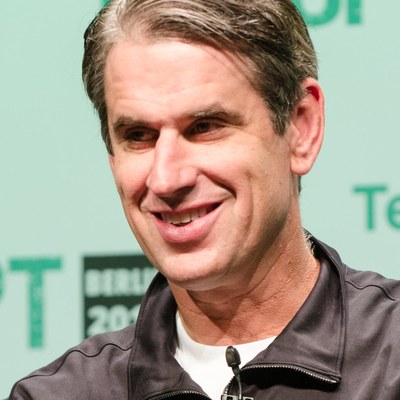 Bill Gurley
8
23 Mar 2012 – 23 May 2022
-5009 d
Bill Gurley
8
23 Mar 2012 – 23 May 2022
-5009 d
-
 Brad Gerstner
2
thin
23 Jun 2020 – 26 Mar 2022
-1995 d
Brad Gerstner
2
thin
23 Jun 2020 – 26 Mar 2022
-1995 d
-
 Gavin Baker
6
9 Dec 2025 – 20 May 2026
+0 d
Gavin Baker
6
9 Dec 2025 – 20 May 2026
+0 d
-
 David Friedberg
1
thin
7 Feb 2026 – 7 Feb 2026
+60 d
David Friedberg
1
thin
7 Feb 2026 – 7 Feb 2026
+60 d
-
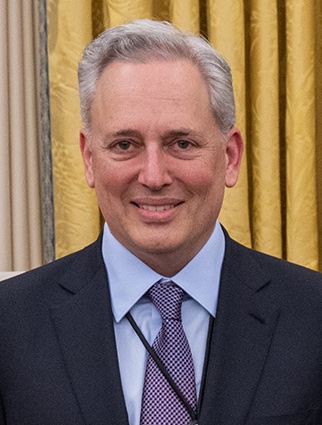 David Sacks
3
thin
7 Feb 2026 – 8 Aug 2026
+60 d
David Sacks
3
thin
7 Feb 2026 – 8 Aug 2026
+60 d
The chronologysourced and dated, oldest first
-
-
Bill Gurley
Gurley describes cloud-connected workflows from business to consumer through apps as unexploited white space across verticals.
“Once it's in the cloud, they connect to Zillow, they connect to rent.com, they push the listings out, they communicate with the end user of the apartment, and so this workflow that starts to be connected from the cloud to the small business, to the consumer, to the smartphone app, that's all white space in a bunch of different verticals.”
-
Bill Gurley
Gurley predicts the next ten years will involve removing enterprise technology and moving systems outside via SaaS.
“I say we spent forty years cramming technology into the enterprise. We're going to spend the next ten yanking it out. It's just so wholesale that you're moving systems outside.”
-
Bill Gurley
Gurley says industry spent forty years putting technology into the enterprise before SaaS reversal.
“The second thing is SaaS. I say we spent forty years cramming technology into the enterprise.”
-
-
-
Bill Gurley
Gurley explains why targeting sales instead of HR made Salesforce wildly more successful than their HR SaaS company.
“the sales executive has a green light on any purchase in a company. The HR executive does not. They had a product where you could put it on a credit card.”
-
Bill Gurley
Gurley explains his HR SaaS company struggled because sales executives can buy freely but HR requires CEO approval.
“Our product required Yeah, PO and approval of the CEO for a less strategic function in his company, right? And so, know, learning learning moment.”
-
-
-
Brad Gerstner
Gerstner argues AWS, GCP and Azure enable software companies to reach much higher IPO valuations than Salesforce did.
“Compare where the software companies that are in the pipeline or that have recently gone public, compare those valuations to where Salesforce went public.”
-
-
-
Bill Gurley
Gurley cites twelve-year bull run and extreme SaaS multiples as major IPO incentives.
“Add into that a roaring, screaming public market that's been on a bull run for, what, twelve years? And multiples in the public markets, especially in, the SaaS world that are out of this world.”
-
-
-
Brad Gerstner
Gerstner cites Snowflake growing free cash flow over 100% annually with Q4 revenue of $1.4B versus $1.2B prior year.
“Snowflake this year will grow its free cash flow at over a 100% a year, next year probably, you know, 80 or 90%. Free cash flow, not just revenue, free cash flow.”
-
“And so what really values companies, you know, it's typically a discounted cash flows. And so now all of a sudden, the buy side's asking SaaS companies about net dollar retention, about long term operating margin, about whether their free cash flow is greater or less than their net income, about SBC as a percentage of free cash”
-
“And so now all of a sudden, the buy side's asking SaaS companies about net dollar retention, about long term operating margin, about whether their free cash flow is greater or less than their net income, about SBC as a percentage of free cash”
-
-
-
Gavin Baker
Baker argues SaaS companies are repeating brick-and-mortar retailers' mistake by rejecting AI due to lower margins.
“Well, I think that application SaaS companies are making the exact same mistake that brick and mortar retailers did with e commerce.”
-
Gavin Baker
Baker argues SaaS companies are repeating brick-and-mortar retailers' mistake by rejecting lower-margin AI business.
“I think that application SaaS companies are making the exact same mistake that brick and mortar retailers did with e commerce.”
-
Gavin Baker
Baker notes AI companies generate cash earlier than SaaS despite lower margins due to fewer employees.
“The crazy thing is because of those efficiency gains, they're generating cash way earlier than SaaS companies did historically, but they're generating cash earlier, not because they have high gross margins, but because they have very few human employees.”
-
Gavin Baker
Baker says AI companies generate cash earlier than SaaS despite lower margins because they have very few human employees.
“And it's just tragic to watch all of these companies. Like you want to have an agent, It's never going to succeed.”
-
-
-
David Sacks
Sacks argues established SaaS products have millions of bug reports and enterprise testing that AI-generated code cannot replace.
“Think about how many bug reports have been filed on Salesforce's code base over the last twenty five years, maybe millions of them. That system has been tested across thousands of large customers and enterprises.”
-
David Sacks
Sacks contrasts limited AI copilots within individual SaaS tools with cross-platform AI tools like Claude that span multiple products.
“All these SaaS products are rolling out like AI copilots inside their tools. And some of them work pretty well, but they're limited to playing in that sandbox.”
-
David Friedberg
Friedberg predicts SaaS will shift from per-seat to value-based pricing as software completes entire projects like services businesses.
“And I think it starts to look a lot more like a services type business where maybe the pricing is set up such that this thing will be completed for your business.”
-
Gavin Baker
Baker says Anthropic added $11B ARR, comparing it to the entire SaaS revolution's $5-10T value creation.
“Anthropic, they added $11,000,000,000 of AR. And what is astonishing to me about this is that the SaaS and cloud revolution it created, we'll call it between 5 and $10,000,000,000,000 of value.”
-
Gavin Baker
Baker says Anthropic added $11B ARR in one month, matching what Palantir, Snowflake, and Databricks built in ten years combined.
“And these three companies employ thousands of people, tens of thousands collectively. They've all spent ten years building their businesses and Anthropic added their combined businesses in one month.”
-
David Sacks
Sacks reveals Leopold's short positions on Adobe and SaaS also contributed to losses.
“He short Adobe and a whole bunch of other SaaS companies. And those trades also moved the wrong way on him.”
-
Where they overlapsame programme, same subject
- David Friedberg and David Sacks — All-In Podcast, 1 appearance together
- All-In Podcast also carries Bill Gurley and Brad Gerstner on this subject, at different times.
- Invest Like the Best also carries Brad Gerstner and Gavin Baker on this subject, at different times.