Who is on this subjectordered by the date of their first quote here
Every lane here carries 5 quotes or more. Offsets are days from the middle first-quote date, 27 Oct 2020 — a date, and nothing else. It is not a claim about who reached a view first.
-
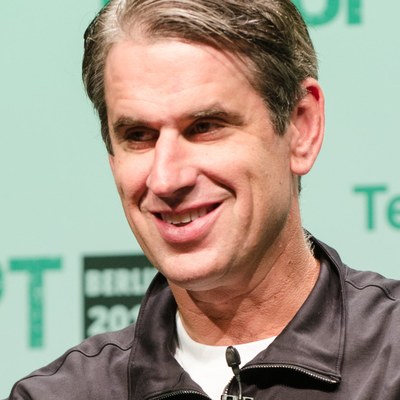 Bill Gurley
8
2 Oct 2020 – 18 Aug 2021
-25 d
-
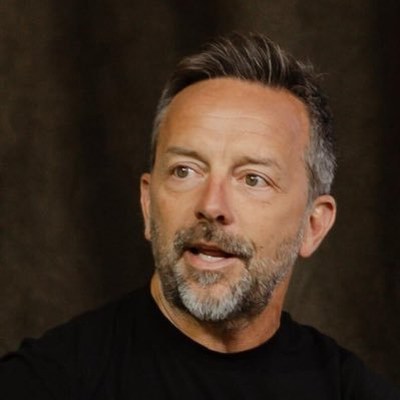 Brad Gerstner
9
27 Oct 2020 – 27 Oct 2020
+0 d
-
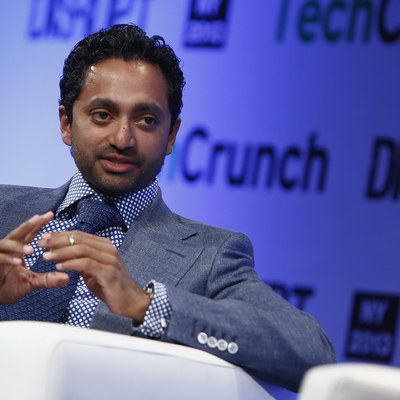 Chamath Palihapitiya
6
2 Mar 2026 – 14 Jul 2026
+1952 d
The chronologysourced and dated, oldest first
-
-
Bill Gurley
Gurley argues SPAC craze exists because traditional IPO route allocates $200 million to bankers' friends.
“I think is the SPAC craze because you've created this massive pricing umbrella arbitrage to get a company public where the traditional route means someone gets to allocate $200,000,000 to their buddies.”
-
Bill Gurley
Gurley argues SPAC sponsors are capturing allocation power from Goldman and Morgan Stanley.
“Well, if someone gets to do that, the SPAC sponsors are saying, Hey Goldman, Hey Morgan, you don't get to allocate that money to your friends. I'm gonna allocate it to mine.”
-
Bill Gurley
Gurley explains SPACs emerged as sponsors arbitraging the $200 million allocation that banks give their friends.
“Well, if someone gets to do that, the SPAC sponsors are saying, Hey Goldman, Hey Morgan, you don't get to allocate that money to your friends.”
-
Brad Gerstner
Gerstner criticizes traditional IPOs as year-long processes where companies don't know pricing or shareholders until the end.
“It's a year long process where you don't know the price for your shares or even who your shareholders are going to be until the end of the line.”
-
Brad Gerstner
Gerstner argues traditional IPO bank fees of 6-7% plus historical-only financials leave investors unable to evaluate high-growth companies.
“And on top of that, of course, you can only give historical financials, which leaves most investors in the dark about a high growth company's future prospects.”
-
Brad Gerstner
Gerstner argues Altimeter's SPAC approach takes companies public faster by acting as owners rather than agents.
“We don't act like agents, we act like owners. We're totally aligned with you. So I mean, we can get you public in a fraction of the time,”
-
Brad Gerstner
Gerstner says Altimeter's SPAC model lets companies set their own price and charges zero fees to the company.
“You set the price, you tell the story with forward looking forecasts. We serve up a world class group of mutual funds and hedge funds as your shareholders.”
-
Brad Gerstner
Gerstner says Altimeter's SPAC model lets founders set their own price and select their shareholders.
“You set the price, you tell the story with forward looking forecasts. We serve up a world class group of mutual funds and hedge funds as your shareholders. You ring the bell, it's your IPO.”
-
Brad Gerstner
Gerstner emphasizes Altimeter charges zero fees to companies going public via SPAC.
“And while the day of the IPO and the day after the IPO are nearly identical as if a bank took you public, we don't charge your company a fee. None. Zero.”
-
Brad Gerstner
Gerstner emphasizes Altimeter's SPAC charges companies zero fees while delivering outcomes identical to traditional bank IPOs.
“while the day of the IPO and the day after the IPO are nearly identical as if a bank took you public, we don't charge your company a fee. None. Zero.”
-
Brad Gerstner
Gerstner explains SPAC costs are borne by SPAC shareholders through share dilution, not by the company going public.
“All the costs are borne by the shareholders of the SPAC who gave us part of their shares when we set up the SPAC as a finder's fee for helping them invest in a world class company.”
-
Brad Gerstner
Gerstner describes SPAC fee structure where shareholders pay via dilution, similar to VC fund economics.
“I mean, it's very similar to our VC funds where we get paid for helping our investors invest in companies like Snowflake.”
-
Bill Gurley
Gurley argues SPAC market emerged because traditional IPO underpricing was worsening.
“I think one of the big reasons the SPAC market opened up was because the underpricing was getting worse and worse and worse.”
-
Bill Gurley
Gurley says direct listings with primary offerings are now clearly superior to both IPOs and SPACs.
“Today's a super important day because I think it'll be very hard for anyone to argue whether it's a traditional IPO or a SPAC that that's gonna be better than a direct listing with a primary offering.”
-
-
-
Bill Gurley
Gurley claims people who benefited from $30 billion in IPO underpricing are fighting regulatory changes.
“There will be people that will fight it from a regulatory standpoint. And quite frankly, Brad, they're fighting the SPACs from a regulatory standpoint.”
-
Bill Gurley
Gurley says people who participated in the $30 billion IPO giveaway are fighting SPACs and direct listings.
“So there's a whole bunch of people, many of who might be watching on this call, who participated in the $30,000,000,000 of giveaway last year,”
-
Bill Gurley
Gurley argues SPACs are only viable because broken IPO process makes direct listings look expensive by comparison.
“But, you know, it appears to me that the thing is gonna, is either gonna slow down or they're gonna step in and do those types of changes you're talking about.”
-
-
-
Chamath Palihapitiya
Palihapitiya says he lost $4 to $5 billion during the SPAC phase.
“Right before the SPAC phase. The SPAC phase, I torched like 4 or $5,000,000,000. That was brutal. But before that, I had another drawdown.”
-
Chamath Palihapitiya
Palihapitiya cites Michael Dell going public at $85M valuation as example of democratized access to operating genius.
“What that allowed is any man, woman, and child, man or woman, any American, most important to actually access a share of Michael Dell's operating genius.”
-
Chamath Palihapitiya
Palihapitiya defends SPAC companies by citing tens of billions raised and millions of customers served.
“The answer is tens billions of dollars. How many clients or patients or customers do they serve? The answer is millions to tens of millions. How have they grown revenues and traction since that happened?”
-
Chamath Palihapitiya
Palihapitiya argues banks structure IPO liquidity to embed gains for their best clients, not company needs.
“The SPAC was I didn't like the idea that two or three banks sat as the gatekeeper between companies that should be funded and exist and their ability to actually serve customers.”
-
Chamath Palihapitiya
Palihapitiya says his biggest SPAC mistake was talking about them on CNBC and Twitter.
“The thing that I would have changed is I would have had nary a comment on Twitter. I would have not come on CNBC and talked about them at all.”
-
Chamath Palihapitiya
Palihapitiya proposes posting hundreds of millions himself to create turnkey IPOs with all his risk.
“But I've talked to Paul Atkins about this. I'll post the hundreds of millions of dollars. Now it's a turnkey IPO. It's all my risk. If I find something I like, I'll just underwrite it.”
-
Where they overlapsame programme, same subject
- Axios also carries Bill Gurley and Chamath Palihapitiya on this subject, at different times.
- CNBC Television also carries Bill Gurley and Chamath Palihapitiya on this subject, at different times.