Who is on this subjectordered by the date of their first quote here
4 of 7 lanes rest on fewer than 5 quotes and are marked thin. Offsets are days from the middle first-quote date, 25 Jan 2022 — a date, and nothing else. It is not a claim about who reached a view first.
-
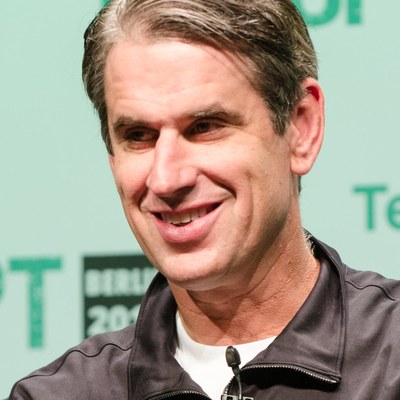 Bill Gurley
181
11 Jun 2011 – 15 Jul 2026
-3881 d
Bill Gurley
181
11 Jun 2011 – 15 Jul 2026
-3881 d
-
 Brad Gerstner
18
23 Jun 2020 – 15 Oct 2025
-581 d
Brad Gerstner
18
23 Jun 2020 – 15 Oct 2025
-581 d
-
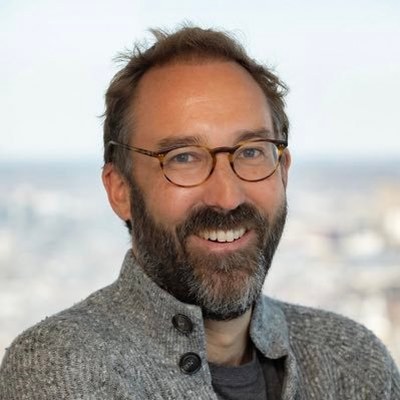 Gavin Baker
2
thin
25 Jan 2022 – 20 May 2026
+0 d
Gavin Baker
2
thin
25 Jan 2022 – 20 May 2026
+0 d
-
 David Friedberg
15
9 Feb 2023 – 9 Oct 2025
+380 d
David Friedberg
15
9 Feb 2023 – 9 Oct 2025
+380 d
-
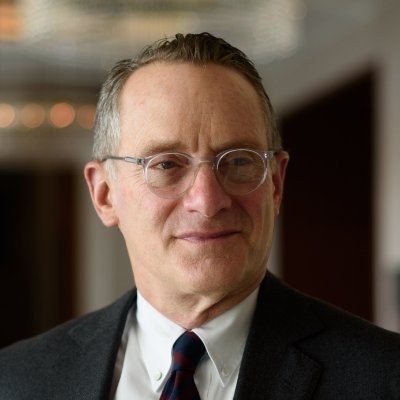 Howard Marks
1
thin
7 Sep 2025 – 7 Sep 2025
+1321 d
Howard Marks
1
thin
7 Sep 2025 – 7 Sep 2025
+1321 d
-
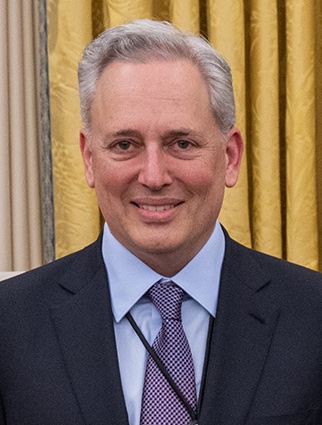 David Sacks
2
thin
9 Jun 2026 – 9 Jun 2026
+1596 d
David Sacks
2
thin
9 Jun 2026 – 9 Jun 2026
+1596 d
-
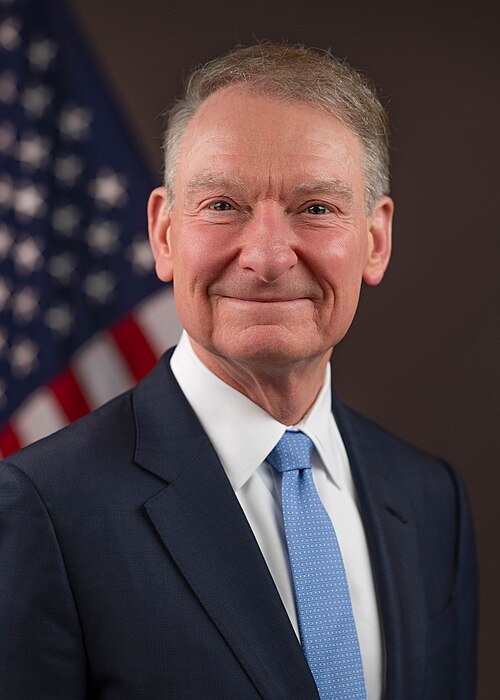 Paul Atkins
1
thin
Paul Atkins
1
thin
The chronologysourced and dated, oldest first
-
-
Bill Gurley
Gurley cites 800 to 900 venture firms existed before the 2008 financial crisis.
“Some numbers say as high as 800 or 900 venture firms. When the financial crisis happened, though, in o eight and then another thing happened,”
-
Bill Gurley
Gurley explains that the financial crisis caused institutional investors to drastically reduce venture capital allocations.
“When the financial crisis happened, that model kinda came undone, and everyone has drastically reduced the amount of money they allocate to this category.”
-
Bill Gurley
Gurley says venture firm count has shrunk dramatically after endowments reduced illiquid asset allocations post-2008.
“And as a result, the number of venture firms has begun to shrunk rather dramatically.”
-
-
-
Bill Gurley
Gurley recalls predictions from five years ago that venture capital would become obsolete due to cheap startup costs.
“If you go back about five years, a whole bunch of people said, well Venture's dead because there's infinite angel money and you can start a company for cheap and you won't need Venture anymore.”
-
Bill Gurley
Gurley argues that while starting is cheap, scaling a company requires both capital and expertise.
“And what I think has come out of it is that you may be able to start a company for nothing but if you want to scale a company you will need capital and you'll need expertise to scale it to the next level.”
-
Bill Gurley
Gurley argues scaling requires capital and expertise even if starting a company is cheap.
“I think has come out of it is that you may be able to start a company for nothing but if you want to scale a company you will need capital and you'll need expertise to scale it to the next level. Not every single player, Benioff who got it up without venture”
-
Bill Gurley
Gurley argues companies that can't generate $100 million in revenue shouldn't take venture funding.
“I'm the first to argue that if your idea is not something that can generate a $100,000,000 in revenue, you may not want to take venture.”
-
Bill Gurley
Gurley states most acquisitions are $20-70 million, but venture backing raises expectations to $150 million or more.
“The number one type of acquisition that the big companies like to do is twenty to seventy million dollars and the minute you take venture, they help you raise the B and all of a sudden everyone's expectation is it's got to be 150 or more or we're not saying yes.”
-
Bill Gurley
Gurley explains Benchmark isn't judged on IRR and would pass on 20% IRR deals due to board seat limits.
“You know, we're luckily in a business where we're not judged on IRR per se.”
-
Bill Gurley
Gurley says Benchmark is not judged on IRR and would not necessarily pursue every 20% IRR opportunity.
“Like if there's an opportunity where we can make a 20% IRR someone might go, oh you should do every one of those,”
-
Bill Gurley
Gurley says Benchmark turns down twenty percent IRR opportunities because LPs invest for beta and home runs, not steady returns.
“Like if there's an opportunity where we can make a 20% IRR someone might go, oh you should do every one of those, but we're limited by the number of board seats we can take and our LPs are investing in us to get beta and so they want the home runs”
-
Bill Gurley
Gurley describes venture capital as an artisan business that fundamentally does not scale.
“In the long run, we like to believe that this is an artisan business that doesn't scale and that if you want someone to help you and trusted you taking this company to the next level that you want what is an artisan,”
-
Bill Gurley
Gurley says the majority of Benchmark partners joined at about 30 years old.
“Kevin Harvey joined the venture business about that time. Peter Fenton also joined at about that age. And so across our partnership, the majority of the partners joined at about 30 years old.”
-
Bill Gurley
Gurley says the majority of Benchmark partners joined at about 30 years old because venture is a hustle game.
“And so across our partnership, the majority of the partners joined at about 30 years old. And there's a number of reasons why I think youth plays to an advantage. One, it's a hustle game.”
-
Bill Gurley
Gurley says the majority of Benchmark partners joined at about 30 years old.
“And so across our partnership, the majority of the partners joined at about 30 years old.”
-
Bill Gurley
Gurley recounts Austin Ventures told him to work twenty years before entering venture, opposite of Benchmark's approach.
“And while I was there, I went and talked to some of the Austin Ventures partners and I said, I want to get into venture, what should I do?”
-
Bill Gurley
Gurley recounts being told to work twenty years before entering venture capital.
“I went and talked to some of the Austin Ventures partners and I said, I want to get into venture, what should I do?”
-
Bill Gurley
Gurley contrasts Austin Ventures' advice to work twenty years before VC with Benchmark's opposite approach.
“And they said, go work for twenty years and then get in. And it's ironic when I think back to that moment in time because we have kind of the exact opposite process.”
-
Bill Gurley
Gurley says boardroom strategy is only about 5% of the venture business.
“I often hear people describe venture and they think about sitting around in board rooms thinking up cool strategies. That's probably 5% of the business at best.”
-
Bill Gurley
Gurley says boardroom strategy is 5% of venture capital at best, most time is spent selling.
“That's probably 5% of the business at best. Most of the time you're on the phone trying to sell something.”
-
Bill Gurley
Gurley says most venture capital work involves selling and convincing people.
“You're trying to convince, you know, to close an investment opportunity, you're trying to close an executive, you're trying to close a biz dev deal,”
-
Bill Gurley
Gurley describes LP data showing top venture funds depend on their single best performer.
“There's one of the LPs used to give a presentation where they showed the top 10 funds of all time, not the venture firms, but the specific funds.”
-
Bill Gurley
Gurley cites LP analysis showing top 10 VC funds all fell out when removing their single best performer.
“And then they took the top performer out of those funds and they all fell out of the top 10 or maybe one of them stayed.”
-
Bill Gurley
Gurley recounts Austin Ventures told him to work twenty years before entering venture capital.
“And while I was there, I went and talked to some of the Austin Ventures partners and I said, I want to get into venture, what should I do?”
-
Bill Gurley
Gurley says boardroom strategy is 5% of venture at best; most time is spent selling.
“That's probably 5% of the business at best. Most of the time you're on the phone trying to sell something.”
-
Bill Gurley
Gurley says top ten venture funds all fell out when their single best performer was removed.
“And then they took the top performer out of those funds and they all fell out of the top 10 or maybe one of them stayed.”
-
Bill Gurley
Gurley says it took a twelve-year gap before startups like Groupon could burn $150-200M annually.
“I think you look at Groupon, right? I mean, you, it had to take a twelve year gap before someone would say it's okay for a startup to burn $150 $200,000,000 in year.”
-
Bill Gurley
Gurley identifies smartphone transition as massive venture opportunity by pushing computing into the field and standardizing platforms.
“It's just massive. Like you have, you're pushing computing so far out into the field and you have standardized, even with two operating systems it kind of doesn't matter, you have standardized what is possible.”
-
-
-
Bill Gurley
Gurley notes Seattle's four pillar companies Microsoft, Amazon, Costco, and Starbucks were all venture backed.
“the four pillars of Seattle, Microsoft, Amazon, Costco, and Starbucks, they were all venture backed.”
-
Bill Gurley
Gurley notes Seattle's four pillars—Microsoft, Amazon, Costco, and Starbucks—were all venture backed.
“the four pillars of Seattle, Microsoft, Amazon, Costco, and Starbucks, they were all venture backed. And so you have So Costco and Starbucks took venture capital.”
-
Bill Gurley
Gurley argues venture capital has an anti-IPO attitude that prevents companies from hitting the long ball.
“in general, in the venture business, we have this problem, this kind of anti IPO attitude that I think prohibits companies from hitting the long ball.”
-
Bill Gurley
Gurley argues the venture business has an anti-IPO attitude that prevents companies from hitting home runs.
“in the venture business, we have this problem, this kind of anti IPO attitude that I think prohibits companies from hitting the long ball.”
-
-
-
Bill Gurley
Gurley argues current risk bubble differs from 1999 because investors now put hundreds of millions into four-year-old private companies.
“But you didn't have a situation where people were putting $102,103 $104,109 $1,001,000,000,000 dollars into a private company who might only be four years old. These companies just haven't had the time to mature.”
-
Bill Gurley
Gurley warns that unlimited capital leads to poor execution and burn rates are now higher than ever before.
“Being able to just do everything leads to poor business execution. And so now we have numbers of companies, I think, making poor decisions. Burn rates are higher than they've ever been.”
-
Bill Gurley
Gurley observes there is a complete absence of fear in Silicon Valley right now, which typically leads to problems.
“And while I'm I'm not here to accuse people of being greedy, there is no fear in Silicon Valley right now, a complete absence of fear.”
-
-
-
Bill Gurley
Gurley argues excessive capital in Silicon Valley allows entrepreneurs to run without discipline or accountability.
“The the I guess the thing I would say is that, you know, the excessive amount of capital that's been available to Silicon Valley has allowed a lot of entrepreneurs to run without much discipline because if you if if you're not running out of money, you're not constantly being regraded and asked to come back to the table.”
-
Bill Gurley
Gurley argues excessive capital availability lets entrepreneurs run without discipline since they never get regraded.
“I guess the thing I would say is that, you know, the excessive amount of capital that's been available to Silicon Valley has allowed a lot of entrepreneurs to run without much discipline because if you if if you're not running out of money, you're not constantly being regraded”
-
Bill Gurley
Gurley argues excessive capital allows entrepreneurs to run without discipline by avoiding constant regrade cycles.
“I guess the thing I would say is that, you know, the excessive amount of capital that's been available to Silicon Valley has allowed a lot of entrepreneurs to run without much discipline because if you if if you're not running out of money, you're not constantly being regraded and asked to come back to the table.”
-
-
-
“Yeah, the flow of cash and the competition and how that money is being used.”
-
Bill Gurley
Gurley criticizes Silicon Valley's crude valuation approach, where entrepreneurs expect 10x revenue regardless of business model quality.
“I've always felt Silicon Valley has a very crude understanding of valuation. Most entrepreneurs think they all deserve 10 times revenue and also with zero regard for what the revenue is.”
-
Bill Gurley
Gurley criticizes VCs who think cheap capital enables them to pursue low-return businesses in new industries.
“But I overheard a VC on a panel say that now that capital's become so cheap, we as venture capitalists get to go after all these new industries.”
-
Bill Gurley
Gurley argues that VCs using cheap capital to enter new industries are actually funding low-return businesses.
“I overheard a VC on a panel say that now that capital's become so cheap, we as venture capitalists get to go after all these new industries.”
-
Bill Gurley
Gurley mocked a VC who said cheap capital enables going after new industries, calling it flawed logic.
“I overheard a VC on a panel say that now that capital's become so cheap, we as venture capitalists get to go after all these new industries. And it really made me chuckle.”
-
Bill Gurley
Gurley argues that funding businesses because capital is cheap is equivalent to funding low-return businesses.
“The exact flip way of saying that is, I'm excited about funding low return businesses and I'm gonna go do it.”
-
Bill Gurley
Gurley argues private companies now have more capital than incumbents for the first time in history.
“And for the first time in history, I believe private companies are the ones with more money and are attacking the long held incumbents, which is a radical thing to think about.”
-
-
-
Bill Gurley
Gurley argues that during risk expansion periods, average entrepreneur quality declines as easy capital attracts people from banking and consulting.
“And I think you actually, that entire time that risk is increasing, the quality of your average entrepreneur that's getting funded is actually going down.”
-
Bill Gurley
Gurley argues that entrepreneur quality declines during boom times and improves when risk appetite falls.
“I think you actually, that entire time that risk is increasing, the quality of your average entrepreneur that's getting funded is actually going down.”
-
Brad Gerstner
Gerstner argues large investors must be in private markets to capture value; notes inability to sell as advantage.
“If you want if you're Fidelity, if you're TRO, if you're one of these companies that wants to participate in all of that value creation, you can't not be in the private markets.”
-
-
-
Gavin Baker
Baker describes adopting a multistage venture strategy from mentor Antonio Gracias.
“But his whole strategy a lot of his strategy for venture, which I ruthlessly copied, is around the idea of their profound advantages towards being multistage.”
-
Brad Gerstner
Gerstner refuses late-stage investment now due to lack of price discovery, expects real pricing this fall.
“This fall is when we'll start to see real price discovery. You couldn't pry a late stage dollar out of my hand right now because I don't think we have real price discovery going on.”
-
“So you have low barriers to entry, but you have very high barriers to exit.”
-
“So you have low barriers to entry, but you have very high barriers to exit. And so felt that it was just systematically set up to rise and crash, rise and crash.”
-
Bill Gurley
Gurley says venture cycles don't follow a sine curve as imagined but rather a different pattern of rise and crash.
“And one thing that I realized coming out of that is that it doesn't happen like a sine curve, which is what we all imagine when we think of a cyclical business.”
-
“And then risk off tends to be very abrupt and we've seen that here, right? This this cycle, risk on was from o nine. That's well said. To five months ago.”
-
Bill Gurley
Gurley says the abrupt nature of risk-off cycles requires rapid mental adjustment, creating structural problems for cap tables.
“And the thing that's really tough about that is it requires a mental adjustment very quickly.”
-
Bill Gurley
Gurley explains venture firms must maximize upside because IRR depends on hot cycle performance, which may accelerate collapses.
“And that's where we came up with this phrase that the best way to protect yourself against the downside is to enjoy every last bit of the upside.”
-
Bill Gurley
Gurley finds post-correction windows the calmest period with least anxiety as people behave more rationally and pragmatically.
“The window after the correction is the calmest, where there's least anxiety for me at least. Like, everything slows down, people talk rationally, people aren't doing silly things.”
-
-
-
Bill Gurley
Gurley notes the two best VCs at the time, Doerr and Moritz, invested in Google when he passed.
“I'd like to highlight, and I always do, the two best venture capitalists in the world at the time, John Doerr and Mike Maritz, kinda locked hands and said yes.”
-
Bill Gurley
Gurley tells entrepreneurs the 2020-21 boom was a fantasy, not normal, and current conditions are reality.
“Then I'm not the only one, there's other VC's getting, this is normal dude. Like that was a fantasy you were in and you need to forget it fast, but you can't.”
-
David Friedberg
Friedberg reports venture-funded fusion companies grew from 7 three years ago to 70 today.
“So a couple of years ago, three years ago, was about seven venture funded fusion companies. As of the end of last year, Q3 of last year, count was 47.”
-
David Friedberg
Friedberg argues Silicon Valley media coverage misses substantial hardware and biotech investment happening beyond software companies.
“There are many biotech companies. There are a number of kind of consumer hardware, there's also a number of kind of enterprise hardware, lab automation.”
-
David Friedberg
Friedberg explains rising interest rates compressed VC time horizons from ten-fifteen years to under five years.
“When interest rates jump up to 4%, well, now I can invest my money and I can make 20% back on my money in four and a half years.”
-
David Friedberg
Friedberg reports 40% of biotech companies now trade below cash due to shifted investor time horizons.
“40% of biotechs are trading below cash now, because historically you've bet on a biotech company, and then if they hit their mark, they go and raise more money, And then they hit that mark, they raise more money.”
-
Bill Gurley
Gurley says during booms every firm started multiple funds, piling up money and slowly taking on unrecognized risk.
“So when things boom, everyone starts a venture firm. Right? And in this past boom, in addition to everyone starting a venture firm, every venture firm started multiple venture firms and growth firms, and all that money gets piled up and you're slowly taking on risk and you don't realize it.”
-
Bill Gurley
Gurley says in the recent boom every venture firm started multiple funds, slowly piling up risk unknowingly.
“And in this past boom, in addition to everyone starting a venture firm, every venture firm started multiple venture firms and growth firms, and all that money gets piled up and you're slowly taking on risk and you don't realize it. It's like the roller coaster goes, nink, nink, nink, nink, nink.”
-
Bill Gurley
Gurley says in the recent boom every venture firm started multiple funds, piling up risk unnoticed.
“And you're taking more and more risk and you don't know it because everyone around you is taking the same amount of risk.”
-
Bill Gurley
Gurley calls FTX the perfect pinnacle of the recent bubble where legendary investors ignored risk.
“And maybe FTX is the perfect pinnacle of this past one where a bunch of legendary investors just ignored risk. You know, and they wouldn't have done that in 2009.”
-
Bill Gurley
Gurley says every VC speaking publicly is performing for entrepreneurs they haven't met yet.
“Every venture capitalist, when they open their mouth in front of a microphone, which I guess I'm doing right now, is talking to the entrepreneur they haven't met yet.”
-
Bill Gurley
Gurley says every VC speaking publicly is performing for future founders, creating pressure to look supportive.
“There is so much important criticality in getting in front of the right pitches that everyone wants to look like the best actor.”
-
Bill Gurley
Gurley links VC cheerleading behavior directly to governance failures like FTX.
“The problem is that's the exact same type of behavior that leads to the FTX situation because you take yourself out of a governance role completely because you just become the founder cheerleader.”
-
Bill Gurley
Gurley cites adage that protecting against downside in venture requires capturing full upside during bubbles.
“Unfortunately, and this ties into the cyclicality thing, there's a saying which is the best way to protect yourself against the downside is to enjoy every last bit of the upside.”
-
Bill Gurley
Gurley says venture capital must be measured over 20-40 years, longer than most employees stay.
“You got to look at it over twenty to forty years, which is really bizarre because most firms don't have employees that long.”
-
Bill Gurley
Gurley says firms that exited in the late 1990s bubble missed the vast majority of returns.
“But the vast majority of the returns are in these periods at the top of these bubbles.”
-
“What I would tell you is under 500,000,000, maybe under 600,000,000. Right? Series b and c rounds are as hot as I've ever seen them in data infrastructure and AI and software, etcetera.”
-
Brad Gerstner
Gerstner argues pensions and sovereign wealth funds now dominate venture LP base, creating deployment pressure.
“And so, again, I'm not saying this for certain, and, certainly, there are more discerning sovereign wealth funds”
-
Bill Gurley
Gurley says venture capital's outperformance comes from tiny windows of frothy markets according to longtime LPs.
“I went and talked to some LPs that have been in the business for a very long period of time and a vast majority of the reason Venture outperforms other asset classes has to do with these tiny windows when you have a super frothing market.”
-
Bill Gurley
Gurley argues venture capital becomes uninteresting when peak years are stripped from forty-year assessments.
“And if you don't, if you aren't around for that part, you know, you strip those years out a forty year assessment, it's actually not that interesting an asset class, which highlights the need for venture funds to get liquidity at the peak.”
-
Bill Gurley
Gurley observes venture markets rise slowly but crash immediately, based on experiencing three bubble cycles.
“Yeah. Look, I've lived through three different bubbles and bursts in this industry, and unfortunately, it's highly cyclical. And when you and and it tends to go up slowly, and it tends to crash immediately.”
-
Bill Gurley
Gurley says the venture industry is highly cyclical, rising slowly but crashing immediately across three bubbles.
“I've lived through three different bubbles and bursts in this industry, and unfortunately, it's highly cyclical. And when you and and it tends to go up slowly, and it tends to crash immediately.”
-
Bill Gurley
Gurley observes tech valuations rise slowly but crash immediately, and he has now seen this pattern three times.
“it tends to go up slowly, and it tends to crash immediately. And so this is the third time I've seen valuations crash,”
-
Bill Gurley
Gurley shows telecom regulation killed innovation: VC investment dropped from 15% of total to below 1% in ten years.
“This used to be 15% of what VCs did. Within ten years, it had gone below 1%, and a year later, the MVCA stopped tracking it.”
-
Bill Gurley
Gurley notes AI companies have raised billions of dollars each at unprecedented levels despite being early stage startups.
“So yeah, you could call them early stage startups, but you could also I mean, who they've raised billions of dollars each, you know,”
-
Brad Gerstner
Gerstner argues Google 2004 IPO investors captured 90 percent of internet search profits, illustrating patience in venture.
“You could have waited to invest in Google in 2004 and their IPO and you would have captured 90 plus percent of all the profits ever generated in internet search.”
-
-
-
David Friedberg
Friedberg notes top NASDAQ stocks returned 10x over ten years while top 5% of venture funds only returned 3x.
“In the past ten years, if you bought the top 10 stocks on the NASDAQ, you would have made 10 x. Okay. It's a crazy statistic.”
-
David Friedberg
Friedberg argues that capital diffusion into small software projects prevents concentration on transformative breakthroughs like semiconductors.
“And you could probably make 50,000,000 in return. That's a nice little 10 bagger. Great. Let's do that.”
-
David Friedberg
Friedberg argues too much capital flows into small software projects seeking quick 10x returns.
“And you could probably make 50,000,000 in return. That's a nice little 10 bagger. Great. Let's do that. And then let's plow a trillion dollars into that concept.”
-
David Friedberg
Friedberg cites top VC firm data showing 40% of capital in down rounds lost money while up rounds generated returns.
“On the rest of the portfolio where things were up rounds and things were going well and they put more money in, they made a lot of money.”
-
Brad Gerstner
Gerstner argues high valuations force you to double that number, so $100B becomes $200B, distorting strategy.
“it forces the business strategy to fit that outcome. And worse yet, Dara, not only do you have to get to that number, you have to double that number.”
-
Bill Gurley
Gurley argues that investing in an index of LLMs may not be successful despite early stage AI demand.
“if you're building an index of LLMs, it may not be a very successful investment approach.”
-
Brad Gerstner
Gerstner describes recent AI startup fast failures including Inflection, noting venture returns are now off the table.
“So, we've had what I call these fast failures. You might maybe the inflection team will get their money back, but that's not what Venture is about.”
-
Bill Gurley
Gurley says AI foundational models no longer qualify as startup market due to massive capital and big company involvement.
“It's already evolved to a point that's very similar to where Uber, Lyft and DoorDash ended up, where there's just so much money moving around that I really don't even think about it as a startup market anymore.”
-
Bill Gurley
Gurley says AI foundational models are no longer a startup market, with big company involvement being dangerous.
“If you wanted to be accurate, non consensus in a way around these, part of it ties into the big guys being interested in what they're doing with their own balance sheet to reinforce this, which I consider to be remarkably dangerous and unhealthy.”
-
Bill Gurley
Gurley says venture capital structurally sucks due to low entry barriers and high exit barriers.
“There's high competition. But the big problem, and this is structural, is there's low barriers to entry and high barriers to exit.”
-
Bill Gurley
Gurley says venture industry is structurally flawed on cyclicality and fixing it requires rewriting standard LP agreements.
“You'd have to rewrite the standard GPLP agreement, I think. I'll spend more time thinking about that later, but it is structurally flawed, I think, from a cyclicality standpoint.”
-
Bill Gurley
Gurley says billion-dollar revenue threshold for IPOs fundamentally changes venture game and reduces accessibility.
“Anyone can start a company that can go public. If you have to get to a billion in revenue, it's just it's a totally different game.”
-
Bill Gurley
Gurley admits pattern recognition decays; anti-small-business bias from Intuit caused VCs to miss HubSpot, Shopify, Twilio.
“And so you develop this anti small business mindset, which keeps you out of HubSpot and Shopify and Twilio.”
-
Brad Gerstner
Gerstner argues closed AI models will struggle to get funding as large CapEx spending clears the market of competitors.
“So I think to your point, by throwing down on the CapEx that you're going to spend, you are clearing the market of potential competitors.”
-
Bill Gurley
Gurley argues institutionalized belief in network effects drives AI capital flood, creating competitive chaos and forced raises.
“Then it's a competitive dynamic. Like once your company raises, you know, 200,000,000, 1,000,000,000, if you're in that market, you raise it too. And it does create chaos.”
-
Bill Gurley
Gurley says venture firms incrementally adopted risk like boiled frog before reaching iBuying extremes
“And so people adopt incremental risk with the whole boiled frog metaphor without kinda realizing they're doing it.”
-
Bill Gurley
Gurley says Schumer's AI proposal recommending $32 billion annually shocked him given unprecedented existing venture capital inflows.
“Certainly in my lifetime, and I think prior to my lifetime, there's never been a venture capital category that's attracted more money.”
-
David Friedberg
Friedberg argues agtech is innovating despite poor investor returns, distinguishing between VC performance and farmer value creation.
“Everyone views the ag tech market negatively because the returns for the ag tech investor class isn't there. But that doesn't mean that ag tech isn't innovating and that we aren't improving productivity”
-
David Friedberg
Friedberg argues ag tech is innovating successfully despite poor VC returns from over-investment.
“that doesn't mean that ag tech isn't innovating and that we aren't improving productivity and bringing value to farmers and improving the quality of our food systems.”
-
David Friedberg
Friedberg argues ag tech's seasonal cycles fundamentally differ from enterprise software, causing multi-year return delays that frustrated investors.
“In ag tech, you have seasonal cycles that you're kind of stuck to, so you don't get the results for a while.”
-
Bill Gurley
Gurley calls AI founders' government engagement a horrible precedent for future technology waves in venture capital.
“I think it'd just be a horrible step for the venture industry for this to be the first move when any new wave comes along is for people to run and become friends with the government and try and lock in their winners.”
-
Bill Gurley
Gurley cites Sequoia's investments in Elon's companies at $50-100B range as departure from historic venture model.
“I look at someone posted the just the investments Sequoia has made in Elon's companies, and they were rounds that were in the, you know, $506,100,000,000 dollar range, and there were three or four of them. And once again, just not not the historic venture capital model.”
-
Bill Gurley
Gurley says VCs earn two and twenty writing $300-400M checks without taking board seats.
“But like these people are getting two and twenty to write a check for 3 or $400,000,000 and not take a board seat.”
-
Bill Gurley
Gurley criticizes investors earning 2% annual fees on $300-400M checks without taking board seats.
“And for the listeners that may not know that 2 represents an annual management fee,”
-
Bill Gurley
Gurley argues raising $400M forces high burn rates and staying private longer becomes self-reinforcing.
“Like, there's no point in it, like, unless you just like interest income. The the staying private longer thing becomes both the dog and the tail.”
-
Brad Gerstner
Gerstner argues excess capital distorts company behavior and makes it difficult to stay efficient when all options can be funded.
“It's not impossible, but it's very difficult to stay fit and efficient when you have a buffet of all options sitting in front of you and you can fund all of them.”
-
Brad Gerstner
Gerstner notes AI funding in 2023 was $28 billion over 700 deals, with 65% going to five or six companies.
“I think AI funding in twenty twenty three, four x, you know, 28,000,000,000 and over 700 deals.”
-
Bill Gurley
Gurley reports AI deals average $1 billion valuation and $120 million round size year to date.
“Year to date, I think 200 deals, 22,000,000,000 of investment, average valuation, wait for it, $1,000,000,000. Right? Average round size, 120,000,000.”
-
Brad Gerstner
Gerstner notes four coding AI companies each raised over $400 million, questioning sustainability of further funding rounds.
“There's four companies in the coding AI space that raised over 400,000,000 each. You you think there'll be another round behind that?”
-
Bill Gurley
Gurley says hyper-competition with every AI coding player having $400M can reduce venture returns despite market enthusiasm.
“Having crazy money in the market is not necessarily consistent with creating positive return for your venture capital portfolio.”
-
Bill Gurley
Gurley says acqui-hire deals like Adept and Inflection cannot possibly represent wins for venture capitalists.
“There's no way that's a win for venture capitalists. Like, I'm sure venture capitalists try and spin it, and we heard some spin around inflection, but, you know, I, it's just not possible.”
-
Bill Gurley
Gurley says Adept-style acqui-hires with license deals cannot generate venture returns after raising $415 million.
“if you're a venture capitalist and every one of your deals turned into one of these weird human acqui hires with a licensed deal back, you're not going to generate a return for your portfolio.”
-
Brad Gerstner
Gerstner argues taxing unrealized gains would require forced liquidity and create situations where people pay taxes then lose everything.
“And then the third point, which you just mentioned, there would be numerous situations where you'd have people pay a tax and then the valuations would collapse.”
-
Bill Gurley
Gurley says successful companies now routinely pressured to raise $500M or more, fundamentally changing venture model.
“I think you're gonna, until this change, I think you're gonna have very few companies that are considered to be doing well that aren't asked by the industry to raise $500,000,000 or more.”
-
Bill Gurley
Gurley questions whether overfeeding startups with cash leads to poor execution, citing companies burning $20M monthly.
“does overfeeding these companies with cash lead to non optimal execution? And you and I were deeply involved in the Uber situation, but you know, when you start losing a billion dollars a year, or even I would say $20,000,000 a month, you're very far away from profitability. And we talk a lot about focus and constraints”
-
Bill Gurley
Gurley questions whether overfeeding startups with cash leads to poor execution citing companies spending $20M monthly.
“And we talk a lot about focus and constraints and how that leads to better decision making.”
-
Brad Gerstner
Gerstner says venture capital grew from $100 billion to $300 billion over ten years, now back to pre-COVID levels.
“There's no doubt that VC has grown from 100,000,000,000 ten years ago to 300,000,000,000 over the last ten years. Right?”
-
Brad Gerstner
Gerstner argues venture capital remains at $300 billion pre-COVID levels, claiming the market hasn't actually grown much.
“And so while we call all of this venture, Bill, one of the big differences I have here, and I've said many times, is that the venture market really hasn't grown that much.”
-
Bill Gurley
Gurley calculates AI companies burning $20M monthly need $500M revenue run rate to reach profitability at 50% margins.
“if you're spending 20,000,000 a month, you're burning $240,000,000 a year. You know, if these companies in AI are 50% gross margin or whatever, you got to get revenue to twice that, you know, you're right at that 500,000,000 run rate before you could think about being profitable.”
-
Brad Gerstner
Gerstner calculates that raising $5 billion every two years generates $1 billion annually in management fees alone.
“if you're on a run rate where you're raising $5,000,000,000 every two years. Okay? So give or take, that's, you know, $50,000,000,000 over a ten year period of time.”
-
Brad Gerstner
Gerstner notes OpenAI reached $4.5 billion revenue faster than Google or Meta, justifying larger fund sizes.
“OpenAI got to, you know, $4,500,000,000 of revenue in a fraction of the time it took Google and Meta.”
-
Bill Gurley
Gurley explains compounding IPO ratchets create misalignment by making late investors want lower IPO prices.
“The the later stage investors that wrote this compounding ratchet term actually want the IPO to be as low as possible because they'll they'll get more shares.”
-
-
-
Bill Gurley
Gurley observes venture's loose money trend has persisted beyond the zero interest rate period unexpectedly.
“There's been a trend in venture recently. Recently. I I thought thought it it was was the the zero zero interest interest rate rate thing that caused it, but it's sustaining beyond that.”
-
Bill Gurley
Gurley says Benchmark peers increased fund sizes tenfold and moved to multi-stage investing model.
“Many of the peers of Benchmark have taken their fund size up 10 x. So their their assets under management and they've entered they've declared themselves multi stage.”
-
Bill Gurley
Gurley says late-stage investors force-feed capital to companies based on power law beliefs in unprecedented ways.
“It's it's it's just worse as it's ever been, where because you have these monolithic late stage players who believe in power laws, believe in network effects,”
-
Bill Gurley
Gurley says late-stage VCs force-feed companies fifty to hundred million despite no capital need, like foie gras geese.
“They just wanna cram money in. I I I thought about it. I I learned how they force feed geese to make for gras.”
-
Bill Gurley
Gurley says AI consensus is unprecedented in venture history with even Fortune five hundred fully committed.
“And if even if I go back to the mobile wave or the Internet wave, there were plenty of skeptics like within the Fortune 500.”
-
David Friedberg
Friedberg argues AI enables building deep tech companies with 100 to 200 people instead of thousand-plus person teams.
“there's the opportunity to build deep tech companies, to build technically difficult companies, to build businesses that historically may have been the realm of thousand plus person companies with a 100 to 200 people.”
-
David Friedberg
Friedberg argues AI enables small startups to pursue multi-billion dollar markets previously requiring much larger teams.
“I actually think the addressable economic opportunity for startups has actually grown. So startups that otherwise might not have been able with 50 or 100 people to go after a multi billion dollar seed market, which is kind of the market that we're in, can now do so because of the leverage they get with AI.”
-
Bill Gurley
Gurley claims many VCs have become China hawks because they need that stance to justify their military-tech investments.
“And I will tell you after spending twenty five years in venture capital, there's just this instinctive thing.”
-
Bill Gurley
Gurley argues VCs in military-focused companies become China Hawks to justify their investments and defend portfolio companies.
“And I think that's happening now that we have a large number of VCs in the military space.”
-
Bill Gurley
Gurley clarifies Manus operates exclusively on US models, has no foundational model, and never used Chinese models like DeepSeek.
“first of all, they've only operated on US models. They're a wrapper company. They don't have a foundational model and and they've only operated on top of US models.”
-
Bill Gurley
Gurley says branded VC firms have increased fund size 10x from $500M to $5B over recent years.
“Today, many of the branded firms, I think, have moved from maybe 500,000,000 commitment every three or four years to 5,000,000,000. So 10x. And they're participating very actively in what we would call late stage.”
-
Bill Gurley
Gurley argues excessive capital availability forces all-or-nothing strategies, with AI companies burning $100-150M annually versus traditional company building.
“Traditional company building isn't spend a 100 or 150,000,000 a year in cash burn, but all the big AI companies are doing that, maybe more.”
-
Bill Gurley
Gurley calculates that delaying exits from year ten to fifteen requires 2.5x higher returns to meet expectations.
“If you just take that 10% compounding, it now needs to be worth a $160 in year fifteen.”
-
“He said, the head of the world's largest sovereign wealth fund said the clock is ticking for private equity and join the chorus of investors who've grown worried about the industry's valuation practices.”
-
Brad Gerstner
Gerstner says OpenAI and Anthropic deals are bigger private IPOs than any public tech IPO in five years.
“I think these are bigger private IPOs than any public IPO done in the last five years in the tech market.”
-
Howard Marks
Marks states that 99% of startups and 90% of venture capital investments fail despite high return potential.
“something like probably 99% of all startups fail, probably something like 90% of all the investments that venture capital funds make fail.”
-
David Friedberg
Friedberg argues ag tech is innovating successfully despite poor VC returns, separating farmer value from investor outcomes.
“I think that the ag market is going through a lot of fantastic innovation cycles right now. Everyone views the ag tech market negatively because the returns for the ag tech investor class isn't there.”
-
David Friedberg
Friedberg was rejected by all VCs he approached, including Mike Moritz and John Doerr from Google's board.
“And Danny's like, I'll introduce you to all the VCs in the Valley. I had met two of them from Google's board meetings, Mike Moritz and John Doors.”
-
Brad Gerstner
Gerstner says over a thousand billion-dollar-plus companies in Silicon Valley are trying to raise capital and will face significant washout.
“There are over a thousand of those in Silicon Valley, over a billion dollars that are trying to raise capital right now.”
-
-
-
Bill Gurley
Gurley says his biggest career mistake was not pursuing Google when Larry and Sergei presented at 25 employees.
“The there's a there's a notion in venture capital about asymmetric risks. So if you if you you know, the biggest mistake of my career is I had Larry and Sergei present to the partnership when there were 25 employees at Google and we failed to chase the deal.”
-
Bill Gurley
Gurley says missing Google at 25 employees was his biggest career mistake, not failed investments.
“I had Larry and Sergei present to the partnership when there were 25 employees at Google and we failed to chase the deal.”
-
Bill Gurley
Gurley explains asymmetric risk: funding failures lose 1x while missing big wins loses 10,000x your money.
“If you fund something that doesn't work, you lose one times your money. If you miss this big thing, you lose, you know, 10,000 extra money.”
-
Bill Gurley
Gurley brought Larry and Sergey to Benchmark at 25 employees but the firm failed to invest in Google.
“I had the, both the fortune and now the, the kind of weight of having brought Larry and Sergey in to present to our partnership when they were 25 employees.”
-
Bill Gurley
Gurley says the current AI bubble is unlike anything he has seen in his career including previous tech waves.
“Yes. And in a way, I've, I mean, I've seen a lot of waves and a lot of bubbles, and this is like nothing I've ever seen. Yeah. Like when Amazon was losing a billion”
-
Bill Gurley
Gurley says competing in top AI categories now requires willingness to lose a billion dollars per year.
“So every one of the most interesting AI categories, you may have to be willing to lose 1,000,000,000 a year just to compete”
-
Bill Gurley
Gurley acknowledges VC's AI-only focus may be rationally correct behavior but creates hardship for non-AI founders with good economics.
“But I I think it's unquestionably true. Like there's just zero interest. And so that's a tough call for someone that's in a business that may have good unit economics that's not AI.”
-
Bill Gurley
Gurley describes current venture capital as sport of Kings fight to the death, different from past era.
“I say it's not your father's venture capital. This is a sport of Kings world we've evolved into and it's fight to the death.”
-
Bill Gurley
Gurley warns disciplined fundraising means irrelevance when competitors each have $500M to deploy.
“Well, if you're the disciplined one and there's six players with $500,000,000 each hiring salespeople, you're not going to matter.”
-
Bill Gurley
Gurley clarifies Google presented to Benchmark at 25 employees shortly after he joined the firm.
“I had Larry and Sergei present to the Benchmark partnership shortly after I joined Benchmark with the company had 25 employees, Google.”
-
Bill Gurley
Gurley learned from missing Google that passing on an outlier costs a thousand times more than a loss.
“I came out of that with a little bit of your chips on shoulder situation and a little bit more having a higher recognition of an asymmetric wrist indenture and that missing an outlier cost you a thousand X or more than a loss.”
-
Bill Gurley
Gurley says Benchmark quarterly studied missed deals extensively but never beat up partners over failures after Google miss.
“Bruce Dunleavy in our shop started saying what could go right as a theme. And I will tell you from that day on, we never spent much time talking about the failures.”
-
Bill Gurley
Gurley says Benchmark focused quarterly reviews on studying missed deals rather than failed investments.
“from that day on, we never spent much time talking about the failures. We never beat up a partner because a deal didn't work, but we would once a quarter study the deals we didn't do at nauseum and talk about why we either didn't see them or passed on them”
-
Bill Gurley
Gurley describes how industrialized VC funds now offer money to keep best companies private.
“And one of the things that they've decided to do is to approach the companies, the best in class companies, and offer them money to stay private”
-
Bill Gurley
Gurley describes venture firms telling him to work twenty years before reapplying as unexecutable.
“I couldn't find a way in. I I had a few informational interviews. They said, go work for twenty years and call me back, which I thought was not really an executable plan.”
-
Bill Gurley
Gurley says at Benchmark's level, 80% of portfolio can fail because winners are so large.
“The winners are so big at that level, you could have 80% of your portfolio fail. So it's a game that's a lot riskier, and you're searching for the really big outcomes.”
-
Bill Gurley
Gurley says venture funding is now completely preemptive with investors forcing money on companies.
“So the the the the days when the company would run out of money or get close to running out and decide, oh, we're gonna go raise now is over. Like, the the it's preemptive.”
-
Bill Gurley
Gurley recalls knowing Benchmark would fund WeWork at Series A despite never doing real estate deals.
“Now keep in mind, Benchmark's never done a real estate transaction in the history of the firm. And we're about thirty minutes into the presentation. This is series a.”
-
Bill Gurley
Gurley argues most US endowments and foundations are now overinvested in private equity and venture capital.
“I think the Swinson mimic effect has now played out. And I think personally that most of the endowments and foundations in The US are over invested in private, both PE and venture.”
-
“I ended up in Silicon Valley and got into venture capital and spent twenty five years there and never asked myself that question again.”
-
“They had 25 employees at the time, to tell you how early it was. And they presented and we failed to chase that.”
-
Bill Gurley
Gurley says venture capital requires breaking your own rules or you'll say no to everything.
“venture capital is a game where you have to one of the reasons, group decision making works so well is you're you're gonna have to break one of your rules or you're gonna say no to everything.”
-
“I could have, I think, fooled myself. And I went through this mental model when I was thinking about it and said, oh, I'll be the best venture capitalist in a the sixth VC city.”
-
Bill Gurley
Gurley dismisses mid-market private equity work as unmotivating though acknowledging money can be made there.
“I don't even I would never be motivated by it, but but, you know, I'm not not necessarily shitting on them too bad. Like, somebody there are you can make money.”
-
Bill Gurley
Gurley explains liquidation preference allows VCs to treat investments like debt, getting paid first in sales.
“So venture capitalists typically take preferred stock, and it has a term called liquidation preference, which means in a sale, they get the option to basically treat it like debt.”
-
Bill Gurley
Gurley explains liquidation preference means founders in AI rounds raising $500M see no proceeds until that amount is recovered first.
“And so if you've raised in these days of these AI rounds, if you raise 500,000,000, Lake Common doesn't even participate until you get a sale over that, technically.”
-
Bill Gurley
Gurley argues leading AI companies seek regulatory protection while conducting billions in secondary transactions for employees
“Can also though frame Like they're also raising billions and billions of dollars for the They're leading the biggest secondary transactions for their employees in the history of venture capital, the history of the world.”
-
Bill Gurley
Gurley says leading AI model providers are conducting the biggest secondary transactions in venture capital history.
“Like they're also raising billions and billions of dollars for the They're leading the biggest secondary transactions for their employees in the history of venture capital, the history of the world.”
-
Bill Gurley
Gurley says AI wave threatens more broadly than previous tech waves like PC, internet, or mobile.
“And the past week in the financial markets, like a whole bunch of companies, you know, traded down because of fear that this would would disrupt them.”
-
Bill Gurley
Gurley says best VCs have missed lists because they position themselves for opportunities, prerequisite to great investments.
“yeah, I mean, it took me forever to realize that some of the best venture capitalists have this missed list and the reason they have the missed list is because they're really effective at putting themselves in the right position to have the opportunity, which is a prerequisite to actually making the great investments.”
-
Bill Gurley
Gurley says he brought Larry and Sergei to his partnership but failed to chase the Google investment.
“I met Larry and Sergei, was very early in my career, I brought them into the partnership and they presented and we failed to lay chase.”
-
Bill Gurley
Gurley estimates 98% of venture capitalists are exclusively focused on AI investments right now.
“From where I sit, 98% of venture capitalists are only looking at AI and they're AI all day long, they don't wanna see another business”
-
Bill Gurley
Gurley reports 98% of VCs focus solely on AI and non-AI company valuations halved in five weeks.
“98% of venture capitalists are only looking at AI and they're AI all day long, they don't wanna see another business and and and in the past five weeks, the valuations on the non AI companies have been cut in half”
-
Bill Gurley
Gurley claims 98% of VCs focus only on AI and non-AI valuations were cut in half in five weeks.
“98% of venture capitalists are only looking at AI and they're AI all day long, they don't wanna see another business and and and in the past five weeks, the valuations on the non AI companies have been cut in half and so that mentality is gonna be reinforced even more and so there's just no oxygen.”
-
Bill Gurley
Gurley argues venture capital bends toward youth because founders are young and young VCs understand new techniques better.
“I think it's very hard to be a venture capitalist as you get older and I think it's very easy to break into venture capital as a young person.”
-
Bill Gurley
Gurley warns venture capital has massive oversupply of aspirants and being young alone won't make someone good.
“If you think like just being young will make you good at venture capital, that's wrong. But and it is a job that does not have a supply demand balance.”
-
Bill Gurley
Gurley states the average age of a new Benchmark partner is about 30 years old.
“the way, the average age of a new partner at Benchmark that becomes an equal partner is about 30.”
-
Bill Gurley
Gurley states winning companies now raise $400-500 million minimum before considering going public.
“Today, every company that is being identified as a winner is ingesting 400 or $500,000,000 minimum before they even think about going public, if they're ever gonna think about that.”
-
Bill Gurley
Gurley argues late stage funds intercept growth years formerly in public markets oligopolistically.
“I would say the late stage funds have come up with a pretty clever premise, which is if they can intercept those growth years that used to be in the public markets and keep it for themselves in an oligopic kind of way.”
-
Bill Gurley
Gurley contrasts dot-com era when companies went public at million monthly revenue versus today's opposite standard.
“In the .com period, if you had 1,000,000 a month a million a month in revenue, you went public. Here, the exact opposite.”
-
Bill Gurley
Gurley says AI companies now burn more than Uber's $2 billion annual losses that he found anxiety-inducing.
“I thought losing 2,000,000,000 a year was nuts and very anxiety inducing, And these companies are doing more than that.”
-
Bill Gurley
Gurley cites rumors of thirty billion dollar Nvidia investment into OpenAI, calls modern venture capital sport of kings.
“And so, there's rumors today of a $30,000,000,000 investment from Nvidia into OpenAi on top of everything they've already already raised and spent.”
-
“Well, biggest mistake I made in my career is when I was three years into the venture capital business, I met Larry and Sergey at their office with 25 employees.”
-
Bill Gurley
Gurley reveals he met Larry and Sergey when Google had 25 employees but Benchmark failed to invest.
“I met Larry and Sergey at their office with 25 employees. They pitched Benchmark, and we failed to invest”
-
Bill Gurley
Gurley warns founder equity drops from 90% to 10% while market prefers $20-100M exits over billion dollar outcomes.
“And very quickly, almost in a flash before you know it, your founder's equity goes from 90% to 10%. And I've watched it happen over and over and again.”
-
Bill Gurley
Gurley warns founders that M&A market favors twenty to hundred million dollar exits, not billion dollar outcomes venture requires.
“And the world wants to do more M and A in the 20,000,000 to $100,000,000 tuck in range than they want to do billion dollar exits.”
-
Bill Gurley
Gurley says venture capitalists needed Washington relationships to enter military equipment and fight incumbent regulatory capture.
“the the other big thing that's that's causing this right now is is venture capitalists have gotten into military equipment, which is nothing I know anything about.”
-
Bill Gurley
Gurley says he is seeing the most risk seeking venture capital behavior he has ever seen in his entire life.
“You would have a hard time convincing me that risk capital is in shortage in America right now. I'm seeing the most risk seeking venture capital behavior I've ever seen in my entire life.”
-
Bill Gurley
Gurley argues that consulting, venture capital, and law offer breadth through exposure to multiple clients and industries.
“If you're a consultant, if you're a venture capitalist, if you're a lawyer, like you'll have clients across multiple, you know, places and you'll get to study more things.”
-
Bill Gurley
Gurley explains venture capitalists live in fear of missing the one or two asymmetric deals each year.
“Once again, because of this asymmetric outcome thing, live in fear of missing this one or two deals a year. There's like, how could you possibly minimize the chance of not finding that?”
-
Bill Gurley
Gurley argues older investors build cynical mental models that make them miss next disruptive thing.
“Two, I think, and this all goes back to the asymmetric optimism thing, as you get older, you build more mental models and you become more cynical.”
-
Bill Gurley
Gurley says aging venture capitalists build mental models that create cynicism, causing them to miss disruptive innovations.
“I think, and this all goes back to the asymmetric optimism thing, as you get older, you build more mental models and you become more cynical.”
-
Bill Gurley
Gurley says SoftBank threatened to fund competitors if founders refused money, forcing preemptive rounds.
“And there's an implicit threat that, at least at SoftBank, Masa was very direct about and not implicit. That if you don't take it, I'll give it to your competitor.”
-
Bill Gurley
Gurley notes seven AI coding or lawyer companies raised hundreds of millions, unlike venture capital he practiced.
“There's seven companies that have raised hundreds of millions of dollars. And that's not the venture capital I practiced.”
-
Bill Gurley
Gurley invokes Carlota Perez to argue real disruptive waves attract speculators and charlatans, creating bubbles alongside innovation.
“And what happens is with a wave that's real, people get rich quick. When people get rich quick, fools rush in. Like speculators, charlatans, they come in.”
-
Gavin Baker
Baker warns VCs that Jensen sees Taiwan Semi processes before any startup claiming special access.
“If you're a VC and you're investing a semiconductor company that is telling you they are going to have an advantage because of a Taiwan Semi process that they have special access to, I promise you the Jensen saw that process when it was a twinkle in Taiwanese eyes.”
-
Bill Gurley
Gurley says Wall Street is the buyer of the product venture capitalists create through M&A or IPO.
“You know, I've always thought of Wall Street as the buyer of the product that venture capitalists create.”
-
Bill Gurley
Gurley says venture capital is getting more risk seeking due to belief in power laws.
“the venture capital community as a whole is is getting more risk seeking and taking on more risk because of their knowledge of how things have played out in the past.”
-
Bill Gurley
Gurley notes AI company burn rates increased from risky million monthly ten years ago to billions yearly today.
“Ten years ago, like, it was super risky to burn 1,000,000 a month. You know, today, these companies are burning 5,000,000,000 a year.”
-
David Sacks
Sacks explains that fund size divided by 20 to 25 portfolio companies determines check size and market positioning.
“I think fund size determines fund strategy and the size of your fund because you're gonna divide your fund size by 20 to 25 names to achieve some portfolio diversification and construction.”
-
David Sacks
Sacks questions whether writing $50 million checks in late venture beats playing the noisy early stage game.
“You know, you're writing $50,000,000 checks. You just kinda wait for the breakouts as opposed to playing in this really noisy super early stage game.”
-
Bill Gurley
Gurley says most VCs are so focused on AI that non-AI companies can't raise money at any valuation.
“So you really have this massive black, white, have, have not situation where the AI companies are raising money at crazy valuations and the non AI companies can't raise money at any valuation.”
-
Bill Gurley
Gurley says venture firms now proactively push money on working companies rather than waiting for companies to raise.
“They all now believe in network effects and power laws. And so if a company's working, they proactively go to them and ask them to take money, which is what you just referred to.”
-
Bill Gurley
Gurley contrasts old fundraising where companies decided timing versus today where investors proactively offer money with implied competitor threats.
“And today people are just showing up at the door and saying, take the money. In many cases, with the implication, if you don't take it, they'll give it to the competitor.”
-
Bill Gurley
Gurley warns that high valuations represent discounted future expectations, creating risk for founders.
“The other thing that founders should always realize that they unfortunately, especially young ones, don't understand. Valuations represent discounted future expectations.”
-
Bill Gurley
Gurley explains private cap tables are structurally built to only go up unlike public stocks.
“Private cap tables are not structured very well to go down. It would take forever to explain exactly why that is with lick preference stacks and whatnot and ratchets, but they're built to kind of only go up and public companies stocks can go up and down.”
-
Bill Gurley
Gurley says venture capitalists who see successful pivots learn it's all about the founder.
“And for any venture capitalist that's been through one of those pivots, they're famously known as pivots now, it's all about the person. Like, it's all about the founder.”
-
Bill Gurley
Gurley cites that new CEO hires are a fifty-fifty bet at best, questioning why investors would take that risk.
“I'm sure it's not scientific, but as new CEO hires a fifty fifty bet at best.”
-
Bill Gurley
Gurley explains VCs can only join about two boards per year, unlike public investors evaluating unlimited positive-IRR opportunities.
“If it's positive IRR and I'll make 14%, I'll do it. Yep. But venture capitalists have a limited number of boards they can go on, probably two a year.”
-
Bill Gurley
Gurley explains VCs can only join two boards yearly so must emotionally commit, not just meet hurdle rates.
“But venture capitalists have a limited number of boards they can go on, probably two a year. And and so they don't have limited shot unlimited shots on goal.”
-
Bill Gurley
Gurley explains VCs invest in only two boards yearly requiring emotional commitment not just IRR.
“venture capitalists have a limited number of boards they can go on, probably two a year. And and so they don't have limited shot unlimited shots on goal.”
-
Bill Gurley
Gurley explains VCs are limited to about two boards yearly so cannot fund everything above hurdle rate.
“And and so they don't have limited shot unlimited shots on goal. They can't fund everything that's over 12% hurdle rate.”
-
Bill Gurley
Gurley notes owning 100% of a $20 million exit creates lifetime wealth and attracts more acquirers than larger exits.
“Your boss won't care. If you own a 100% of a $20,000,000 company, that's lifetime wealth.”
-
Bill Gurley
Gurley argues owning 100% of a $20M company beats owning diluted equity in $500M sale.
“If you own a 100% of a $20,000,000 company, that's lifetime wealth. Like, trying to make $20,000,000 selling a company for 500,000,000, that's hard because it's hard to sell if”
-
Bill Gurley
Gurley explains liquidation preference means common shareholders only benefit after $500M raised is repaid.
“if you've raised in these days of these AI rounds, if you raise 500,000,000, Lake Common doesn't even participate until you get a sale over that, technically.”
-
-
-
Paul Atkins
Atkins cites Draghi report showing EU raises only 5% of global venture capital versus 52% in US.
“Europe’s capital markets, he found, remain fragmented, and the flow of savings into them is lower than other major economies—only about 5% of global venture-capital funds are raised in the EU, compared to 52% in the United States.”
-
Where they overlapsame programme, same subject
- Bill Gurley and Brad Gerstner — BG2 Pod, 5 appearances together
- Bill Gurley and Brad Gerstner — All-In Podcast, 1 appearance together
- Invest Like the Best also carries Bill Gurley, Brad Gerstner and Gavin Baker on this subject, at different times.
- This Week in Startups also carries Bill Gurley, Brad Gerstner and David Friedberg on this subject, at different times.
- Bloomberg Podcasts also carries Bill Gurley and Brad Gerstner on this subject, at different times.
- CNBC Television also carries Bill Gurley and Brad Gerstner on this subject, at different times.