Who is on this subjectordered by the date of their first quote here
2 of 4 lanes rest on fewer than 5 quotes and are marked thin. Offsets are days from the middle first-quote date, 14 Oct 2025 — a date, and nothing else. It is not a claim about who reached a view first.
-
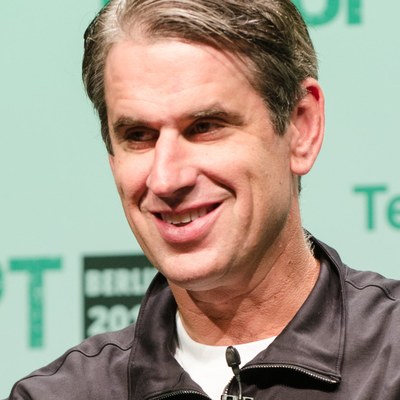 Bill Gurley
9
4 Jun 2024 – 23 Apr 2026
-497 d
-
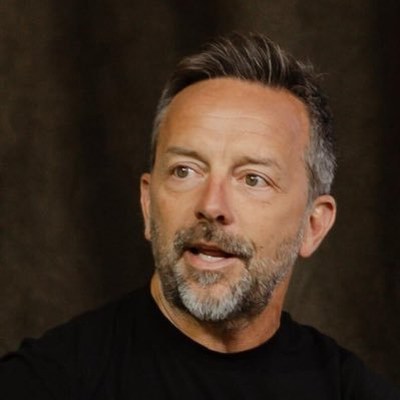 Brad Gerstner
1
thin
14 Oct 2025 – 14 Oct 2025
+0 d
-
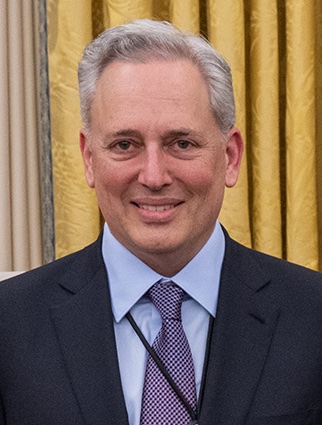 David Sacks
10
26 Mar 2026 – 25 Aug 2026
+163 d
-
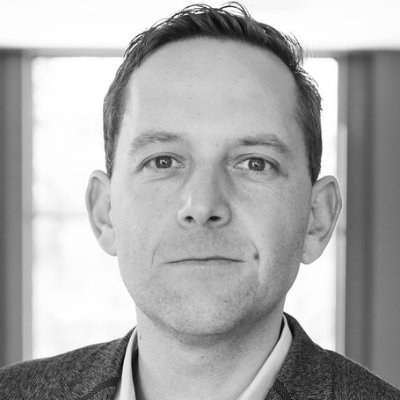 David Friedberg
1
thin
18 Jul 2026 – 18 Jul 2026
+277 d
The chronologysourced and dated, oldest first
-
-
Bill Gurley
Gurley observes the biggest AI doomers have the largest financial stakes in foundational models.
“It's remarkably interesting that the biggest doomers are the ones that have the biggest financial stakes and the biggest foundational model.”
-
Bill Gurley
Gurley argues biggest AI doomers are those with largest financial stakes in foundational models, not disinterested academics.
“the biggest doomers are the ones that have the biggest financial stakes and the biggest foundational model.”
-
Bill Gurley
Gurley predicts restricting open source AI in US while leaving it available elsewhere will shift innovation abroad.
“if you pull up and say there's no open source here and you leave open source there, guess where it's going to be the most innovative, where where you're going to have the most entrepreneurs, where you're going to have the most innovation. It's gonna be over there,”
-
Bill Gurley
Gurley questions why advocates believe Washington would be effective at regulating nascent AI technology.
“The thing I would ask these these people is why do they have confidence that Washington would be good at regulating something this nascent? Like, why would they be effective?”
-
Bill Gurley
Gurley argues AI crimes are already illegal under existing laws, questioning need for new regulations.
“If I defraud you with AI, it's still illegal as it would have been if I'd have done it with a phishing scam before AI. And so there why do we need new laws?”
-
-
-
Bill Gurley
Gurley says state AI laws stem from regret over missing social media regulation but create massive fragmentation risk.
“And and and I I think some of that comes from there. You run this massive risk of of trying to regulate a brand new technology at a state by state level.”
-
Bill Gurley
Gurley argues 50 different state AI rules will slow US companies competing globally against unregulated foreign rivals.
“Right now, a lot of people believe we're in this global competition to to see, you know, whose tech stack for AI is used on a global basis.”
-
Brad Gerstner
Gerstner suggests OpenAI should consider blocking citizens of states with AI laws to force federal preemption.
“if states are going to pass these laws, Bill, then I wonder whether or not OpenAI or some other company should consider blocking the citizens of those states until it's resolved at the national level.”
-
-
-
Bill Gurley
Gurley argues Anthropic and OpenAI seek regulation to handicap startups and open source competitors.
“I think for certain reason Anthropic and OpenAI are begging for regulation is so that they can write rules that make it harder for startups, open source models to be competitive with them, which I think is very rational for them to do, but I don't think it's good for society.”
-
David Sacks
Sacks says 50 states regulating AI in 50 different ways creates a difficult patchwork for innovators.
“The problem that we're seeing right now is that you've got 50 different states regulating this in 50 different ways, and it's creating a patchwork of regulation that's difficult for our innovators to comply with.”
-
Bill Gurley
Gurley predicts US AI regulation could create a fence letting China serve the global market instead.
“I think what could happen with AI is we could build a fence around ourselves, and China could end up serving the rest of the world.”
-
David Friedberg
Friedberg argues California's AI legislation made no sense and couldn't map to current technology, justifying industry self-regulation.
“As we saw in California, when California tried to pass AI legislation, I think it was about a year, a year and a half ago, none of what they wrote even made sense at the time, But fast forward a year, none of those kind of rules and requirements actually map to the technology of the day.”
-
David Sacks
Sacks explains FAA certification for new aircraft designs takes five to nine years.
“And for an entirely new aircraft design, it takes five to nine years to get the certification.”
-
David Sacks
Sacks argues tech companies must draw a line on regulation or government will keep taking more control.
“The government will be happy to take this and then come back for more and more and more until it's fully under government control.”
-
David Sacks
Sacks calls FINRA for AI a DMV for AI, predicting models will queue for pre-release testing and slow development.
“Have you ever been to the DMV waiting in queue? It's a terrible idea, and it's just a repackaging of what Dario has always wanted, which is an FDA for AI.”
-
David Sacks
Sacks warns an open source ban is coming by requiring open models to meet closed model standards.
“I got bad news for you, Jamaf. An open source ban is coming. They're not gonna call it that. You know what they're going to say?”
-
David Sacks
Sacks claims Dario's regulatory vision would have prevented Anthropic from achieving a successful IPO.
“Because I think if he had if he had realized his dream of this highly regulated AI apparatus, I don't think that company would be set up for a hugely successful IPO.”
-
David Sacks
Sacks argues regulatory approval would instantly erode Anthropic's competitive lead.
“And that six months be eaten up in the blink of an eye if they were subject to regulatory approval.”
-
David Sacks
Sacks notes FAA certification takes a minimum of five years, contrasting with AI release cycles.
“You know how long it takes the FAA to certify and approve a new model, in this case for airframes? Minimum of five years.”
-
David Sacks
Sacks argues applying FAA-style regulation to AI would immediately eliminate Anthropic's competitive advantage.
“You're gonna apply that regulatory framework to AI model releases? Game over. Forget about it. Your six months will be gone like that.”
-
David Sacks
Sacks predicts FAA-style regulation would commoditize AI models and eliminate competitive advantage.
“You're gonna apply that regulatory framework to AI model releases? Game over. Forget about it. Your six months will be gone like that. Your model will be commoditized.”
-
Where they overlapsame programme, same subject
- David Friedberg and David Sacks — All-In Podcast, 1 appearance together
- Bill Gurley and Brad Gerstner — BG2 Pod, 1 appearance together