Who is on this subjectordered by the date of their first quote here
3 of 6 lanes rest on fewer than 5 quotes and are marked thin. Offsets are days from the middle first-quote date, 25 Oct 2023 — a date, and nothing else. It is not a claim about who reached a view first.
-
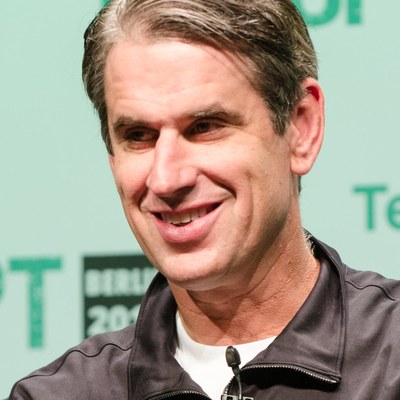 Bill Gurley
10
11 Dec 2012 – 4 Aug 2026
-3970 d
Bill Gurley
10
11 Dec 2012 – 4 Aug 2026
-3970 d
-
 Gavin Baker
3
thin
25 Jan 2022 – 15 May 2026
-638 d
Gavin Baker
3
thin
25 Jan 2022 – 15 May 2026
-638 d
-
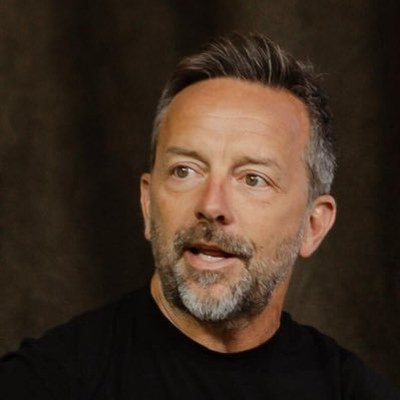 Brad Gerstner
15
25 Oct 2023 – 2 Mar 2026
+0 d
Brad Gerstner
15
25 Oct 2023 – 2 Mar 2026
+0 d
- Dylan Patel 7 23 Dec 2024 – 7 Apr 2026 +425 d
-
 David Friedberg
1
thin
23 Jun 2026 – 23 Jun 2026
+972 d
David Friedberg
1
thin
23 Jun 2026 – 23 Jun 2026
+972 d
-
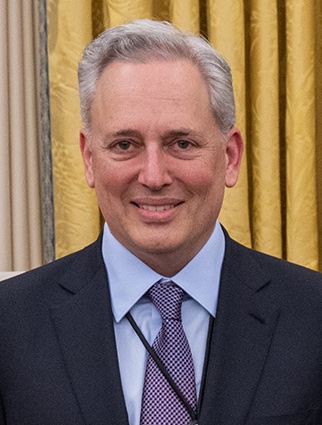 David Sacks
1
thin
14 Aug 2026 – 14 Aug 2026
+1024 d
David Sacks
1
thin
14 Aug 2026 – 14 Aug 2026
+1024 d
The chronologysourced and dated, oldest first
-
-
Bill Gurley
Gurley cites DP Review, a one-person digital camera review site acquired by Amazon for forty to seventy million dollars.
“I love this story of DP Review, which is a website for digital camera reviews.”
-
-
-
Gavin Baker
Baker notes Amazon spent more on CapEx in two years than in the preceding twenty years.
“It's not a comment on Amazon. It's just a comment on the supplier response. They have spent more money on CapEx in the last two years than they did in the preceding twenty years.”
-
Gavin Baker
Baker provides specific numbers showing Amazon's CapEx jumped from $62B over 20 years to $87B in just two years.
“From 1999 to 2019, they spent $62,000,000,000 on CapEx. They're going spend $87,000,000,000 in 2020 and 2021. That's crazy.”
-
-
-
Bill Gurley
Gurley discovered Amazon was running same-day delivery experiments through Uber drivers by talking to them as a shareholder.
“And I always talk to them. I always talk to the drivers because I'm a shareholder and I always talk to the drivers.”
-
Bill Gurley
Gurley contrasts Bezos respectfully addressing shareholders in his S-1 against later founders' antagonistic approach.
“So if you reread his S-one where he writes a letter, it's titled To Our Share Owners, and he talks a lot about them.”
-
Brad Gerstner
Gerstner cites Amazon CodeWhisperer reporting 56% increase in engineering productivity from AI coding tools.
“I think Amazon CodeWhisperer, so this is a cogeneration copilot Mhmm. Is reporting that they've seen 56% increase in engineering productivity”
-
-
-
Brad Gerstner
Gerstner forecasts Microsoft, Amazon, and Snowflake will accelerate growth rates, calling this unprecedented at their scale.
“We expect our forecast is that Microsoft and Amazon, you know, Snowflake, they'll all accelerate their growth rates this year. Right?”
-
Brad Gerstner
Gerstner says he was concerned a year ago that Microsoft's OpenAI partnership would cause Amazon customers to switch to Azure.
“A year ago, I was concerned and some others were whether or not Microsoft's early lead because of their partnership with OpenAI would cause a bunch of customers to leave Amazon and go to Azure in order to take advantage of the benefits of OpenAI.”
-
Brad Gerstner
Gerstner says Amazon saw almost no customer churn to Azure despite Microsoft's OpenAI partnership advantage.
“A year ago, I was concerned and some others were whether or not Microsoft's early lead because of their partnership with OpenAI would cause a bunch of customers to leave Amazon and go to Azure in order to take advantage of the benefits of OpenAI. We didn't see that. We saw almost no customer churn.”
-
Brad Gerstner
Gerstner notes Amazon bought land near nuclear facility while 30-35% US production comes from independent sellers.
“And, once again, according to Phil, about 35%, 30% of the production in The US is from independent energy producers who who basically sell to whoever they decide they want to sell to.”
-
Brad Gerstner
Gerstner praises Jassy's efficiency focus at Amazon retail, expects margin expansion as investment thesis.
“Why are we in Amazon? Because we think the retail businesses margins are gonna go up. Jassy has absolutely found religion.”
-
Brad Gerstner
Gerstner says Amazon CEO Jassy is aggressively focused on running the retail business efficiently.
“Jassy has absolutely found religion. He's in animal mode when it comes to making sure that they're running that as efficiently as possible.”
-
Dylan Patel
Patel dubs Amazon's Trainium chip the Amazon Basics TPU due to less efficient but cost-effective design.
“Yeah. So so funnily enough, Amazon's chip is the Amazon I I call it the Amazon's basics TPU. Right?”
-
-
-
Brad Gerstner
Gerstner earned 100x returns on Amazon in public markets, returns now going to private investors instead.
“So I earned a 100 x return in the public markets. Right? By all accounts, venture capitalists would do back flips for that return, but those returns were going to private market participants.”
-
Brad Gerstner
Gerstner says Amazon is up 200x from 2000 peak and 1000x from 2000 low on split-adjusted basis.
“On a split adjusted basis, where is Amazon today relative to that $150? It's up 200x. Where is it relative to where it was in December 2020? Up 1000x.”
-
Brad Gerstner
Gerstner recounts Amazon peaked at $243 in 1998, fell to $26 after Blodgett's $400 call.
“Amazon, if you recall, Bill, and I know you do, it peaked at $243 a share in 1998. But at the start of 2000, it's at $150 a share.”
-
Brad Gerstner
Gerstner references Henry Blodgett's $400 Amazon call in 2000 as historical precedent for AI investments.
“I talked about Henry Blodgett's 400 call on Amazon back in 2000. Right? What do you think Amazon is today relative to the $400 call that Henry Blodgett made in 2000?”
-
Brad Gerstner
Gerstner says Amazon is up 87 times from Henry Blodget's ridiculed $400 call in 2000.
“He got ridiculed and laughed off of Wall Street for it. But Amazon is up 87 times today from where it was when he made that call.”
-
Brad Gerstner
Gerstner notes Amazon is up 87x since Blodgett's 2000 call, validating long-term thinking.
“Amazon is up 87 times today from where it was when he made that call.”
-
Dylan Patel
Patel says Microsoft was on pace to beat Amazon as largest infrastructure provider by 2026-27 but paused expansion.
“So last year Microsoft was on path to be the largest infrastructure provider by far.”
-
Dylan Patel
Patel says Google will make five to seven million TPU chips while Amazon targets three to five million.
“They're going to make something like five to 7,000,000 chips, right? Of their own TPUs. You look at Amazon, they're trying to make three to 5,000,000.”
-
-
-
Bill Gurley
Gurley says AI companies have bigger burn rates than Amazon or any company in venture capital history.
“Oh, more than Amazon ever lost. And so the the burn rates are bigger than they've ever been in the history of venture capital. And eventually, they're gonna wanna bring those in.”
-
Brad Gerstner
Gerstner reports Andy Jassy said Amazon has demand it cannot fulfill.
“Andy Jassy said last night that he has demand coming in over the bow. He can't fulfill the demand.”
-
Brad Gerstner
Gerstner uses Amazon-Walmart coexistence to argue disruption does not mean zero-sum destruction.
“if you go back to 2000, remember, there were concerns that Amazon was gonna destroy Walmart.”
-
Dylan Patel
Patel reports Amazon's CPU server installations have tripled year-on-year with no capacity remaining anywhere.
“So then you've just seen everyone run out of CPUs, Amazon's volumes on CPUs, of CPU servers they're installing have three x year on year, right, from this year versus last year.”
-
Dylan Patel
Patel reports Amazon's CPU server installations have tripled year-over-year with no spare capacity.
“Amazon's volumes on CPUs, of CPU servers they're installing have three x year on year, right, from this year versus last year. And so there's just no capacity anywhere”
-
Dylan Patel
Patel says Amazon's CPU server installations have tripled year-on-year, causing capacity shortages and GitHub instability.
“And so there's just no capacity anywhere and that's causing a lot of instability, not just in GitHub but probably other places too.”
-
Dylan Patel
Patel reveals OpenAI ported entire stack from x86 to ARM to access Amazon's CPU capacity for recent deal.
“A lot of the impetus for the recent Amazon and OpenAI deal was, yes, OpenAI wanted money, yes, they needed compute, but they also just went to Amazon and were like, give us your CPUs, And before, OpenAI's stack was pretty much only on x86 CPUs, but Amazon had tons of ARM CPUs and so they ported the whole thing,”
-
Bill Gurley
Gurley says Mechanical Turk network effects level out because aggregating more commodity workers does not improve quality.
“If you had 100,000, it doesn't really change the quality of the work that much.”
-
Gavin Baker
Baker predicts Trainium will be to 2026 what TPUs were to 2025 as Trainium 3 ramps.
“Tranium, by far. Tranium is going to be to 2026, especially in the second half of this year when Tranium three really ramps, as TPUs were to twenty twenty five.”
-
Bill Gurley
Gurley learned from Bill Miller that network effects justify Amazon growing at unreasonable rates for extended periods.
“value just means that the asset is underpriced relative to what you think it will be worth in the future.”
-
David Friedberg
Friedberg observes Amazon sellers are frustrated with margins Amazon takes, suggesting the company may be over-earning.
“I've been involved in a number of businesses I've been on the board of and I see the margin that Amazon takes for seller from sellers and everyone's frustrated about it.”
-
Bill Gurley
Gurley discovered Amazon was running same-day delivery experiments on top of Uber using burner phones and driver cars.
“And I'm like, what happens at 02:30? He goes, I have to meet at the Amazon warehouse at 02:30.”
-
Bill Gurley
Gurley says most companies over $20-30M in revenue wouldn't run Amazon's experimental hack approach due to accounting concerns.
“I know for a fact that most of the companies I've worked with that have gotten over 20 or 30,000,000 in revenue would not run that experiment because someone would say, oh, we won't know how to do the accounting. We can't like, that's too much of a hack, like, whatever.”
-
Bill Gurley
Gurley says Amazon ran same-day delivery experiment using Uber while most companies over $30M wouldn't.
“I know for a fact that most of the companies I've worked with that have gotten over 20 or 30,000,000 in revenue would not run that experiment”
-
Bill Gurley
Gurley quotes Bezos saying internal experiments get killed only when the last person with good judgment gives up.
“They ask him, when does a internal experiment get killed? And he said, when the last person with good judgment gives up.”
-
David Sacks
Sacks contrasts Amazon's same-day efficiency with government services on contractor regulation debate.
“When you compare Amazon's service to anything government provides, it's insane how efficient Amazon is. You order your thing and it can be there the same day.”
-
Where they overlapsame programme, same subject
- All-In Podcast also carries David Friedberg and David Sacks on this subject, at different times.
- BG2 Pod also carries Brad Gerstner and Dylan Patel on this subject, at different times.