Who is on this subjectordered by the date of their first quote here
Every lane here carries 5 quotes or more. Offsets are days from the middle first-quote date, 26 Nov 2019 — a date, and nothing else. It is not a claim about who reached a view first.
-
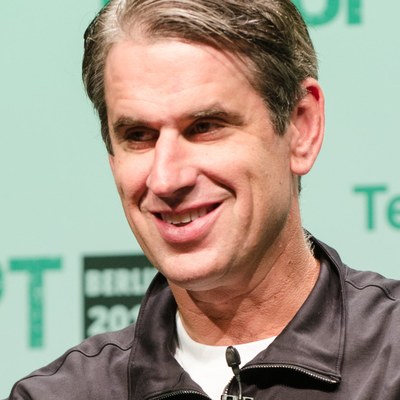 Bill Gurley
5
26 Aug 2011 – 9 Aug 2024
-3014 d
-
 Gavin Baker
6
26 Nov 2019 – 26 Nov 2019
+0 d
-
 Brad Gerstner
9
22 Feb 2024 – 28 Aug 2025
+1549 d
- Dylan Patel 6 30 Jun 2025 – 7 Apr 2026 +2043 d
The chronologysourced and dated, oldest first
-
-
Bill Gurley
Gurley recounts learning Jobs personally decided which icons appear on the iPhone home screen.
“Because we've got some great companies, Zillow, OpenTable, and I love to talk to him about getting something on there. And he just starts laughing.”
-
Bill Gurley
Gurley notes Apple started at $2 billion market cap when Jobs returned.
“You can only you can only say great things because the company I mean, to think about what this company has started at $2,000,000,000 when”
-
Bill Gurley
Gurley notes Apple grew from $2 billion to $343 billion market cap under Jobs, exceeding Microsoft and Intel combined.
“started at $2,000,000,000 when in market cap when he came in. Today, they're three forty three and bigger than Microsoft and Intel combined.”
-
-
-
Gavin Baker
Baker recounts how Sunu Kalra's simple iPod vs Walkman comparison gave him conviction to hold Apple long-term.
“And as soon as I heard that, it's like, wow. It really doesn't matter. Apple went on to be seven x, 10 x, 15 x from there.”
-
Gavin Baker
Baker argues used iPhone resale value is critically important to Apple's business model and pricing power.
“One is, I think the price to used iPhones is critically important to Apple's business model. Why is that? Used iPhones retain their value much better than used Android phones.”
-
Gavin Baker
Baker says used iPhone resale value enables Apple to charge consumers less effectively than Android despite higher sticker prices.
“Used iPhones retain their value much better than used Android phones. When you trade in your phone, you capture that.”
-
Gavin Baker
Baker argues used iPhone resale value enables Apple to charge premium prices while maintaining lower effective consumer cost.
“When you trade in your phone, you capture that. That lets the used iPhones retain their value better, supports a dramatic price premium for Apple.”
-
Gavin Baker
Baker explains Apple's effective price is $600 versus Android's $850 due to trade-in value differences.
“That comparable Android phone is being traded in for probably a $150, which means you're paying $850.”
-
Gavin Baker
Baker provides specific numbers showing Apple's effective price is $600 versus Android's $850 after trade-ins.
“So Apple can charge the consumer more than its competitors, but actually have a lower effective price to the consumer.”
-
-
-
Brad Gerstner
Gerstner argues personalized memory and internet access matter more than raw intelligence for AI assistants, favoring Apple's positioning.
“Would you rather have an assistant with the intelligence of like Einstein, but they have no access to the Internet and they don't know anything about your history?”
-
Brad Gerstner
Gerstner argues memory and context matter more than raw intelligence for AI assistants.
“Or would you like to have an assistant that's just above average intelligence, knows everything about you, and they can use the Internet?”
-
Brad Gerstner
Gerstner estimates Apple needs 75 gigs of DRAM on phones to run 7B on-device models.
“I think the question that Apple's probably struggling with, Bill, is in order to do that, even a 7B model, you probably have to have, you know, 75 gigs of DRAM on your phone, right?”
-
Brad Gerstner
Gerstner estimates running a 7B model on-device requires 75 gigabytes of DRAM on phones.
“in order to do that, even a 7B model, you probably have to have, you know, 75 gigs of DRAM on your phone, right?”
-
Brad Gerstner
Gerstner says only 5% of Apple users can access Apple Intelligence, requiring device upgrades.
“part of the reason, you know, that we like Apple is only 5% of Apple users today can access Apple intelligence. So they're going to have to upgrade these devices in order to play.”
-
Brad Gerstner
Gerstner says only 5% of Apple users can access Apple intelligence, requiring device upgrades.
“only 5% of Apple users today can access Apple intelligence. So they're going to have to upgrade these devices in order to play.”
-
Brad Gerstner
Gerstner suspects OpenAI's integration with Apple is deeper than publicly disclosed, creating unequal competition.
“I suspect that the integration going on with OpenAI is deeper than what we heard about yesterday. Right? So I don't know that this is going to be everybody playing equal.”
-
Bill Gurley
Gurley says Zuckerberg described Apple blocking product improvements as soul crushing, motivating Meta's open source commitment.
“Great word. When you develop, work really hard on a product improvement, and then you have a company that says, no.”
-
Bill Gurley
Gurley says Google and Apple present completely one-sided partnership terms that would be unacceptable with other parties.
“And you're presented with a set of terms that you would never consider with any other party out there. It's a completely one-sided deal.”
-
-
-
Dylan Patel
Patel describes Apple's model having empty experts that never get routed to, indicating wasted training capacity.
“if you actually look at the model, oftentimes won't even route tokens to certain experts. So it was like a waste of training.”
-
Dylan Patel
Patel explains that Apple's rushed model has empty experts not receiving tokens due to flawed sparse MOE routing.
“Basically in between every layer, the router can route to whatever expert it wants to, And it learns which expert to route to. And and each expert learns its own independent things”
-
Dylan Patel
Patel describes the Bumpgate incident where NVIDIA laptop GPUs had defective solder balls.
“There's a generation of NVIDIA GPUs for laptops. Right? And and chips have solder balls on the bottom. Right?”
-
Dylan Patel
Patel explains Bumpgate issue where thermal expansion differences caused GPU solder ball failures in Apple laptops.
“And what ended up happening is because of that different rate of expansion, the solder balls connecting the chip and the board would crack.”
-
Brad Gerstner
Gerstner is asked about Apple evaluating Perplexity and other LLM providers for potential partnerships.
“I haven't heard your thoughts on the revelation that people inside Apple were kicking the tires at Perplexity and some of the other LLM providers and AI companies.”
-
Brad Gerstner
Gerstner suggests Apple should acquire AI capabilities given their $2 trillion market cap and cash position.
“What's your opinion on the build it versus buy it debate around Apple? I feel like for $2,025,000,000,000, they should just buy it, just given how much cash they have”
-
-
-
Dylan Patel
Patel reports memory prices tripled from $3-4 per gigabyte to $12, adding $100 iPhone cost.
“Each gig cost used to cost roughly 3 or $4, so it's $50. But now the price of memory is like tripled. Let's call it if it's now it's $12 per gig for DDR.”
-
Dylan Patel
Patel says TSMC is forcing Apple, Qualcomm, and MediaTek off three-nanometer, pushing them toward Intel.
“They're telling Qualcomm and MediaTek to get off and all three of these companies are like, oh, maybe we should use Intel because they're not telling us to get off”
-
Where they overlapsame programme, same subject
- BG2 Pod also carries Bill Gurley and Brad Gerstner on this subject, at different times.