Who is on this subjectordered by the date of their first quote here
4 of 8 lanes rest on fewer than 5 quotes and are marked thin. Offsets are days from the middle first-quote date, 23 Apr 2025 — a date, and nothing else. It is not a claim about who reached a view first.
-
 Gavin Baker
5
25 Jan 2022 – 8 Jul 2026
-1184 d
Gavin Baker
5
25 Jan 2022 – 8 Jul 2026
-1184 d
-
 Brad Gerstner
20
25 Oct 2023 – 4 May 2026
-546 d
Brad Gerstner
20
25 Oct 2023 – 4 May 2026
-546 d
-
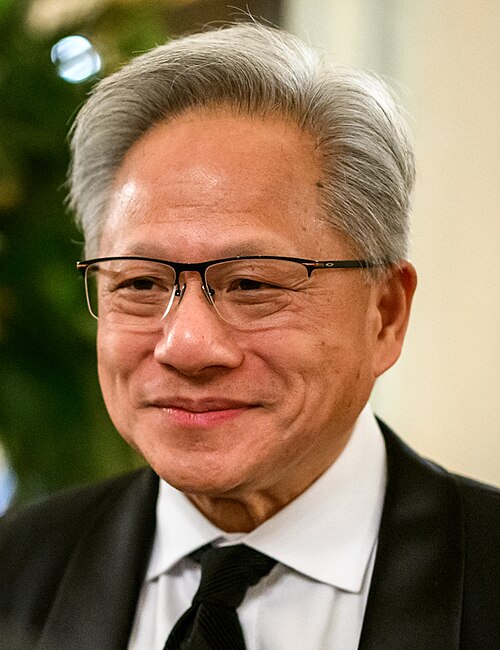 Jensen Huang
5
13 Oct 2024 – 16 Jun 2026
-192 d
Jensen Huang
5
13 Oct 2024 – 16 Jun 2026
-192 d
- Dylan Patel 15 23 Apr 2025 – 25 Aug 2026 +0 d
-
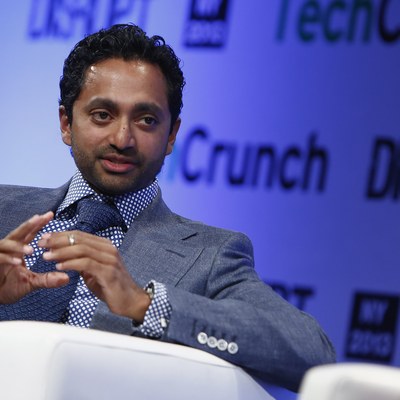 Chamath Palihapitiya
1
thin
10 Oct 2025 – 10 Oct 2025
+170 d
Chamath Palihapitiya
1
thin
10 Oct 2025 – 10 Oct 2025
+170 d
-
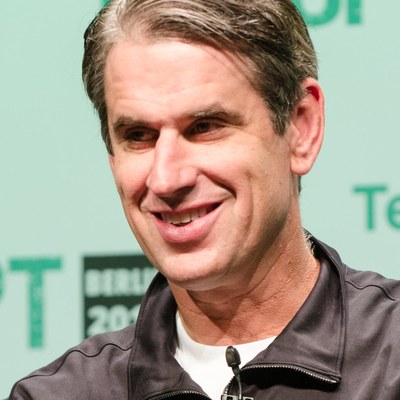 Bill Gurley
2
thin
5 Mar 2026 – 9 Jun 2026
+316 d
Bill Gurley
2
thin
5 Mar 2026 – 9 Jun 2026
+316 d
-
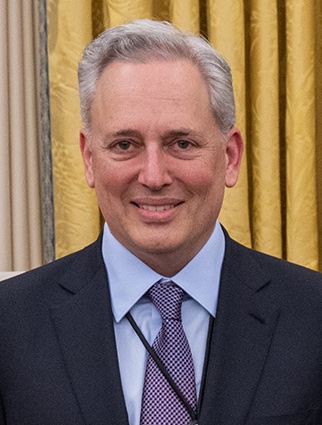 David Sacks
2
thin
10 Apr 2026 – 1 May 2026
+352 d
David Sacks
2
thin
10 Apr 2026 – 1 May 2026
+352 d
-
 David Friedberg
1
thin
8 Aug 2026 – 8 Aug 2026
+472 d
David Friedberg
1
thin
8 Aug 2026 – 8 Aug 2026
+472 d
The chronologysourced and dated, oldest first
-
-
Gavin Baker
Baker notes Amazon spent more on CapEx in two years than in the preceding twenty years.
“It's not a comment on Amazon. It's just a comment on the supplier response. They have spent more money on CapEx in the last two years than they did in the preceding twenty years.”
-
Gavin Baker
Baker provides specific numbers showing Amazon's CapEx jumped from $62B over 20 years to $87B in just two years.
“From 1999 to 2019, they spent $62,000,000,000 on CapEx. They're going spend $87,000,000,000 in 2020 and 2021. That's crazy.”
-
Gavin Baker
Baker notes Taiwan Semi will spend more on CapEx in two years than in the preceding five years.
“Taiwan Semi, their 2022 CapEx is going to be many multiples of 2019. 2021 and 2022, they'll spend more than they did in the preceding five years. So there is a massive supply response coming.”
-
Gavin Baker
Baker says Taiwan Semi will spend more on CapEx in 2021-2022 than in the preceding five years.
“Taiwan Semi, their 2022 CapEx is going to be many multiples of 2019. 2021 and 2022, they'll spend more than they did in the preceding five years.”
-
-
-
Brad Gerstner
Gerstner predicts 2024 will see more compute deployed than all previous years combined for AI.
“We're gonna launch more. We're gonna deploy more compute in 2024 than in all previous years combined.”
-
-
-
Brad Gerstner
Gerstner quotes Jensen predicting data center infrastructure will double from $1T to $2T in four to five years.
“And over the course of the next four to five years, we'll have 2,000,000,000,000 of data centers powering software around the world and it will all be accelerated compute.”
-
Brad Gerstner
Gerstner identifies hyperscaler total CapEx at $200 billion as the real concern drawing criticism and return questions.
“In fact, I think if people are gonna be critical of anything, a lot of people are looking at the total CapEx of the hyperscalers now at $200,000,000,000”
-
Brad Gerstner
Gerstner says Amazon spent over $100 billion on AWS for over eight years before seeing profitability.
“just Amazon spent over a $100,000,000,000 on AWS, invested for over eight years before they saw profitability in that business.”
-
Brad Gerstner
Gerstner argues Amazon spent over $100 billion on AWS for eight years before profitability, paralleling AI investment.
“Amazon spent over a $100,000,000,000 on AWS, invested for over eight years before they saw profitability in that business.”
-
Jensen Huang
Huang estimates a trillion dollars of AI infrastructure to be built over the next four to five years.
“What about, call it $150,000,000,000 into it? Right. Okay. So we have a trillion dollars of infrastructure to go build over the next four or five years.”
-
Brad Gerstner
Gerstner says Jensen confirmed a trillion dollars of data center CPU replacement workloads over four years beyond AI training.
“he said, but we're also going to have a trillion dollars of CPU replacement, of data center replacement workloads over the course of the next four years.”
-
Brad Gerstner
Gerstner argues GPU capex sustainability depends on hyperscalers generating commensurate inference revenues, citing Satya's disciplined approach.
“It all comes down ultimately to the revenues that are generated by the people who are making the purchases of the GPUs. Right?”
-
Brad Gerstner
Gerstner argues capex growth depends on enterprise adoption rates and consumer willingness to pay, not just model improvements.
“It's the rate of adoption of consumers and what consumers are willing to pay to use ChatGPT or to use Clawd or to use these other services.”
-
Brad Gerstner
Gerstner claims 30% annual infrastructure expense growth requires comparable inference revenue growth on both sides.
“So, you know, if you think that infrastructure expenses are going to grow at 30% a year, then I think you have to believe that the underlying inference revenues, right, both on the consumer side and the enterprise side are gonna grow somewhere in that range as well.”
-
Brad Gerstner
Gerstner posits 30% annual infrastructure expense growth requires matching inference revenue growth from enterprises and consumers.
“if you think that infrastructure expenses are going to grow at 30% a year, then I think you have to believe that the underlying inference revenues, right, both on the consumer side and the enterprise side are gonna grow somewhere in that range as well.”
-
-
-
Brad Gerstner
Gerstner says TSMC pledged $100 billion more, contributing to $1.5 trillion in total U.S. reinvestment commitments.
“I mean, the list of companies, I think we're up to a trillion, a trillion and $0.5 of reinvestment.”
-
Dylan Patel
Patel states $10 billion data centers target automated software engineering, not chat models.
“So no one is trying to make with these $10,000,000,000 data centers, they're not trying to make chat models. Right?”
-
Dylan Patel
Patel forecasts NVIDIA revenue exceeding $300 billion next year as infrastructure spending reaches nation-state scale.
“NVIDIA's revenue this year is gonna be, like, over $200,000,000,000, and next year expects over 300,000,000,000 plus Google's gonna spend, like, $50,000,000,000 on TPU data centers.”
-
Brad Gerstner
Gerstner notes Jensen raised compute buildout forecast from $2 trillion to $3-4 trillion through decade end.
“Jensen said, you know, when he was on our pod last year, he said, we think the build out between now and the end of the decade's $2,000,000,000,000 of total compute.”
-
Brad Gerstner
Gerstner says NVIDIA raised total compute buildout estimate to $3-4 trillion from $2 trillion.
“Last night on the call, they said 3 to 4,000,000,000,000 of total compute. He told us that inference was gonna billion x. Right?”
-
Dylan Patel
Patel forecasts hyperscaler CapEx at $455-500 billion for next year versus Wall Street consensus of $360 billion.
“The consensus for the banks is $360,000,000,000 of spend next year across all of them. And my number is closer to, like it's, like, $45,500.”
-
Chamath Palihapitiya
Palihapitiya argues AI infrastructure OpEx over twenty years equals CapEx, making total spending far larger than reported trillion-dollar figures.
“That's just the CapEx. Then you have to think of what the OpEx is. The OpEx is probably the same multiplied by the useful life, which is probably twenty years.”
-
Brad Gerstner
Gerstner calculates OpenAI needs at least $150 billion revenue in 2030 to justify announced CapEx commitments.
“And so, like, the question is, Bill, how much revenue do they need in 2030 to justify $150,000,000,000 in capex? Well, I think you would need at least $150,000,000,000 of revenue.”
-
Brad Gerstner
Gerstner contrasts OpenAI's $13 billion revenue with its $1.4 trillion compute commitment over four to five years.
“OpenAI's revenues are still a reported $13,000,000,000 in 2025. And Sam, on your live stream this week, you talked about this massive commitment to compute, right? 1,400,000,000,000 over the next four or five years”
-
“Tech companies are investing over the course of the next four or five years, it's about 10 times the size of the Manhattan Project on an inflation adjusted or GDP adjusted basis.”
-
Brad Gerstner
Gerstner breaks down OpenAI's $1.4 trillion capex: half borne by partners, remainder spread over five years.
“And if they're doing that and you spread the CapEx out, so we talked about 1,400,000,000,000, half of that's gonna be borne by their partners.”
-
Brad Gerstner
Gerstner argues $100-200B annual capex is responsible if OpenAI hits $100-200B revenue in 2028-29.
“Now if they're doing a 100 to 200,000,000,000 in revenue in 2829, then now we're in the zone of responsible.”
-
Brad Gerstner
Gerstner calculates partners will bear half of $1.4 trillion capex, leaving $600-700 billion spread over five years.
“And if they're doing that and you spread the capex out, so we talk about 1,400,000,000,000, half of that's gonna be borne by their partners.”
-
-
-
Dylan Patel
Patel states OpenAI will deploy 16-18 gigawatts by end of 2028 requiring $300 billion spend.
“OpenAI is gonna have 18 gigawatts or 16 gigawatts by the end of twenty eight, and they're gonna be able to pay for it. And that's like, well, that's $300,000,000,000 of spend.”
-
Dylan Patel
Patel calculates $100B AI revenue requires $250B infrastructure with five-year depreciation at 50% margins.
“That $50,000,000,000 of COGS needs to burn on infra, which cost roughly with if a five if you're talking about five year depreciation, call it $250,000,000,000,”
-
Dylan Patel
Patel calculates $100B AI revenue requires $250B infrastructure spend at five-year depreciation, double current capex.
“That $50,000,000,000 of COGS needs to burn on infra, which cost roughly with if a five if you're talking about five year depreciation, call it $250,000,000,000, right, of infra Yeah. For a $100,000,000,000 of revenue.”
-
Dylan Patel
Patel says Google spending $180B and Amazon $200B on AI infrastructure represents 4x increase from recent years.
“If we start looking at like, hey, this year, Google spending 2 Amazon spending $200,000,000,000, Google spending a $180,000,000,000 on on AI infrastructure primarily. Right?”
-
Dylan Patel
Patel notes Google's $180B and Amazon's $200B capex announcements caused stock declines despite hyperscalers seeing massive AI demand.
“Google announced a 180,000,000,000 of capex. The stock went down. And then Amazon announced 200,000,000,000 of capex and their stock went down like, I wanna say like 10%.”
-
Bill Gurley
Gurley states Mag Seven companies formerly generated approximately $3.4 trillion in cash flow before CapEx shift.
“I will tell you, I have a couple different answers to this, which I think are quite interesting. First of all, the Mag seven formerly were creating, I don't know, $3,400,000,000,000 in cash flow.”
-
Dylan Patel
Patel predicts Google will eliminate its $100 billion annual cash flow next year by spending everything on AI infrastructure.
“Google will have no cash flow next year because they're they see AI so clearly, and they know that they need to spend every dollar they make on compute,”
-
David Sacks
Sacks cites $350 billion hyperscaler capex this year, heading to $1 trillion by 2030 per Jensen.
“Again, just the top four hyperscalers, $350,000,000,000 of expected capex this year. On its way, I think Jensen said 1,000,000,000,000 by 2030.”
-
David Sacks
Sacks says hyperscaler capex will exceed $700 billion this year, up from $350 billion last year, over 2% of GDP.
“This year, I think we were supposed to have $660,000,000,000 of hyperscaler CapEx up from $3.50 last year. I think there's now the new estimate is is gonna be over 700.”
-
Brad Gerstner
Gerstner says 80% of Altimeter's capital is in memory, logic, and compute companies like Nvidia, SK Hynix, and CoreWeave.
“80% of our capital has been in memory and logic and compute, you know, companies like Nvidia, companies like SK Hynix, companies like CoreWeave, etcetera. And so that's consumed a lot of capital.”
-
Bill Gurley
Gurley says he wouldn't have believed Mag Seven would turn $50-100B annual free cash flow to zero via CapEx.
“If you told me five years ago that these, mag seven would become worth $3,000,000,000,000 and then turn around and take their free cash flow from 50 to a 100,000,000,000 a year down near zero because they were gonna spend it all on CapEx, I'd have been like, no way. Like, I wouldn't have believed it.”
-
Jensen Huang
Huang forecasts tens of trillions of dollars in new computer infrastructure over the next ten years.
“We've now built about sixty years with the computer infrastructure, the Internet and all the computers and email.”
-
Jensen Huang
Huang forecasts tens of trillions of dollars in new computer infrastructure over the next decade.
“We're now in the process of reinventing all of that, which is the reason why over the course of the next ten years, we're going to be building tens of trillions of dollars of new computers to replace the old computers that we built over the last sixty years.”
-
Jensen Huang
Huang says NVIDIA will spend about $500 billion building in America, noting Trump's support.
“He's delighted that we're investing in Coherent. He's incredibly happy that we are manufacturing in United States. We're gonna spend about $500,000,000,000 building in America.”
-
Jensen Huang
Huang says NVIDIA will spend about $500 billion building in America.
“The chip plant in TSMC's chip had chip plant in Arizona, Foxconn, the the number of companies that we've inspired from Taiwan to to partner with us to build factories here.”
-
Gavin Baker
Baker argues that whether AI buildout is funded by debt or cash flows is critical for bubble risk.
“And a very important distinction we will come to is whether or not that build out is funded out of debt or cash flows. It's a critical distinction for AI.”
-
David Friedberg
Friedberg states Google committed $200 billion in AI infrastructure CapEx this year, hugely tax advantaged due to accelerated depreciation.
“Google has made a commitment to deploy $200,000,000,000 in CapEx this year in AI infrastructure data center build out.”
-
Dylan Patel
Patel forecasts AI CapEx will exceed $2 trillion by 2028, up from just over $1 trillion in 2025.
“As we go forward into the future, the the numbers for computer ballooning, right, we're at, you know, you know, a little bit over a trillion dollars of CapEx this year.”
-
Dylan Patel
Patel predicts AI labs will scale from tens of billions to trillions in annual spending by decade's end.
“As we go out into '28, it's gonna be more than $2,000,000,000,000. The labs are also taking an increasing percentage of this.”
-
Dylan Patel
Patel estimates $3-4 trillion total CapEx needed by 2028 across compute, data centers, and energy infrastructure.
“So to enable, let's say, that 100 gigawatts by 2030 or let's even like let's even like pare it down to 2028 where it's like 3 or $4,000,000,000,000 of CapEx across all of these items.”
-
Dylan Patel
Patel questions where $3-4 trillion in CapEx will come from for 2028 AI infrastructure buildout.
“So if you're at 3 or $4,000,000,000,000 of CapEx, where does all this cash come from?”
-
Dylan Patel
Patel identifies multi-trillion dollar funding gap as hyperscalers exhaust cash flows and raise debt.
“No one is generating that much cash from the business yet. Right? Hyperscalers, they funded all of the growth up until now. Google, Microsoft, Amazon, Meta.”
-
Dylan Patel
Patel's models show $11 trillion AI CapEx through 2029, requiring over $5 trillion in new debt.
“In the modeling that we do, we have about $11,000,000,000,000 of CapEx from 2024 to 2029. Total. Total.”
-
Where they overlapsame programme, same subject
- All-In Podcast also carries Chamath Palihapitiya, David Friedberg and David Sacks on this subject, at different times.
- BG2 Pod also carries Brad Gerstner and Jensen Huang on this subject, at different times.