Who is on this subjectordered by the date of their first quote here
11 of 13 lanes rest on fewer than 5 quotes and are marked thin. Offsets are days from the middle first-quote date, 30 Jun 2022 — a date, and nothing else. It is not a claim about who reached a view first.
-
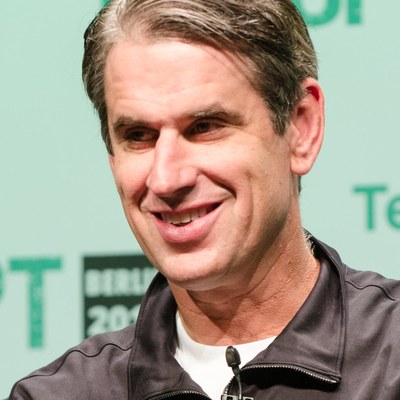 Bill Gurley
7
17 Nov 2017 – 16 Mar 2026
-1686 d
Bill Gurley
7
17 Nov 2017 – 16 Mar 2026
-1686 d
-
 Gavin Baker
3
thin
26 Nov 2019 – 25 Jan 2022
-947 d
Gavin Baker
3
thin
26 Nov 2019 – 25 Jan 2022
-947 d
- Stanley Druckenmiller 1 thin 19 Dec 2019 – 19 Dec 2019 -924 d
-
 David Friedberg
9
19 Sep 2020 – 11 Sep 2025
-649 d
David Friedberg
9
19 Sep 2020 – 11 Sep 2025
-649 d
-
 Brad Gerstner
4
thin
27 Oct 2020 – 20 Jun 2025
-611 d
Brad Gerstner
4
thin
27 Oct 2020 – 20 Jun 2025
-611 d
-
 Howard Marks
2
thin
30 Jun 2022 – 30 Jun 2022
+0 d
Howard Marks
2
thin
30 Jun 2022 – 30 Jun 2022
+0 d
-
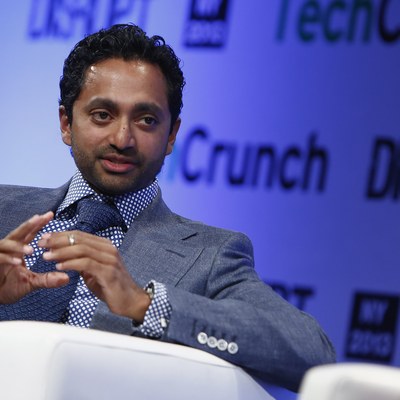 Chamath Palihapitiya
1
thin
27 Sep 2025 – 27 Sep 2025
+1185 d
Chamath Palihapitiya
1
thin
27 Sep 2025 – 27 Sep 2025
+1185 d
-
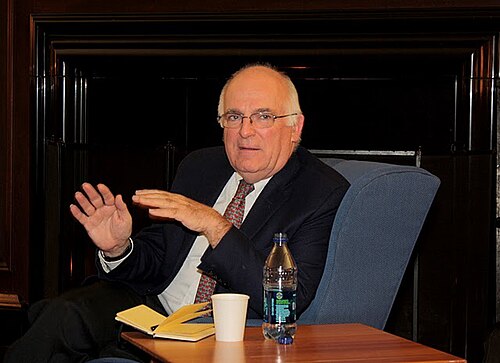 Sir Richard Dearlove
3
thin
4 Oct 2025 – 4 Oct 2025
+1192 d
Sir Richard Dearlove
3
thin
4 Oct 2025 – 4 Oct 2025
+1192 d
-
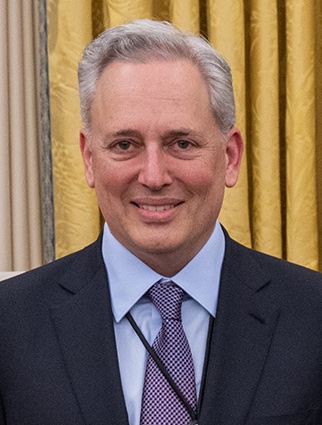 David Sacks
3
thin
13 Dec 2025 – 7 Feb 2026
+1262 d
David Sacks
3
thin
13 Dec 2025 – 7 Feb 2026
+1262 d
- Dylan Patel 1 thin 6 May 2026 – 6 May 2026 +1406 d
-
 Howard Lutnick
1
thin
11 May 2026 – 11 May 2026
+1411 d
Howard Lutnick
1
thin
11 May 2026 – 11 May 2026
+1411 d
-
 Kevin Warsh
2
thin
28 Aug 2026 – 28 Aug 2026
+1520 d
Kevin Warsh
2
thin
28 Aug 2026 – 28 Aug 2026
+1520 d
-
 John Williams
4
thin
John Williams
4
thin
The chronologysourced and dated, oldest first
-
-
Bill Gurley
Gurley argues successful AI requires huge datasets on both sides for matching.
“In order to be successful and powerful in these types of areas, you need huge datasets, and you need them on both sides so that you can do the matching.”
-
“Before we ever engage with a customer, they've already given us way more information than any other apparel retailer has.”
-
-
-
Bill Gurley
Gurley cites $171 billion in first-day wealth transfer over thirty-eight years from IPO underpricing.
“You know, thirty, forty years over the past thirty eight years, 171,000,000,000 in First Day Wealth Transfer.”
-
Gavin Baker
Baker cites research showing AI quality doubles with every 10x increase in training data quantity.
“All that matters is the quantity of data, and it's been very well established in multiple papers from both Google and Microsoft research that for every order of magnitude increase in the data you use to train an algorithm, the quality of the AI doubles.”
-
Gavin Baker
Baker cites research showing every 10x increase in training data doubles AI quality.
“it's been very well established in multiple papers from both Google and Microsoft research that for every order of magnitude increase in the data you use to train an algorithm, the quality of the AI doubles.”
-
Stanley Druckenmiller
Druckenmiller says U.S. poverty fell from 26% decades ago to 16% in 2008 to 13% now, an all-time low.
“It was 26% a few decades ago. It was 16% in the financial crisis and it's 13% now. It's at an all time low. Is 13 poverty rate low enough?”
-
-
-
David Friedberg
Friedberg provides specific numbers showing California fires have burned 10% of forest acreage so far.
“Forests make up about a third of our land. So far, we're we're burning three and a half million, so about 10% of our acres.”
-
Brad Gerstner
Gerstner describes identifying the post-internet data explosion trend nearly a decade ago as foundation for Snowflake thesis.
“when we started thinking about the biggest trends, this was almost a decade ago, the post internet trends, the explosion of data, and how we make sense out of data to yield useful insights.”
-
Brad Gerstner
Gerstner recalls when next-day sales reports felt like magic as CEO of NLG.
“I remember when I was CEO of NLG, just having a system like Cognos that could give me a report the next day of what we actually sold the day before felt like magic.”
-
-
-
Gavin Baker
Baker cites research showing AI algorithm quality doubles with every 10x increase in training data.
“Microsoft wrote about this in a research paper ten years ago, or maybe not twelve years ago, the quality of a given AI algorithm doubles with every 10x increase in the amount of data you use to train that algorithm.”
-
Howard Marks
Marks says readily available quantitative data cannot make you superior because everyone has the same information.
“readily available quantitative information about the present can't help you be superior as an investor, or it's not sufficient to be superior.”
-
Howard Marks
Marks argues readily available quantitative data cannot make you superior because everyone has access to it.
“You have to understand that and process it, but it's not enough because everybody else has it readily available and it's quantitative, so everybody can process it.”
-
-
-
“At that time, probably the largest we were known to be the largest users of Amazon's Elastic Compute Cloud because we were ingesting so much data to build these models that related all the variables of farming and the weather to predict outcome.”
-
David Friedberg
Friedberg says Climate Corp was the largest known user of Amazon's cloud and filed FOIA requests for farming data.
“In fact, we did federal Freedom of Information Act requests for the federal government in The U. S. To get hard drives and hard drives of data.”
-
-
-
Bill Gurley
Gurley notes Tesla drivers upload 115 gigabytes monthly, infrastructure impossible five years ago.
“Here here's here's someone who's who's Tesla uploaded a 115 gigabyte in a month. Right? And so these are massive numbers. And the infrastructure five years ago, your car couldn't have done this.”
-
David Friedberg
Friedberg recalls buying 17 megabytes of weather data on CD-ROM for $10,000 in 2006 when founding Climate Corp.
“when I started Climate Corp 2006, the first thing I did when I got a seed check to start the company is I went out and bought weather data, and I bought it from a company called RMS that sold weather data. The sales guy was a guy named Jeff Hamlin.”
-
David Friedberg
Friedberg estimates 30 to 40 percent of US workers are employed by or depend on government spending.
“I tried to pull together all this data a couple months ago, but something north of like 30 or 40% of The US working force is touched by the government as a customer of their business, the primary customer of their business or as the employer of those individuals.”
-
Brad Gerstner
Gerstner cites studies showing children with investment accounts have better educational and economic outcomes.
“We know that kids who have an investment account for birth, they're more likely to graduate from high school. They're more likely to be financially literate.”
-
-
-
Brad Gerstner
Gerstner's data shows Google page views grow 4% annually for users without ChatGPT subscriptions, contrasting with ChatGPT subscribers.
“absent ChatGDP, ChatGPT, maybe Google page views for a particular user are growing 4% per year. So we are consuming more Google.”
-
David Friedberg
Friedberg recalls buying weather data on CD-ROM for $10,000 when starting Climate Corp in 2006.
“The sales guy was a guy named Jeff Hamlin. I'll give him a shout out because he still works at Climate Corp to this day.”
-
David Friedberg
Friedberg recounts buying a CD-ROM with 30 years of weather data for 200 stations when founding Climate Corp.
“I'll give him a shout out because he still works at Climate Corp to this day I hired him after so he sold me a CD ROM of weather data.”
-
David Friedberg
Friedberg paid $10,000 for 17 megabytes of weather data in 2006, illustrating how data costs have plummeted.
“So you could put it a spreadsheet. It cost me $10,000 to buy that CD ROM. It was 17 megabytes of data.”
-
David Friedberg
Friedberg paid $10,000 for 17 megabytes of weather data in 2006, now equivalent to two iPhone photos.
“It was 17 megabytes of data. That's like as much data as you get when you take a photo on your iPhone now or two photos on your iPhone pretty much.”
-
Chamath Palihapitiya
Palihapitiya says H-1B visas have reached 10 times the intended 85,000 annual cap in recent years.
“But here is the data. And so what you see is that in many years, the last several, it's been upwards of 10 times that number.”
-
Sir Richard Dearlove
Dearlove argues Palantir uniquely adapted modern democratic security structures to the world of data.
“pull together the diversity and complexity of a modern democratic security structure and make it, let's say, fully adapt it to the world of data in a way that no one else has seemed to have had the conceptual approach.”
-
Sir Richard Dearlove
Dearlove says Palantir uniquely had the conceptual approach to fully adapt democratic security structures to data.
“and make it, let's say, fully adapt it to the world of data in a way that no one else has seemed to have had the conceptual approach.”
-
Sir Richard Dearlove
Dearlove argues Palantir uniquely adapted democratic security structures to the world of data through conceptual approach.
“make it, let's say, fully adapt it to the world of data in a way that no one else has seemed to have had the conceptual approach.”
-
David Sacks
Sacks cites November Challenger Gray report showing only 6,000 U.S. layoffs attributable to AI, down 53% from October spike.
“The number fell by 53% and only about 6,000 of the layoffs that were announced in November in the entire country were attributable to AI.”
-
David Sacks
Sacks says AI accounts for only 4.7% of year-to-date layoffs, likely inflated since CEOs blame AI for poor performance.
“So only 6,000. And if you look at the year to date in the Challenger Gray report, AI has only accounted for 4.7% of total layoffs.”
-
-
-
David Sacks
Sacks criticizes the Fed for measuring rental inflation by surveying only 8,000 households instead of using real-time market data.
“And he was telling me that the way they measure inflation for housing or for rentals, which is a major component, is they survey, like, 8,000 households to find out what their rent is.”
-
Bill Gurley
Gurley cites 2023 Gallup poll showing 53% of people are disengaged at work.
“there was a Gallup poll in 2023 that like 53% of people are disengaged at work. And that's not great. We've all heard about quiet quitting.”
-
Bill Gurley
Gurley cites 2023 Gallup poll showing over 50% aren't engaged at work, only 23% qualify as engaged.
“If you're unfulfilled at work, there's a 2023 Gallup poll study that came out and said over 50% of people aren't actively engaged at work. And the number that qualifies engaged is like 23%.”
-
Bill Gurley
Gurley reports survey finding that 60% of people would choose a different career if starting over.
“we did a survey where we asked people if you could go back in time and start your career over again, would you do something different? And six out of 10 said yes.”
-
Dylan Patel
Patel explains long context windows fail because pre-training uses short context and lacks data for longer ranges.
“But it's like, what data do I have? That's why my two fifty ks to one mil context is trash anyways, because there's no data on this stuff.”
-
Howard Lutnick
Lutnick commits to using the best and most precise data for decisions affecting lobstermen.
“We promise you that we will use the best data and the most precise data to make sure that our decisions are right for America, and they need to be right for the lobstermen of Maine.”
-
Kevin Warsh
Warsh cites Fed's preferred inflation measure at 3.7% over twelve months, above four percent over six months.
“The Fed's preferred measure of inflation, the one I talked about earlier, the twelve month change in the PC price index stands at 3.7%, with the six month change a little above four.”
-
Kevin Warsh
Warsh reports PCE inflation at 3.7% over twelve months, above 4% over six months.
“The Fed's preferred measure of inflation, the one I talked about earlier, the twelve month change in the PC price index stands at 3.7%, with the six month change a little above four.”
-
-
-
John Williams
Williams notes productivity growth swings from minus 2 to 7 percent yearly versus 2 percent long-run average.
“Year-over-year productivity growth swings from minus 2 percent to 7 percent, compared to the long-run average of just over 2 percent ( Figure 1 ).”
-
John Williams
Williams reports PCE inflation rose to 3.5 percent in March.
“On the price stability side of the Fed’s dual mandate, overall inflation—as measured by the Personal Consumption Expenditures price index—rose to 3-1/2 percent in March.”
-
John Williams
Williams reports tariff receipts as share of imports rose from 2.25 percent early year to 8 percent in May.
“Net tariff receipts as a share of imports rose from about 2-1/4 percent in the first three months of the year to about 8 percent in May.”
-
John Williams
Williams says inflation fell from 7.25% in mid-2022 to 2.75% in 2024, below December projections.
“Inflation declined from a peak of 7-1/4 percent in mid-2022 to 2-3/4 percent in 2024.”
-
Where they overlapsame programme, same subject
- All-In Podcast also carries Chamath Palihapitiya and David Sacks on this subject, at different times.
- BG2 Pod also carries Bill Gurley and Brad Gerstner on this subject, at different times.
- Invest Like the Best also carries Brad Gerstner and Gavin Baker on this subject, at different times.