Who is on this subjectordered by the date of their first quote here
8 of 9 lanes rest on fewer than 5 quotes and are marked thin. Offsets are days from the middle first-quote date, 10 Jun 2025 — a date, and nothing else. It is not a claim about who reached a view first.
-
 Gavin Baker
3
thin
2 Apr 2020 – 4 Aug 2026
-1895 d
Gavin Baker
3
thin
2 Apr 2020 – 4 Aug 2026
-1895 d
- Stanley Druckenmiller 1 thin 7 Jun 2023 – 7 Jun 2023 -734 d
-
 David Friedberg
10
2 Jul 2024 – 29 Aug 2026
-343 d
David Friedberg
10
2 Jul 2024 – 29 Aug 2026
-343 d
-
 Brad Gerstner
3
thin
5 Feb 2025 – 20 Jun 2025
-125 d
Brad Gerstner
3
thin
5 Feb 2025 – 20 Jun 2025
-125 d
-
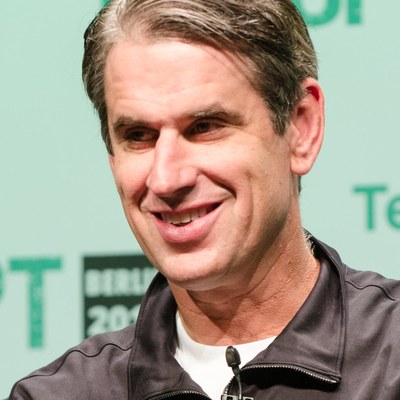 Bill Gurley
1
thin
10 Jun 2025 – 10 Jun 2025
+0 d
Bill Gurley
1
thin
10 Jun 2025 – 10 Jun 2025
+0 d
-
 Marc Rowan
1
thin
21 Dec 2025 – 21 Dec 2025
+194 d
Marc Rowan
1
thin
21 Dec 2025 – 21 Dec 2025
+194 d
-
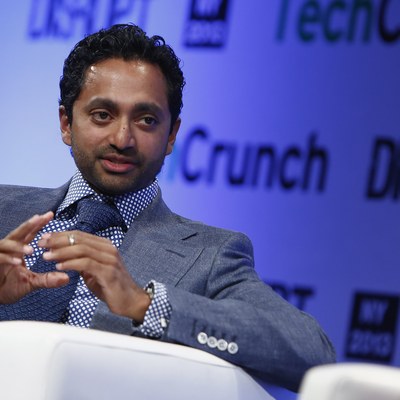 Chamath Palihapitiya
2
thin
13 Feb 2026 – 13 Feb 2026
+248 d
Chamath Palihapitiya
2
thin
13 Feb 2026 – 13 Feb 2026
+248 d
- Dylan Patel 3 thin 26 Feb 2026 – 25 Aug 2026 +261 d
-
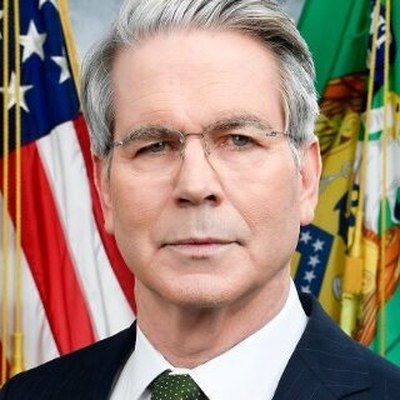 Scott Bessent
1
thin
20 Aug 2026 – 20 Aug 2026
+436 d
Scott Bessent
1
thin
20 Aug 2026 – 20 Aug 2026
+436 d
The chronologysourced and dated, oldest first
-
-
Gavin Baker
Baker references Robert Smith's claim that software is better than first lien debt.
“Robert Smith is the CEO of Vista Equity Partners, brilliant man. And he famously said software is better than first lien debt.”
-
-
-
Stanley Druckenmiller
Druckenmiller says US debt is 31 trillion officially but 200 trillion when including promised entitlement payments.
“But if you did your accounting like any corporation and you assume those payments are going be made, yeah, the present value is probably around $200,000,000,000,000.”
-
-
-
David Friedberg
Friedberg states the US has $33 trillion national debt and a proposed $7 trillion budget next year.
“We are proposing the federal administration is proposing a $7,000,000,000,000 budget next year. We have $33,000,000,000,000 of national debt.”
-
David Friedberg
Friedberg calculates refinancing half of U.S. debt at higher rates adds $300 billion in annual interest payments.
“And when that happens, you know, 2% increase in interest on $15,000,000,000,000 that's another $300,000,000,000 of interest payments a year.”
-
David Friedberg
Friedberg warns the US is already paying a trillion dollars annually just in interest on federal debt.
“And this year, we're already paying a trillion dollars just in interest on the debt that the federal government owes to its bondholders, to the people that own treasuries.”
-
-
-
Brad Gerstner
Gerstner argues sovereign wealth fund must clear 5% hurdle rate given $40 trillion debt at 5% cost.
“So we're a debtor nation, and we're paying 5% on all that debt. So the hurdle rate to our return that is needed on the sovereign wealth fund, right, is 5%.”
-
Bill Gurley
Gurley notes US universities issued $12B debt in Q1 2025, third highest ever, signaling liquidity crisis.
“US colleges and universities issued $12,000,000,000 of debt, which was the third highest quarter ever.”
-
Brad Gerstner
Gerstner calculates that 2.5-3.5% annual productivity growth for a decade could substantially reduce the US debt-to-GDP ratio.
“if productivity for the next decade or so was about two and a half to three and a half percent per year, we could achieve substantial reductions in this key ratio of debt to GDP.”
-
Brad Gerstner
Gerstner notes 1990s experts wrongly predicted debt-to-GDP would rise to 80%; instead it fell from 60 to 40.
“in 1993, debt to GDP was supposed to go from 40 to or 60 to 80 by experts, it in fact went from 60 to 40. Yes. So experts can be wrong by a lot.”
-
Marc Rowan
Rowan says hyperscaler debt is not a concern given their massive cash flows from diverse businesses.
“They have massive amounts of cash flow coming from lots of other businesses. And if I am worried about the debt of hyperscalers, the economy and The US have way bigger issues.”
-
-
-
David Friedberg
Friedberg calculates that 5% interest rates would add $650 billion yearly, bringing total interest expense near $2 trillion.
“But if rates climb closer to 5%, as I mentioned in the past, just using the current debt levels, it adds another $650,000,000,000 a year of interest expense, which takes interest expense almost up to 2,000,000,000,000 a year just paying the interest on the past debt.”
-
Chamath Palihapitiya
Palihapitiya argues debt-to-GDP ratios don't matter if all major economies rise together since 1700 to potentially 300 percent.
“So if the entire world moves in unison like this, there is an argument to be made, which is that you could end up at 300, two fifty, 200% of debt to GDP.”
-
Chamath Palihapitiya
Palihapitiya predicts debt-to-GDP will reach 200 to 600 percent globally because governments are addicted to spending.
“But I think debt to GDP, quite honestly, if I had to be a betting man, will trend into the $2.03, $4.05, 600 on a relative basis for all countries because I just think the governments of these countries are addicted to spending, and there is no reason to stop, safe of some other planetary species invading planet Earth.”
-
Dylan Patel
Patel predicts Google and Amazon will take on debt for AI infrastructure following Meta's example.
“Google and Amazon haven't taken on debt yet for AI infrastructure, but they will. Right?”
-
David Friedberg
Friedberg states US has $40 trillion debt, $2 trillion deficit, with $1 trillion just in interest payments.
“We have $40,000,000,000,000 of debt and we're gonna have a $2,000,000,000,000 deficit this year. A trillion dollars of that is just interest on the existing debt. That number is getting bigger and bigger every year.”
-
David Friedberg
Friedberg states California cannot pay retirement obligations of $250 billion to $1 trillion without legal restructuring.
“there's no way that California can make enough revenue to pay the retirement obligations that they've made to existing employees and past employees, and you're not legally allowed to restructure those employment retirement obligations.”
-
David Friedberg
Friedberg states California faces 250 billion to 1 trillion dollars in unpaid retirement obligations making it functionally bankrupt.
“And I'm talking about somewhere between 250,000,000,000 and $1,000,000,000,000. California is bankrupt. That is a major Right. Fact that is completely ignored by”
-
David Friedberg
Friedberg describes economic crisis with college graduates facing debt, unaffordable healthcare, and high grocery costs.
“Kids are graduating college. They got hundreds of thousands of dollars in student loan debt. No one can afford to go to the doctor. Grocery bills are too high.”
-
David Friedberg
Friedberg claims 63 percent of Americans have negative equity with more debt than assets and no economic mobility.
“They have more debt than they have assets and everything's getting more expensive and no one's moving up the economic ladder. There's no mobility anymore.”
-
Gavin Baker
Baker argues that whether AI buildout is funded by debt or cash flows is critical for bubble risk.
“And a very important distinction we will come to is whether or not that build out is funded out of debt or cash flows. It's a critical distinction for AI.”
-
Gavin Baker
Baker compares current AI buildout to internet bubble risks if debt-funded rather than cash flow-funded.
“So if supply and demand get a little bit out of whack, things can unwind very, very, very quickly. That's what happened in the Internet.”
-
Scott Bessent
Bessent claims the Biden administration had the highest peacetime, non-recession deficit-to-GDP ratio in history.
“The Biden administration had the highest deficit to GDP in history when we weren't at war or weren't in a recession.”
-
Dylan Patel
Patel's models show $11 trillion AI CapEx through 2029, requiring over $5 trillion in new debt.
“In the modeling that we do, we have about $11,000,000,000,000 of CapEx from 2024 to 2029. Total. Total.”
-
Dylan Patel
Patel argues Meta could pay 8% interest rates versus current 5-6% because compute returns are enormous.
“So why wouldn't interest rates Yep. For Amazon go from, you know, from where they are today? I think Meta pay okay, let's like so this is going be extremely lived out.”
-
David Friedberg
Friedberg states each 1% interest rate increase costs US government 1.25% of GDP annually in interest.
“For every 1% change in the interest rate, the US government has to pay 1.25% of GDP in excess interest each year.”
-
Where they overlapsame programme, same subject
- Chamath Palihapitiya and David Friedberg — All-In Podcast, 1 appearance together
- Invest Like the Best also carries Bill Gurley and Gavin Baker on this subject, at different times.