Who is on this subjectordered by the date of their first quote here
4 of 7 lanes rest on fewer than 5 quotes and are marked thin. Offsets are days from the middle first-quote date, 4 Oct 2023 — a date, and nothing else. It is not a claim about who reached a view first.
- Stanley Druckenmiller 12 19 Dec 2019 – 7 Jun 2023 -1385 d
-
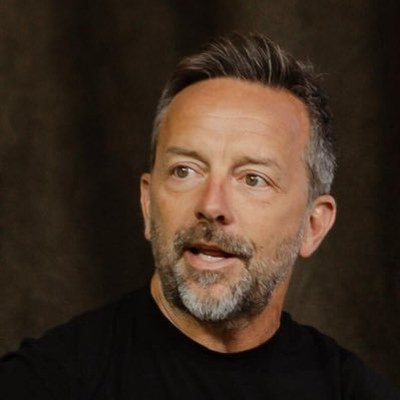 Brad Gerstner
10
26 Mar 2022 – 12 Jan 2024
-557 d
Brad Gerstner
10
26 Mar 2022 – 12 Jan 2024
-557 d
-
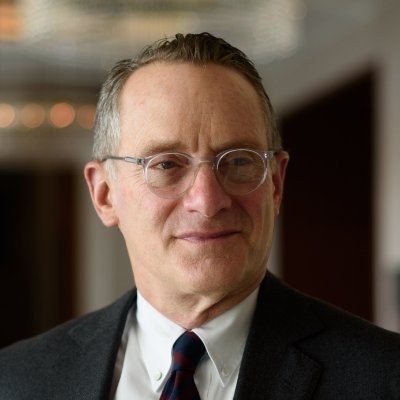 Howard Marks
7
4 Oct 2023 – 12 Jun 2026
+0 d
Howard Marks
7
4 Oct 2023 – 12 Jun 2026
+0 d
-
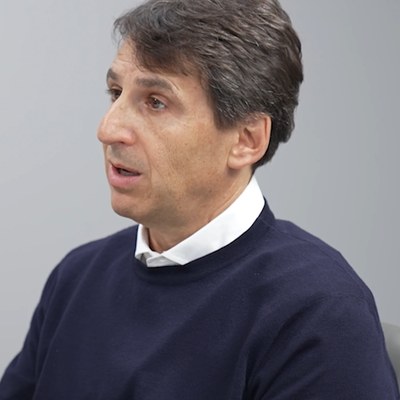 Marc Rowan
2
thin
2 Oct 2024 – 2 Oct 2024
+364 d
Marc Rowan
2
thin
2 Oct 2024 – 2 Oct 2024
+364 d
-
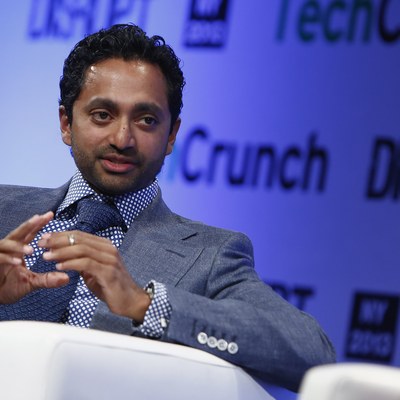 Chamath Palihapitiya
1
thin
7 Sep 2025 – 7 Sep 2025
+704 d
Chamath Palihapitiya
1
thin
7 Sep 2025 – 7 Sep 2025
+704 d
-
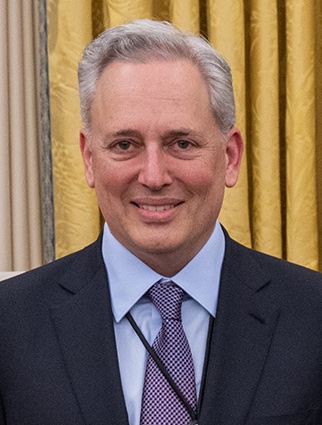 David Sacks
2
thin
7 Feb 2026 – 7 Feb 2026
+857 d
David Sacks
2
thin
7 Feb 2026 – 7 Feb 2026
+857 d
-
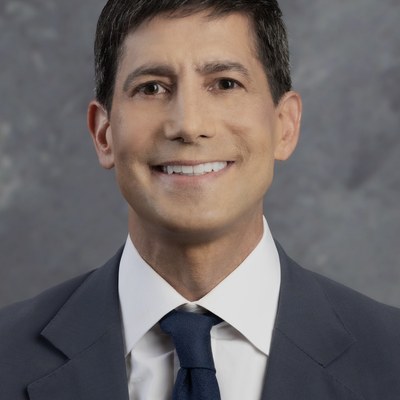 Kevin Warsh
2
thin
Kevin Warsh
2
thin
The chronologysourced and dated, oldest first
-
-
Stanley Druckenmiller
Druckenmiller says core PCE was 1.5% when Greenspan raised rates from 4.75%, now it's 1.7% at 1.5% Fed funds.
“I look back and the core PCE was one and a half in '98 and '99 when Greenspan started raising rates again from 475 is currently one seven and he's got them at 1.5.”
-
Stanley Druckenmiller
Druckenmiller blames financial crisis on easy money bubbles and questions current low interest rate levels.
“I will go to my grave believing that that financial crisis happened because of bubbles created by easy money. And I just don't understand why we need interest rates where they are now.”
-
Stanley Druckenmiller
Druckenmiller says negative rates are the most anti-capitalist idea and that Trump has clearly influenced Powell despite media claims otherwise.
“It's the most anti capitalist idea I could ever dream up. And he's pushing Powell. You know, I didn't want to believe this, but it's pretty clear now that he's had an effect on Powell.”
-
Stanley Druckenmiller
Druckenmiller calls Powell a weaker version of Yellen without the monetary framework Bernanke had.
“He's a weaker version of Yellen without the monetary framework. Bernanke and I philosophically disagree about easy money and helicopter money.”
-
Stanley Druckenmiller
Druckenmiller notes 12 of 14 inflation measures are above 2%, questions Fed focus on 1.7% core PCE.
“Well, first of all, there's 14 recognized measures of inflation. 12 of them are above 2%. Their preferred measure, the core PCE, is at 1.7%.”
-
-
-
Stanley Druckenmiller
Druckenmiller notes the US is running a trillion dollar deficit at full employment alongside negative real rates globally.
“We're running a trillion dollar deficit at full employment. Apparently, we're gonna have some sort of green stimulus in Europe, and we have negative real rates everywhere and negative absolute rates a lot of places.”
-
Stanley Druckenmiller
Druckenmiller says current Fed funds rate of 1.5% is absurd given economic conditions; appropriate level would be 3.5%.
“If I came down from Mars and you showed me the the broad landscape and asked me where Fed funds would be, probably would guess three and a half, somewhere in there.”
-
Stanley Druckenmiller
Druckenmiller blames the financial crisis on easy money bubbles and questions current low interest rate policy.
“I will go to my grave believing that that financial crisis happened because of bubbles created by easy money. And I just don't understand why we need interest rates where they are now.”
-
Stanley Druckenmiller
Druckenmiller says negative rates are most anti-capitalist idea and Trump has clearly influenced Powell despite media claims.
“It's the most anti capitalist idea I could ever dream up, and he's pushing Powell.”
-
-
-
Brad Gerstner
Gerstner reports the Fed expects 2% negative real rates by year-end, with 4.3% inflation and 2.3% ten-year rate.
“They said we expect inflation exiting the year to be 4.3 and we expect the ten year to be around 2.3.”
-
Brad Gerstner
Gerstner argues the Fed is behind the curve on recession rather than inflation, citing massive demand destruction.
“I tweeted a few weeks ago, the Fed's probably behind the curve on recession, not inflation. Right? We have massive demand destruction going on right now in The US economy.”
-
Brad Gerstner
Gerstner reports $15 trillion household net worth destroyed in five months, bringing levels back on trend.
“We destroyed 15,000,000,000,000, you said this on pod 80, we destroyed 15,000,000,000,000 of household net worth in the last five months.”
-
Stanley Druckenmiller
Druckenmiller cites $30 trillion in global QE and $18 trillion negative-yielding debt before 8% inflation.
“I think globally we had 30,000,000,000,000 of QE. Even as late as, I think a year ago, was 18,000,000,000,000 of debt that was still negative yielding when the world was about to experience 8% inflation.”
-
-
-
Stanley Druckenmiller
Druckenmiller expects 800 billion in treasury issuance by year-end as liquidity conditions reverse from earlier stimulus.
“So you're going to probably about 800,000,000,000 in treasuries issued between now and year end. The Fed will be continuing on with QT.”
-
Stanley Druckenmiller
Druckenmiller says this is the most complicated and unanalyzable economic situation he's ever seen.
“this is the most complicated non roadmap unanalyzable situation I've ever seen in terms of having a lot of confidence in an economic prediction going forward.”
-
Brad Gerstner
Gerstner says cargo container costs increased tenfold by June 2021 when inflation was evident.
“June 2021, when the world knew inflation was here. I mean, the cost of a cargo container had gone up by 10 x.”
-
Brad Gerstner
Gerstner cites Kashkari's June 2021 forecast of no rate hikes until 2024 as evidence of Fed miscalculation.
“He says we're not gonna have rate hikes until 2024. That's how wrong the Fed's forecast was in June 2021 because they were making the argument that inflation was transient.”
-
Brad Gerstner
Gerstner highlights the shift from zero rates to 8% mortgages as evidence of dramatic policy change.
“We've gone from effectively a 0% interest rate environment in ZERP, where corporations borrowed for free and consumers borrowed for free, to now we have 8% mortgages.”
-
Brad Gerstner
Gerstner notes Fed raised 2024 GDP forecast from 1.1% to 1.5% despite worsening real economy conditions.
“The Fed forecast in June of this year for GDP growth for 2024 was 1.1%. Today, the Fed forecast for GDP growth in 2024 is 1.5%.”
-
Howard Marks
Marks predicts Fed funds rate will normalize between two and four percent, not zero to two.
“rates are likely to be between two and four, not between zero and two, the Fed funds rate. And, you know, between zero and two is, an emergency measure.”
-
Howard Marks
Marks says the Fed funds rate should exceed inflation to maintain a positive real rate.
“If inflation's two, then the Fed funds rate should be higher than that so that there's a positive real Fed funds rate.”
-
Brad Gerstner
Gerstner says the key missing element for the last three years has been predictability in markets.
“What we need In the nineties. We need predictability. Yeah. And what we haven't had the last three years is predictability.”
-
Brad Gerstner
Gerstner says the Fed made a clear mistake in summer 2021 by not seeing inflation coming.
“But by the summer of twenty one, when the Fed was saying they don't see inflation, that was clearly a mistake.”
-
-
-
Brad Gerstner
Gerstner explains falling inflation increases economic restrictiveness, requiring rate cuts to maintain same restrictiveness level.
“every month that inflation goes down, the effective restrictiveness of the economy goes up, holding all else equal. So you gotta take rates down just to keep it at the same level of restrictiveness.”
-
Marc Rowan
Rowan criticizes Fed rate cuts as expensive insurance when financial markets are wide open and equities at all-time highs.
“What's expensive about it. The notion that we would cut rates. Financial markets are wide open. Equities are at all time high. Financing is available.”
-
Marc Rowan
Rowan questions Fed rate cuts given wide-open markets, record equity highs, and rising real estate.
“The notion that we would cut rates. Financial markets are wide open. Equities are at all time high. Financing is available. Real estate prices are going up”
-
-
-
Chamath Palihapitiya
Palihapitiya argues a 25 basis point cut is insufficient for a $32 trillion economy hampered by faulty data.
“So a 25 basis point cut to a $32,000,000,000,000 economy is not a strategy. And I think that the reason they don't know what to do exactly is because they have extremely faulty data.”
-
Howard Marks
Marks characterizes Fed interventions as price controls that induce excessive risk-taking when money is artificially cheap.
“And the Fed manipulations are a form of price controls. You know, they control the price of money. And if Fed puts money artificially cheap, then it induces behavior like risk taking.”
-
Howard Marks
Marks calls Fed rate setting a form of price controls that forces investors into riskier activities.
“And the Fed manipulations are a form of price controls. You know, they control the price of money.”
-
Howard Marks
Marks argues artificially cheap Fed money forces investors into riskier activities when safe returns are too low.
“And if Fed puts money artificially cheap, then it induces behavior like risk taking. It forces people into riskier activities because the returns on safe activities are so low.”
-
-
-
“So I do think that over the next say six months to a year, he's gonna wanna cut rates.”
-
David Sacks
Sacks criticizes the Fed for measuring rental inflation by surveying only 8,000 households instead of using real-time market data.
“And he was telling me that the way they measure inflation for housing or for rentals, which is a major component, is they survey, like, 8,000 households to find out what their rent is.”
-
Howard Marks
Marks identifies October 1, 2022 as the turning point when Fed dovishness began driving market optimism.
“I'll say since 10/01/2022, which is a special date for a reason, it's when the Fed turned more dovish.”
-
Howard Marks
Marks sees no reason for the Fed to cut rates given the economy is performing fine.
“I don't see any reason to cut rates. I don't think this economy needs stimulus. The economy is doing fine.”
-
-
-
Kevin Warsh
Warsh notes the FOMC unanimously reaffirmed its Statement on Longer-Run Goals and Monetary Policy Strategy at its organizational meeting.
“The Federal Open Market Committee, at its annual organizational meeting this week, unanimously reaffirmed its "Statement of Longer-Run Goals and Monetary Policy Strategy."”
-
Kevin Warsh
Warsh states the reaffirmed statement is identical to the version adopted in August 2020 following the strategy review.
“The reaffirmed statement is identical to the statement adopted in August 2020 following the Committee's review of its monetary policy strategy, tools, and communication practices”
-
Where they overlapsame programme, same subject
- All-In Podcast also carries Brad Gerstner, Chamath Palihapitiya and David Sacks on this subject, at different times.
- Bloomberg Television also carries Marc Rowan and Stanley Druckenmiller on this subject, at different times.